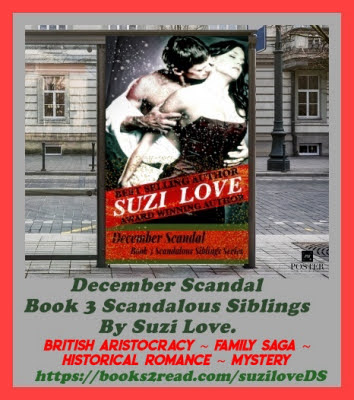
Michael Brandon travels to introduce the woman he loves to family but is shocked when his missing brother arrives. Four years ago, Melissa called herself a widow to protect her daughter. When her past lover returns from the dead, she’s forced to reveals the truth to him, and to her new love. Will the brothers forgive her deceit? https://books2read.com/suziloveDS
1826 The Cyprian’s Ball At the Argyll Rooms. A Regency Gentleman’s Life. From The English Spy By Robert Cruikshank.
1826 The Cyprian’s Ball At the Argyll Rooms. A Regency Gentleman’s Life. From The English Spy By Robert Cruikshank. RL_2_D2D_RetailerBuyLink_RL_2
https://books2read.com/suziloveYGD
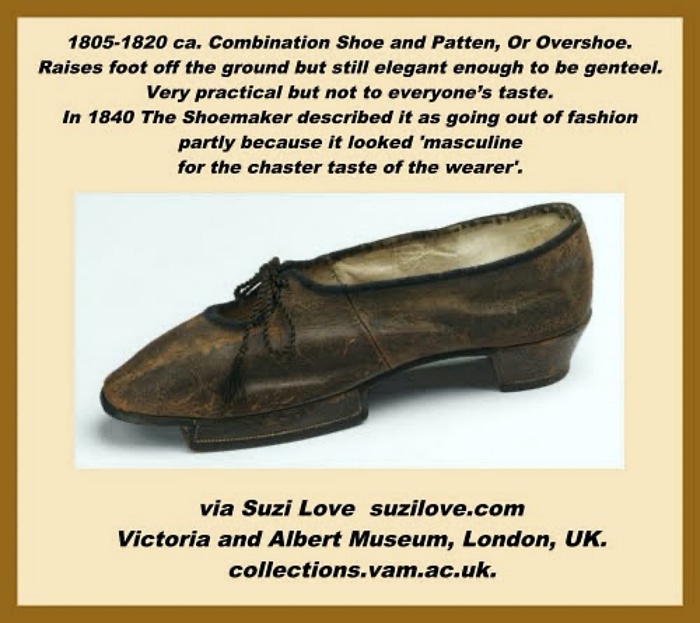
1805-1820 ca. Combination Shoe and Patten, Or Overshoe. Raises foot off the ground but still elegant enough to be genteel. Very practical but not to everyone’s taste. When Jane Austen and her family and friends went walking in the country, the ground was often very wet due to England’s high rainfall and snowfall so pattens were used to keep shoes and the hems of clothing out of the mud.
Only one of this pair of shoes survives. It effectively combines shoe and patten (overshoe) in one, so raising the foot off the ground but remaining sufficiently elegant to be considered genteel. This type of shoe was very practical but not to everyone’s taste. In 1840 The Shoemaker described it as going out of fashion partly because it looked ‘masculine for the chaster taste of the wearer’. via Victoria and Albert Museum, London, UK. collections.vam.ac.uk
1805-1820 ca. Combination Shoe and Patten, Or Overshoe. Suitable for both genders. Raises the foot off the ground but is still elegant enough to be genteel. Very practical but not to everyone’s taste. In 1840 The Shoemaker described it as going out of fashion partly because it looked ‘masculine for the chaster taste of the wearer’. via Victoria and Albert Museum, London, UK. collections.vam.ac.uk.
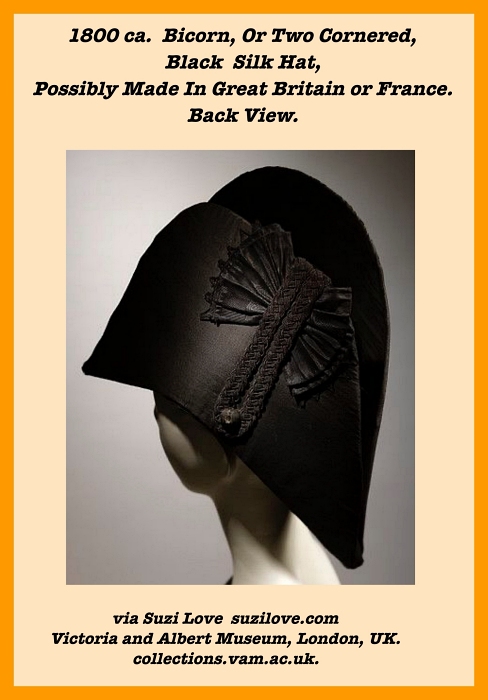
1800 ca. Bicorn, Or Two Cornered, Black Silk Hat, Possibly Made In Great Britain or France. via Victoria and Albert Museum, London, UK. collections.vam.ac.uk. The type of hats worn by the men in Jane Austen’s family around the turn of the century.
Definition: Bicorn Or Bicorne: Two cornered, or pointed, hats often worn by military men because the rain would drain off either side of the hat and away from the body. They could also be easily flattened to carry under arm.
1800 ca. Bicorn, Or Two Cornered, Black Silk Hat, Possibly Made In Great Britain or France. via Victoria and Albert Museum, London, UK. collections.vam.ac.uk.1800 ca. Bicorn, Or Two Cornered, Black Silk Hat, Possibly Made In Great Britain or France. via Victoria and Albert Museum, London, UK. collections.vam.ac.uk.23_d2d_fashionmen1800-1819 https://books2read.com/SuziLoveFashionMen1800-1819
1810 ca. Muslin, or Cotton, Bodiced Petticoat With Sleeves, British.The sort of petticoat Jane Austen wore beneath her dresses, for both modesty and warmth. via Killerton House. National Trust, U.K. nationaltrustcollections.org.uk
In Jane Austen’s years of the early nineteenth century, women often wore light-weight dresses under which was worn a range of underclothing to stop gowns appearing transparent and sticking to a lady’s body. To preserve modesty, underclothing included a chemise next to the skin, then a corset, and then petticoats to give shape to a dress and to keep it away from her body.
In Jane Austen’s times craftsmen created boxes and containers of precious metals, leather, silks, and decorated them with jewels. Boxes, Cases, Etui, Necessaire and everything else that was used to carry essential items for travel, sewing, medicine, writing, and toiletries. Containers were engraved to make exquisite and expensive items as well as practical carrying cases. books2read.com/suziloveBoxesCases
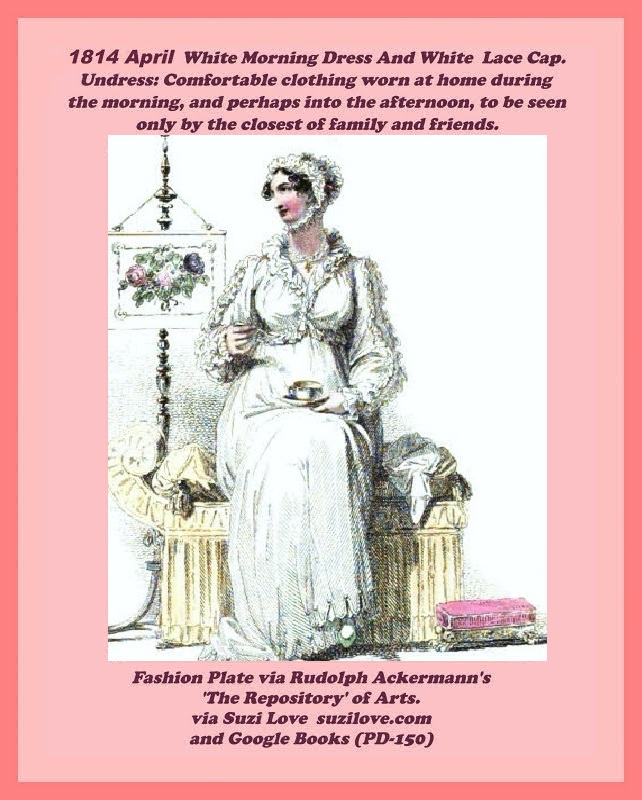
1814 April Morning Dress and Lace Cap. ‘”A petticoat and bodice of fine jaconet muslin, finished round the bottom in vandykes and small buttons. The Rochelle spencer composed of the same material, appliqued with footing lace down the sleeve, and trimmed at each edge with a narrow but full border of muslin. Double fan frill of muslin round the neck, very full, continuing round the bottom of the waist, where it is gathered on a beading of needle-work. Bourdeaux mob cap, composed of lace, with treble full borders, narrowed under the chin. A small flower placed backward, on the left side. Hair much divided in front, and in full waved curls on each side. Necklace of twisted gold and pearl, with pendant cross in the center. Spring Green kid slippers and gloves of the same.” “This dress is from Mrs. Gill, of Cork-street, to whose taste and invention this work as well as the world of fashion, are under continued obligations.” Fashion Plate via Rudolph Ackermann’s ‘The Repository of Arts’. https://books2read.com/SuziLoveFashion1810-1814
Definition Van Dyke Points: V-shaped lace and trims named after a 17th Century Flemish painter, Sir Anthony Van Dyck, known for painting V-shaped lace collars and scalloped edges on sitters.
Definition Jaconet: Cotton fabric of medium thickness made in England, lighter than shirting and heavier than mull.
Definition Muslin: Thin fabric said to take its name from Mosul or Moosul, a large town in Turkish Asia where it was first made.
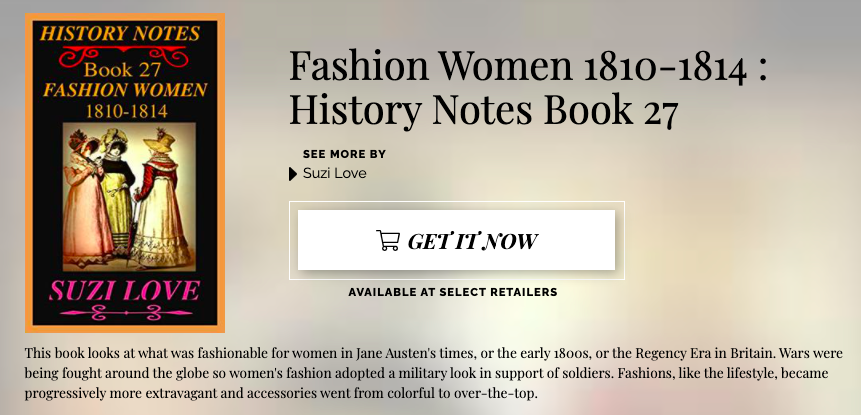
1814 April Morning Dress and Lace Cap. Petticoat and bodice of fine lace jaconet muslin finished with vandykes and small buttons. Fashion Plate via Rudolph Ackermann’s ‘The Repository of Arts’.HN_27_D2D_fashwomen1810-1814
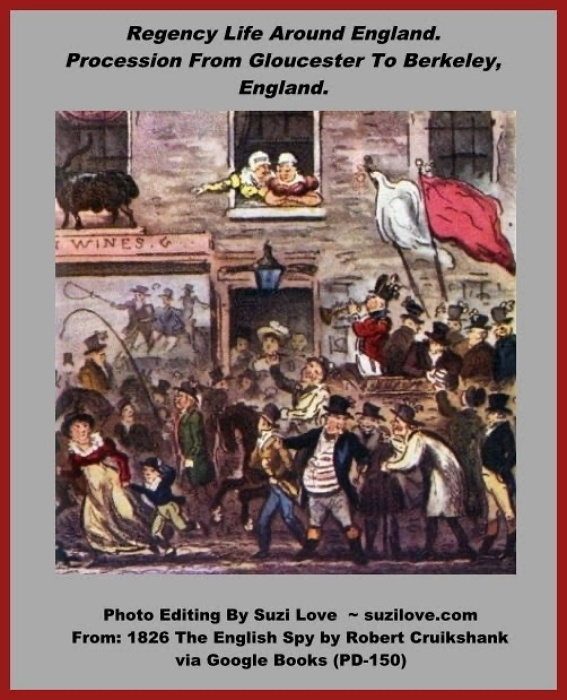
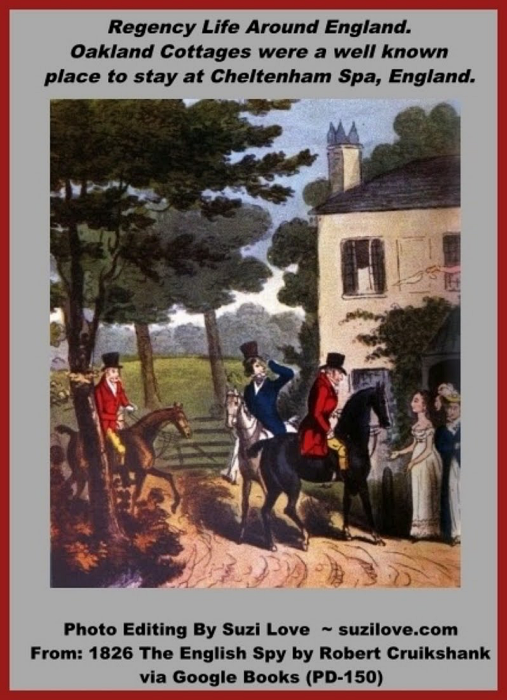
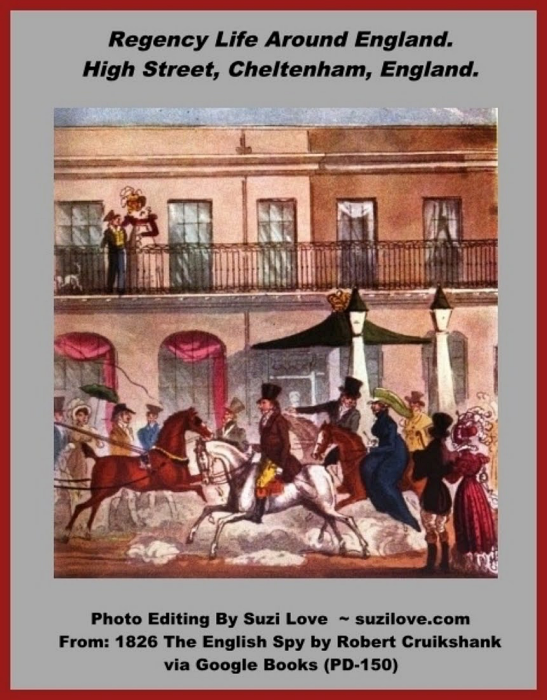
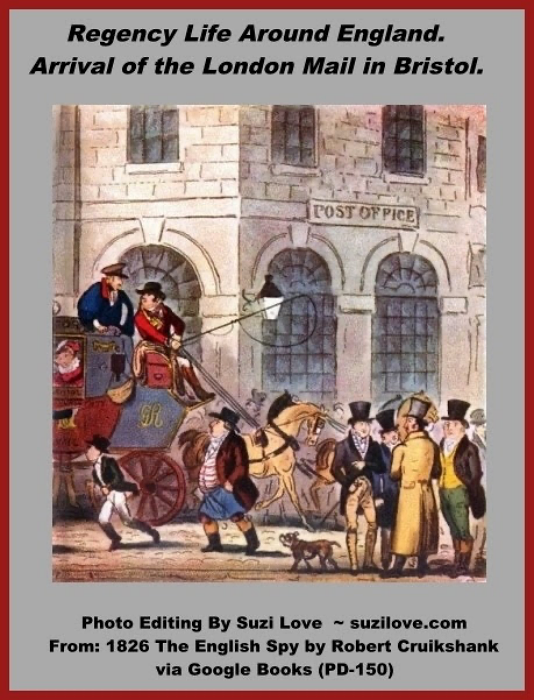
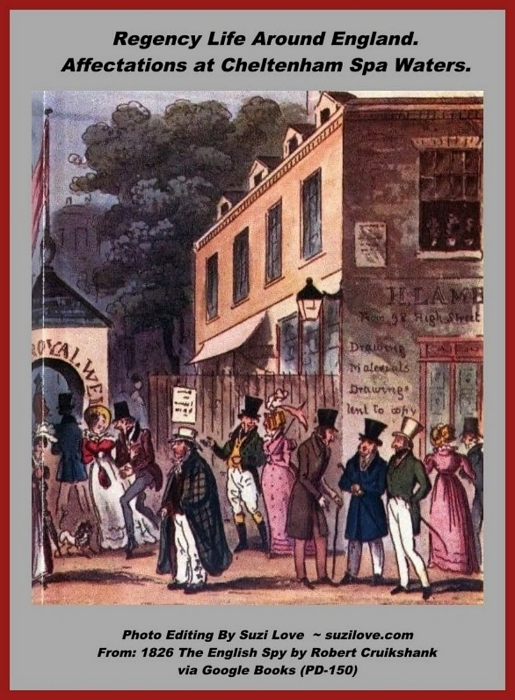
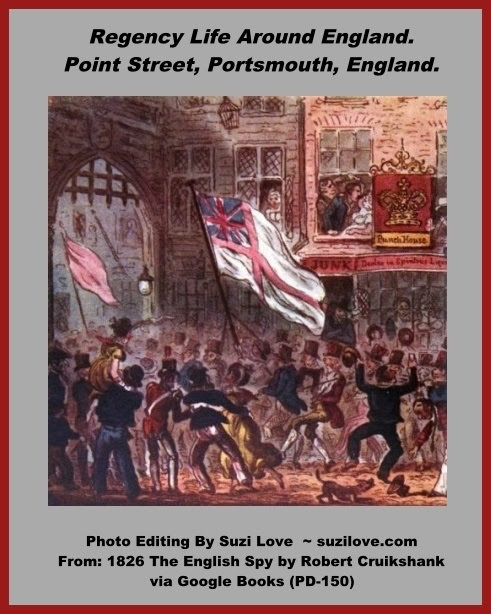
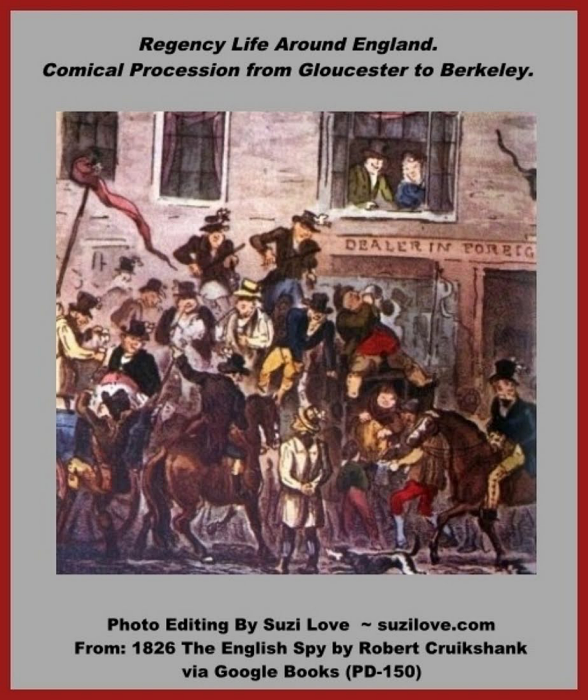
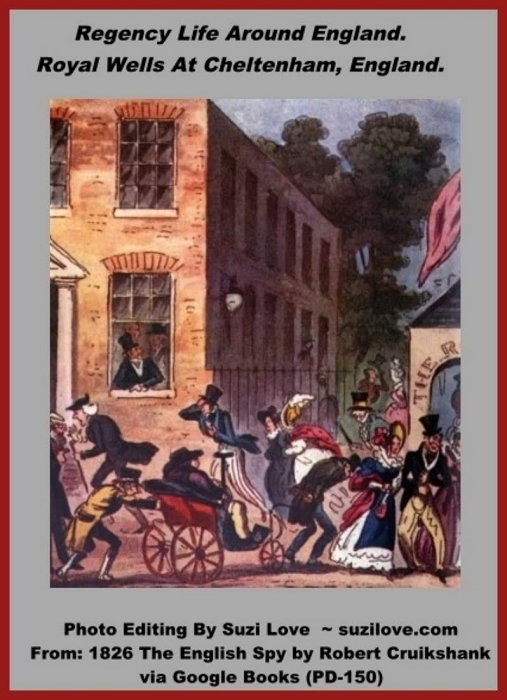
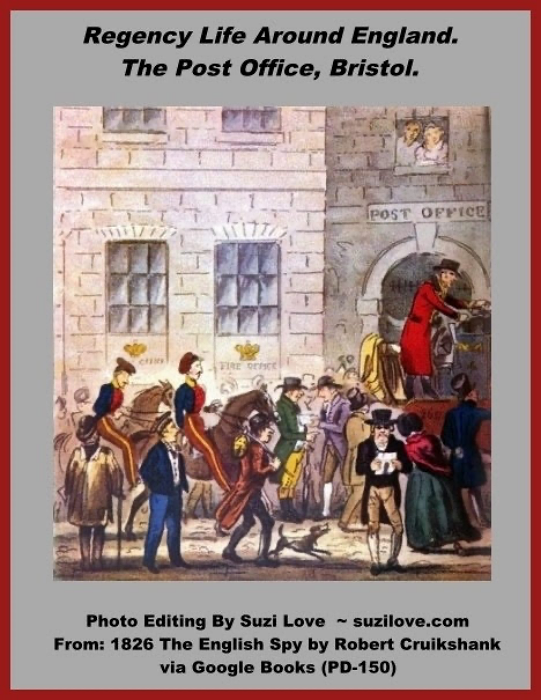
1826 Sights the Bridgertons and Jane Austen Saw Around Regency England. The sights that the families and friends would have seen around while traveling around England. via 1826 The English Spy By Robert Cruikshank via Google Books (PD-150)
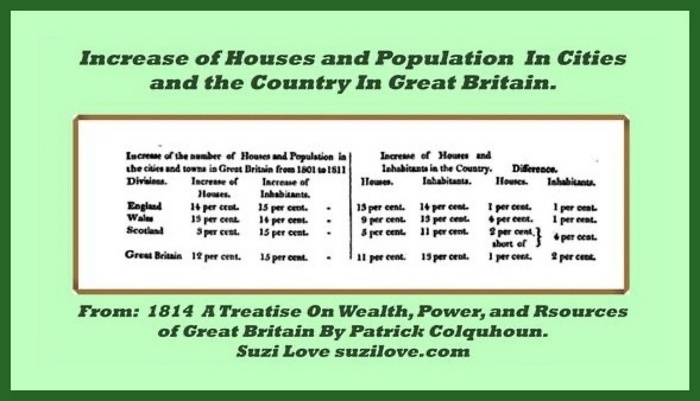
1814 Statistics On Classes, Properties and Population In Great Britain. From: 1814 A Treatise On Wealth and Power. By Patrick Colquhoun. These are the statistics for England in Jane Austen’s time, or the early 1800s, or Regency Era.
1814 Statistics On Classes, Properties, Population In Jane Austen’s Great Britain. #JaneAusten #BritishHistory #RegencyEra #Statistics books2read.com/suziloveROver
1802 ‘The Cow Pock or The Wonderful Effects Of The New Inoculation’. By James Gillray. Caricature depicting the early controversy surrounding Dr. Edward Jenner’s cowpox vaccination program begun in 1796 in England. Recipients of the vaccine developing cow-like appendages. Via British Museum, London, UK. britishmuseum.org (PD-Art)
Cartoon: 1802 ‘The Cow Pock or The Wonderful Effects Of The New Inoculation’ By James Gillray. #Cartoon #RegencyEra #medical https://books2read.com/suziloveROver