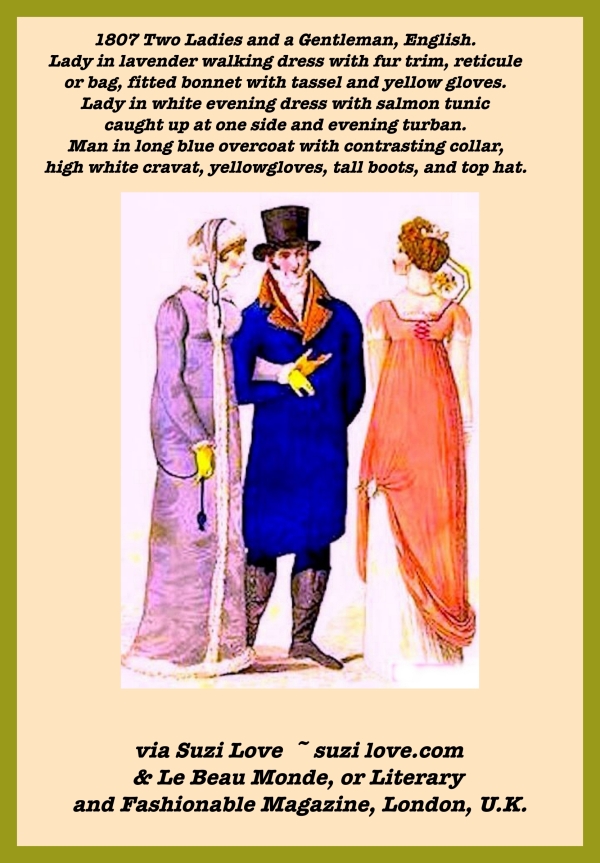
1807 Two Ladies and a Gentleman, English. Lady in lavender walking dress with fur trim, reticule or bag, fitted bonnet with tassel and yellow gloves. Lady in white evening dress with salmon tunic caught up at one side and evening turban. Man in long blue overcoat with contrasting collar, high white cravat, yellow gloves, tall boots, and top hat. Typical of the sort of outfits ladies and gentlemen in Jane Austen’s times would have worn while out walking, visiting friends or for an evening event, like a dinner party. A long coat, or Redingote or Pelisse for warmth when outdoors, and all matched with the essentials, day or night, of hats and gloves. via Le Beau Monde, or Literary and Fashionable Magazine, London, U.K.
1818 November ‘Fashionables Of 1818’ By George Cruikshank.Couple walk arm-in-arm with the man wearing Dandy costume of bell-shaped top-hat, trousers strapped under high-heeled boots without spurs and jauntily carried cane. Much shorter lady wears enormously high bonnet, striped over-dress over frilled white muslin, skirt above ankles, and carries a large ermine muff. Via British Museum, London, UK. britishmuseum.org (PD-Art)
These are the sort of outfits a couple would wear in Jane Austen’s times although these are exaggerated in caricatures to poke fun at the extremes of Regency fashion when women’s hats were so large and high that a lady was dwarfed by her devotion to fashion and a gentleman’s collar and neckcloth were so high he couldn’t turn his head to speak to the lady.
1818 November ‘Fashionables Of 1818’ By George Cruikshank.Couple walk arm-in-arm with the man wearing Dandy costume of bell-shaped top-hat, trousers strapped under high-heeled boots without spurs and jauntily carried cane.Much shorter lady wear enormously high bonnet, striped over-dress over frilled white muslin, skirt above ankles, and carries a large ermine muff. Via British Museum, London, UK. britishmuseum.org (PD-Art)23_d2d_fashionmen1800-1819https://books2read.com/SuziLoveFashionMen1800-1819
1818 Walking Dress and Redingote, French. White walking dress under a royal blue redingote, or pelisse, or coat, with a wide fur trim and high shawl collar and with a large bonnet with black plume. The type of outfit young Regency Era ladies would have worn if they were out shopping on Bond Street, walking in a park, or taking a carriage ride through Hyde Park. Fashion Plate via Journal des Dames et des Modes, or Costume Parisien. .
Definition Redingote Or Pelisse Or Walking Dress Or Coat: French word developed from English words, riding coat. Long fitted outdoor coat worn over other garments for warmth. Often left open at the front to show off the dress underneath. Sometimes cut away in front. Originally made with several capes and trimmed with large buttons. French fashion plates call these coats Redingotes and they are designed for women, men and children. English fashion plates call them a Pelisse, a walking dress, Promenade dress, or Carriage dress.
1808 Two Ladies, French. Apricot Evening Dress Or Moire Brochee, French. Patterned dress with very low cut bodice, short sleeves, long white gloves, and holding a Lorgnette, or looking glass, and a handkerchief. Grey Redingote with high waist and holding a red shawl. Fashion Plate via Journal des Dames et des Modes, or Costume Parisien.
The French magazine, Journal des Dames et des Modes, frequently made fashion plates with a single woman, two women or a woman with a man where they wear the same outfit. The two variations show innovative ideas for decorating plain white muslin dresses with a range of colorful accessories, and the early 1800s were definitely the years when accessories were the fashion highlight. Add a pair of colorful long gloves, a draped shawl or scarf, a reticule, handkerchief, fan or looking glass and the typical white dress is given individuality and personality.
Here is the companion to the above fashion plate with the single lady in her apricot dress. The lady in a grey Redingote is added.
1808 Two Ladies, French. Apricot Evening Dress Or Moire Brochee, French. Patterned dress with very low cut bodice, short sleeves, long white gloves, and holding a Lorgnette, or looking glass, and a handkerchief. Grey Redingote with high waist and holding a red shawl. Fashion Plate via Journal des Dames et des Modes, or Costume Parisien. Fashion Women 1805-1809 History Notes Book 26 What did Jane Austen and friends wear? https://books2read.com/SuziLoveFashionWomen1805-1809
1818 Blue Spencer Of Levantine, French. White cotton print dress with ruffled hem, high plumed bonnet and a neck scarf.
Definition Levantine: Stout silk cloth in twill weave. First made in the Levant, a large area in the Eastern Mediterranean region of Western Asia.
Definition Spencer: Short jacket, cropped at the waist, worn over a dress, or gown. These close-fitting, tight sleeved, waist length jackets were modeled on a gentleman’s riding coat, but without tails. Delicate and regency dresses provided so little protection from the cold, so over garments were essential for warmth, modesty and good health.
Fashion Women 1815-1819 History Notes Book 28 https://books2read.com/SuziLoveFashionWomen1815-1819
1797 Elegant Couple Dancing At A Ball. Man: Bottle green tailcoat, yellow knee breeches, white stockings, red vest and black dancing slippers. Lady: White spotted dress with a pale pink overdress open at the front, high belted waist, red and green turban and a parure, or jewelry set. via Fashion Plate via Journal des Dames et des Modes, or Costume Parisien.
HN_2_D2D_Fashion Men 1700s
books2read.com/suziloveFashMen1700
1800-1815 ca. Fan of Bone and Silk, French. Jane Austen and her family and friends would have carried this style of fan when attending assemblies, musical evenings and balls. Metropolitan Museum New York City, U.S.A. metmuseum.org
1800-1815 ca. Fan of Bone and Silk, French. via Metropolitan Museum New York City, U.S.A. metmuseum.orgHN_27_D2D_fashwomen1810-1814
https://books2read.com/SuziLoveFashion1810-1814
1808 January Trio In Half Dress Walking Ensembles, English. Lady on left wearing a pink dress and green coat and carrying a reticule. Lady on right in a white trained dress, long draping shawl and fitted hat. Gentleman in a blue tailcoat, white vest, extra high white cravat, knee breeches, shoes, and black top hat. Fashion Plate via Le Beau Monde. The sort of outfits ladies and gentlemen in Jane Austen’s times would have worn while out walking, shopping, or going to visit friends.
Fashion Women 1805-1809 History Notes Book 26 What did Jane Austen and friends wear? https://books2read.com/SuziLoveFashionWomen1805-1809
1802 February, 15th. ‘Advantages of Wearing Muslin Dresses.’ during the Regency Era, or Jane Austen’s times. By James Gillray. Fat lady sitting with man and woman at tea table reacts in horror when hot poker from fire falls on her dress. Man sits helplessly while second woman upsets the table. Butler drops plate of muffins and cat scampers away from fire. Painting of Mt. Vesuvius hangs over fireplace. Via Wikimedia Commons commons.wikimedia.org (PD-ART)
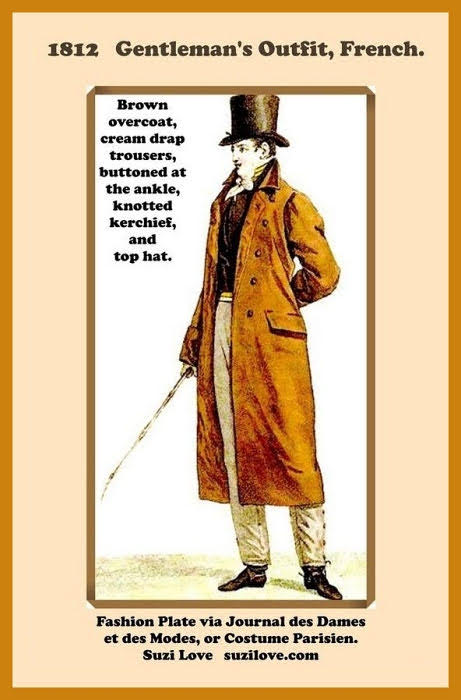
1812 Gentleman’s Outfit, French. Brown overcoat, or Redingote, with front pockets, cream Drap trousers buttoned at the ankle, knotted kerchief, top hat and holding a cane. Fashion Plate via suzilove.com and Journal des Dames et des Modes, or Costume Parisien. By 1812, men no longer wore complicated styles and extravagant fabrics. Men’s fashions had simplified and these practical and relaxed clothing items were the sort worn by Jane Austen’s male family and friends when out and about in town or on their daily excursions.
Definition Redingote Or Coat: French word developed from English words, riding coat. Long fitted outdoor coat worn over other garments for warmth. Originally made with several capes and trimmed with large buttons. French fashion plates call these coats Redingotes and they were worn by men, women, and children. English fashion plates call the coats a Pelisse, a Walking Dress, Promenade dress, or Carriage dress. Definition Drap: French equivalent for the English word cloth or stuff and generally applied to fabrics of wool or silk.
HN_23_D2D_Fashion Men 1800-1819 History Notes Book 23
https://books2read.com/SuziLoveFashionMen1800-1819