Are you ‘Following’ me on Book Bub?? If you do, you’ll be the first to know about my new releases.


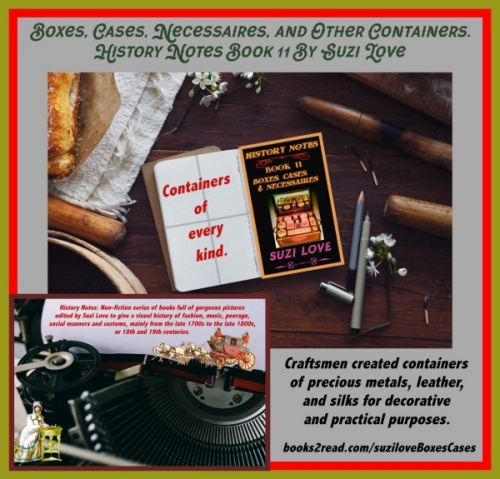
In Jane Austen’s times craftsmen created boxes and containers of precious metals, leather, silks, and decorated them with jewels. Boxes, Cases, Etui, Necessaire and everything else that was used to carry essential items for travel, sewing, medicine, writing, and toiletries. Containers were engraved to make exquisite and expensive items as well as practical carrying cases. books2read.com/suziloveBoxesCases

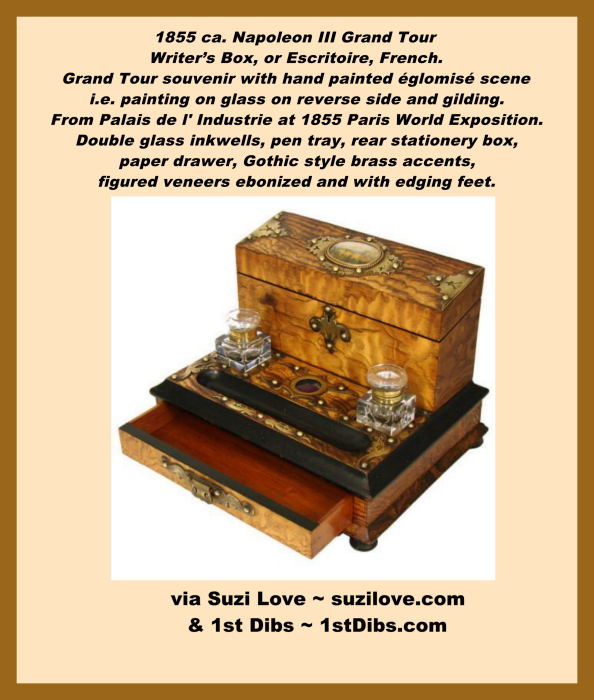
1855 ca. Napoleon III Grand Tour Influenced Travel Writer’s Box, Or Ecritoire, French. Double inkwell with rear stationery box, Gothic style brass accents and Grand Tour souvenir hand painted eglomise scene, the Palais de l’ Industrie from the 1855 Paris World Exposition! Figured veneers, ebonized edging, feet and pen tray and brass or bronze accents. via 1st Dibs 1stdibs.com

19th Century Set of Damascened Calligrapher’s Tools, Turkey. via Sotheby’s Auctions. sothebys.com
books2read.com/SuziLoveWritingTools

19th Century Early. Gilt and Patinated Bronze Inkstand , or Encrier, or a little reservoir of ink. Rectangular base mounted with a round lidded ink pot with a porcelain container and a sand pot, each raised on winged lion feet, centered by a palm decorated columnar carrying handle, with two pen holes. via 1st Dibs Auctions 1stdibs.com
The type of inkstand that households would have in Bridgerton and Jane Austen households for writing letters and keeping track of estate matters.


1820 Lapdesk, English. Exterior covered in metal with a lacquer finish and edged with stamped and gold lacquered brass strips. Interior veneered in kingwood with plush velvet writing surface. walpoleantiques.com
1827 ca. Gentleman’s Dressing Box, London. Mahogany box with brass carrying handles, lid opens to velvet and leather interior with twelve engraved silver topped bottles, all with an engraving of an oak tree engraving, ivory handled cut throat razors, scissors, boot pulls, tongue scraper, section for letters etc. Top tray lifts out to another tray of tools. via Antique Tea Caddies, U.K.

Craftsmen created containers of precious metals, leather, and silks and decorated them with jewels and engraving. Jane Austen and her contemporaries would have used writing boxes, linen boxes when travelling, boxes to hold their food and drink supplies while traveling by carriage, and decorative boxes to keep letters, ribbons, gloves, hairpins etc. Boxes, Cases, and Necessaires By Suzi Love, History Notes Book 11. books2read.com/suziloveBoxesCases.


1808 Silver Wax Jack, Irish. By Robert Breading (active 1775–1822) Dublin. via suzilove.com and Metropolitan Museum New York City, U.S.A. metmuseum.org
How did Jane Austen seal her letters? Wax was melted by lighting the tip of a coiled wax length. This is called a wax jack. The melted wax blob was placed on the outside of a letter or document. A personal desk seal or a fob seal was pressed into the wax to identify the sender or owner of the document. Aristocrat families had their own coat of arms and others may have had their initials or their name on the seal.

Craftsmen created containers of precious metals, leather, and silks and decorated them with jewels and engraving. Jane Austen and her contemporaries would have used writing boxes, linen boxes when travelling, boxes to hold their food and drink supplies while traveling by carriage, and decorative boxes to keep letters, ribbons, gloves, hairpins etc. Boxes, Cases, and Necessaires By Suzi Love, History Notes Book 11. books2read.com/suziloveBoxesCases.
