19th Century Mid Dance Card or Aide de Memoire. Jeweled and enameled gold dance card with concealed timepiece. Lid with a blue enamel with rose-cut diamonds floral wreath, opening to compartment with watch dial, pencil, and notebook. via Sotheby’s Auctions. sothebys.com
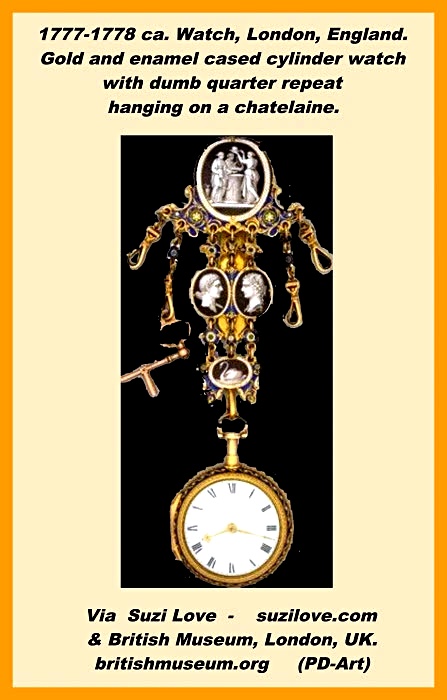
1777-1778 ca. Gold and enamel Cased Cylinder Watch with dumb quarter- repeat and en-suite Chatelaine, London, England. Via British Museum, London, UK. britishmuseum.org books2read.com/SuziLoveChatelaines
D2D_RetailerBuyLink_HN_9. Chatelaines and Chains History Notes Book 9 By Suzi Love. #regency Women in charge of houses wore long chains holding important household items around their waist e.g. keys, pen, notebook, sewing. books2read.com/SuziLoveChatelaines
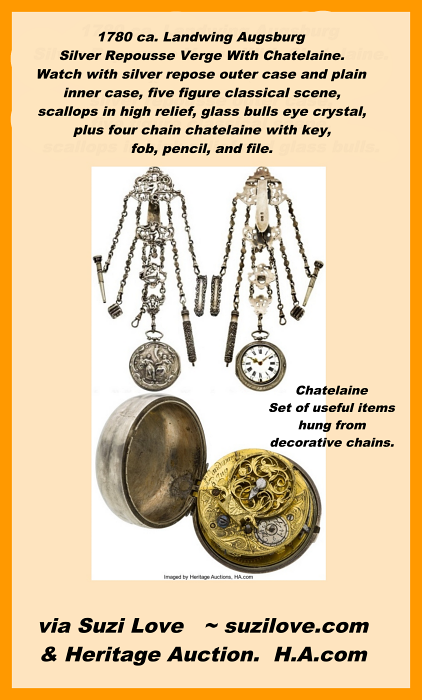
1780 Watch on a Chatelaine, Germany. Silver Repousse Verge With four chain chatelaine. via Heritage Auction H.A.com.
Definition Chatelaine: The word Chatelaine is French and means the keeper of the keys. Chatelaine” derives from the Latin word for castle. In Medieval times, the chatelaine was in charge of the day-to-day running of the castle. What did a chatelaine do? Most important task was keeper of the keys. Also ordered supplies, did bookkeeping, supervised servants, taught castle children, and organized guests. books2read.com/SuziLoveChatelaines
By 1700’s, a metal jeweled ornament hung from pockets, attached to belts, or by hooks into skirt waistbands
During 1800’s, women wore large collections of tools hung from chains
Young girls sewed and did needlework and needed to carry sewing notions eg scissors, thimbles
Worn by women of all classes, from workers to nobility
Varied depending on class and finances.
Made of silver, brass, steel, leather, or fabric
During 19th century, fashionable dresses often had no waist and nowhere to hang chatelaines
Chatelaines became decorative brooches
Often given as a wedding present from a husband to bride
Later became fashion accessories.
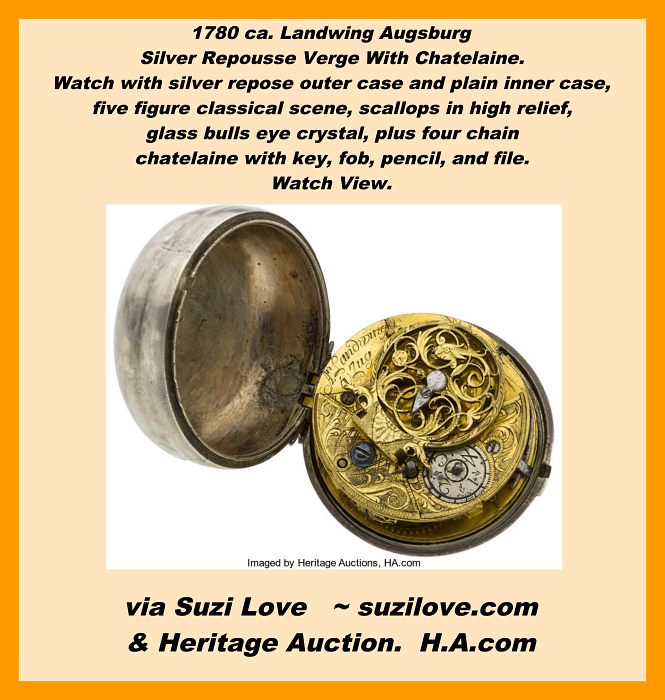
1780 ca. Watch. Landwing Augsburg
Silver Repousse Verge With Chatelaine. Watch with silver repose outer case and plain inner case, five figure classical scene, scallops in high relief, glass bulls eye crystal, plus four chain chatelaine with key, fob, pencil, and file. via Heritage Auctions
Chatelaine: Set of useful items hung from decorative chains.Chatelaines and Chains History Notes Book 9 By Suzi Love. #regency Women in charge of houses wore long chains holding important household items around their waist e.g. keys, pen, notebook, sewing. books2read.com/SuziLoveChatelaines
1745-1750 ca. Necessaire, or small decorative box, with watch, probably German. Fitted with sewing and writing implements as well as a watch, this unmarked nécessaire shows delightful chinoiserie decoration in the Rococo style, echoing the work of the influential Munich designer François Cuvilliés (1695–1768). via Metropolitan Museum New York City, U.S.A. metmuseum.org
Small toiletry, writing, or sewing containers were called Necessaire or Etui: Tiny boxes or containers were carried in large castles or sprawling manor houses so a lady or gentleman had their essentials with them all day. They were also important when traveling by coach, trains, or ships where space was always limited. A necessaire or Etui was easily carried in a bag, reticule, or pocket so essentials were on hand for personal grooming, to repair a ripped hem, replace a button, to embroider, or to write a note or letter.
1745-1750 ca. Necessaire With Watch. Probably German. via Suzi Love suzilove.com and Metropolitan Museum New York City, U.S.A. metmuseum.orgHN_13_D2D_Writing Tools books2read.com/SuziLoveWritingTools