1805 Regency Group of Ladies and Gentlemen dressed as Jan Austen and her family and friends would have dressed. Ladies in dresses, bonnets, shawls, gloves, and carrying a reticule, or bag, and a parasol. Gentlemen in tailcoats, overcoats, trousers, vests, cravats, hats, boots and shoes and carrying walking sticks. via Men And Women In Costumes, 1804-1829. The Miriam and Ira D. Wallach Division, The New York Public Library, U.S.A.
1826 Almack’s Revisited by Charles White. The ball of this evening passed off as all other balls at the same place, creating envy, jealousy, and hatred in the minds of many of those who have been unsuccessful in procuring tickets; affording real amusement to few, and disappointing a greater portion of those who, by dint of manoeuvring, petitioning, parliamentary interest, or presents, have been enabled to obtain the desired vouchers; and as this was one of the last balls of the season, and a general election already talked of, the mixture of company and the number was much greater than usual; and, consequently, it was what the most correct persons called, “horrid bad Almack’s!”
Almack’s or Willis’s Rooms, King Street, St James, London, UK. Almack’s Assembly Rooms, founded by William Almack at No. 26-28, were on the site of the present Almack House. The club was originally a gaming establishment but moved from Pall Mall. The Assembly rooms were on the South side of King Street in St James’s and were opened on February 12, 1765. At the time the subscription was ten guineas for which there was a ball and supper each week for the twelve weeks of the season.
1826 Almack’s Revisited by Charles White.: ‘It was what most correct persons called ‘horrid bad Almack’s’. #RegencyEra #London #BritishHistory
1805 Lady With Her Sketching Portfolio In Half Dress, French. White, At-Home, High-waisted, relaxed & flowing dress with white cap and pink flowers to match, long gloves, slippers. Fashion Plate via Journal des Dames et des Modes, or Costume Parisien. Definition Caps: Worn as morning caps, night caps, or under other hats. Jane Austen and her family and female friends would have worn caps like these, sometimes during the morning at home, to bed to keep their long hair from becoming knotted, or under a bonnet to hold a hairstyle in place. Caps sometimes had hanging ties, or tails, and were also called ‘follow me lads’, or ‘flirtation ribbons’. Or flaps covering theirs called Lappets. Magazine Journal des Dames et des Modes, or Costume Parisien, French. French fashion magazine published between 1797 and 1839 and second oldest fashion magazine published in France. Pierre de la Mesangere was editor and published every five days, which is why there is an abundance of French fashion plates from these years in France and internationally.
1805 Lady With Her Sketching Portfolio In Half Dress, French. White, At-Home, High-waisted, relaxed & flowing dress with white cap and pink flowers to match, long gloves, slippers. Fashion Plate via Journal des Dames et des Modes, or Costume Parisien.
1800s Silver and Carved Mother of Pearl Writing and Desk Set, French. Wax Seal, Dip Pen and Letter Opener in the style that Jane Austen would have used to write her novels and her letters. via Ruby Lane Antiques. rubylane.com. books2read.com/SuziLoveWritingTools
HN_13_D2D_WritingTools Book 13 What did the lady of the house use to pen notes? What sat on the desk of the man of the house when managing his accounts? #History #Nonfiction #travel books2read.com/SuziLoveWritingTools
1817-1820 ca. Spencer, English. Green silk, brown satin puffs, silk cord on deep V collar and sleeves. With the rise of fashionable waistlines in women’s dresses after around 1800, women’s outerwear followed suit. This jacket with very short bodice and long sleeves was known as a Spencer and was named after the male coat made famous by the Earl Spencer. The jacket is said to have originated in an accident to Lord Spencer in hunting when his coat tails were torn off and a cropped jacket was invented. via Museum of London, UK. museumoflondon.org.uk. books2read.com/suziloveSpencers. Jane Austen and her contemporaries often walked to places and so would have needed the warmth of a Spencer over her dress in the cold British winters.
Definition Spencer: Short jacket, cropped at the waist, worn over a dress, or gown. These close-fitting, tight sleeved, waist length jackets were modeled on a gentleman’s riding coat, but without tails. Delicate and regency dresses provided so little protection from the cold, so over garments were essential for warmth, modesty and good health.
1817-1820 ca. Spencer, English. With the rise of fashionable waistlines in women’s dresses after around 1800, women’s outerwear followed suit. This jacket with very short bodice and long sleeves was known as a spencer. via Museum Of London. HN_4_Spencers Or Regency Jackets.
books2read.com/suziloveSpencers
1800-1815 ca. Sprigged Mull Dress. Typical of the white cotton high-waisted dresses in vogue in the early 1800s. They replaced the more formal gowns from the end of the 18th Century and moved away from heavier and more decorative fabrics. This is the type of dress Jane Austen and her contemporaries would have worn on a daily basis. via Whitaker Auctions.
19th Century Inkwell and Tomb of the Scipios Grand Tour Souvenir, Italian. The type of Grand Tour souvenir collected by travelers in Jane Austen and Bridgerton Times.
Siena marble with ink wells and pen holder. Lid removes to reveal pair of ink wells and pen holder. Scipios were a family of Roman war heroes and generals. Tomb of Scipios erected around 150 B.C.E and copied many times. 18th-19th Centuries, tomb models were favorites of Grand Tour souvenir hunters. The sort of exotic item a gentleman in Jane Austen’s times might send back to England during his Grand Tour of Europe and Asia. via 1st Dibs Auctions 1stdibs.com
19th Century Inkwell and Tomb of the Scipios Grand Tour Souvenir, Italian. Inkwell View. Lid removes to reveal pair of ink wells and pen holder. 18th-19th Centuries Tomb models were favorites of Grand Tour travelers. via suzilove.com and 1st Dibs Auctions 1stdibs.comHN_13_D2D_WritingTools Book 13 What did the lady of the house use to pen notes? What sat on the desk of the man of the house when managing his accounts? #History #Nonfiction #travel books2read.com/SuziLoveWritingTools
1806 Young French Gentleman. Blue tailcoat under a short brown Castorine coat, cream cashmere breeches, white stockings, yellow gloves, black top hat and a cane. Fashion Plate via Journal des Dames et des Modes, or Costume Parisien.
French fashions and Georgian and Regency Era fashions from Great Britain were copied around the world. This is the normal daily outfit for a gentleman in the early 1800s, or in the times of Jane Austen, for daily city and country life. https://books2read.com/SuziLoveFashionMen1800-1819
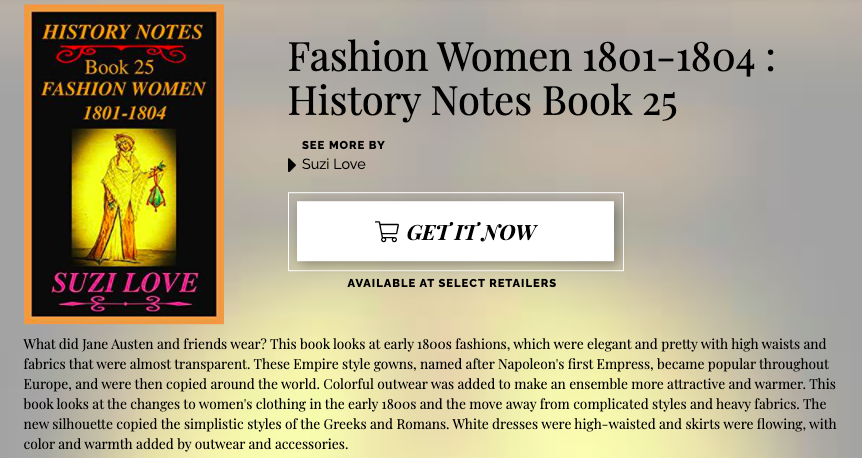
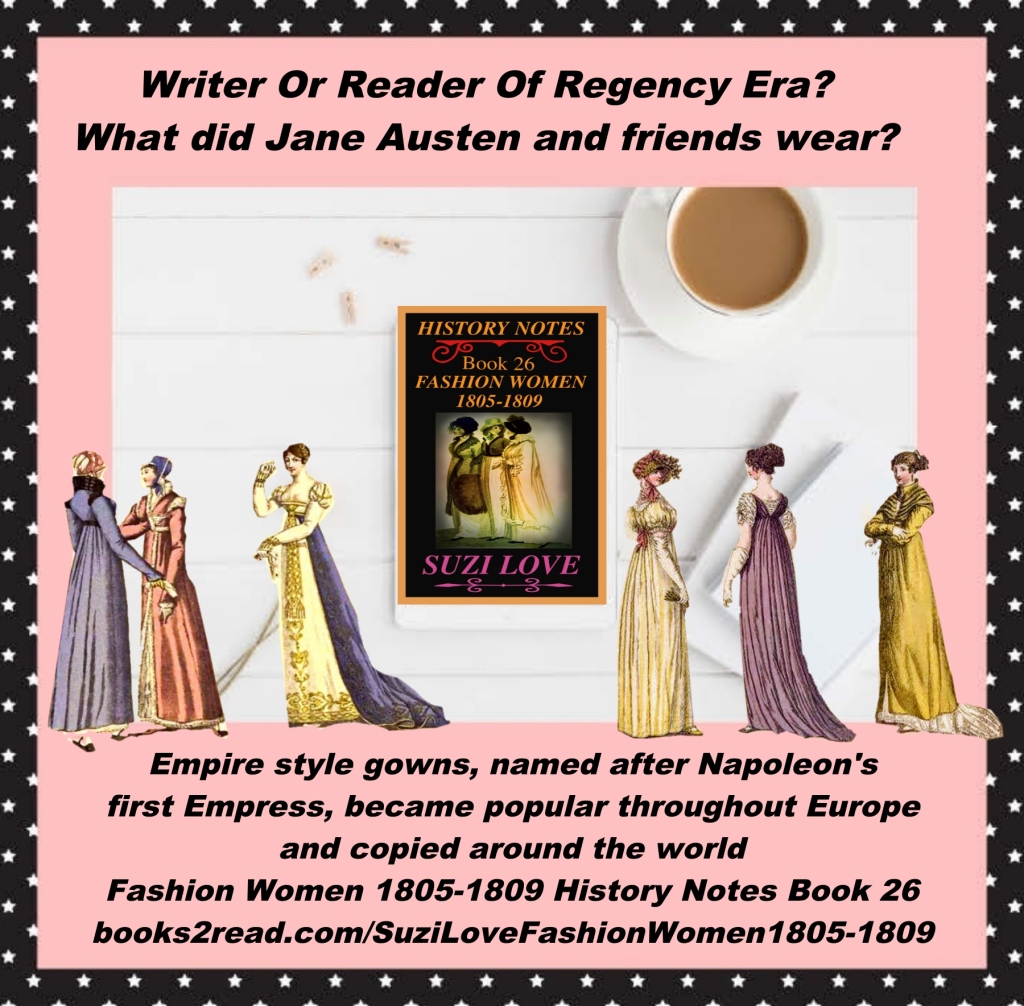
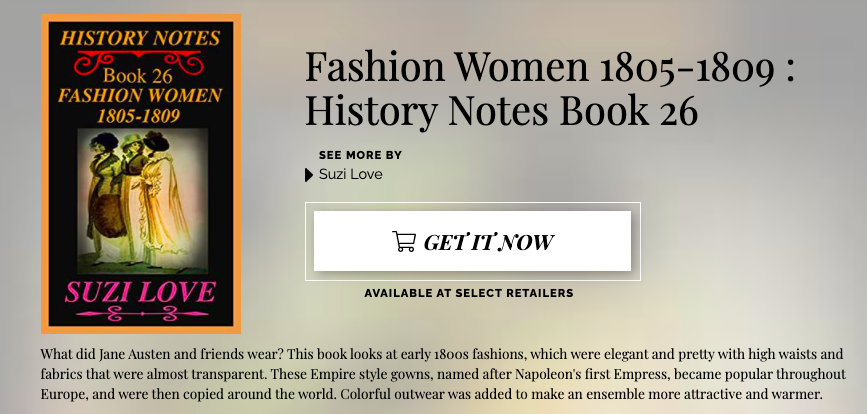
What did Jane Austen and friends wear? Early 1800s fashions were elegant and pretty with high waists and fabrics that were almost transparent. These Empire style gowns, named after Napoleon’s first Empress, became popular throughout Europe, and were then copied around the world. Colorful outwear was added to make an ensemble more attractive and warmer. History Notes Book 26 Fashion Women 1805-1809. https://books2read.com/SuziLoveFashionWomen1805-1809
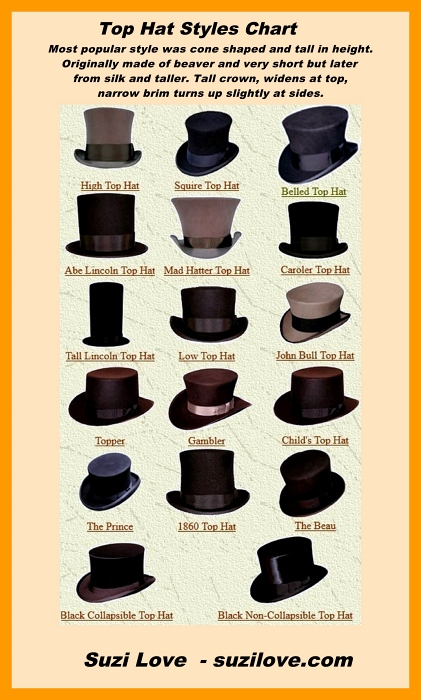
Top Hat Styles Chart. Most popular style was cone shaped and tall in height. Originally made of beaver and very short but later from silk and taller. Tall crown, widens at top, narrow brim turns up slightly at sides.
Top Hat Styles Chart. Most popular style was cone shaped and tall in height. Originally made of beaver and very short but later from silk and taller. Tall crown, widens at top, narrow brim turns up slightly at sides. https://books2read.com/SuziLoveFashionMen1800-1819



![1805_HalfDress_WhiteAtHomeDress_LadywithSketchingPortfolio_CP_Lge.jpg ]](https://www.suzilove.com/wp-content/uploads/2022/11/1805_HalfDress_WhiteAtHokmeDress_LadywithSketchingPortfolio_CP_Sml.jpg)