1790-1820 ca. Fichus, Or Shoulder Shawls. Short and Long. Embroidered Cream Net Fichus as worn by ladies in the times of Jane Austen. via Whitaker Auction whitakerauction.smugmug.com
Definition Fichu: Triangular piece of lace, muslin, or other cloth worn about the neck and cleavage to fill in a low bodice or neckline and preserve a lady’s modesty. From the French ‘thrown over’. The Bridgerton family and Jane Austen and her female family and friends would have worn a Fichu over a light muslin dress for both warmth and modesty.
1815 March Brown Promenade Dress, English. High-waisted dress with decorative hem, white sleeves, white fichu, blue scarf, brown hat decorated with flowers. Jane Austen and her contemporaries would have worn this style of outdoor walking outfit and flowered hat. Fashion Plate via The Lady’s Magazine Or Entertaining Companion for the Fair Sex.
Definition Redingote: Woman’s long, fitted coat often worn open in front to show off the dress underneath. Sometimes cut away in front. Originally made with several capes and trimmed with large buttons. French word developed from English words, riding coat. reefer. Single- or double-breasted, fitted, tailored, over-all coat usually made from sturdy fabric.
Definition Fichu: A piece of lace, muslin, or other cloth worn about the neck and cleavage to preserve a lady’s modesty. From French word meaning neckerchief.
1804 Fawn Drap Riding Habit in Jane Austen style. High-waisted dress with a full skirt and train, skirt buttoned at the side, long straight sleeves, velvet snug hat, Fichu around her neck, riding crop, two views of hairstyles. Fashion Plate via Journal des Dames et des Modes, or Costume Parisien.
Male tailors made most women’s riding habits during the Regency years and they were constructed similarly to men’s riding outfits. Generally in two pieces, a jacket and a skirt, and with a shirt with a frilled collar or front opening underneath. The trains of a habit could be caught up for walking, usually with a button and loop, and unhooked and let down so that the skirt flowed over the woman’s legs when she rode side saddle. Due to the numerous wars during the early 1800s, it was seen as patriotic for women to add military style touches to outfits in support of military men. The shoulder and cuff trims resemble the epaulettes and coat trims of a military uniform.
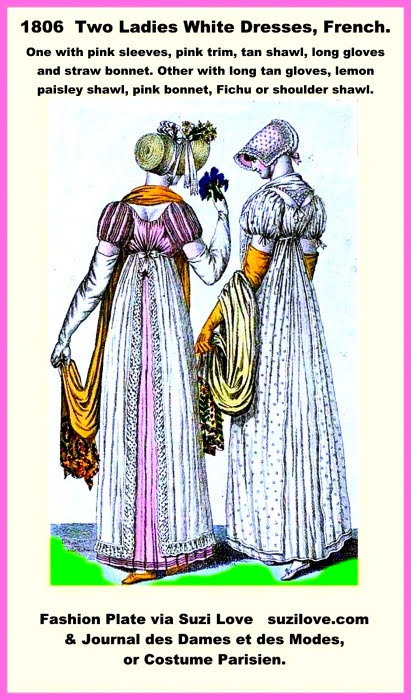
1806 Two Ladies In White Dresses, French. One with pink sleeves, pink trim, tan shawl, long gloves and straw bonnet. Other with long tan gloves, lemon paisley shawl, pink bonnet, Fichu or shoulder shawl. Fashion Plate via Journal des Dames et des Modes, or Costume Parisien. These fashionable ensembles with a variety of fashionable and practical accessories would have been worn by Jane Austen and her family and friends during the day when out walking in the park or visiting village shops. Hats were a necessity to protect fair skin from the sun and scarfs and shawls added color and warmth to an outfit.
Definition Fichu: Draped scarf or shawl worn about shoulders and tied in knot at breast, with ends hanging down loosely. Word, meaning negligee or careless, first used to describe breaking away from stiff collar of the past.
1790-1810 ca. Fichu Or Shoulder Shawl. Jane Austen and her female family and friends would have worn a Fichu over a light muslin dress for both warmth and modesty. via Metropolitan Museum New York City, U.S.A. metmuseum.org.
Definition Fichu: Triangular piece of lace, muslin, or other cloth worn about the neck and cleavage to fill in a low bodice or neckline and preserve a lady’s modesty. From the French ‘thrown over’. The Bridgerton family and Jane Austen and her female family and friends would have worn a Fichu over a light muslin dress for both warmth and modesty.
1802 Jane Austen Style Riding Habit, French. Blue riding habit made of castor, worn with a Fichu of white lace to cover her chest and preserve her modesty and carrying a long riding whip. Fashion Plate via Journal des Dames et des Modes, Costume Parisien.
Riding Habit: Early 1800s riding habits still copied men’s riding fashion and usually made by male tailors. They were often a close-fitting jacket worn over a shirt, or with a fichu covering the neck. A skirt with train had either a waistband or straps over the shoulders to keep it in place. Sometimes, habits were made in one piece with the skirt and bodice joined.
1816 December Carriage Dress, English. Fawn or lemon dress with blue silk hem trimming, blue bow tied at the back with long hanging ends, a half sleeve over a plain long sleeve, tight at the wrist and bound with blue trimming and finished with a narrow ruffle of three falls of tulle. A fichu of tulle with matching ruff. When worn as a carriage dress, the head-dress is a bonnet, the crown composed of white satin at the top and the middle and front of Leghorn. Lined with white satin and ornamented with a white satin band and strings. An indispensable India shawl, yellow slippers and carrying a black ridicule, or bag, and later called a reticule. Fashion Plate via Rudolph Ackermann’s ‘The Repository of Arts’.
Definition Fichu: Piece of lace, muslin, or other cloth worn about the neck and cleavage to preserve a lady’s modesty. From French word meaning neckerchief.
Definition Ridicule, Reticule, Indispensable, or Handbag: From the late 1700s, pockets could no longer be sewn into gowns nor could separate pockets be tied around their waists and accessed by slits in the gown and petticoats, as skirts fell from just under the bust and were full and flowing. In Jane Austen’s times, women carried small bags, known at first as ridicules and later as reticules, to keep necessary items on their person e.g. handkerchiefs, coins, vinaigrettes, calling cards, glasses etc.. For more on reticules, try my History Notes book 3 http://books2read.com/suziloveReticules
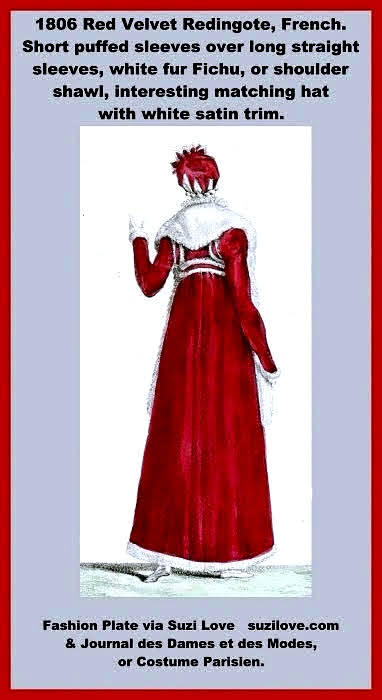
1806 Red Velvet Redingote, French. Short puffed sleeves over long straight sleeves, white fur Fichu, or shoulder shawl, interesting matching hat with white satin trim. Fashion Plate via Journal des Dames et des Modes, or Costume Parisien.
Redingotes or Pelisses were needed to cover the flimsy dresses made of lightweight fabrics of the Regency years to provide warmth and some protection from windy conditions when gowns might lift and cause modesty issues. Jane Austen and her contemporaries often walked to places and so would have needed the warmth of a Pelisse or coat in the cold British winters. https://books2read.com/SuziLoveFashionWomen1805-1809
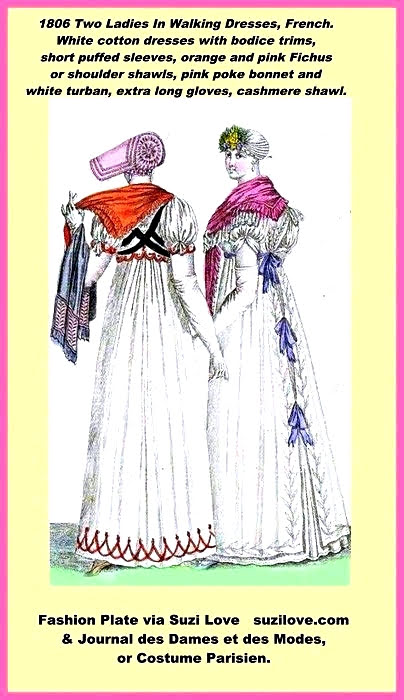
1806 Two Ladies In White Walking Dresses, French. Puffed sleeves, extra long gloves, bonnets tied under chins and decorated with flowers, walking boots, green cashmere shawl. Fashion Plate via Journal des Dames et des Modes, or Costume Parisien. These fashionable ensembles with a variety of fashionable and practical accessories would have been worn by Jane Austen and her family and friends during the day when out walking in the park or visiting village shops. Hats were a necessity to protect fair skin from the sun and scarfs and shawls added color and warmth to an outfit.
1807 Two Ladies In Morning Dress, French. Left: Morning dress with short puffed sleeves over long straight sleeves ruffles around collar sleeves and hem white cap carrying blue parasol. Right: Blue Fichu or neck Shawl, blue Bonnet. Fashion Plate via Journal des Dames et des Modes, or Costume Parisien.
Definition Fichu: Piece of lace, muslin, or other cloth worn about the neck and cleavage to preserve a lady’s modesty. From French word meaning neckerchief.
These are the types of outfits worn by Jane Austen and contemporaries in English magazines, where French fashions were obsessively copied despite the two countries being at war for many years.
1807 Two Ladies In Morning Dress, French. Left: Morning dress with short puffed sleeves over long straight sleeves ruffles around collar sleeves and hem white cap carrying blue parasol. Right: Blue Fichu or neck Shawl, blue Bonnet. Fashion Plate via Journal des Dames et des Modes,
or Costume Parisien.1807 Two Ladies In Morning Dress With Fashion Accessories, French. #RegencyFashion #HistoricalFashion #France https://books2read.com/SuziLoveFashionWomen1805-1809 Share on XFashion Women 1805-1809 History Notes Book 26
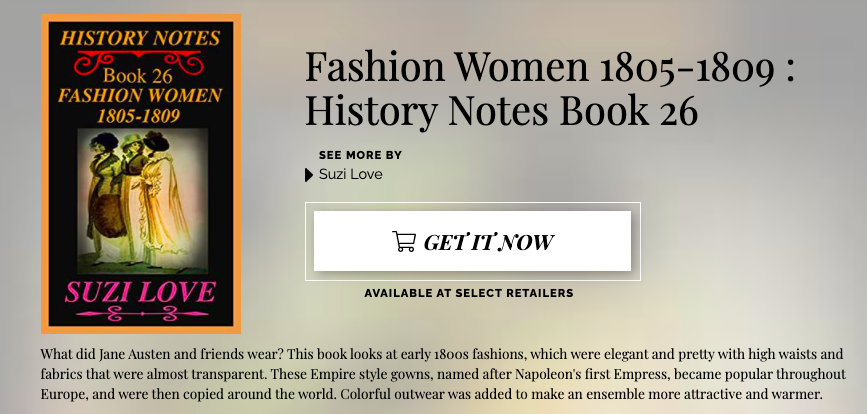
What did Jane Austen and friends wear? This book looks at early 1800s fashions, which were elegant and pretty with high waists and fabrics that were almost transparent. These Empire style gowns, named after Napoleon’s first Empress, became popular throughout Europe, and were then copied around the world. Colorful outwear was added to make an ensemble more attractive and warmer.
https://books2read.com/SuziLoveFashionWomen1805-1809