1800-1815 ca. Sprigged Mull Dress. Typical of the white cotton high-waisted dresses in vogue in the early 1800s. They replaced the more formal gowns from the end of the 18th Century and moved away from heavier and more decorative fabrics. This is the type of dress Jane Austen and her contemporaries would have worn on a daily basis. via Whitaker Auctions.
1806 Waiting For the St. Cloud Coach, Place de la Concorde, Paris. Illustrations by Francis Courboin. via Les Modes de Paris. (PD-Art) This couple is depicted waiting for the coach, which was a passenger vehicle drawn by four horses. The woman is wearing a fashionable hat or “capote” that covers her face. Her dress maintains the empire waist and has very long sleeves that also have a ‘mancheron’ or a gathered sleeve at the shoulders. The man is wearing a ‘habit du gagé’ or a coat with tails, buttoned at the waist. His hat is a ‘haut-de-forme’ or what is commonly known in English as a top hat. He wears tight, short pants tucked into large, riding boots, as was the fashion for men. Illustrations by François Courboin from Octave Uzanne‘s Les Modes de Paris. Variations du goût et de l’esthétique de la femme, 1797-1897, L. Henry May, Paris, 1898, or from the English translation of the same work: Fashion in Paris : the various phases of feminine taste and aesthetics from 1797 to 1897, William Heinemann, London, 1898. Modes de Paris VIa Brown University Library .
1816. June Blue Merino wool riding dress with high waist and embroidered and ornamented round the bust and cuffs and fastens on the back of the shoulder. Double ruff of fine Vandyke lace is separated from shirt collar by a Chinese silk handkerchief of blue and white. Small round hat made of fine beaver or moss silk, the half boots are of blue kid with Limerick gloves worked and seamed with blue and she is carrying a riding whip. These riding habits were usually designed by men and were in two pieces, a jacket and a skirt, worn over a shirt but this is in one piece and the full skirt falls from directly under the bust. Fashion Plate via John Belle’s La Belle Assemblée or, Bell’s Court and Fashionable Magazine, London. https://books2read.com/SuziLoveFashionWomen1815-1819
Typical of the riding costumes worn by Jane Austen’s female contemporaries. The style is still in the Empire fashion of a high-waist with the full skirt falling from just under the bust and with a frill and small decorations on the wrists and shoulders to make it look unique.
19th Century Inkwell and Tomb of the Scipios Grand Tour Souvenir, Italian. The type of Grand Tour souvenir collected by travelers in Jane Austen and Bridgerton Times.
Siena marble with ink wells and pen holder. Lid removes to reveal pair of ink wells and pen holder. Scipios were a family of Roman war heroes and generals. Tomb of Scipios erected around 150 B.C.E and copied many times. 18th-19th Centuries, tomb models were favorites of Grand Tour souvenir hunters. The sort of exotic item a gentleman in Jane Austen’s times might send back to England during his Grand Tour of Europe and Asia. via 1st Dibs Auctions 1stdibs.com
1806 Young French Gentleman. Blue tailcoat under a short brown Castorine coat, cream cashmere breeches, white stockings, yellow gloves, black top hat and a cane. Fashion Plate via Journal des Dames et des Modes, or Costume Parisien.
French fashions and Georgian and Regency Era fashions from Great Britain were copied around the world. This is the normal daily outfit for a gentleman in the early 1800s, or in the times of Jane Austen, for daily city and country life. https://books2read.com/SuziLoveFashionMen1800-1819
What did Jane Austen and friends wear? Early 1800s fashions were elegant and pretty with high waists and fabrics that were almost transparent. These Empire style gowns, named after Napoleon’s first Empress, became popular throughout Europe, and were then copied around the world. Colorful outwear was added to make an ensemble more attractive and warmer. History Notes Book 26 Fashion Women 1805-1809. https://books2read.com/SuziLoveFashionWomen1805-1809
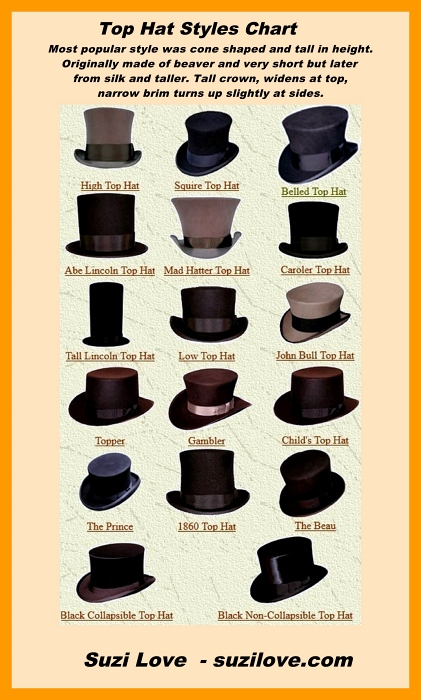
Top Hat Styles Chart. Most popular style was cone shaped and tall in height. Originally made of beaver and very short but later from silk and taller. Tall crown, widens at top, narrow brim turns up slightly at sides.
1805 ca. Leather Breeches, French. Buttoned and adjustable waist and narrow drop down front flap, back waist gusset for ease of movement, fitted cuffs on legs with many buttons to fasten and hold in place. via Metropolitan Museum New York City, U.S.A. metmuseum.org The style of men’s breeches worn by men at the end of the 1700s and early 1800s, or in Jane Austen’ lifetime.
1805 ca. Front Leather Breeches, French. Buttoned and adjustable waist, back waist gusset for ease of movement, front fall flap, two tone fitted cuffs on legs with many buttons to fasten and hold in place on the legs. via Metropolitan Museum New York City, U.S.A. metmuseum.org 1805 ca. Back Leather Breeches, French. Buttoned and adjustable waist, back waist gusset for ease of movement, front fall flap, two tone fitted cuffs on legs with many buttons to fasten and hold in place on the legs. via Metropolitan Museum New York City, U.S.A. metmuseum.org 1805 ca. Waist Fastening Leather Breeches, French. Buttoned and adjustable waist, back waist gusset for ease of movement, front fall flap, two tone fitted cuffs on legs with many buttons to fasten and hold in place on the legs. via Metropolitan Museum New York City, U.S.A. metmuseum.org 1805 ca. Front and Back Leather Breeches, French. Buttoned and adjustable waist, back waist gusset for ease of movement, front fall flap, two tone fitted cuffs on legs with many buttons to fasten and hold in place on the legs. via Metropolitan Museum New York City, U.S.A. metmuseum.org 1805 ca. Cuff Leather Breeches, French. Buttoned and adjustable waist, back waist gusset for ease of movement, front fall flap, two tone fitted cuffs on legs with many buttons to fasten and hold in place on the legs. via Metropolitan Museum New York City, U.S.A. metmuseum.org 1805 Jane Austen Era Men's Leather Breeches With Front Flap and Fitted Leg Cuffs, French. #Bridgertons #JaneAusten #RegencyEra #Mensfashion #Breeches https://books2read.com/SuziLoveFashionMen1800-1819 Share on X https://books2read.com/SuziLoveFashionMen1800-1819
1805 Typical Regency Era, or Early 1800s, Muslin Dress. Long sleeves, square neckline, and decorated with Palm Tree embroidery. via Whitaker Auction whitakerauction.smugmug.com Typical of the Empire dresses worn by Jane Austen and her contemporaries. Square necklines, long sleeves, and skirts that started directly under the bust and flowed into the classical relaxed wide styles of Greece and Rome. These high-waisted dresses were worn most days and cotton, silk or taffeta were the popular fabrics.
1805 May Two Ladies In Jane Austen Style Walking Dress and Full Dress, English. White dress with a train under a purple cape, purple reticule or bag, and green parasol. Pink evening full dress with low cut bodice, short sleeves and light draping shawl. via Vernon and Hood at The Lady’s Monthly Museum, London, U.K. Definition Reticule, or Ridicule, or Bag or Purse: Often with a drawstring to pull closed and usually made of cloth or covered cardboard and often decorated with beading or embroidery. A reticule, or purse, or handbag, was usually carried by a woman during the Regency period to carry all their daily necessities. Earlier, women used pockets that tied at the waistline and were hidden in the folds of their skirts. Empire style, or early 1800s, high-waisted dresses made it impossible to either sewn in a pocket or to tie on a pocket. So women began carrying small, decorated bags called Reticules, or ridicules, which generally pulled close at the top with a drawstring.