1807 Gentleman’s Everyday Outfit, French. Brown coat, high collared shirt, and vest simply tied, wit a cravat and a black hat and a cane. Brutus style hair cut of curled hair. Fashion Plate via Journal des Dames et des Modes, or Costume Parisien.
French fashions and Georgian and Regency Era fashions from Great Britain were copied around the world. This is what men wore in the times of Jane Austen for city and country life.
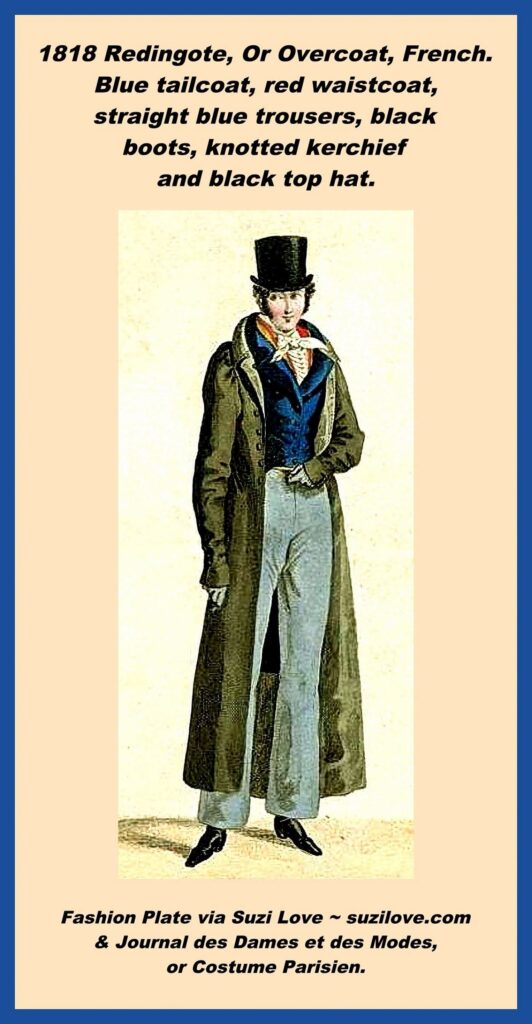
1818 Redingote, Or Overcoat, French. Blue tailcoat, red waistcoat, straight blue trousers, black boots, knotted kerchief and black top hat. Fashion Plate via Journal des Dames et des Modes, or Costume Parisien.
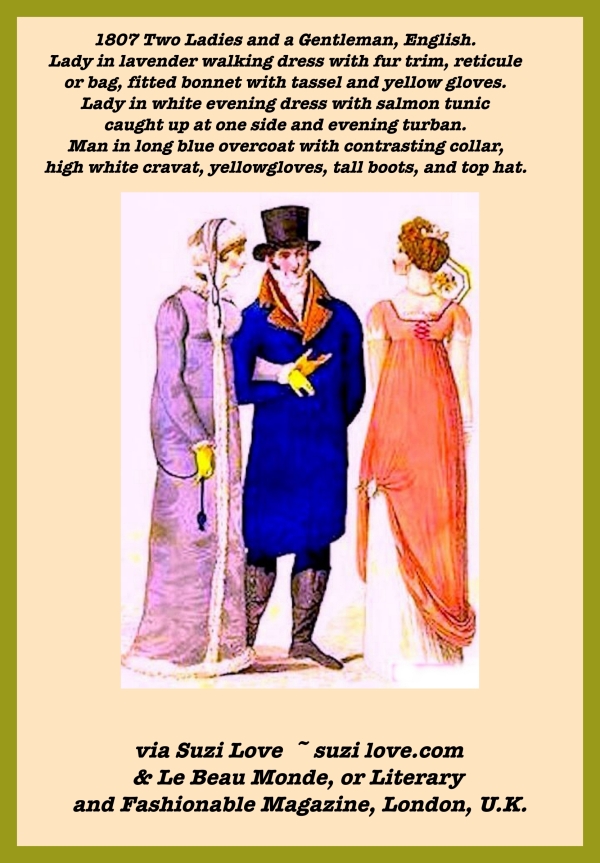
1807 Two Ladies and a Gentleman, English. Lady in lavender walking dress with fur trim, reticule or bag, fitted bonnet with tassel and yellow gloves. Lady in white evening dress with salmon tunic caught up at one side and evening turban. Man in long blue overcoat with contrasting collar, high white cravat, yellow gloves, tall boots, and top hat. Typical of the sort of outfits ladies and gentlemen in Jane Austen’s times would have worn while out walking, visiting friends or for an evening event, like a dinner party. A long coat, or Redingote or Pelisse for warmth when outdoors, and all matched with the essentials, day or night, of hats and gloves. via Le Beau Monde, or Literary and Fashionable Magazine, London, U.K.
1818 November ‘Fashionables Of 1818’ By George Cruikshank.Couple walk arm-in-arm with the man wearing Dandy costume of bell-shaped top-hat, trousers strapped under high-heeled boots without spurs and jauntily carried cane. Much shorter lady wears enormously high bonnet, striped over-dress over frilled white muslin, skirt above ankles, and carries a large ermine muff. Via British Museum, London, UK. britishmuseum.org (PD-Art)
These are the sort of outfits a couple would wear in Jane Austen’s times although these are exaggerated in caricatures to poke fun at the extremes of Regency fashion when women’s hats were so large and high that a lady was dwarfed by her devotion to fashion and a gentleman’s collar and neckcloth were so high he couldn’t turn his head to speak to the lady.
Top Hat Styles Chart during the 1800s, from the Regency Era through to the Victorian years. Most popular style was cone shaped and tall in height. Originally made of beaver and very short but later from silk and taller. Tall crown, widens at top, narrow brim turns up slightly at sides. https://books2read.com/SuziLoveFashionMen1800-1819
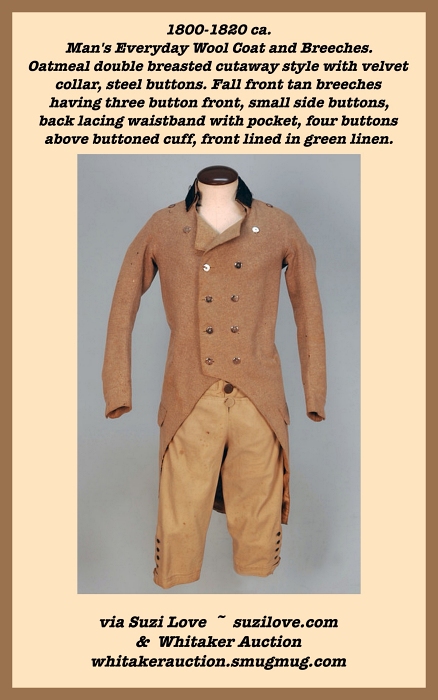
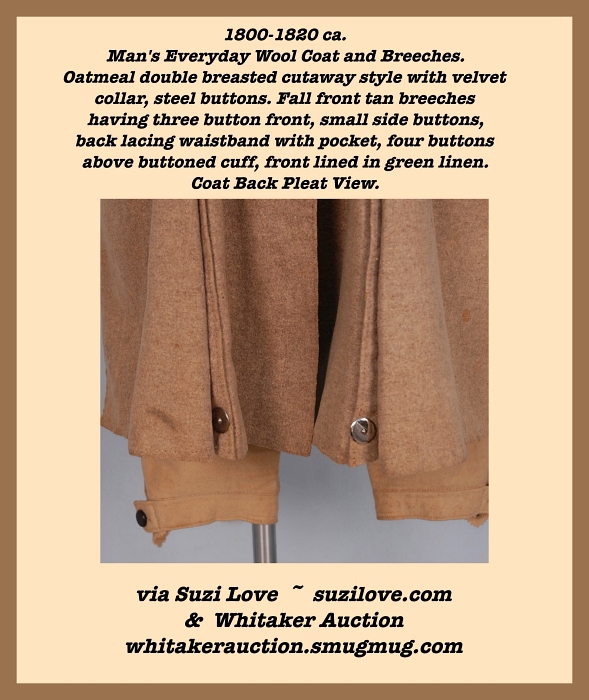
1800-1820 ca. Man’s Everyday Oatmeal Colored Wool Suit With Breeches. Can you picture Jane Austen’s male relatives and friends wearing this? Oatmeal colored double breasted cutaway style coat with velvet collar, steel buttons, rear flap pockets, back vent flanked by stitched down pleats having top and bottom button detail, glazed linen lining. Fall front tan breeches having three button front, small side buttons, back lacing waistband with pocket, four buttons above buttoned cuff, front lined in green linen. via Whitaker Auction whitakerauction.smugmug.com
1808 January Trio In Half Dress Walking Ensembles, English. Lady on left wearing a pink dress and green coat and carrying a reticule. Lady on right in a white trained dress, long draping shawl and fitted hat. Gentleman in a blue tailcoat, white vest, extra high white cravat, knee breeches, shoes, and black top hat. Fashion Plate via Le Beau Monde. The sort of outfits ladies and gentlemen in Jane Austen’s times would have worn while out walking, shopping, or going to visit friends.
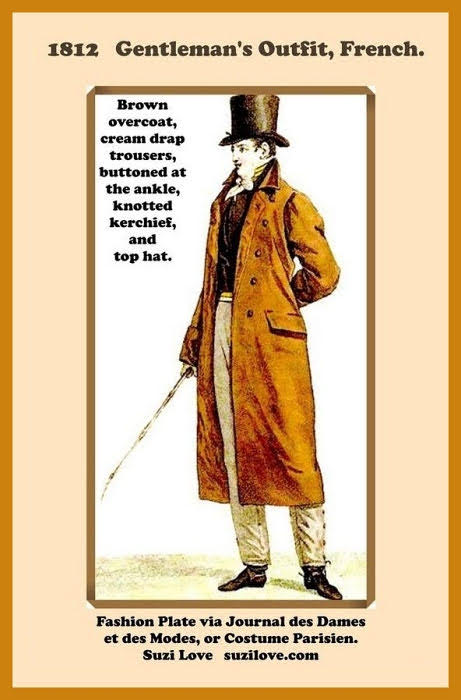
1812 Gentleman’s Outfit, French. Brown overcoat, or Redingote, with front pockets, cream Drap trousers buttoned at the ankle, knotted kerchief, top hat and holding a cane. Fashion Plate via suzilove.com and Journal des Dames et des Modes, or Costume Parisien. By 1812, men no longer wore complicated styles and extravagant fabrics. Men’s fashions had simplified and these practical and relaxed clothing items were the sort worn by Jane Austen’s male family and friends when out and about in town or on their daily excursions.
Definition Redingote Or Coat: French word developed from English words, riding coat. Long fitted outdoor coat worn over other garments for warmth. Originally made with several capes and trimmed with large buttons. French fashion plates call these coats Redingotes and they were worn by men, women, and children. English fashion plates call the coats a Pelisse, a Walking Dress, Promenade dress, or Carriage dress. Definition Drap: French equivalent for the English word cloth or stuff and generally applied to fabrics of wool or silk.
1818 September 18th Le Palais Royal de Paris, Or ‘A Peep at the French Monstrosities’. By George Cruikshank. Two English tourists, both dressed as dandies, walk arm-in-arm under the arcade of the Palais Royal, interested in the promenading courtesans. Two Frenchmen make more direct overtures to two women. Their dress is rather similar to that of the Englishmen, but the latter wear bell-shaped top-hats, while the Frenchmen have flower-pot shaped hats. An officer wearing a large cocked hat addresses a girl, and a man, said by Reid to be Irish, jovially accosts another. Some of the women are in evening-dress, others in street costume. Behind are iron railings between the supports of the roof; on one of these is the inscription ‘Caveau des Sauvages’. Published by: George Humphrey. via British Museum.
1807 January Couple In Morning Walking Ensembles, English. Lady in white dress with lemon pelisse or coat, fitted hat and interesting reticule, or bag. Gentleman in long black tailcoat over yellow breeches, high black boots with wide tan tops, yellow gloves, cane and top hat. via Le Beau Monde, or Literary and Fashionable Magazine, London, U.K.
These are the types of outfits worn by Jane Austen and contemporaries in England and shown in their English magazines.The same designs had probably already been seen in France, because English publishers obsessively copied French fashions despite the two countries being at war for many years. https://books2read.com/SuziLoveFashionWomen1805-1809