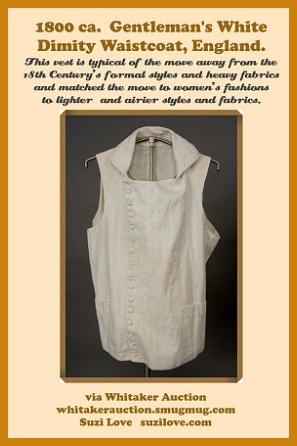
1800 ca. Gentleman’s White Dimity Waistcoat, England. This vest is typical of the move away from the 18th Century’s formal styles and fussy fabrics and matched the move of women’s fashions towards lighter and airier styles and fabrics. via Whitaker Auction whitakerauction.smugmug.com
Jane Austen Men’s Waistcoats: Waistcoats worn at the very beginning of the early 19th century generally had a straight bottom, double-breasted and with wide lapels. Not long after this, waistcoats began to be cut higher up to the waist in front so men during Jane Austen’s lifetime would have worn both styles.
1798 Gentleman’s Outfit, French. Long green overcoat with yellow buttons, tan gloves, black boots topped with yellow band, gloves with three seams across the back of the hand, high white cravat, black hat, fob at his waist and holding a cane. Fashion Plate via Journal des Dames et des Modes, or Costume Parisien.
1810 Couple In Walking Dress, French. Lady in a jade green Redingote, or coat, with paisley skirt, worn over a white dress with sleeves caught up, and hat tied under her chin. Man in a brown tailcoat, tight white pants that button down the sides, black hat and shoes and carrying a walking stick. Fashion Plate via Journal des Dames et des Modes, or Costume Parisien.
The sort of outfits a lady and gentleman in Jane Austen’s times would have worn while out walking, shopping, or going to visit friends.
Pelisse, or Walking Dress, or Redingote. The Fashion Dictionary description of a Redingote is (réd’ing-göt; red ing gote). Pronounced: red ing gote Woman’s long, fitted coat often cut Princess style and worn open in front to show off the dress underneath. Sometimes cut away in front. Originally made for men with several capes and trimmed with large buttons. French word developed from English words, riding coat. reefer. Single- or double-breasted, fitted, tailored, over-all coat usually made from sturdy fabric but in the British Regency Era a Pelisse was often made from a lighter fabric, such as cotton.
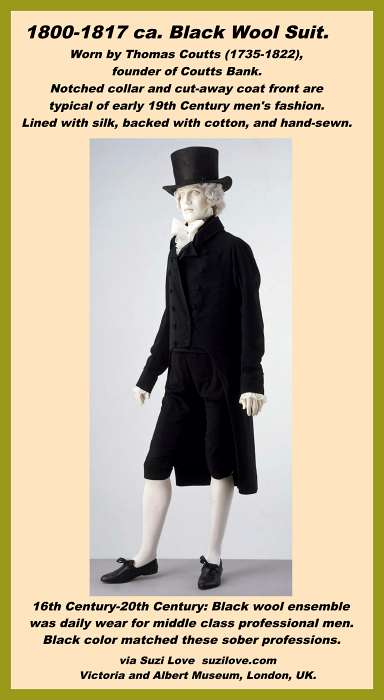
1800-1817 ca. Black Wool Suit, British. An ensemble made from black wool has been the uniform of the middle-class professional – doctor, lawyer, clergyman, academic, merchant, businessmen – since the late 16th century. This tradition continued through the 19th century and well into the 20th. The sombre color of this suit befits the sober profession of its wearer, Thomas Coutts (1735-1822), the founder of Coutts Bank. The notched collar and cut-away front of the coat reflect early-19th-century fashions. via Victoria and Albert Museum, London, UK. collections.vam.ac.uk. https://books2read.com/SuziLoveFashionMen1800-1819
This is the sort of suit that professional men in Jane Austen’s times would have worn, doctors, lawyers and clergymen. https://books2read.com/SuziLoveFashionMen1800-1819
1800-1817 ca. Black Wool Suit, British. An ensemble made from black wool has been the uniform of the middle-class professional – doctor, lawyer, clergyman, academic, merchant, businessmen – since the late 16th century. This tradition continued through the 19th century and well into the 20th. The sombre color of this suit befits the sober profession of its wearer, Thomas Coutts (1735-1822), the founder of Coutts Bank. The notched collar and cut-away front of the coat reflect early-19th-century fashions. via Victoria and Albert Museum, London, UK. collections.vam.ac.uk.1800-1817 ca. Professional Man's Typical Regency Ensemble Of Black Wool Suit, British. #JaneAusten #RegencyEra #Fashion https://books2read.com/SuziLoveFashionMen1800-1819 Share on X
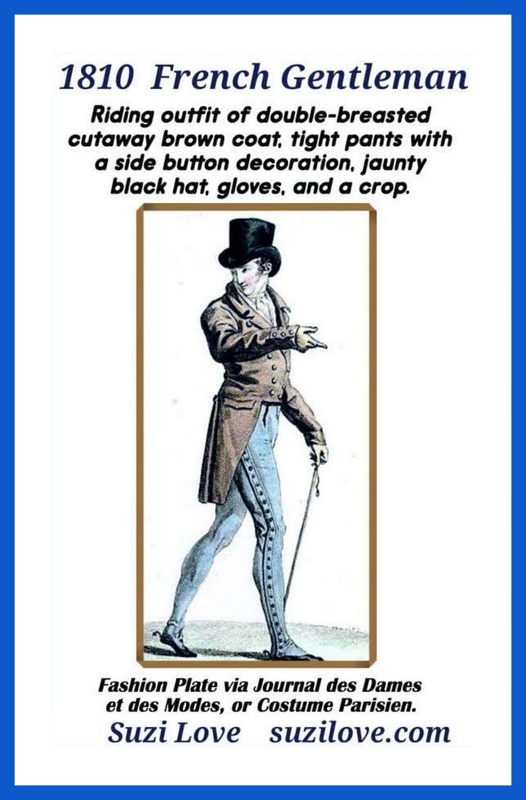
1810 French Gentleman. Riding outfit of double-breasted brown coat, tight pants with a side button decoration, jaunty black hat, gloves, and a crop. Fashion Plate via Journal des Dames et des Modes, or Costume Parisien.
In the early 1800s, men no longer wore complicated styles and extravagant fabrics. Men’s fashion simplified and became more conservative. A well cut tailcoat, vest, pantaloons and an immaculate cravat of beautiful white linen in the style of George Bryan, or Beau, Brummell. Clothes were a status symbol and indicated a man’s social position. These clothing items were the sort worn by Jane Austen’s male family and friends.