20th Century Early Easter Egg. Side 1. The Resurrection of Christ. The Descent into Limbo. Side 2. The Most Orthodox Prince St. Vladimir. Made By Lukutin Factory Russia. Papier-mache and silk, painted in oil gilded and lacquered.
were very popular gifts and objects of collecting among rich Russians at the turn of the 20th century. They were used for making necklaces, pendants and bracelets that were worn during the Easter Week according to the well-established traditions.
Imperial and private fabrics and works, best artists, jewelers and craftsmen took part in creating Easter souvenirs.
1906 Swan Imperial Faberge Surprise Easter Egg. Commissioned by Tzar Nicholas II and presented to the Dowager Empress Maria Feodorovna for her 40th wedding anniversary. Faberge Easter Egg, Russia.
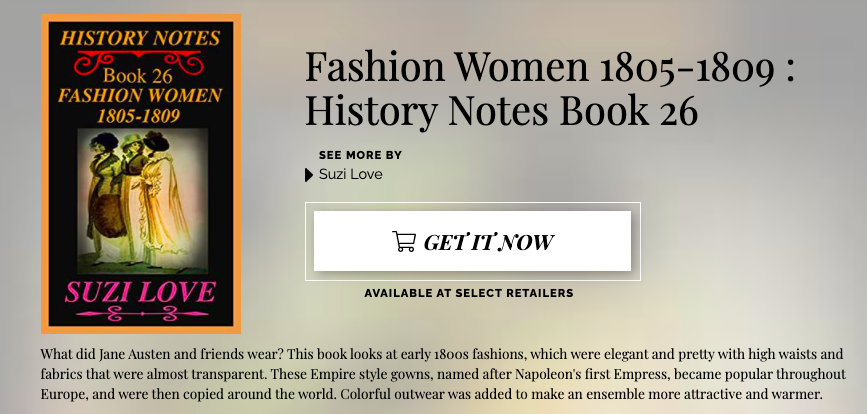
1807 Blue Walking Dress, French. Although this is a French fashion plate, this is the sort of dress that Jane Austen and her friends would have worn when walking together. Back bow, a train and black trim, a white hat with flowers and holding a looking glass. Fashion Plate via Journal des Dames et des Modes, or Costume Parisien.
Definition Empire Style Dress: High-waisted white gown defined women’s fashion during the Regency Era. ‘Empire’ is the name given to the period when Napoleon Bonaparte built his French Empire. High-waisted, loose gowns were adopted by the aristocracy as a symbol of turning away from the fussy, elaborate and expensive clothing worn in the 1700s.
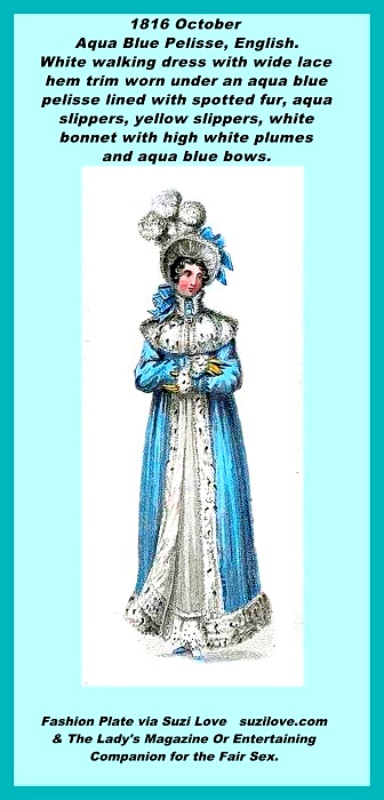
Definition Walking Dress: Worn for walking in a park or the country estate. This sort of outfit needed to be presentable and warm, but not overly accessorized.
1887 Resurrection Imperial Faberge Egg. Yellow gold, rock crystal, rose-cut-diamonds, pearls, brilliant diamonds and various colored enamels. One of Faberge’s masterpieces and is essentially a jewel.Â
The name Faberge is associated with the Russian Imperial family for whom most of the world’s most famous eggs were created. In 1870, Faberge inherited his father’s jewelry business and quickly became known for his brilliant designs. A display of his work and the gold medal he was awarded in Moscow’s Pan-Russian Exhibition of 1882 brought him to the attention of the Russian nobility.
After the Russian Revolution, the House of Faberge was nationalized by the Bolsheviks and the Faberge family fled to Switzerland where Peter Carl Faberge died in 1920. Several of the Faberge Imperial eggs are still missing.
19th Century Second Half. Paper Mache Easter Egg, Russian.#Easter Resurrection of Christ, Cathedral of Christ the Savior. via Hermitage Museum, Russia. hermitagemuseum.org
An imperial Easter egg presented by Alexander III to his wife, Empress Maria Fiodorovna, for Easter 1885. The Hen, was made by Faberge at the behest of Emperor Alexander III for Empress Maria Fedorovna in 1885, possibly to mark the 20th anniversary of their betrothral. It imitates a natural egg and is golden, covered with a white opaque enamel. Inside there is a surprise in the form of a chicken figurine which held in its beak a ruby egg (presently lost). Via The Hermitage Museum, Russia.
1890-1900s Porcelain Easter Egg. Inscription “Christ is risen!”. The Kornilov Brothers Factory, St Petersburg. Via Hermitage Museum Faberge Easter Egg, Russia. books2read.com/suziloveEaster
A porcelain Easter egg from the 1890–1900s featuring the inscription “Christ is risen!” was a traditional Russian Orthodox Easter gift. They were produced by both the Kornilov Brothers Factory and the Imperial Porcelain Factory in St. Petersburg. The State Hermitage Museum in St. Petersburg has a large collection of Imperial-era porcelain Easter eggs. These eggs were exchanged, hung on ribbons, or placed on stands during Easter as a symbol of life’s renewal. The words “Christ is Risen!” was a traditional Russian Easter greeting.
1804 Parliamentary Robes For Titled Men from the King downwards. 1804 Kearsley Complete Peerage of England, Scotland, Wales.
1804 Kearsley’s Complete Peerage. Google Books (PD-180)1804 Baron in his parliamentary robes. via Kearsley’s Complete Peerage. via Google Books (PD-200)1804 Viscount in his parliamentary robes. via Kearsley’s Complete Peerage. via Google Books (PD-200)1804 Earl in his parliamentary robes. via Kearsley’s Complete Peerage. via Google Books (PD-200)1804 Marquis in his parliamentary robes. via Kearsley’s Complete Peerage. via Google Books (PD-200)1804 Duke in his parliamentary robes. via Kearsley’s Complete Peerage. via Google Books (PD-200)1804 Table of Precedence of Women From Queen Downwards. From Kearsley's Complete Peerage. #RegencyEra #Peerage #BritishHistory #Royalty https://books2read.com/suziloveROver Share on XRL_1_D2D_Regency Overview RetailerLinks
https://books2read.com/suziloveROver
1930-1939 ca. Louis Vuitton Wardrobe Trunk. Monogrammed coat hangers, leather handle.1930-19391930-1939 ca. Louis Vuitton Steamer Trunk.18th Century Late – 19th Century Early. Hide covered, two tier traveling chest or box. Via Bonham’s Auctions.17th Century Iron Trunk With Locking Mechanism. 1900s Early Bags and Suitcases.
1st Dibs Auctions. 1859 ca. Packing Case or Trunk By Louis Vuitton, French. Iron trim, wooden slats, brass studs and locks.17th – 20th Centuries Luggage For Travel. #RegencyEra #VictorianEra #EdwardianEra books2read.com/SuziLoveTravel Share on XHN_10_D2D_RetailerBuyLink_ History Notes Book 10 books2read.com/SuziLoveTravel