“A woman is like a tea bag. You can’t tell how strong she is until you put her in hot water.” By American First Lady Eleanor Roosevelt.


“A woman is like a tea bag. You can’t tell how strong she is until you put her in hot water.” By American First Lady Eleanor Roosevelt.
19th Century Early Chemise or Shift, American. Linen and embroidery. Chemise: Worn next to the skin under stays or corset. via Metropolitan Museum New York City, U.S.A. metmuseum.org
Chemise Or Shift: Sleeveless, mid-calf length garment of white cotton or muslin was worn next to the skin under stays or corset. Called ‘Shift’ from early Georgian (1700-1750) until Late Georgian (1750-1790) to replace ‘Smock’. By 1800, name replaced by ‘Chemise’.

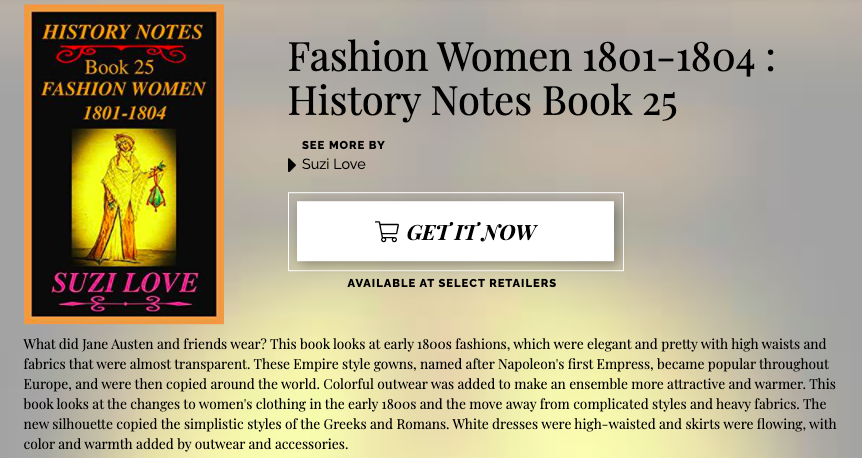
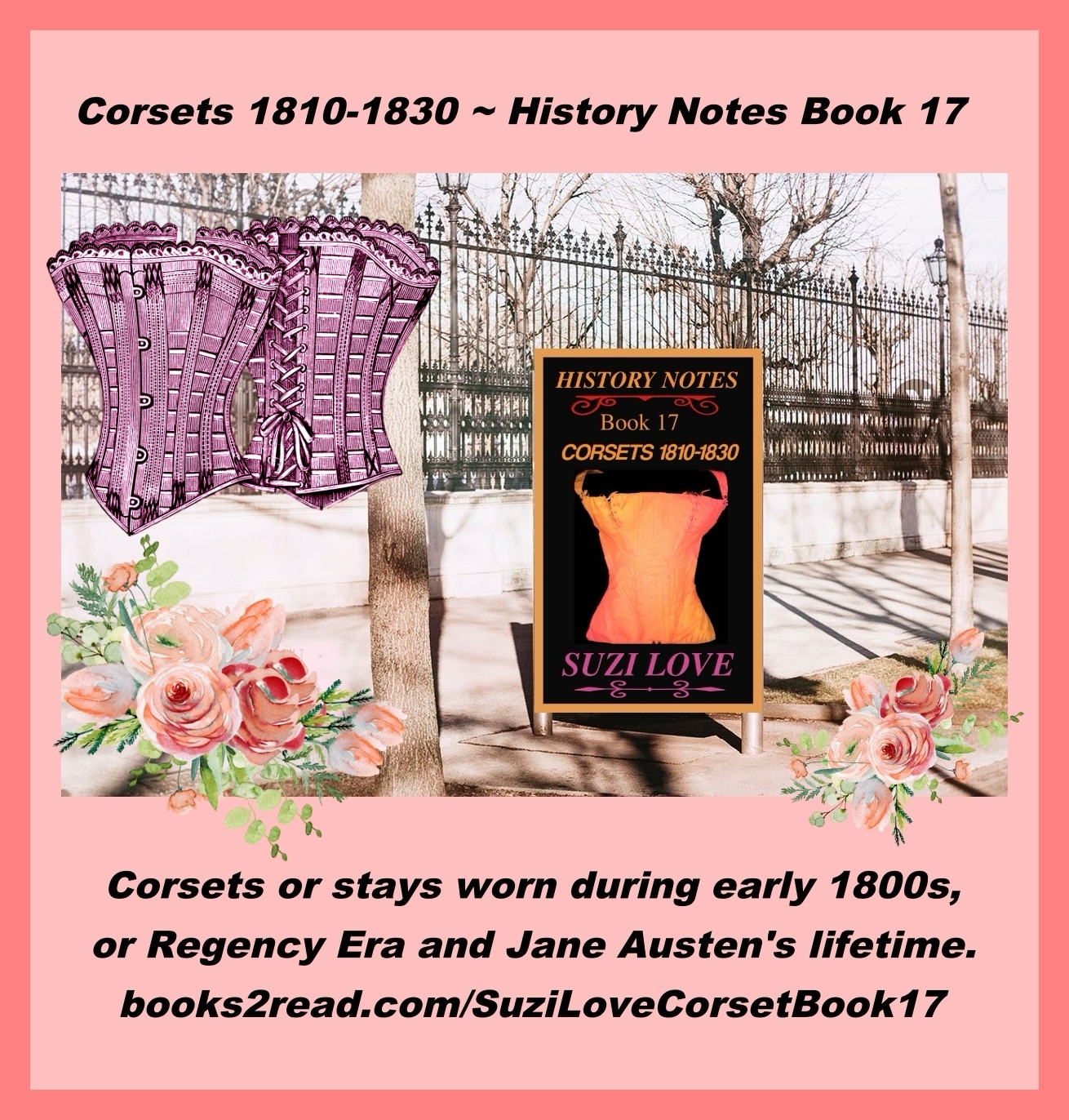
This book shows how corsets changed to fit well under clothing, give maximum support and comfort. Corsets pushed up breasts and showed off the bust line beneath a square-cut and low-cut neckline as in the early 1800s, or Regency years. Jane Austen and her female and friends wore these corsets. Corsets or stays worn during the early 1800s, or Jane Austen’s lifetime. https://books2read.com/SuziLoveCorsetBook17


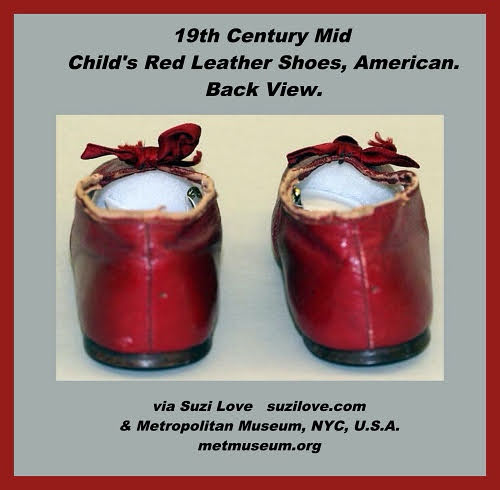
19th Century Mid Child’s Red Leather Shoes, American. Bow decoration on fronts.via Metropolitan Museum New York City, U.S.A. metmuseum.org

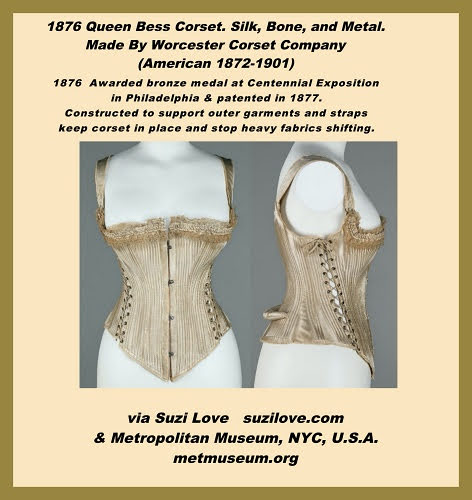
1876 ‘Queen Bess’ Corset By Worcester Company, American. Made of silk, bone, and metal. Named ‘Queen Bess’, this corset was awarded the bronze medal at the Centennial Exposition in Philadelphia in 1876 and was patented in 1877. A well documented piece, it is unique in its design, which has been carefully constructed to support the wearer’s outer garments. The straps would assist in keeping the corset in place and hinder any shifting due to the heavy fabrics, and the bustle roll at back would ease any strain the wearer might experience from the excessive weight of the skirt. Credit Line:Brooklyn Museum Costume Collection at The Metropolitan Museum of Art, Gift of the Brooklyn Museum, 2009; Gift of E. A. Meister, 1950 Accession Number:2009.300.3496a–e
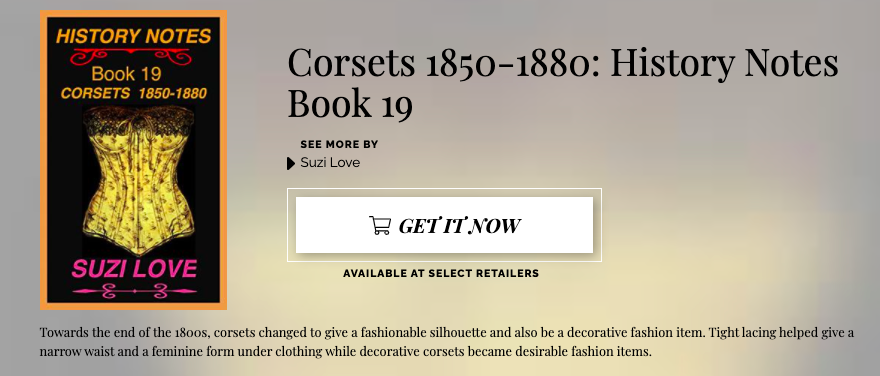
Corsets 1850-1880 History Notes Book 19 Towards the end of the 1800s, corsets changed to give a fashionable silhouette and be a decorative fashion item. Tight lacing helped give a narrow waist and a feminine form under clothing while decorative corsets became desirable fashion items. Victorian corsets for small waists and fashionable silhouettes. Corsets during the Victorian Era, or late 1800s, tightened to give tiny waists and fashionable silhouettes.
1876 ‘Queen Bess’ Silk Corset By Worcester Company, American. #VictorianFashion #VictorianEra #Corset #Worcester https://books2read.com/SuziLoveCorsetBook19 Share on X