1906 Swan Imperial Faberge Surprise Easter Egg. Commissioned by Tzar Nicholas II and presented to the Dowager Empress Maria Feodorovna for her 40th wedding anniversary. Faberge Easter Egg, Russia.
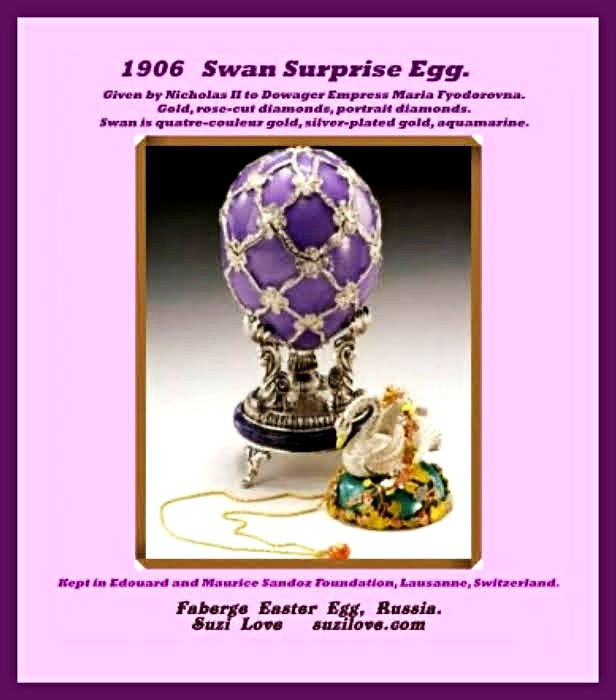


1906 Swan Imperial Faberge Surprise Easter Egg. Commissioned by Tzar Nicholas II and presented to the Dowager Empress Maria Feodorovna for her 40th wedding anniversary. Faberge Easter Egg, Russia.
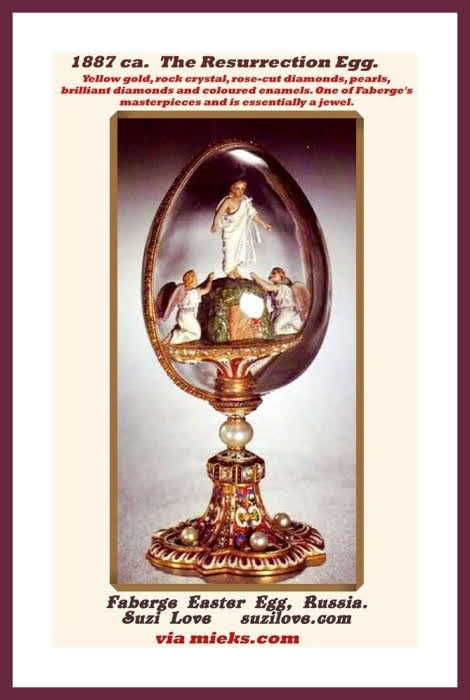
1887 Resurrection Imperial Faberge Egg. Yellow gold, rock crystal, rose-cut-diamonds, pearls, brilliant diamonds and various colored enamels. One of Faberge’s masterpieces and is essentially a jewel.
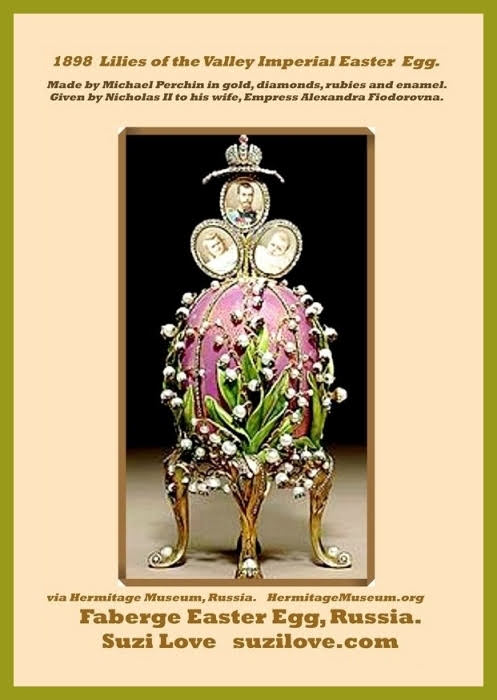
1898 Lilies Of The Valley Imperial Faberge Easter Egg, Russia. An imperial Easter egg presented by Nicholas II to his wife, Empress Alexandra Fiodorovna, for Easter 1898. Gold, diamonds, rubies and pink guilloché enamel with lily-of-the-valley flowers (pearls/diamonds) and contains a hidden portrait. From The Fabergé firm, St Petersburg made by Michael Perchin. Height is 20 cm opened. Via Collection of the Fund ‘The Link of Times’.
The name Faberge is associated with the Russian Imperial family for whom most of the world’s most famous eggs were created. In 1870, Faberge inherited his father’s jewelry business and quickly became known for his brilliant designs. A display of his work and the gold medal he was awarded in Moscow’s Pan-Russian Exhibition of 1882 brought him to the attention of the Russian nobility.
In 1885, Faberge was commissioned by Tsar Alexander III of Russia to create an Easter egg for his wife, the Empress Maria Fedorovna. This became known as The Hen Egg, the first Imperial Faberge Egg, and is made of gold. The Empress was so happy with the gift that Alexander appointed Fabergé a ‘Goldsmith by Special Appointment to the Imperial Crown’ and the following year commissioned another egg. From then on, Faberge was given complete freedom with future Imperial designs which become even more elaborate every year. A famous Fabergé egg is one of sixty eight jeweled eggs made by Fabergé and his assistants for the Russian Tzars and private collectors between 1885 and 1917.
After the Russian Revolution, the House of Faberge was nationalized by the Bolsheviks and the Faberge family fled to Switzerland where Peter Carl Faberge died in 1920. Several of the Faberge Imperial eggs are still missing.
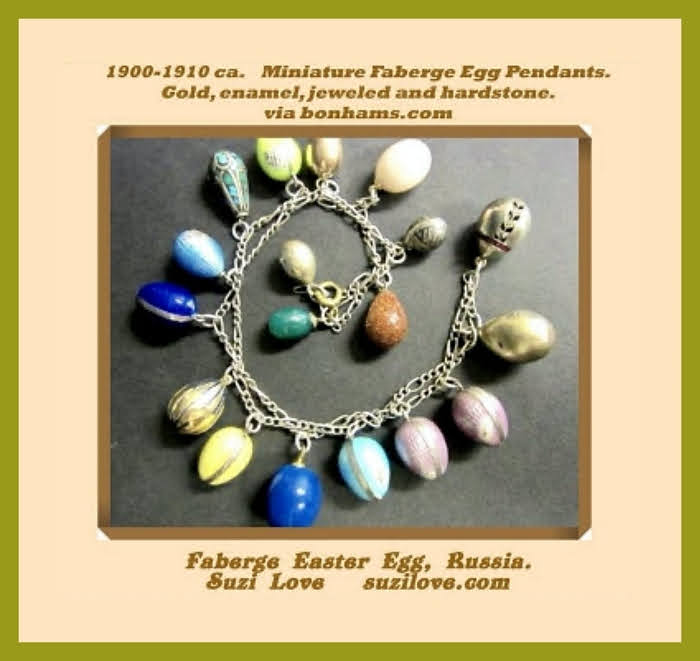
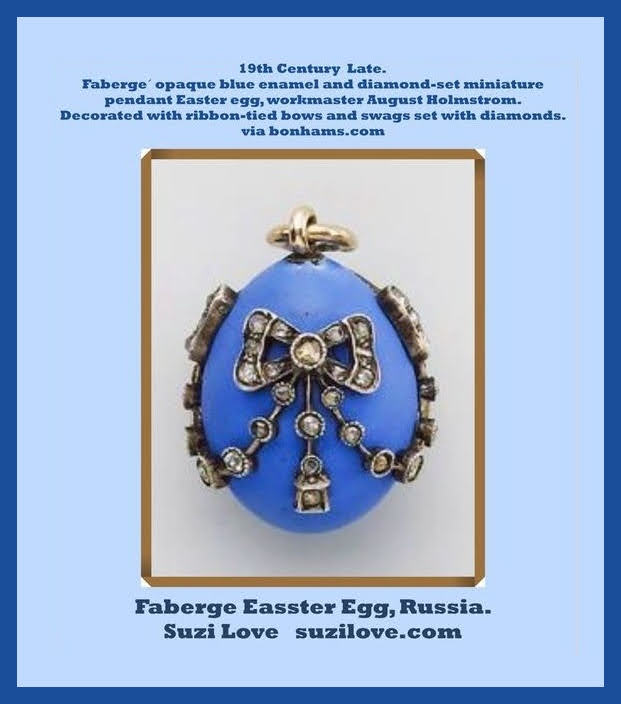
1900s Early Gorgeous Faberge Egg Pendants From Russia. Giving Eggs in spring was a pagan tradition adopted by early Christians. The old tradition was to give dyed chicken eggs and later it became chocolate eggs. The act of Egg giving is popular in Eastern Europe and this tradition indicated the birth of something new. As the Russian monarchy were Russian orthodox Christians, the Tsar wanted to surprise his wife with a jewelled Egg as a symbol of his love and affection. The gift pleased the Tsar’s family so much that his immediate circle, and the wider public, began the tradition of a Faberge from 1885 to 1917 until the revolution destroyed the Royalty.


1900s Early Gorgeous Faberge Egg Pendants Made In Russia. 2.
The name Faberge is associated with the Russian Imperial family for whom most of the world’s most famous eggs were created. In 1870, Faberge inherited his father’s jewelry business and quickly became known for his brilliant designs. A display of his work and the gold medal he was awarded in Moscow’s Pan-Russian Exhibition of 1882 brought him to the attention of the Russian nobility.
In 1885, Faberge was commissioned by Tsar Alexander III of Russia to create an Easter egg for his wife, the Empress Maria Fedorovna. This became known as The Hen Egg, the first Imperial Faberge Egg, and is made of gold. The Empress was so happy with the gift that Alexander appointed Fabergé a ‘Goldsmith by Special Appointment to the Imperial Crown’ and the following year commissioned another egg. From then on, Faberge was given complete freedom with future Imperial designs which become even more elaborate every year. A famous Fabergé egg is one of sixty eight jeweled eggs made by Fabergé and his assistants for the Russian Tzars and private collectors between 1885 and 1917.
After the Russian Revolution, the House of Faberge was nationalized by the Bolsheviks and the Faberge family fled to Switzerland where Peter Carl Faberge died in 1920. Several of the Faberge Imperial eggs are still missing.
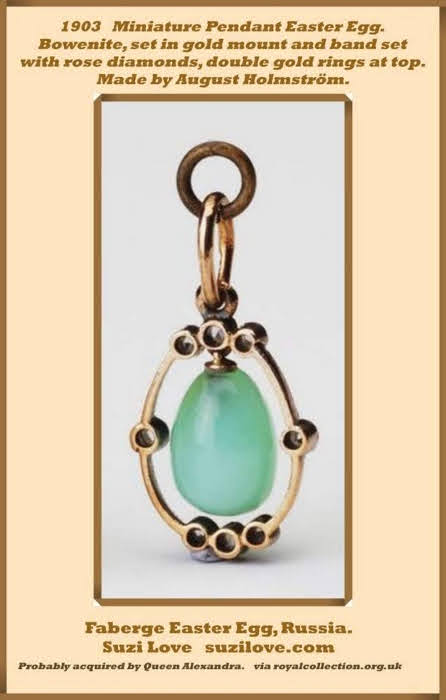
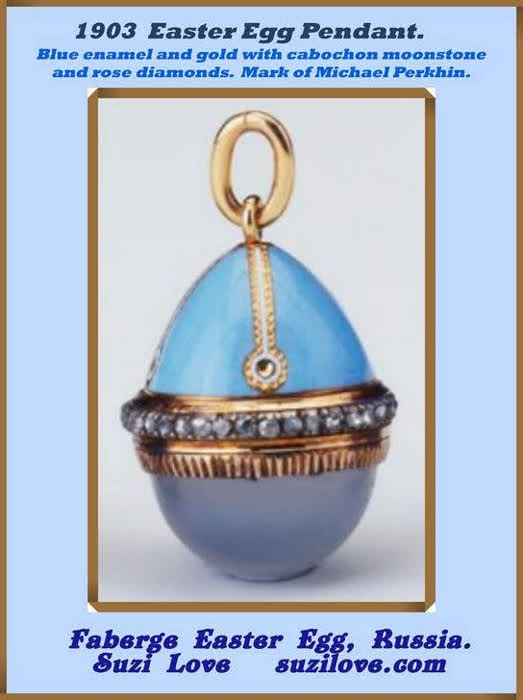
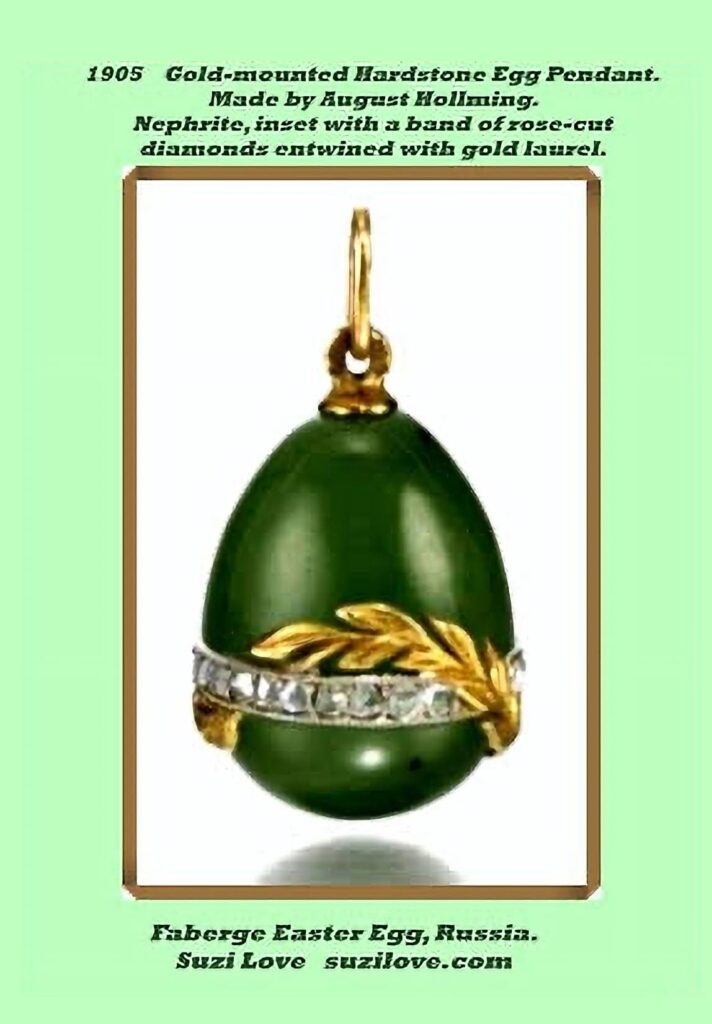
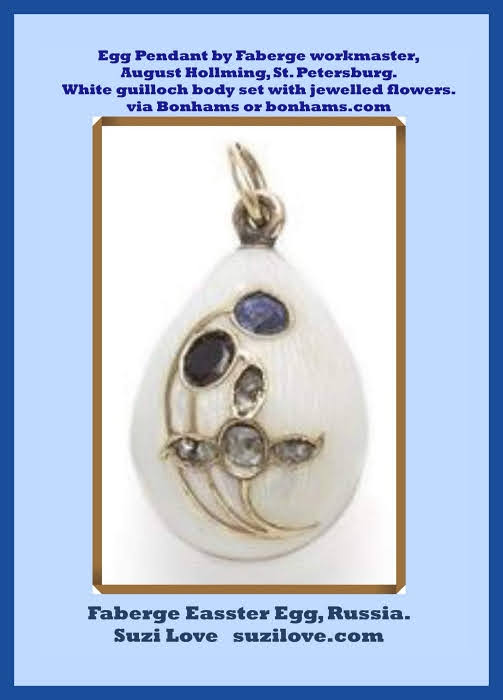

1885 The Hen Egg, Imperial Faberge egg, Russia. Gold, rubies and enamel. Height: 6.4 cm. Made by The Fabergé firm, St Petersburg
An imperial Easter egg presented by Alexander III to his wife, Empress Maria Fiodorovna, for Easter 1885. The Hen, was made by Faberge at the behest of Emperor Alexander III for Empress Maria Fedorovna in 1885, possibly to mark the 20th anniversary of their betrothral. It imitates a natural egg and is golden, covered with a white opaque enamel. Inside there is a surprise in the form of a chicken figurine which held in its beak a ruby egg (presently lost). Via The Hermitage Museum, Russia.

1916 Steel Military Surprise Faberge Easter Egg, Russia. Gift from Nicholas II to his wife Tzaritsa Alexandra Fyodorovna. Surprise is a miniature painting on an easel of the Tzarin planning with his generals in field. Faberge Easter Egg, Russia.
The name Faberge is associated with the Russian Imperial family for whom most of the world’s most famous eggs were created. In 1870, Faberge inherited his father’s jewelry business and quickly became known for his brilliant designs. A display of his work and the gold medal he was awarded in Moscow’s Pan-Russian Exhibition of 1882 brought him to the attention of the Russian nobility.
In 1885, Faberge was commissioned by Tsar Alexander III of Russia to create an Easter egg for his wife, the Empress Maria Fedorovna. This became known as The Hen Egg, the first Imperial Faberge Egg, and is made of gold. The Empress was so happy with the gift that Alexander appointed Fabergé a ‘Goldsmith by Special Appointment to the Imperial Crown’ and the following year commissioned another egg. From then on, Faberge was given complete freedom with future Imperial designs which become even more elaborate every year. A famous Fabergé egg is one of sixty eight jeweled eggs made by Fabergé and his assistants for the Russian Tzars and private collectors between 1885 and 1917.
After the Russian Revolution, the House of Faberge was nationalized by the Bolsheviks and the Faberge family fled to Switzerland where Peter Carl Faberge died in 1920. Several of the Faberge Imperial eggs are still missing.

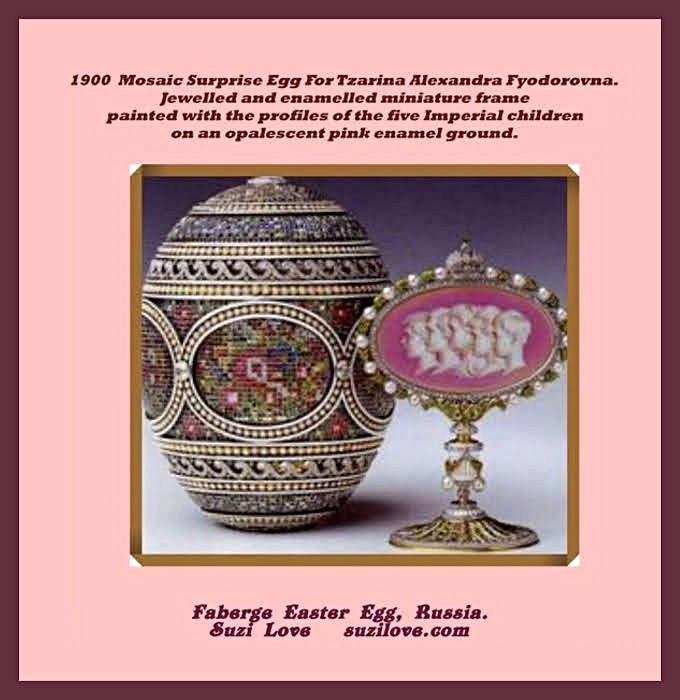
1900 Mosaic Faberge Surprise Egg, Russia. For Tzarina Alexandra Fyodorovna The miniature frame is painted with the profiles of the five Imperial-Russian children on an opalescent pink enamel ground. Faberge Easter Egg, Russia.
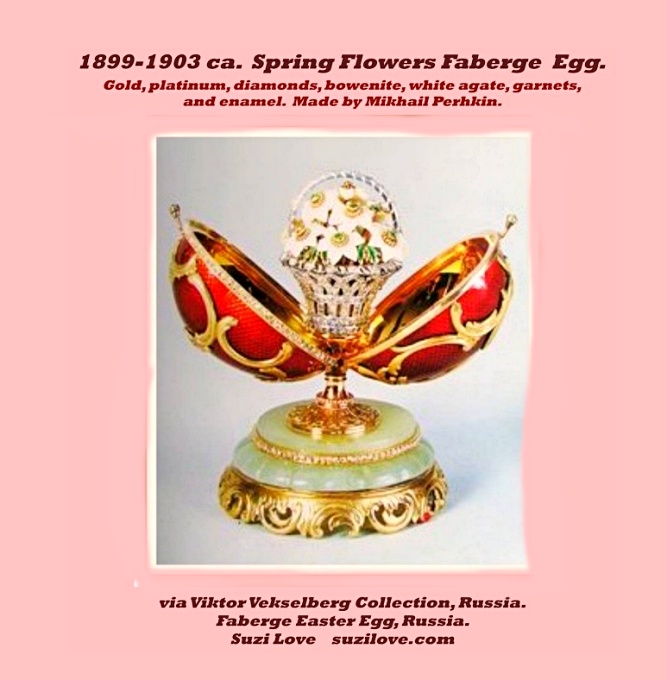
1899-1903 ca. Spring Flowers Imperial Surprise Faberge Easter Egg. Gold, platinum diamonds, bowenite, white agate, demantoid, garnets, and enamel. By Mikhail Perhkin. Via Viktor Vekselberg Collection in Russia. Faberge Easter Egg, Russia. Faberge Easter Egg, Russia.
1911 Orange Tree, or, Bay Tree Faberge Imperial Easter Egg. Gift to Maria from her son. Automaton nightingale emerges and sings when the correct orange is turned. Gold, jade, diamonds, vitrines, amethysts, rubies, pearls, agates, and bird has feathers. Faberge Easter Egg, Russia.
The name Faberge is associated with the Russian Imperial family for whom most of the world’s most famous eggs were created. In 1870, Faberge inherited his father’s jewelry business and quickly became known for his brilliant designs. A display of his work and the gold medal he was awarded in Moscow’s Pan-Russian Exhibition of 1882 brought him to the attention of the Russian nobility.
