Policing in the 17th and 18th centuries – one unarmed able-bodied citizen in each parish a man was appointed or elected annually to serve for a year unpaid as parish constable.
Worked in co-operation with the local Justices in observing laws and maintaining order.
In towns, responsibility for the maintenance of order was conferred on the guilds
Later conferred on other specified groups of citizens
These supplied bodies of paid men, known as The Watch
The Watch guarded the gates and patrolled the streets at night
Huge social and economic changes and increases in town populations meant parish constables and Watch systems couldn’t cope.
In 1812, 1818 and 1822, Parliamentary committees investigated crime and policing.
Impotence of the law-enforcement machinery was a serious menace
Conditions became intolerable and led to the formation of the New Police
The Metropolitan Police
Established by an Act of Parliament in 1829 by Sir Robert Peel
Peel appointed 2 Commissioners
Appointed 895 Constables, 88 Sergeants, 20 Inspectors and 8 Superintendents.
Superseded the local Watch in the London area but the City of London was not covered.
Numbers increased
Grew to include the Greater London area (excluding the City of London)
Included parts of the Home Counties and all Royal Naval Dock Yards throughout the country.
First officer was given the warrant number ‘1’
Today the service is reaching near to a quarter million
The warrant number is unique to the officer
Different from the shoulder number which changes as the officer moves stations. Scotland Yard
Colonel Charles Rowan and Richard Mayne organized and designed the New Police
The two Commissioners occupied a private house at 4, Whitehall Place
The back opened on to a courtyard and used as a police station
This address led to the headquarters of the Metropolitan Police being known as Scotland Yard.
Sir Robert Peel, 2nd Baronet, (5 February 1788 – 2 July 1850) British Conservative statesman who served twice as Prime Minister of the United Kingdom, Chancellor of the Exchequer, and Home Secretary. Regarded as the father of modern British policing as he founded the Metropolitan Police Service.
Other Police organizations
Some older police establishments remained outside control of the Metropolitan Police Office
The Bow Street Patrols, mounted and foot, commonly called the Bow Street runners.
Police Office constables attached to the offices of, and under the control of, the Magistrates.
The Marine or River Police.
By 1839 all these establishments had been absorbed by the Metropolitan Police Force.
The City of London Police was set up in 1839 and is an independent force to this day.
1805-1820 ca. Combination Shoe and Patten, Or Overshoe. Raises foot off the ground but still elegant enough to be genteel. Very practical but not to everyone’s taste. When Jane Austen and her family and friends went walking in the country, the ground was often very wet due to England’s high rainfall and snowfall so pattens were used to keep shoes and the hems of clothing out of the mud.
Only one of this pair of shoes survives. It effectively combines shoe and patten (overshoe) in one, so raising the foot off the ground but remaining sufficiently elegant to be considered genteel. This type of shoe was very practical but not to everyone’s taste. In 1840 The Shoemaker described it as going out of fashion partly because it looked ‘masculine for the chaster taste of the wearer’. via Victoria and Albert Museum, London, UK. collections.vam.ac.uk
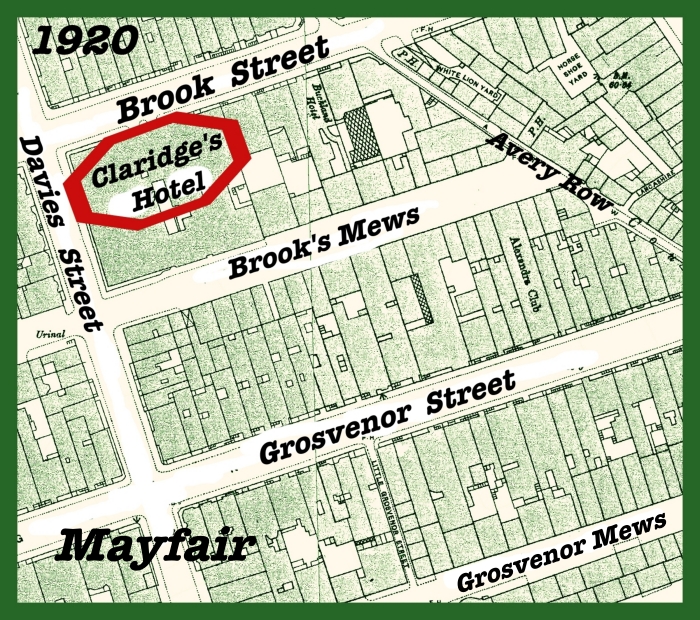
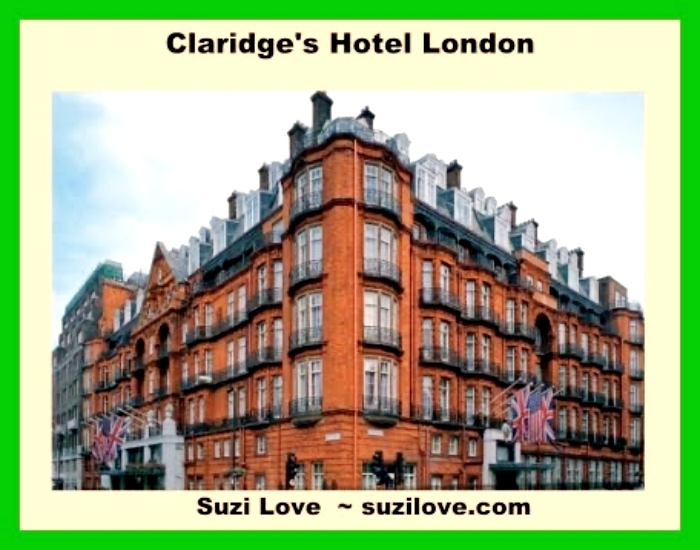
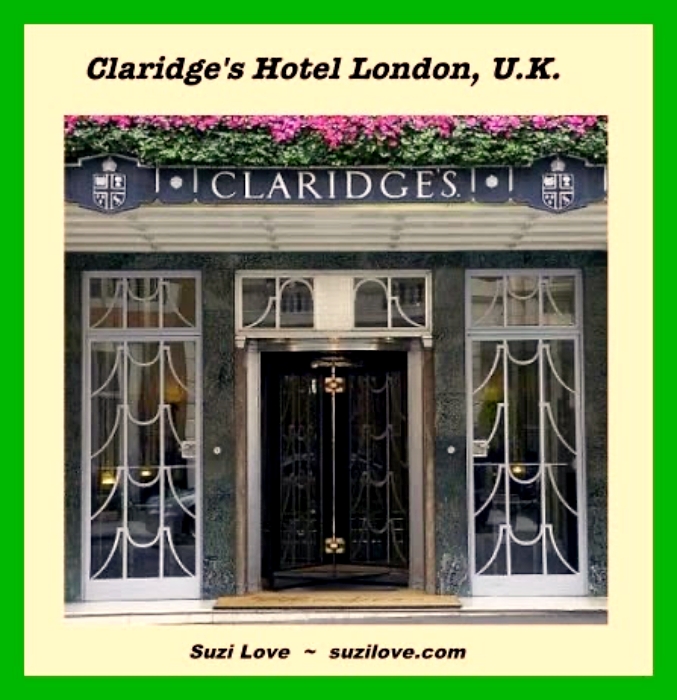
Claridge’s Hotel – London’s Historic Places Claridge’s was founded in 1812, during the Regency Era, as Mivart’s Hotel at 51 Brook Street, Mayfair, London, UK.
Lord William Beauclerk leased the terrace house from the Grosvenor Estate with permission to turn it into a hotel run by James Edward Mivart, the anglicized name for French chef Jacques Mivart. By 1838, the hotel grew to buy five consecutive houses along Brook Street, knocking down the walls to create one large hotel and Mivart prospered by introducing English county families to subtle French cooking to replace their traditional stodgy fare. Mivart designed the hotel for guests who wished to stay longer, so apartments were let by the month to foreign royalty and nobility who enjoyed the ambiance of the well-run hotel yet had the privacy of their own suites. The Prince Regent, who succeeded to the throne as King George IV in 1820, had a suite of rooms permanently reserved for him so he could discreetly carry on his playboy lifestyle.
In 1827, The Morning Post noted that Mivart’s was the fashionable rendezvous for the high Corps Diplomatique. In 1854, the hotel was sold to Mr and Mrs Claridge who ran a separate hotel at 49 Brook Street. They combined the two operations to trade as “Mivart’s at Claridge’s” until, after Mivart’s death, the hotel changed its name to Claridge’s in 1856, adding “late Mivart’s” underneath.
In 1860, Queen Victoria and Prince Albert visited the Empress Eugènie of France, who had made Claridge’s her winter quarters, and Queen Victoria was so impressed that she wrote to her uncle, Leopold I, King of the Belgians, in glowing terms of Claridge’s. The hotel became so connected to royalty it was called an “extension to Buckingham Palace”.including the Grand Duke Alexander of Russia and King William III of the Netherlands, until by 1853, The Times decided London had just three first-class hotels- Mivart’s, The Clarendon in Bond Street and Thomas’s in Berkeley Square.
In 1881, William Claridge’s failing health forced them to sell to a consortium, but the hotel consisted of several private houses and couldn’t be upgraded to compete with purpose built hotels cropping up all over London. The Savoy for example, built in 1889, offered lifts to all floors, electricity, en suite bathrooms and the best chef in Europe, Auguste Escoffier. So in 1894, Richard D’ Oyly Carte, founder of the rival Savoy Hotel, purchased Claridge’s and commissioned CW Stephens, designer of Harrods, to rebuild the hotel from the ground up. The new Claridge’s opened in November 1898.
1897 Claridge’s Hotel, Mayfair, London, U.K. A perspective view of the new building showing the front entrance in Brook Street and the return front in Davies Street. Drawn by C. W. Stephens, architect.
After World War I, Claridge’s flourished due to demand from aristocrats who no longer maintained a London house and Carte’s son, Rupert D’ Oyly Carte, added a new extension. During World War II, Peter II of Yugoslavia and his wife spent their exile at Claridge’s until on 17th June 1945, suite 212 was ceded by the UK to Yugoslavia for a single day to allow their heir, Crown Prince Alexander, to be born on Yugoslav soil.
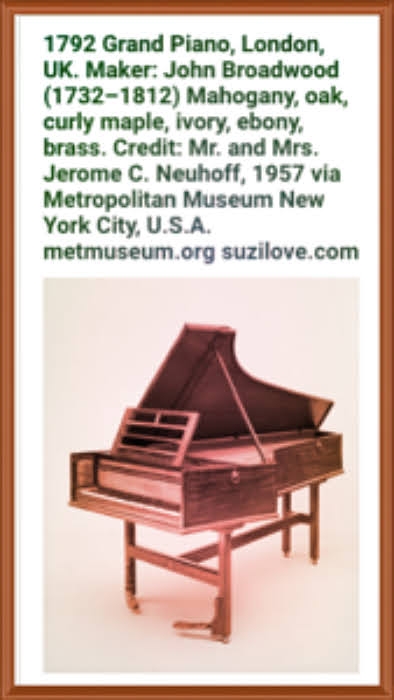
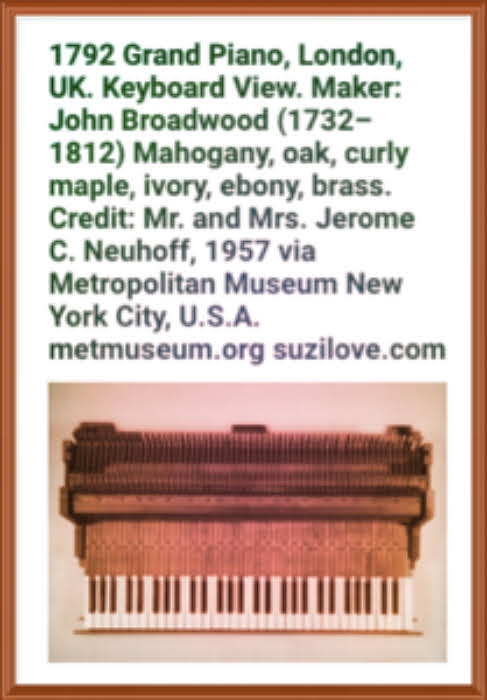
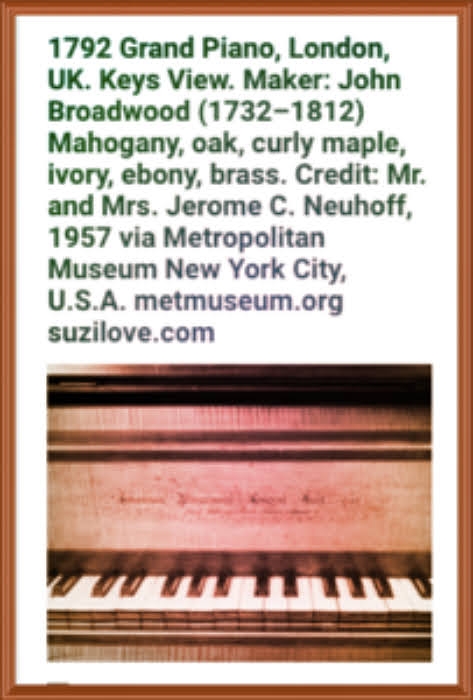
1792 Grand Piano, London, UK. Maker John Broadwood (1732–1812) Mahogany, oak, curly maple, ivory, ebony, brass. Credit: Mr. and Mrs. Jerome C. Neuhoff, 1957 via Metropolitan Museum New York City, U.S.A. metmuseum.org books2read.com/suziloveMusicPiano
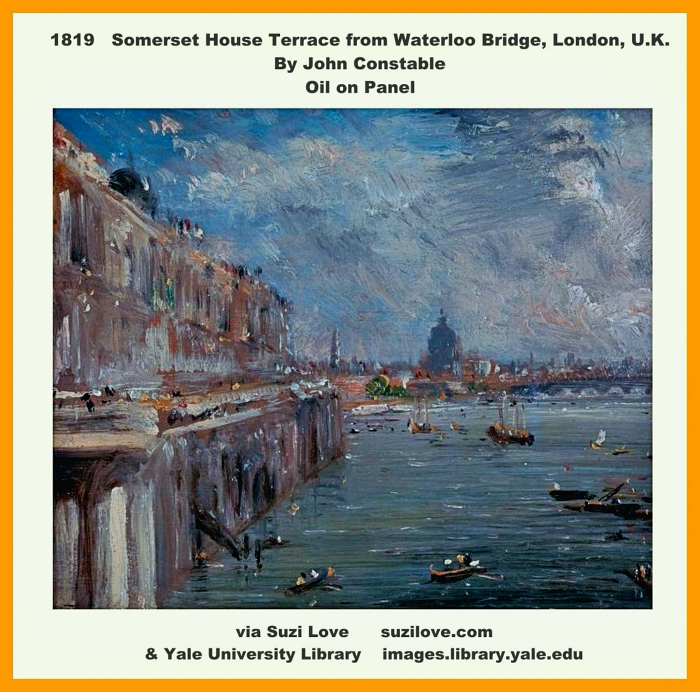
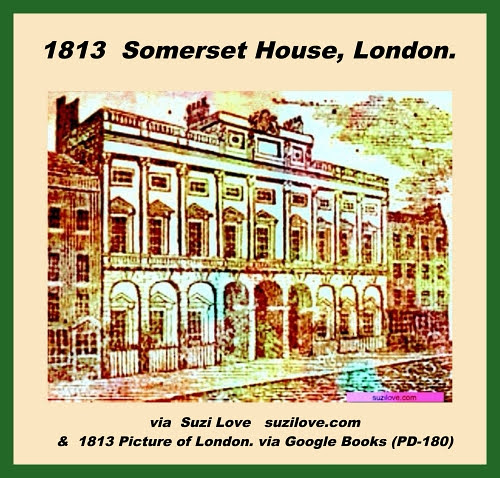
Somerset House, London, UK. London’s Best Places to Visit. Home to Royal Academy and The Great Institutions.
Demolition of the old house, between the Strand and the River Thames, began in 1775 and continued in stages as the new Somerset House was constructed around it. When the new building rose from the rubble, the Royal Academy, which had been one of the last occupants of the old Somerset House, became one of the first occupants of the apartments which fronted the Strand, providing tangible continuity between the old and the new.
Timeline
1547 Edward Seymour, Lord Protector and Duke of Somerset, starts building a palace for himself on the banks of the Thames
1552 Seymour is executed at the Tower of London; ownership of his palace, nearly complete, passes to the Crown
1553 Aged 20, Princess Elizabeth moves to Somerset House; she lives there until 1558, when she’s crowned Queen Elizabeth I
1603 Anne of Denmark, wife of James I of England (James VI of Scotland), moves to Somerset House, which is renamed Denmark House in her honour
1604 The Treaty of London, ending the 19-year Anglo-Spanish War, is negotiated and signed at Denmark House
1609 Anne of Denmark invites Inigo Jones and other architects to redesign and rebuild parts of the palace; work continues until her death in 1619
1625 Charles I is crowned king; his wife, Henrietta Maria of France, commissions Jones and others to undertake more construction and renovation work, including a lavish new Roman Catholic chapel completed in in 1636
1642 The English Civil War begins; soon afterwards, General Thomas Fairfax takes over the palace as the headquarters for the Parliamentary Army
1649 The Civil War ends and Charles I is executed; Parliament tries and fails to sell Denmark House, but successfully sells its contents for the then-huge sum of £118,000
1652 Inigo Jones dies at Denmark House
1660 After Charles II, her son, is crowned king at the start of the Restoration, Henrietta Maria returns to Denmark House; more new construction follows
1665 The Plague sweeps London; Henrietta Maria moves back to France, where she dies in 1669
1666 The Great Fire of London destroys much of the City of London, but stops just short of Denmark House
1685 Charles II dies and his wife, Catherine of Braganza, moves into Denmark House; Sir Christopher Wren oversees yet more construction and renovation work
1693 Catherine of Braganza leaves Denmark House, the last royal to live in the palace
early 1700s Denmark House is used as grace-and-favour apartments, offices, storage and stables
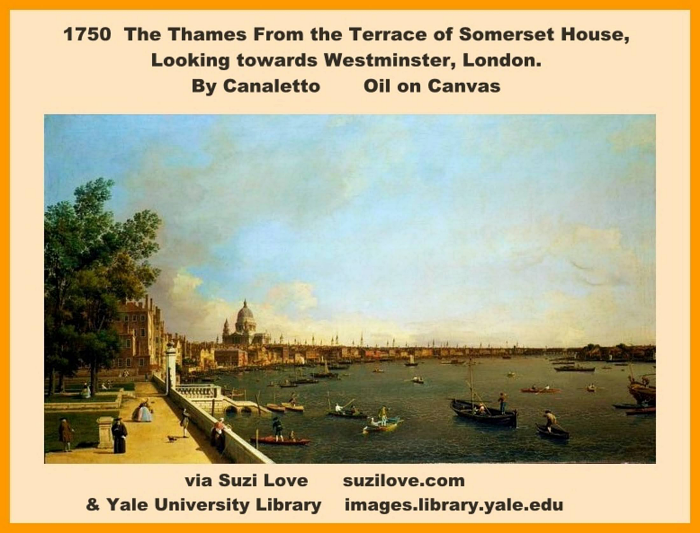
c.1750 Canaletto paints two views from the terrace
1775 After decades of neglect, the original Somerset House is demolished; architect William Chambers immediately starts work on its replacement
1779 The Royal Academy of Arts becomes the first resident of new Somerset House in what’s now known as the North Wing
1780 The Royal Society and the Society of Antiquaries take up residence in the North Wing; Somerset House hosts the first Royal Academy Exhibition
1786 The Embankment Building, known today as the South Wing, is completed; the East and West Wings are completed two years later
1789 The Navy Board completes its move to Somerset House and eventually occupies one-third of the site; the Stamp Office, responsible for taxing newspapers and other documents, joins the board in the South Wing
1795 William Chambers, then aged 72, retires; James Wyatt replaces him as the building’s architect
1801 The new Somerset House is deemed complete, its construction having cost a mammoth £462,323
1829 Sir Robert Smirke starts work on King’s College, which opens in 1831 and is finally completed in 1835
1836 The General Register Office, responsible for births, deaths and marriages, is established here
1837 One year after the final Royal Academy Exhibition at Somerset House, the academy moves to Burlington House on Piccadilly
1849 Having merged in 1834, the Stamp Office and the Board of Taxes join with the Board of Excise to form the Inland Revenue, which remains in residence for more than 150 years
1856 Seven years after James Pennethorne started work on its design, the New Wing is completed
1857 The Royal Society moves out of Somerset House to join the Royal Academy of Arts at Burlington House; the Society of Antiquaries follows 17 years later
1864 Work begins on the Victoria Embankment, designed by Sir Joseph Bazalgette; the embankment is completed in 1870
1873 The Admiralty leaves Somerset House; its offices are taken over by the Inland Revenue
1940s Near the start of World War II, the Inland Revenue temporarily moves out of Somerset House; the Ministry of Supply takes its place
1950 Sir Alfred Richardson starts a two-year project to rebuild the Navy Staircase, known today as the Nelson Stair, which had suffered terrible bomb damage in 1940
1970 After 134 years at Somerset House, the General Register Office moves out
1989 The Courtauld Institute of Art moves into the North Wing
1997 The Somerset House Trust is established to preserve and develop Somerset House for public use
2000 The River Terrace opens to the public for the first time in more than a century; the Hermitage Rooms and the Gilbert Collection both open; then, in December, Somerset House installs a temporary ice rink for the first time
2001 American band Lambchop plays the first gig in the Edmond J. Safra Fountain Court; a full programme of shows follows in 2002 and continues today as the Summer Series
2009 London Fashion Week takes place at Somerset House for the first time
2011 The HMRC (formerly the Inland Revenue) closes its offices at Somerset House
The Royal Academy of Arts
George III, described as an “enthusiastic if undiscriminating collector and patron of the arts”, provided invaluable patronage for the three learned societies. When old Somerset House was relinquished by the Crown, the King reserved to himself the right to appropriate sufficient space in the new building for the Royal Academy of Arts, the Royal Society, and the Society of Antiquaries.
The Great Exhibition Room
1808 The Exhibition Room at Somerset House.
The most important part of the building for the Royal Academy was its Exhibition Room. Situated at the top of the steep, winding staircase, it was roughly 53 x 43 feet and 32 feet high including the lantern, and was described by Joseph Baretti as, “undoubtedly at that date the finest gallery for displaying pictures so far built.” It was here that George III was given a preview of the first Royal Academy Exhibition held at his command in 1780.
Year by year, the exhibits increased. There were 547 in 1781, 1,037 in 1801, and 1,165 in 1821, so that the pictures had to be hung almost from floor to ceiling and with the frames touching one another. From 1832 onwards there was talk of the Royal Academy moving to more spacious rooms in what is now the National Gallery, which was being built at the north end of Trafalgar Square. Accordingly, the last exhibition at Somerset House was held in 1836.
When the Academy moved, the most valuable decorations were taken down and reused in their new quarters. Later they were moved to Burlington House, the Royal Academy’s present home, where the ceiling paintings by Benjamin West and Angelica Kauffmann can now be seen in the entrance hall. The Academy’s old rooms at Somerset House were occupied by the Department of Practical Art, or Government School of Design.
The Royal Society
In 1776, they discovered they were to share the building to the east of the Strand entrance with the Society of Antiquaries, and complained to William Chambers that the accommodation would be inadequate; that the library would be too small and that there would be no room for the Society’s museum.
One of the first discoveries announced to the Society in its new quarters was that of a new planet, first observed by William Herschel in 1781. He wished to call the new planet Georgium Sidus in honour of the King, but other astronomers disagreed and today we know the planet as Uranus. Fellows of the Royal Society were keen to prevent war and politics interfering with the advancement of scientific discovery.
During the Napoleonic Wars of 1796-1815, the President of the Royal Society, Sir Joseph Banks, used his influence both in England and France to ensure that explorers of the two nations were not obstructed by the conflicting armed forces, and that French scientists should continue to be elected Fellows of the Society. When Sir Humphry Davy became president in 1820, the Society became oriented more towards pure scientific enquiry, to which ends, George IV founded two Gold Medals.
After the Royal Academy left Somerset House in 1837, the Royal Society remained there until 1857 when it joined the Academy at Burlington House.
The Society of Antiquaries
In 1776, the Antiquaries heard about the proposed new building at Somerset House, they decided to apply to George III, their Patron, for rooms there. After some intense lobbying by the President, the Reverend Dr Milles, the Society’s request for accommodation was favourably considered, and the King was, “most graciously pleased to order that the Society be accommodated with apartments in the new buildings at Somerset House.”
The resident Secretary of the Society was accommodated in the attic with three rooms “with deal dadoes, and Sienna marble and Sicilian jasper chimney-pieces”. The basement was hotly contested between the Royal Society and the Antiquaries, who were eventually allowed a kitchen, cellar, two vaults, and a privy. However, the lobby, originally intended for the footman in waiting, had to accommodate the Antiquaries’ porter as the Royal Society had taken possession of the Porter’s Lodge!
In the 1850s there was a proposal to move the Royal Society and the Antiquaries from Somerset House but, when the Royal Society moved out in 1857, the Antiquaries decided to remain, taking the opportunity to secure sole use of the disputed rooms, until they joined the other two learned societies at Burlington House in 1874.
The Navy Board
When the Admiralty moved into new premises in Whitehall in 1725, it was decided that the Navy Board, over whom the Admiralty had responsibility, should move to a site much closer; from Seething Lane behind the Tower of London to new offices at Somerset House. Chambers proposed to house the Navy Board on the west side of the south wing of the new building, in the part facing the river, with the Seamen’s Waiting Hall in the centre of the building providing an imposing entrance.
The related Sick and Hurt, Navy Pay, and Victualling Offices were to occupy the range of buildings on the west side of the courtyard. By 1789 the move was completed and, for nearly a century, more than a third of Somerset House was home to the various branches of the Navy Board.
General Register Office
In 1836 the General Register Office was created to set up a comprehensive system for the registration of Births, Marriages and Deaths and appoint the first Registrar General based at Somerset House. It was not until 1970, after slightly less than a century and a half at Somerset House, that the General Register Office moved out.
Principal Probate Registry
The Inland Revenue Stamp duty on documents, including newspapers, was only one of many revenue-raising methods administered by the Stamp Office, one of the government departments which moved to the new Somerset House in 1789. In 1834 the Stamp Office united with the Affairs of Taxes and in 1849 Stamps and Taxes joined the Excise to form a new Board of Inland Revenue. The Board of Inland Revenue today still occupies the east and west wings of Somerset House.
To read more of the history of Somerset House, visit their fascinating site.
Almack’s Assembly Rooms often appear in Regency Era romances as they were a well known gathering place for those in the Ton looking for wives or husbands. 1770-1840 . Almack’s or Willis’s Rooms, King Street, St James, London, UK. Almack’s Assembly Rooms, founded by William Almack at No. 26-28, were on the site of the present Almack House. The club was originally a gaming establishment but moved from Pall Mall. The Assembly rooms were on the South side of King Street in St James’s and were opened on February 12, 1765. At the time the subscription was ten guineas for which there was a ball and supper each week for the twelve weeks of the season.
Assemblies were held on Tuesdays and Thursdays, but only four or five times a season. Dates were listed in the paper along with the names of the Patronesses. When Lady Jersey took over Almack’s around 1815, assemblies were changed to Wednesdays. Many aristocrats were reportedly offended by something that happened at Almack’s but Lord Jersey is reported to have refused to duel over any inferred slights because it would have meant he was forever involved in a duel. The other well-known Patronesses were Lady Bathurst and Lady Downshire.
1826 Almack’s Revisited by Charles White.: ‘It was what most correct persons called ‘horrid bad Almack’s’. #RegencyEra #London #BritishHistory1817 April Ladies’ Voucher for all the Wednesday balls at Almack’s in April 1817. via The Huntington Library, San Marino, California, U.S.A.1815 The First Quadrille at Almack’s Assembly Rooms, London. Left to Right: Marquis of Worcester, Lady Jersey, Clanronald MacDonald and Lady Worcester. “It was not until 1815 that Lady Jersey introduced from Paris the favourite quadrille, which has so long remained popular. I recollect the persons who formed the very first quadrille that was ever danced at Almack’s: they were Lady Jersey, Lady Harriett Butler, Lady Susan Ryde, and Miss Montgomery; the men being the Count St Aldegonde, Mr Montgomery, Mr Montague, and Charles Standish.” From The Reminiscences of Captain Gronow 1810-1860.
1765-1840 ca. Almack’s, or Willis’s, Assembly Rooms, South Side Of King Street, St James, London. commons.wikimedia.org
1800s Early Exterior of Almack’s Assembly Rooms, London, UK.
Captain Gronow, an army officer in London around 1814, wrote about the rules of Almack’s in Captain Gronow’s Recollections and Anecdotes, 1864 , but only gives his views on a few years of Almack’s history.
Embracing Scandal Book 1 Scandalous Siblings After Lady Rebecca Jamison, a mathematical genius, saves her family from financial ruin by secretly investing in railway stocks on the London stock exchange, a greedy syndicate, desperate for Becca’s calculations and predictions, murders her friend and threatens the Jamison family, forcing Becca to beg assistance from her childhood friend, Cayle St. Martin. The newly titled Duke of Sherwyn has returned to London after five years on the continent extending his family’s shipping interests. He’s shunned his privileged London life and his father’s unbending attitudes, and becomes committed to employing the spying tactics he learned on the continent to help Becca indict the syndicate – and using his skills as a lover to seduce her into his bed. But how will Cayle be able to convince Becca, a determinedly self-sufficient spinster, that he can be more to her than just a protector? https://books2read.com/suziloveES
Scenting Scandal Book 2 Lady Laura Jamison uses her extraordinary olfactory senses to sniff out her perfect match, a husband who fits all her scientific criteria. But after she evades an assassin’s bullets, twice, while attending her sister’s wedding, she is forced to accept the protection of their family friend, and her nemesis, the Earl of Winchester. Richard evades marriage with someone as beautiful and intelligent as Laura, fearing she’ll uncover his shameful childhood secret. The mismatched pair risks their wealth and reputations racing around London’s seedier areas in a desperate attempt to stop a madwoman before she recruits more criminals and rebuilds her illegal share trading syndicate. When they accept each other’s strengths and weakness, will Laura and Richard also discover a passion neither counted on? https:/books2read.com/suziloveSS
December Scandal Book 3 Michael Brandon travels to introduce the woman he loves to family but is shocked when his missing brother arrives. The Jamisons join the St. Martins at the duke’s country estate but a December snowstorm doubles guest numbers. https:/books2read.com/suziloveDS
Scandalous Siblings Series Books 1-3. The scientifically gifted Jamison siblings beg assistance from the St. Martin clan to battle a greedy railway investment syndicate. https://books2read.com/suziloveES https://books2read.com/suziloveSS https://books2read.com/suziloveDS