Want a HOT Regency Romance for the holidays? “You want me to be your mistress?” The Countess of Dorchester’s sculpted brow rose in an exaggerated show of disbelief. #christmas #holidays #RegencyRomance #HistoricalMystery #EroticHistoricalRomance books2read.com/suziloveFTAV
Drama and romance at the Duke Of Sherwyn’s snowbound country estate in the English countryside in December. Michael Brandon travels to introduce the woman he loves to family but is shocked when his missing brother, presumed dead for years, arrives at the country estate of the Duke Of Sherwyn where several people are stranded due to a severe snow storm. https://books2read.com/suziloveDS December Scandal, Book 3, Scandalous Siblings Series.
“Bells are musics laughter.” By Thomas Hood (1799-1845), British poet and humorist.
Bells hold a long time association with Christmas. In Victorian times, carol singers used small handbells to play the tune of the carol. Sometimes there were bells without singing – Church bells are rung after sunset to signal the start of the Christmas Eve service, the first of Christmas. In England, the bellman goes round at midnight ringing his bell, and rattling off a stanza or two, for the gratuity which he confidently anticipates; while watchmen, firemen, rate-collectors, postmen, chimney-sweeps, street scavengers, the errand-boys of your baker, butcher, poultry merchant, and green-grocer, even to the hired singers in the churches all expect their Christmas-box. In Victorian times, carol singers used small hand bells to play the tune of the carol and sometimes there were bells without singing. Church bells are rung after sunset to signal the start of the Christmas Eve service, the first of Christmas.
The Bellman
The Bellman stands full face, shouting with wide-open mouth and ringing his hand-bell.
In his left hand he holds out his verses headed by a little figure of Napoleon wearing a huge tricorne and holding a gigantic sword:
‘This little Boney-says he’ll come At merry Christmas time,
But that I say is all a hum Or I no more will rhyme
Some say in Wooden house he’ll glide, Some say in air Balloon,
E’en those who airy schemes deride. Agree his coming soon.
Now honest people list to me, Though Income is but small, I’ll bet my Wig, to one Penney, He does not come at all.’ Hand-colored etching and aquatint.
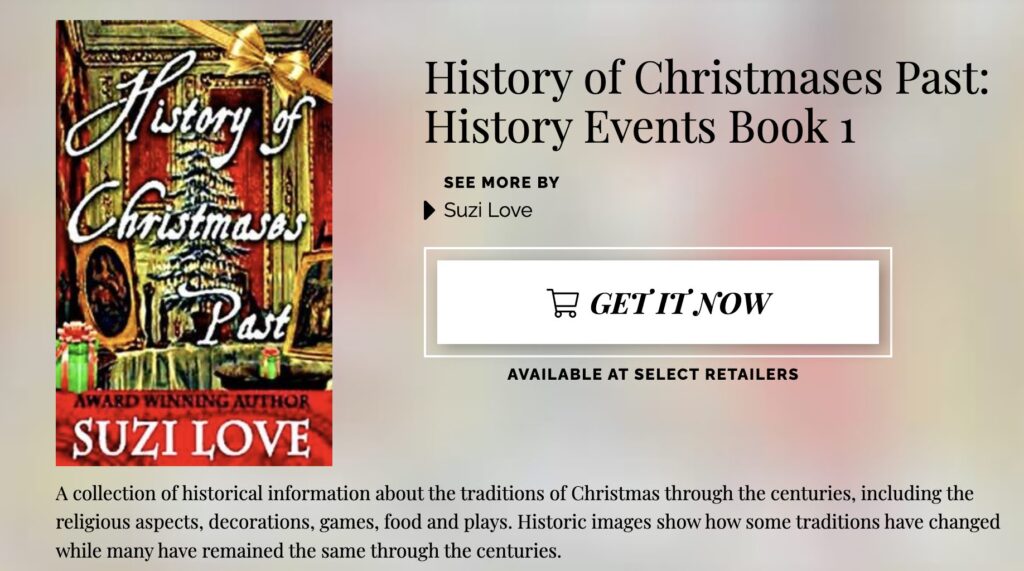
How did they celebrate Christmas in Bridgerton and Jane Austen times? Historical information about the traditions of Christmas through the centuries, including the religious aspects, decorations, games, food and plays. History Of Christmases Past has lots of information and images about Christmas through the centuries, including religious aspects, decorations, games, food and plays. Historic images show how some traditions have changed while many have remained the same through the centuries. books2read.com/suziloveHOCP
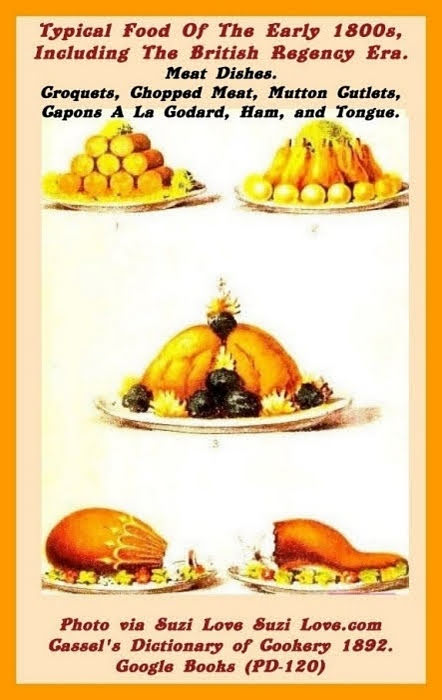
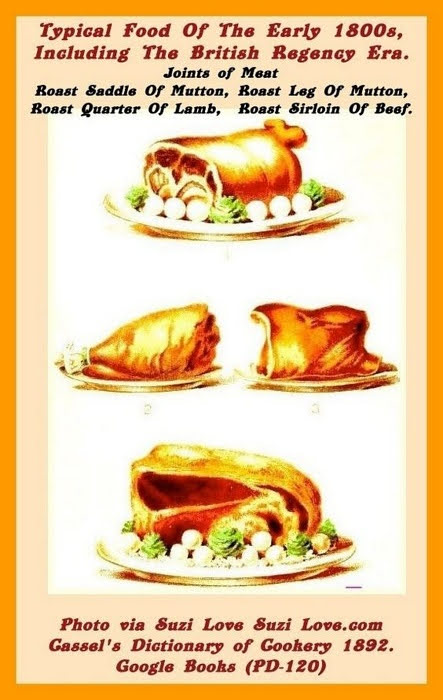
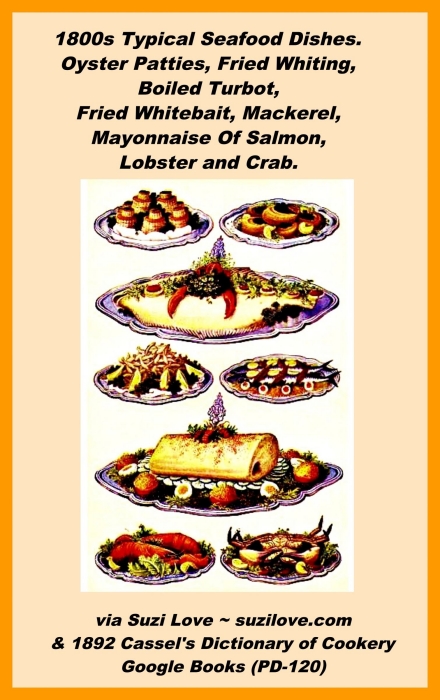
Christmas: Typical Christmas Food Eaten By the Bridgerton and Jane Austen Families. #Christmas #Food #JaneAusten #Bridgerton
On the Christmas menu was generally mince pies and perhaps a goose or a piece of beef, depending on the family’s wealth and status. Mince pies were not made of fruit mince as we do now, but of offal or meat such as bullock’s tongue cooked with spices, orange peel, and wine and then used to fill pastry cases.
Another Christmas specialty was a Yorkshire Christmas pie which would be filled with turkey, goose, a hen, or perhaps woodcocks, partridge, or pigeons. And after the main courses, came the Plum Pudding, mixed on Stir-Up Sunday according to each family’s recipe and then boiled in a cloth.
‘The following is a valued receipt that has been handed down in a Cornish family for many generations, and the hand-writing of the receipt book will vouch for its antiquity. ‘A pound of beef-suet chopped fine; a pound of raisins do. stoned. A pound of currants cleaned dry. A pound of apples chopped fine. Two or three eggs. Allspice beat very fine, and sugar to your taste. A little salt, and as much brandy and wine as you like. An ancient Cornish custom at Christmas.” A small piece of citron in each pie is an improvement.’ From: 1833 Christmas Carols, Ancient and Modern by William Sandys.
Mince meat pies, or Christmas or Twelfth Night pies, were always part of Christmas feasts. Originally the mince pies were oblong or oval but in the 1600’s, the pies became circular, although were quite large and could weigh up to 20 lbs. In London, they could be brought out on Lord Mayor’s Day which was the 9th of November.
Timeline of Mince Pies via Minced Pie Club.
In the 13th century, crusaders returned from the Middle Eastern with recipes containing meat, fruit and spices mixed together, which helped preserve meat without having to smoke, dry or salt.
1413 King Henry served a mincemeat pie at his coronation.
1588 Good Hous-Wiues Treasurie by Edward Allde: meats were still cut up to be eaten with a spoon and combined with fruits and heavy spices. His recipe for Minst Pye had practically the same ingredients as modern mince pies.
1657 Mince Pies were banned during the reign of Oliver Cromwell, along with other Christian traditions that were classed as gluttony.
1659 Oliver Cromwell’s Puritan influence spread to the American British Colonies and many towns banned mincemeat pies at Christmas time.
When pies were reintroduced in Britain, they were a lot smaller and could be served individually to guests and were named Wayfarer pies.
1832 Bill of Fare: no less than one hundred and eleven dishes of mince pies included.
More Minced Pie Trivia
When the monarchy was restored in 1660, the law regarding Minced Pies was disregarded but apparently never repealed so Mince pies are still, supposedly, illegal.
Pastry crusts sink in the middle and are thought to resemble Jesus’ manger so sometimes a small pastry doll was put in the middle and these were called crib pies.
Pies could last up to two months in cold weather.
Recipes varied by region, but usually included beef, poultry and other meats, suet, sugar, raisins or currants, spices, orange and lemon peel, eggs, apples and brandy.
Minced-meat was only supposed to be stirred clockwise, otherwise the stirrer would have bad luck in the coming year. bring bad luck for the coming year.
Filling included cinnamon, cloves and nutmeg to represent the gifts of the Magi to the infant Jesus and the star shaped pastry on top represents the star of Bethlehem.
If you ate minced pie every day of the twelve days of Christmas you were supposed to have twelve months of happiness, especially if the pies were baked by the dozen and offered by friends.
I love finding out the tradition behind some of the things we do and say at Christmas, don’t you? So I am going to do a series of posts this week covering lots of the historical aspects of our celebrations. Why we say things, why we do things, and why we use things to decorate our houses. Enjoy the festive season with me with more posts to follow.
CHRISTMAS
The word has been around for centuries, with some dictionaries putting it in the late Old English period and others to the 12th century. Old forms include cristes masse and christmasse, meaning the festival (mass) of Christ. It replaced other pagan midwinter festivals when the church tried to persuade Romans to convert to Christianity.
XMAS
This abbreviation annoys a lot of people but it isn’ t simply modern shorthand. X was used to represent the Greek symbol chi, which is also the first letter in Christ. This has been used since Roman times.
DECORATE
The word means to adorn and is from the 16th century, but the seasonal meaning of to deck with ornamental accessories dates from the 18th century. The word originates from the Latin decoratus (beautify).
TINSEL
It was first seen in the expression tinsell saten which means strips of shining metal used for ornament. It also describes things that are showy and worthless. It is believed to have come from the Anglo Norman with ancestors in Old French.
Christmas pudding originated as a 14th century porridge called ‘frumenty’ , made of beef and mutton with raisins, currants, prunes, wines and spices. Often more like soup, it was eaten as a fasting meal in preparation for Christmas festivities. By 1595, frumenty changed into a plum pudding thickened with eggs, breadcrumbs, dried fruit and flavoured with beer and spirits. It became the customary Christmas dessert around 1650, but in 1664 the Puritans banned it as a bad custom. In 1714, King George I re-established it as part of the Christmas meal, having tasted and enjoyed Plum Pudding.
“In December, the principal household duty lies in preparing for the creature comforts of those near and dear to us, so as to meet old Christmas with a happy face, a contented mind, and a full larder; and in stoning the plums, washing the currants, cutting the citron, beating the eggs, and mixing the pudding, a housewife is not unworthily greeting the genial season of all good things.” Via 1861 Beeton’s Book of Household Management.
The Sunday closest to St. Andrew’s Day was Stirring-up Sunday, and the day to prepare the family’s Christmas pudding. The eldest member of the household or a visitor would give the first stir and charms were stirred into the pudding. A ring meant a coming marriage, a button was bachelorhood, a thimble meant spinsterhood, and a sixpence was good luck. Puddings were steamed in a pudding bag and stored in a cool place until Christmas Day.
Angels – Heralds for the news of the birth of a baby in a manger.
Bells – Bells have rung out for all important events for centuries, plus lost sheep are found by the sound of the bell.
Candy Cane – Symbolizes the crook of the shepherds who visited Christ. Red represents the blood that was spilled and white is for purity. The peppermint oil that flavors is known for its strong healing properties.
Cards – Produced in Britain in 1843 to be sent with love to family and friends around the world by the new Postal services.
Carols – Poems and stories of worship made into songs.
Carolers – Groups of people who strolled the streets singing Christmas songs
Feasting – To celebrate the joy of the baby’s arrival on the 25th December.
Gift Giving – The Wise Men bowed before the baby and gave him gold, frankincense and myrrh.
Gold – Decorating using the color of one of the gifts of the wise men.
Green – Decorating using the color of evergreens which show everlasting love.
Holly – Represents Eternal Life and the crown of thorns worn by Jesus.
Mistletoe: In the 18th Century, men kissed a woman who stood under mistletoe to show love, friendship and goodwill. If a woman was un-kissed, she would (supposedly) never marry.
Nativity: The birth of Jesus Christ
Poinsettia – Red flowers used in countries such as Mexico to symbolize Christmas time.
Stockings – Hung by children to receive gifts
Twelve Days of Christmas: Twelve days between the birth of Christ on December 25 and the coming of the Magi on January 6, the Epiphany.
Tree – Evergreen tree symbolizes eternal life and love
Wreath – Made of evergreens to symbolize never ending love