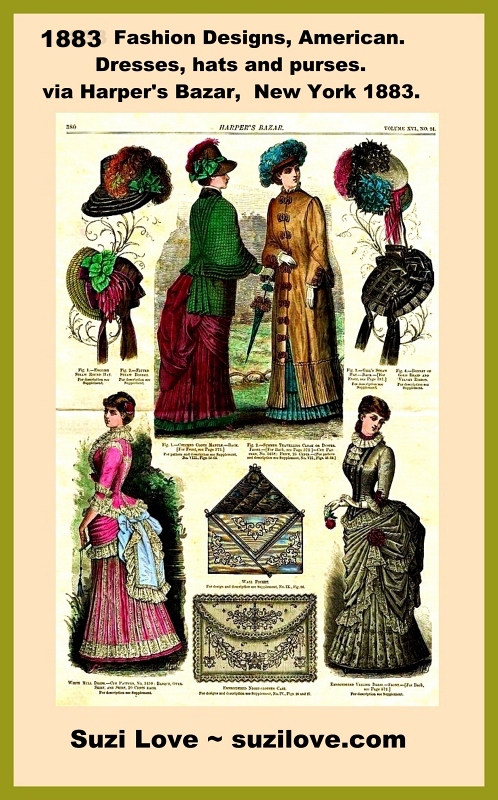
What did the Bridgerton ladies and Jane Austen use to carry her personal items? Ridicule, Reticule, Or Handbag? Call them what you like: purses, bags, handbags, reticules, ridicules, clutches, or pocket replacements. They all did the same job and they changed greatly with the prevailing fashions of time. books2read.com/suziloveReticules
Definition Of A Reticule; Bag or purse, often with a drawstring to pull closed and usually made of cloth or covered cardboard and often decorated with beading or embroidery. A reticule, or purse, or handbag, was usually carried by a woman during the Regency period to carry all their daily necessities. Earlier, women used pockets that tied at the waistline and were hidden in the folds of their skirts. Empire style, or early 1800s, high-waisted dresses made it impossible to either sewn in a pocket or to tie on a pocket, so women began carrying small, decorated bags called Reticules, or ridicules, which generally pulled close at the top with a drawstring. These Reticules, or bags, were the forerunners of our modern day purses.
The term ‘ridicule’ derived from the Latin ‘ridiculum’ and first used in France during the 17th century and meant subjecting something or someone to mockery. As women’s tiny bags were mocked, or ridiculed, for being a useless fashion accessory carried outside when they were first used in the late 1700s, it’s likely this is how the name ‘ridicule’ started. The later term ‘reticule’ derived from the Latin reticulum, meaning ‘netted bag’ and was applied when bags became larger and often made from netting. In the late 1700s and early 1800s, they were also known as indispensables as they carried all the personal items a lady needed upon her person every day. They were easily made by ladies, easy to carry and became an indispensable fashion accessory.
In the early nineteenth century, reticules started to look like future handbags as they were often made from rigid card or molded mâché or card into a variety of shapes. Early bags were circular and with a drawstring but as women wanted their reticules to look individual they could be made with two halves and a hinged metal closure or with concertina sides. Materials varied from silk, cotton and string and shapes were round, hexagonal or lozenge shapes with shell shaped bags becoming very popular during the Regency and Romantic Eras.
1800s magazines were written for well bred women who could read, so they gave plenty of ideas for how ladies could make and embellish reticules for their own use and as pretty gifts. Needlework was highly encouraged as a pastime for a lady so bags were frequently embroidered or decorated with beading. By the 1820s, reticules became more like our modern handbags using soft leather gathered at the top or hard leather with a rigid fastener and metal chain for carrying.