Wishing you a wonderful Easter from Suzi Love. French vintage Easter card.



Wishing you a wonderful Easter from Suzi Love. French vintage Easter card.
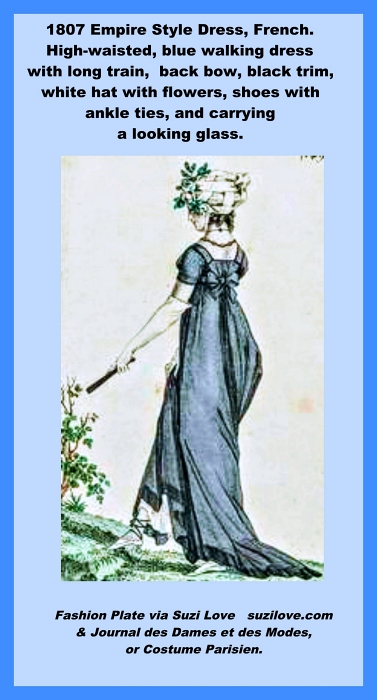
1807 Blue Walking Dress, French. Although this is a French fashion plate, this is the sort of dress that Jane Austen and her friends would have worn when walking together. Back bow, a train and black trim, a white hat with flowers and holding a looking glass. Fashion Plate via Journal des Dames et des Modes, or Costume Parisien.
Definition Empire Style Dress: High-waisted white gown defined women’s fashion during the Regency Era. ‘Empire’ is the name given to the period when Napoleon Bonaparte built his French Empire. High-waisted, loose gowns were adopted by the aristocracy as a symbol of turning away from the fussy, elaborate and expensive clothing worn in the 1700s.
Definition Walking Dress: Worn for walking in a park or the country estate. This sort of outfit needed to be presentable and warm, but not overly accessorized.

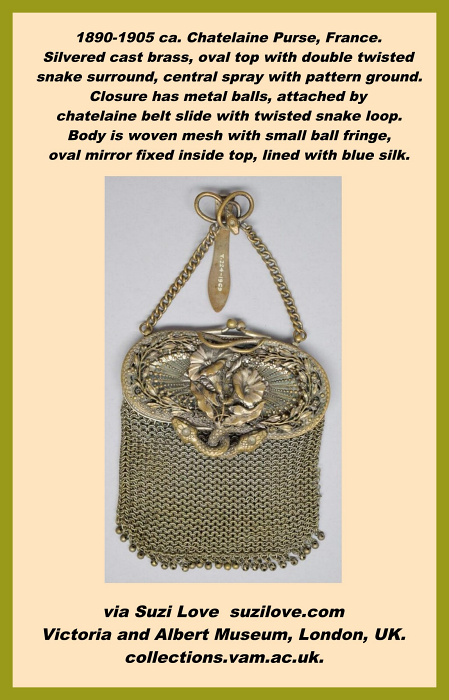
1890-1905 ca. Chatelaine Purse Of Silvered Cast Brass, English. #VictorianEra #EdwardianEra #Chatelaine #Antique books2read.com/SuziLoveChatelaines

1814 Gentleman’s Ensemble, French. Gentleman in brown tailcoat, white vest, high collared white shirt, knotted white cravat, white pants and white gaiters above black shoes. The style of outfit worn by the men in Jane Austen’s life. Fashion Plate via Journal des Dames et des Modes, or Costume Parisien.


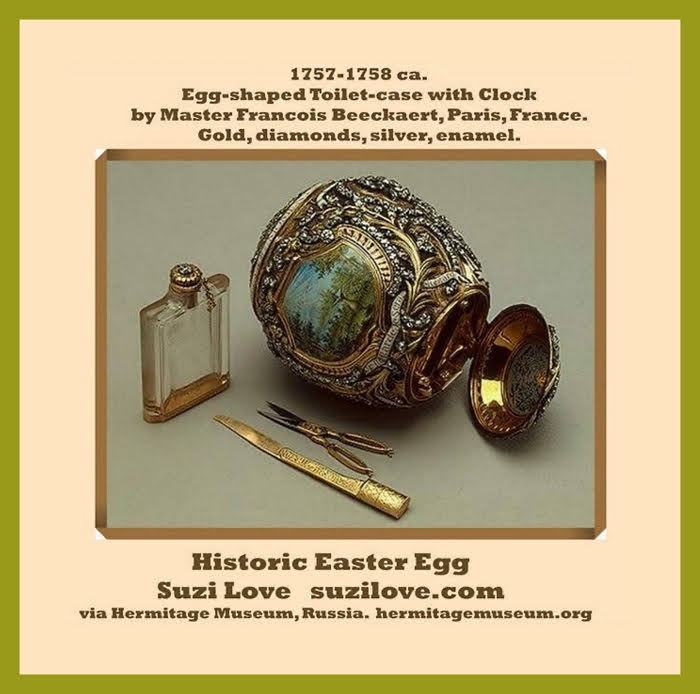
1757-1758 ca. Egg Shaped Toilet Case With Clock. By Master Francois Beeckaert, Paris, France. Gold, diamonds, silver, enamel. via Hermitage Museum, Russia.
1808 Blue Grey Redingote, French. High waist, coordinating trim, short puffed sleeves over long straight sleeves, yellow striped bandana in her hair, yellow gloves and yellow walking boots. Jane Austen and her female contemporaries wore coats like these when outdoors because they needed the warmth over the fashionable light muslin dresses that all women wore. Redingotes could be both comfortable and decorative. They often had military elements in support of the thousands of men involved in ongoing wars. Fashion Plate via Journal des Dames et des Modes, or Costume Parisien.
Definition Redingote Or Pelisse Or Walking Dress Or Coat: Long fitted outdoor coat worn over other garments for warmth. Often left open at the front to show off the dress underneath. French word developed from English words, riding coat.
Bandeau: Narrow strip or band worn around head to confine hair. Made of either twisted fabric, length of pearls, flowers, jewels or feathers. From the French word for “strip.

1811 Evening Dress, French. Red cashmere dress over white under shirt with short puffed sleeves, carrying a white shawl, long white gloves, earrings and white evening shoes. Fashion Plate via Journal des Dames et des Modes, or Costume Parisien. Though this is a French fashion plate, the outfit is typical of the dresses worn by Jane Austen and her contemporaries. An Empire style, or high-waisted, dress with a white underdress and for warmth there is an extra layer with the shawl.
Definition Cashmere: Soft, fine wool, historically used for costly dress fabric, usually in twill weave. Originally made of yarn handspun from the wool of Cashmere goats but later from other soft wools. Used for dresses, infants’ coats.


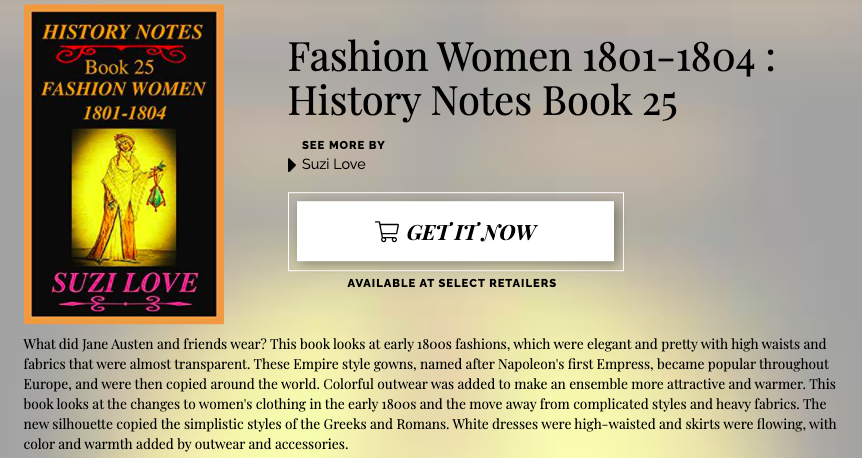
1804–1805 ca. Evening Dress, French. Narrow white dress of sheer cotton mull, probably from India, and with sheer short sleeves, extra wide neckline, vertical white embroidery which was very fashionable at the time. The cotton fabric was probably imported from India already embroidered with heavy white cotton thread in transparent mull. At the beginning of the nineteenth century, this sort of dress was considered shocking and immodest after the wider hooped dresses of the eighteenth century. This style of dress was worn by most women in Jane Austen’s time, but only the wealthy could afford the best quality mull. Vertical white embroidery was very fashionable in the early 1800s, with the sheer cotton mull probably imported from India already embroidered with this heavy white cotton thread. These daring items of clothing copied the Grecian idea of loosely draped clothing and were the first of many changes to women’s outfits. Heavy fabrics were abandoned, especially in summer, in favor of lighter materials that allowed women to move about easier.
From the museum curator: “On December 24, 1803, Jerome Bonaparte (1784—1860), brother of Napoleon, wed Elizabeth Patterson (1785—1879) of Baltimore. The beautiful and fashionable young American was married in a dress of muslin and lace that, according to a contemporary, “would fit easily into a gentleman’s pocket.” Although originally thought to have been Patterson’s wedding dress, the formal gown illustrated here probably dates from 1804, when this type of vertical white embroidery became fashionable. Napoleon had the marriage annulled in 1805. Jerome was made king of Westphalia in 1807 and he married the princess of Wurttemberg. Elizabeth, banned from France by the emperor, remained in Baltimore with her son, Jerome Napoleon Bonaparte (1805—1870). Metropolitan Museum, New York City, USA.


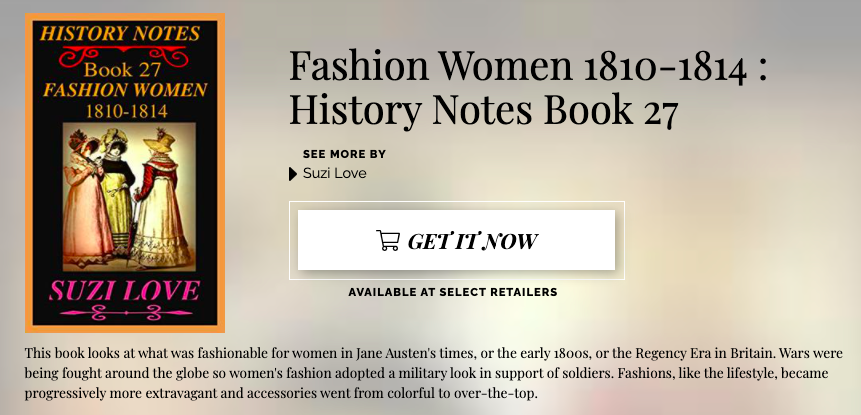
1811 Half-Mourning Dress, French. Black dress, high white neck ruffle, black hat with white trim and white shoes. Jane Austen and her family would have worn this type of outfit when mourning a relative or friend. However, as black dresses, black tunics, and black lace shawls were popular throughout the Regency years, it is often hard to decide what was definitely made for mourning and what was simply fashionable wear. Fashion Plate via Journal des Dames et des Modes, or Costume Parisien.
In November, 1810, Princess Amelia, youngest daughter of George III, died. At the end of 1810 full mourning of complete black would have been worn but by the beginning of 1811, half mourning would still have been to respect the loss of a royal family member. Half-mourning allowed touches of silver, grey, mauve and white to be added to a mostly black outfit and would be worn after the period of full mourning was ended, times depending on the relationship to the deceased person. Garments and accessories could either be trimmed with black, jet jewelry worn, black ribbons added, or a layer of black net or gauze added to a dress or hat.
Definition Half or Slight Mourning: Allowed touches of grey and white to be added to full, or deep, mourning ensembles. Some lustre, or shine, was allowed in fabrics and accessories. After a time, mauve or deep purple could also be worn. https://books2read.com/SuziLoveFashion1810-1814

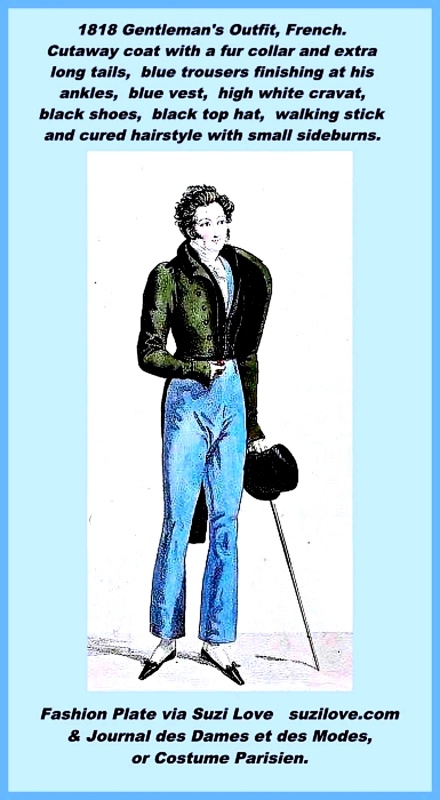
1818 Gentleman’s Outfit, French. Cutaway coat with a fur collar and extra long tails, blue trousers finishing at his ankles, blue vest, high white cravat, black shoes, black top hat, walking stick and cured hairstyle with small sideburns. Fashion Plate via Journal des Dames et des Modes, or Costume Parisien.