1806 Two Ladies In White Dresses, French. High-waisted, Or Empire line, dresses, pink and blue paisley shawls, bonnets tied under their chins, and long gloves, one in gorgeous yellow. Fashion Plate via Journal des Dames et des Modes, or Costume Parisien. These fashionable ensembles with a variety of fashionable and practical accessories would have been worn by Jane Austen and her family and friends during the day when out walking in the park or visiting village shops. Hats were a necessity to protect fair skin from the sun and scarfs and shawls added color and warmth to an outfit.
Definition Empire Style Dress: Named after the First Empire in France. Empire dresses had a low neckline and skirts started directly under the bust and flowed into the classical relaxed wide styles of Greece and Rome. This style of dress is associated with Jane Austen and her contemporaries as a high-waisted dress was worn most days. Cotton, silk or taffeta were the popular fabrics. Only the very wealthy could afford white dress in this style as the cottons were imported from India and had to be carefully cleaned, usually by a lady’s maid.
Definition Paisley Shawl: Made of intricately woven and delicate wool with a teardrop motif that originated in Persia and India.
1800-1805 ca. Pink Silk Bonnet, French. Similar to hats worn in England by Jane Austen and friends. Silk net, silk satin ribbon, and silk flowers. via Museum of Fine Arts, Boston, U.S.A. mfa.org
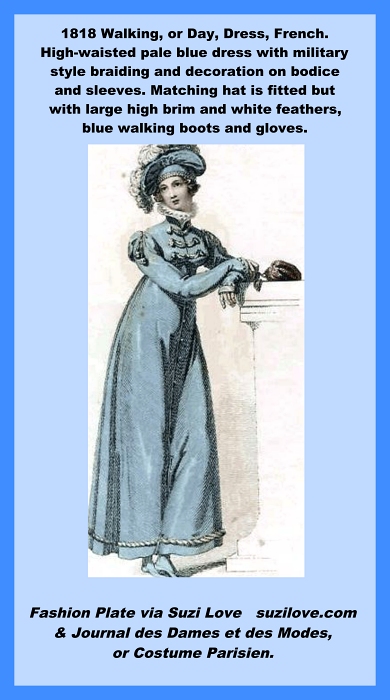
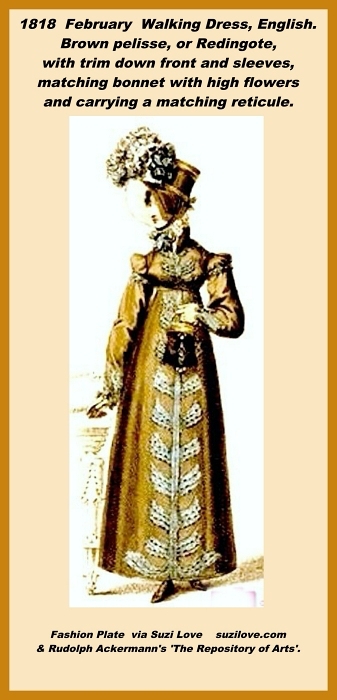
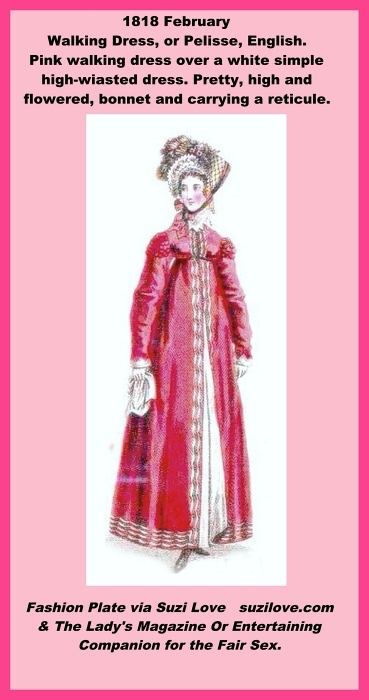
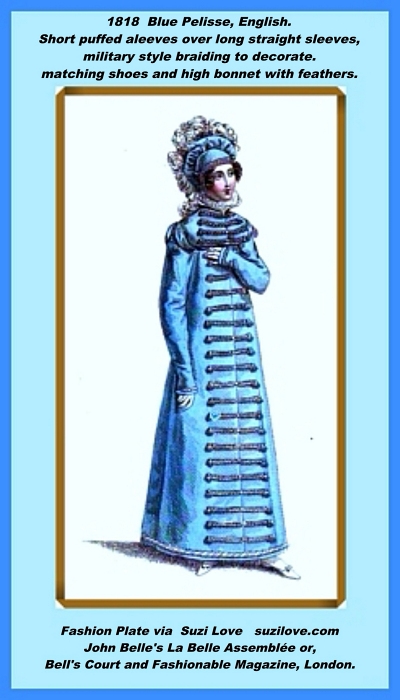
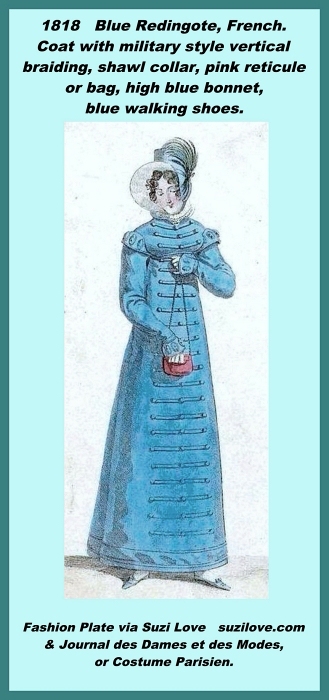
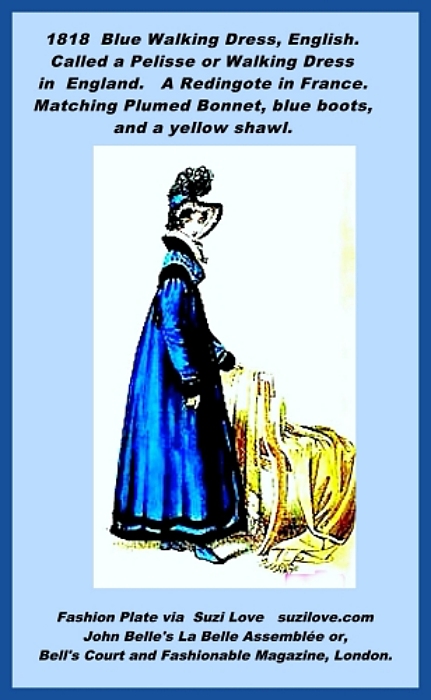
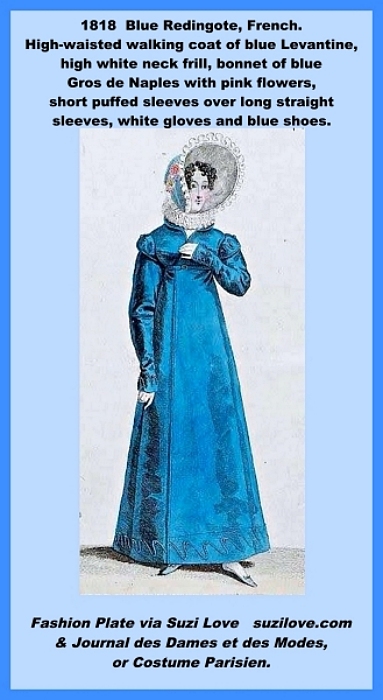
1818 Women’s outdoor fashions In the times of Jane Austen. Pelisses or coats or Redingotes, with matching hats, shoes, goves, reticules or bage, plus other accessories as displayed in various fashion magazines. Definition Redingote Or Coat Or Pelisse: Long fitted outdoor coat worn over other garments for warmth. French word developed from English words, riding coat. French fashion plates call these coats a Redingote and English plates call them a Pelisse, Or Walking Dress, or Carriage Costume.
. Fashion Women 1815-1819 History Notes Book 28 https://books2read.com/SuziLoveFashionWomen1815-1819
1812 Red Dress, French. High-waisted red Merino wool dress with short puffed sleeves, high Chako hat with a plume long white gloves and white shoes. Jane Austen and her family and friends would have worn this style of dress. Fashion Plate via Journal des Dames et des Modes, or Costume Parisien.
Lover of Jane Austen and the Regency Era fashions? History Notes Book 25. #JaneAusten #RegencyFashion #HistoricalFashion books2read.com/SuziLoveFashionWomen1801-1804
1816 Crossing The Pont des Arts, Paris. Illustrations by Francis Courboin. via Les Modes de Paris. (PD-Art) suzilove.comThis plate depicts two women crossing the Pont des Arts, which is also known as the Passerelle des Arts. The women wear very high-waisted dresses. Both women wear a large white feather in their hats, symbolic of the white plume of Henri IV’s famous battle cry, “Ralliez-vous à mon panache blanc!” and made popular by the 1814 restoration of Louis XVIII on the throne. Restoration also brought back various styles, especially those denoting luxury, from the Ancien Regime. The woman on the left wears an ‘old-fashioned’ lace collar and the resurgence of luxury materials, such as fur are indicative of feminine styles of the Restoration period. (PD-Art) Illustrations by François Courboin from Octave Uzanne’s Les Modes de Paris. Variations du goût et de l’esthétique de la femme, 1797-1897, L. Henry May, Paris, 1898, or from the English translation of the same work: Fashion in Paris : the various phases of feminine taste and aesthetics from 1797 to 1897, William Heinemann, London, 1898. Modes De Paris
Fashion Women 1815-1819 History Notes Book 28 What did Jane Austen wear? . D2D_HN_28_https://books2read.com/SuziLoveFashionWomen1815-1819
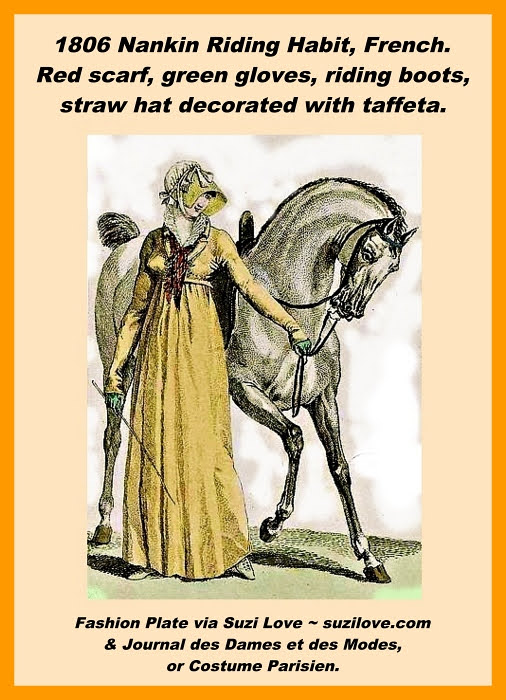
1806 Nankin Riding Habit, French. Red scarf, green gloves, riding boots, straw hat decorated with taffeta. The type of outfit Jane Austen and her friends would have worn if they went horse riding. Nankeen Or Nankin Fabric: Durable, buff colored cloth, made of Chinese cotton which is naturally brownish yellow. Originally brought from Nanking.
1806 Nankin Riding Habit, French. Red scarf, green gloves, riding boots, straw hat decorated with taffeta. Nankeen Or Nankin Fabric: Durable, buff colored cloth, made of Chinese cotton which is naturally brownish yellow. Originally brought from Nanking.HN_26_D2D_FsshionWomen1805-1809
1819 Typical Gentleman’s Outfit, French. The type of outfit worn by Jane Austen’s male family and friends. Brown cutaway coat with extra long tails, white trousers, high white cravat, heeled black boots with spurs, gloves, black top hat and a cane. Fashion Plate via Journal des Dames et des Modes, or Costume Parisien.
Trousers: The word Trouser came into usage in the late 1600’s, so we’ve had trousers around for a long time. But at first, they were mostly for lower classes. Revolutionary France started a trend for sans-culottes, which meant trousers or pantaloons instead of culottes, or knee breeches, which were associated with the aristocracy. The styles of the revolution moved across to England and were taken up by those who either sided with revolutionary ideals or who took them up as part of a protest against the establishment set. Early on, trousers were generally a bit looser than pantaloons or breeches and ended at the ankles, often with side slits to get the foot through or straps under the foot straps to keep the trousers in place.
19th Century Late Mechanical Tantalus, French. Ormolu, Bronze, Crystal, and Gilt with a lock and key to open. Earlier versions of this type of small drinks cabinet would have been used in most households during Jane Austen’s times, unless the householders were teetotalers. via 1st Dibs Auctions 1stdibs.com
Tantalus: A small wooden cabinet containing drink decanters. The box has a lock and key to keep unauthorised people from drinking the contents e.g. servants and younger sons, yet still allowing the decanters of drinks to be on show. The word, Tantalus, is a reference to the unsatisfied temptations of the Greek mythological character Tantalus. Patented in the UK in 1881 by George Betjemann, a cabinet maker from the Netherlands, whose workshop was on Pentonville Road, London from the 1830s.