Looking for a gift for a fan of the Bridgertons and Jane Austen? What did men wear in the early 1800s? Suits, hats, shoes, underclothing, military and bedroom fashions. #christmas #holidays #Bridgerton #RegencyFashion #JaneAusten #BritishHistory



Looking for a gift for a fan of the Bridgertons and Jane Austen? What did men wear in the early 1800s? Suits, hats, shoes, underclothing, military and bedroom fashions. #christmas #holidays #Bridgerton #RegencyFashion #JaneAusten #BritishHistory
Santa Claus The origin of Santa Claus begins in the 4th century with Saint Nicholas, Bishop of Myra, an area in present day Turkey. By all accounts St. Nicholas was a generous man, particularly devoted to children. In the Western world, where Christmas is characterized by the exchange of gifts among friends and family members, some of the gifts are attributed to a character called Santa Claus. He is also known as Father Christmas, Saint Nicholas, St. Nikolaus, Sinterklaas, Kris Kringle, Joulupukki, Weihnachtsmann, Saint Basil and Father Frost.
In the 4th century, Saint Nicholas, Bishop of Myra, Turkey, was a kind and generous man who was particularly devoted to children. His kindness and reputation for generosity gave rise to claims he that he could perform miracles and devotion to him increased. Thousands of churches across Europe were dedicated to him and some time around the 12th century an official church holiday was created in his honor. The Feast of St. Nicholas was celebrated December 6 and the day was marked by gift-giving and charity.
Father Christmas, who predates Santa Claus, was first recorded in the 15th century and then associated with holiday merrymaking and drunkenness. In Victorian Britain, his image was remade to match that of Santa and France’s Père Noël (Papa Noël) evolved the same way and eventually began using the same Santa image.
Today’s version of Santa Claus was created by the German-American cartoonist Thomas Nast (1840-1902), who drew a new image of the character annually, beginning in 1863. By the 1880s, Nast’s Santa had become the one now know and in the 1920s, this image was used in most advertising. But it was the early to mid Coca Cola advertising that cemented the idea of Santa Claus as a jolly man with a white beard and wearing a red suit. He was portrayed as drinking a coke and smiling happily. Many famous artists started doing yearly illustrations of Santa Claus that were used for magazine covers and Christmas postcards.


The Lord of Misrule was generally a peasant, or sub-deacon, and the revelries followed the Pagan tradition of Saturnalia and was a time of drunkenness and wild partying. The Church’s festival with a Boy Bishop, the leader of children’s festivities in choir schools, was similar, but was abolished by Henry VIII in 1541, restored by the Catholic Queen Mary, but again abolished by Protestant Elizabeth I. On the Continent, the Council of Basle suppressed it in 1431 but the custom was revived in some places from time to time, even as late as the eighteenth century. After the death of Edward VI in 1553, the English court stopped appointing a Lord of Misrule.
From A Survey of London by John Stow: Reprinted from the text of 1603.
‘…in the feaste of Christmas, there was in the kings house, wheresoeuer he was lodged, a Lord of Misrule, or Maister of merry disports, and the like had yee in the house of euery noble man, of honor, or good worshippe, were he spirituall or temporall.’
During the late medieval and early Tudor periods in England, Lord of Misrule, also called Abbot Of Misrule, or King Of Misrule, was appointed to manage the Christmas festivities held at court, in the houses of great noblemen, in the law schools of the Inns of Court, and in many of the colleges at the universities of Cambridge and Oxford.
His reign lasted anywhere from 12 days to 3 months and his role was to direct the masques, processions, plays, and feasts. Although this was mostly a British custom, in ancient Rome from the 17th to 23rd of December, a Lord of Misrule took on the guise of Saturn for the feast of Saturnalia and the ordinary rules were changed so that masters became slaves and the offices of state were held by slaves. The Lord of Misrule presided and could command anyone to do anything. Our contemporary Christmas holidays seem to have originated from this idea of festive holidays.
The custom began in December 1551 when the Duke of Somerset, Edward VI’s uncle Edward Seymour, was in the Tower of London awaiting execution. He sent a note to the Master of Revels to appoint George Ferrers as Lord of Misrule. Ferrers was a courtier and poet who later contributed to A Mirror for Magistrates, described by Scott Lucas as a “compendium of tragic monologues” by a series of historical personages.
Scotland had the Abbot of Unreason (suppressed in 1555) as their equivalent to the Lord of Misrule and scholars believe both ideas came from the “king” or “bishop” who presided over the earlier Feast of Fools.

Another Christmas Tradition is kisisng under the Mistletoe. So have fun this Christmas and find someone to kiss. The problem in hotter climates is to find the Mistletoe, of course. Darn!
Mistletoe was used by Druid priests 200 years before the birth of Christ in their winter celebrations. They revered the plant since it had no roots yet remained green during the cold months of winter. The ancient Celtics believed mistletoe to have magical healing powers and used it as an antidote for poison, infertility, and to ward of evil spirits. The plant was also seen as a symbol of peace, and it is said that among Romans, enemies who met under mistletoe would lay down their weapons and embrace.
Scandanavians associated the plant with Frigga, their goddess of love, and it may be from this that we derive the custom of kissing under the mistletoe. Those who kissed under the mistletoe had the promise of happiness and good luck in the following year. Mistletoe was associated with Christmas as both a decoration under which lovers kiss, as well as a protection from witches and demons. Sounds romantic, although mistletoe is actually a parasitic plant that grows on other trees or plants and comes in many varieties.
In Britain, mistletoe was mainly found in the western and southwestern parts, so the custom wasn’t even followed in all parts of England. But where the mistletoe custom was followed, it was hung in doorways and the greenery was watched by young gentlemen in hopes of catching a pretty girl to kiss, usually on the cheek.
Traditionally, a man was allowed to kiss a woman who was standing underneath mistletoe and bad luck would befall any woman who refused. In some places, it was the custom to pick a berry for each kiss and when all the berries were gone, no more kisses could be taken.


Christmas Greenery: Holly, Ivy and Evergreen Boughs. #Christmas #Holidays #customs #Europe https://books2read.com/suziloveHOCP
Continue reading →Sending Christmas Cards.
At the end of the winter term, schoolmasters would set their pupils to work on Christmas Pieces, samplers of writing on superior paper with engraved borders, to show parents how they had progressed during the year. By about 1820, the engraved borders were enhanced with color and the children’s pieces became more decorative.
However, the custom of sending cards at Christmas was started in the United Kingdom in 1843 by Sir Henry Cole. Postage had been standardized three years earlier and Cole was a civil servant who had played a key role in initiating Uniform Penny Post. He wanted ordinary people to become more interested in the new ‘Public Post Office’. With his artist friend John Horsley, they designed the first card which was issued from a periodical, Felix Summerley’s Home Treasury, and were sold for 1 shilling each.
The card was lithographed, hand-colored, had three panels and was in a rustic frame of carved wood and ivy. The outer two panels showed people caring for the hungry and the naked. The centre panel showed a family of three generations having Christmas dinner, although the temperate classes strongly objected to the idea of a child being given a glass of wine with dinner.

New railways carried more post, and a lot faster, than a horse and carriage so the Post Office offered a Penny stamp. Cards became even more popular when they could be posted in an unsealed envelope for one halfpenny. Christmas cards became truly popular when printing improved and cards could be produced in large numbers, around 1860. By the early 1900s, the custom had spread over Europe and especially in Germany.
Early cards usually pictured Nativity scenes, but in the late Victorian times, robins and snow-scenes became popular because the postmen wore red uniforms and were nicknamed ‘Robin Postmen’. Snow-scenes were also popular because they were a reminder of the very bad winter of 1836.
Snow scenes reflected the snowy and often harsh northern hemisphere winters when opening and reading Christmas cards was an enjoyable family experience. In 1860, Charles Goodall & Son, a British publisher of visiting cards, began mass producing cards to be used for visits during the Christmas period. These Christmas and New Year’s visiting cards were decorated with simple designs such as a twig of holly or flowers.
Sales of cards grew and designs and sizes changed. The first cards were meant to appeal to the masses and encourage them to send large numbers by post, so rather than focus on religious images, they showed sentimental or humorous images of family and children, fanciful designs of flowers, fairies, or reminders of the approach of spring. Religious themes of nativity scenes, children looking at the manger, or angels and candles remain popular to the modern day.
Cards could be shaped like bells, a fan, a crescent, a circle, or a diamond and were folding, decorated with jewels, iridescent, embossed, and carried either simple Christmas and New Year greetings or had verses and carols written in them. The next year, Mr W.C.T. Dobson produced a sketch symbolizing the ‘Spirit of Christmas’ which sold many more than the previous thousand and the novelty caught on.
Many artists became famous for their annual illustrations that became postcards and cards. Printing technology became more advanced in the age of industrialisation and the price of card production dropped. With the introduction of the halfpenny postage rate, the Christmas card industry industry increased until in 1880 11.5 million cards were produced.


How did they celebrate Christmas in Bridgerton and Jane Austen times? Historical information about the traditions of Christmas through the centuries, including the religious aspects, decorations, games, food and plays. History Of Christmases Past has lots of information and images about Christmas through the centuries, including religious aspects, decorations, games, food and plays. Historic images show how some traditions have changed while many have remained the same through the centuries. books2read.com/suziloveHOCP

Christmas: Typical Christmas Food Eaten By the Bridgerton and Jane Austen Families. #Christmas #Food #JaneAusten #Bridgerton
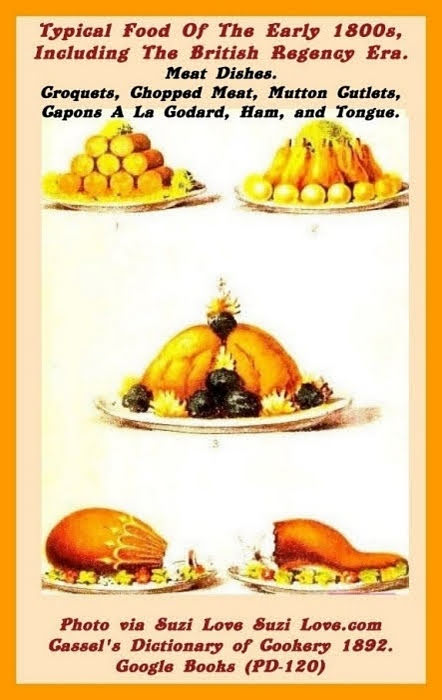
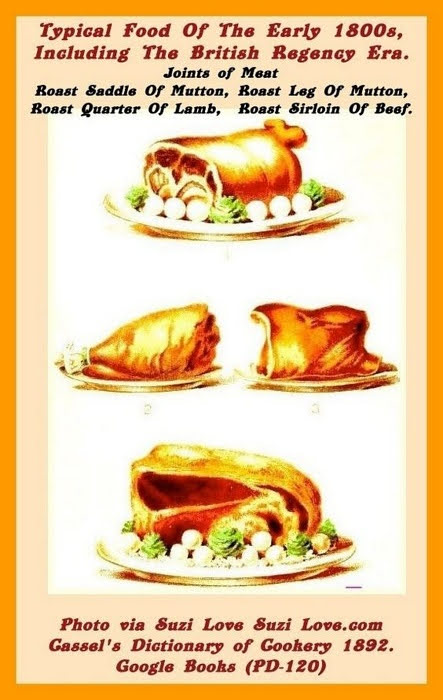
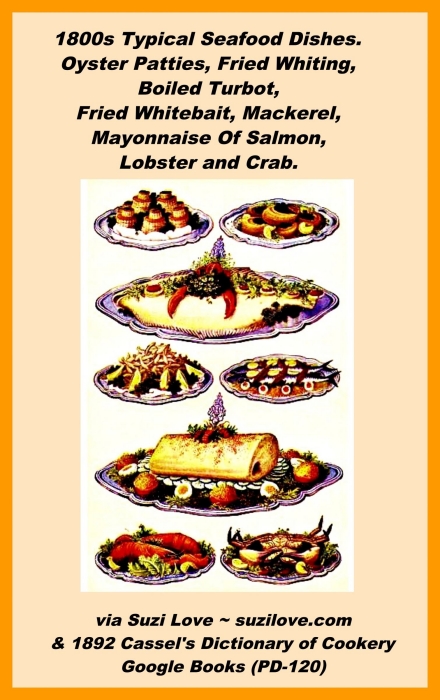
On the Christmas menu was generally mince pies and perhaps a goose or a piece of beef, depending on the family’s wealth and status. Mince pies were not made of fruit mince as we do now, but of offal or meat such as bullock’s tongue cooked with spices, orange peel, and wine and then used to fill pastry cases.
Another Christmas specialty was a Yorkshire Christmas pie which would be filled with turkey, goose, a hen, or perhaps woodcocks, partridge, or pigeons. And after the main courses, came the Plum Pudding, mixed on Stir-Up Sunday according to each family’s recipe and then boiled in a cloth.





First made in 1850 by a London sweet maker called Tom Smith who decided it would a fun idea if his sweets and toys opened with a crack when their fancy wrappers were pulled in half. In early 1830, Tom Smith started work in a bakers and ornamental confectioners shop in London, selling sweets such as fondants, pralines and gum pastilles. He worked hard and took particular interest in the wedding cake ornaments and decorations, experimenting and creating new, more exciting and less crude designs in his spare time. Before long he was successful enough to leave and start up his own business in Goswell Road, Clerkenwell, East London. On a trip to Paris in 1840, he discovered the ‘bon bon’, a sugared almond wrapped in a twist of tissue paper. He brought the ‘bon bon’ to London and they sold extremely well, but in January demand virtually ceased and once again he was reliant on sales of cake and table decorations and ornaments.
Anxious to stimulate sales, Tom placed a small love motto in the tissue paper and encouraged his regular customers to take supplies. Tom took a risk and concentrated on developing it further, while still running the wedding cake ornament and confectionery business. The majority of ‘bon bons’ were sold at Christmas so Tom thought up ways to capitalize on this short, but very profitable, season. It was the crackle of a log as he threw it on his fire that gave him the flash of inspiration which eventually led to the crackers we know today. A ‘ crackle’ added excitement to his novelty ‘bon bon’ so he experimented to find a compound which gave a satisfactory bang. He perfected his chemical explosion to create a ‘pop’ caused by friction when the wrapping was broken and the trade jumped at Tom Smith’s latest novelty.
He quickly refined his product by dropping the sweet and the ‘bon bon’ name, calling his new crackers Cosaques, but he kept the motto and added a surprise gift. Delighted at his overnight success, Tom took his cracker abroad but an Eastern manufacturer copied his idea and delivered crackers to Britain just before Christmas. So Tom designed 8 different kinds of cracker, working his staff day and night and distributing stocks in time for Christmas. He lived to see the new branch of his firm grow to swamp the original premises in Goswell Road and the company moved to Finsbury Square in the City of London where it remained until 1953. When he died he left the business to his three sons, Tom Henry and Walter. A few years later, a drinking fountain was erected in Finsbury Square by Walter Smith in memory of his mother, Mary, and to commemorate the life of the man who invented the great British Cracker.
His three sons developed the cracker designs, contents and mottoes. Walter Smith, the youngest son, introduced a topical note to the mottoes which had previously been love verses. Special writers were commissioned to compose snappy and relevant maxims with references to every important event or craze at the time from greyhounds to Jazz, Frothblowers to Tutankhamen, Persian Art to The Riviera. The original early Victorian mottoes were mainly love verses. Eventually these were replaced by more complicated puzzles and cartoons, and finally by the corny jokes and riddles which characterise our crackers today.
Walter also introduced the paper hats, many of which were elaborate and made of best tissue and decorative paper on proper hatmakers stands and he toured the world to find new, relevant and unusual ideas for the surprise gifts, such as bracelets from Bohemia, tiny wooden barrels from America, and scarf pins from Saxony. Some were assembled in the factory, like the thousands of tiny pill boxes filled with rouge complete with powder puff.
A six foot cracker decorated Euston Station in London, and in 1927 a gentleman wrote to the Company enclosing a diamond engagement ring and 10 shilling note as payment for the ring to be put in a special cracker for his fiancee. Unfortunately he did not enclose an address and never contacted the Company again; the ring, letter and 10 shilling note are still in the safe today. In the early days, there was a large variety of specialist boxes, including Wedgwood Art Crackers from original designs by permission of Josiah Wedgwood and Sons, and designs such as Japanese Menagerie crackers containing the latest novelties from Japan, including animals, birds, reptiles and mottoes in Japanese.
Crackers were created for the War Heroes, Charlie Chaplin, The Wireless, Motoring, The Coronation and even the Channel Tunnel in 1914. Exclusive crackers were also made for members of the Royal Family and still are to this day. During the Second World War restrictions were placed on the production of cracker snaps.
The Ministry of Defence commissioned Tom Smith to fold and tie bundles of three to six snaps together with special string and regulation knots. These bundles were then used by soldiers in training as, when the string was pulled, they mimicked the noise of machine gun fire. After the war, vast quantities of these surplus cracker snaps were released back into the cracker trade. As the demand for crackers increased, Tom Smith merged with Caley Crackers in 1953 taking over their headquarters and factory in Norwich, East Anglia.
Tom Smith Group Limited currently hold a royal warrant from: HM QUEEN ELIZABETH II Ê 1906: Tom Smith were granted their first Royal Warrant by the then Prince of Wales which entitled them in 1909 to become members of the Royal Warrant Holders Association. 1910: In December, the reigning monarch, King George V granted Tom Smith his warrant as suppliers of Christmas Crackers. Tom Smith still holds the honour of producing special crackers each year for the Royal Household.
In the countries that now use them, a cracker is set next to each plate on the Christmas dinner table and a colourful party hat, a toy or gift and a festive joke falls out when the cracker is pulled in half with a loud bang! The party hats look like crowns, supposedly to symbolise the crowns worn by the Wise Men.
Another British company strongly associated with the cracker business was Batger and Co. Like Tom Smith, they sold a wide variety of crackers in highly decorated boxes and once again many were themed or in commemoration of a special event. Batger’s Gretna Green Crackers for the famous place for eloping lovers where couples in the Regency period ran off in a carriage to Scotland to be married at the blacksmiths forge at Gretna Green.

Crackers were an incredibly expensive luxury at the time costing from 14 shillings to 30 shillings a box. Others were Peerless Crackers and Mead and Field Crackers. Cabaret Girl from the Peerless series of Christmas crackers, from 1933, which promises that each cracker contains ‘both a juvenile costume and fancy hat or cap, amusing joke or riddle, a good snap.


CHRISTMAS
The word has been around for centuries, with some dictionaries putting it in the late Old English period and others to the 12th century. Old forms include cristes masse and christmasse, meaning the festival (mass) of Christ. It replaced other pagan midwinter festivals when the church tried to persuade Romans to convert to Christianity.
XMAS
This abbreviation annoys a lot of people but it isn’ t simply modern shorthand. X was used to represent the Greek symbol chi, which is also the first letter in Christ. This has been used since Roman times.
DECORATE
The word means to adorn and is from the 16th century, but the seasonal meaning of to deck with ornamental accessories dates from the 18th century. The word originates from the Latin decoratus (beautify).
TINSEL
It was first seen in the expression tinsell saten which means strips of shining metal used for ornament. It also describes things that are showy and worthless. It is believed to have come from the Anglo Norman with ancestors in Old French.
Christmas: Words We Still Use Today #Christmas #holidays #Traditions #Customs books2read.com/suziloveHOCP Share on X