Christmas: 24th December Or Christmas Eve. The evening leading up to Christmas Day is filled with excitement, last-minute preparations, and religious services. In many cultures, especially European countries, gifts are exchanged on Christmas Eve, while in other places, this happens on Christmas morning. http://books2read.com/suziloveHOCP.
Music history from the 17th, 18th, and 19th Centuries. Pianos, pianofortes, harps, viols, violins played during Jane Austen’s times. Musical Instruments were so important in most of the more affluent households in history that large industries grew all around the world to manufacture instruments, musical accessories, and to print sheet music. Musical instruction and encouragement could be found everywhere and both young ladies and gentlemen were encouraged to have musical appreciation. And of course, playing music was on the list of social requirements for all young ladies desirous of becoming a wife and homemaker.
London became Europe’s leading centre for the manufacture of scientific instruments and this led to the manufacture of more musical instruments as well as factories developed and rail transport helped the faster distribution of goods to regional areas. One of the first places that music was used to tell stories and to share enjoyment was in Christmas music. Because music was such an integral part of households, music was always a feature in Magazines. There were advertisements everywhere for musical instruments for sale, for sheet music, and for music lessons. And of course, of most interest to the ladies were the hundreds of fashion plates included in magazines where people were depicted with their musical instruments.
Santa Claus The origin of Santa Claus begins in the 4th century with Saint Nicholas, Bishop of Myra, an area in present day Turkey. By all accounts St. Nicholas was a generous man, particularly devoted to children. In the Western world, where Christmas is characterized by the exchange of gifts among friends and family members, some of the gifts are attributed to a character called Santa Claus. He is also known as Father Christmas, Saint Nicholas, St. Nikolaus, Sinterklaas, Kris Kringle, Joulupukki, Weihnachtsmann, Saint Basil and Father Frost.
In the 4th century, Saint Nicholas, Bishop of Myra, Turkey, was a kind and generous man who was particularly devoted to children. His kindness and reputation for generosity gave rise to claims he that he could perform miracles and devotion to him increased. Thousands of churches across Europe were dedicated to him and some time around the 12th century an official church holiday was created in his honor. The Feast of St. Nicholas was celebrated December 6 and the day was marked by gift-giving and charity.
Father Christmas, who predates Santa Claus, was first recorded in the 15th century and then associated with holiday merrymaking and drunkenness. In Victorian Britain, his image was remade to match that of Santa and France’s Père Noël (Papa Noël) evolved the same way and eventually began using the same Santa image.
Today’s version of Santa Claus was created by the German-American cartoonist Thomas Nast (1840-1902), who drew a new image of the character annually, beginning in 1863. By the 1880s, Nast’s Santa had become the one now know and in the 1920s, this image was used in most advertising. But it was the early to mid Coca Cola advertising that cemented the idea of Santa Claus as a jolly man with a white beard and wearing a red suit. He was portrayed as drinking a coke and smiling happily. Many famous artists started doing yearly illustrations of Santa Claus that were used for magazine covers and Christmas postcards.
The word ‘carol’ comes from the old French ‘carole’ for a song written and played as a courtly dancing song. Carols then took on a more popular form, telling stories and celebrating religious themes for all seasons until the late 19th century when they became associated with Christmas.
Carols took the place of Psalms in all churches on Christmas Day and, as the whole congregation could join in, were greeted with huge approval. Carols were passed on orally from place to place, often with different words or tunes. The published carols included songs still popular today, including The First Noël, I Saw Three Ships, and God Rest Ye Merry Gentlemen. This collection was followed by compilations of carols from other scholars such as William Sandy’s works in 1833 and 1852.
Legend has it that during the 17th century, craftsmen created straight white sticks of candy in the shape of shepherds’ crooks at the suggestion of the choirmaster at the Cologne Cathedral in Germany. The treats were given to children to keep them quiet during ceremonies at the living creche, or Nativity scene, and the custom of passing out the crooks at such ceremonies soon spread throughout Europe.
‘The legends of the candy cane are many, including that the cane was shaped like a “J” for Jesus, the three red stripes symbolized the Holy Trinity, the hardness of the candy represented the Church’s foundation on solid rock and the peppermint flavor reflects the use of hyssop, an herb referred to in the Old Testament.’ via Encyclopedia Britannica
In celebrations of Saint Nicholas Day, candy canes are given to children as they are also said to represent the crosier of the Christian bishop, Saint Nicholas; crosiers themselves allude to the Good Shepherd, a title associated with Jesus. Some people explain the symbolism of a striped cane as white representing Christ’s purity, red the blood he shed, and the three red stripes the Holy Trinity.
In the mid 1600s, sugar roses were added but weren’t popular so plain white canes remained until red stripes were added around 1890. In 1847, a German immigrant living in Wooster, Ohio, U.S.A. looped candy canes that he brought with him from Europe over the boughs of his Christmas tree.
In 1919, Bob McCormack of Albany, Georgia, made candy canes for family, friends and local shopkeepers. The canes were bent by hand as they came off the assembly line into the ‘J’ shape of a shepherd’s crook, so breakage was often over 20 percent. In the 1920s, a cherubic child in a red-and-white hat sold peppermint candy cane to Albany natives in an advertisement for Bob’s candy company. McCormack was the first manufacturer to wrap his candy in cellophane. Bobs moved to a larger facility in the 1930s so that it could expand its product lines and was one of the few candy companies to remain solvent during the Great Depression.
As the economy improved, people bought more sweet treats, but Bobs Candy was then leveled by a tornado and, as the company had no tornado insurance, they had to rebuild on their own. By August 1940 the company was back in business and employed McCormack’s three children.
During World War II (1941-45), when sugar was rationed, coconuts were in short supply, and pecans were expensive, Bobs took advantage of a plentiful local product—the peanut—and sold peanut-butter crackers and vacuum-packed peanuts. During the 1950s, Bobs began making money with such innovations as break-proof packaging, moisture-proof candy wrappers.
In 1952, Bob McCormack’s brother-in-law, Catholic priest Gregory Keller, invented the Keller Machine which automated the process of twisting soft candy into spiral striping and then cutting them into precise lengths as candy canes.
Harding Keller invented the Keller Machine around 1950 for his brother-in-law Bob McCormack. The machine twisted and cut stick candy, allowing for the mass production of the company’s signature candy canes and other items. – Courtesy of Farley’s and Sathers Candy Company, Inc.
First, candy sticks cut to the desired length enter the machine. Each stick is bent individually, but the machine has a system of multiple grippers and rollers to continually bend the sticks, one after the other. As each stick enters the machine, it is positioned in a gripper which holds the straight portion of the cane with the part to be bent protruding out. Each gripper has on one side a curved die which the protruding end will be bent over. The candy stick is first bent to a right angle as it is moved past and put into contact with an inclined face. The patent application describes two potential versions of the mechanism which complete the bending process.
The first version of the mechanism has a chain around two sprockets on which are mounted bending rollers. Each bending roller is attached to a cam which rides along another inclined face to move the roller along the protruding surface of the cane to complete bending it around the die. In the second version, the chain and sprockets are replaced by a wheel on which the bending rollers are mounted. In modern candy cane production, the sticks are wrapped in cellophane before they are bent.
By the middle of the century, Bob’s company – originally the Famous Candy Company, then the Mills-McCormack Candy Company, and later Bobs Candies, had become one of the world’s leading candy cane producers.Bobs Candies was sold to Farley’s and Sathers in Spring 2005. Farley’s and Sathers merged with the Ferrara Candy Company which continues to make candy canes under the Bobs name.
By the middle of the century, Bob’s company – originally the Famous Candy Company, then the Mills-McCormack Candy Company, and later Bobs Candies, had become one of the world’s leading candy cane producers.
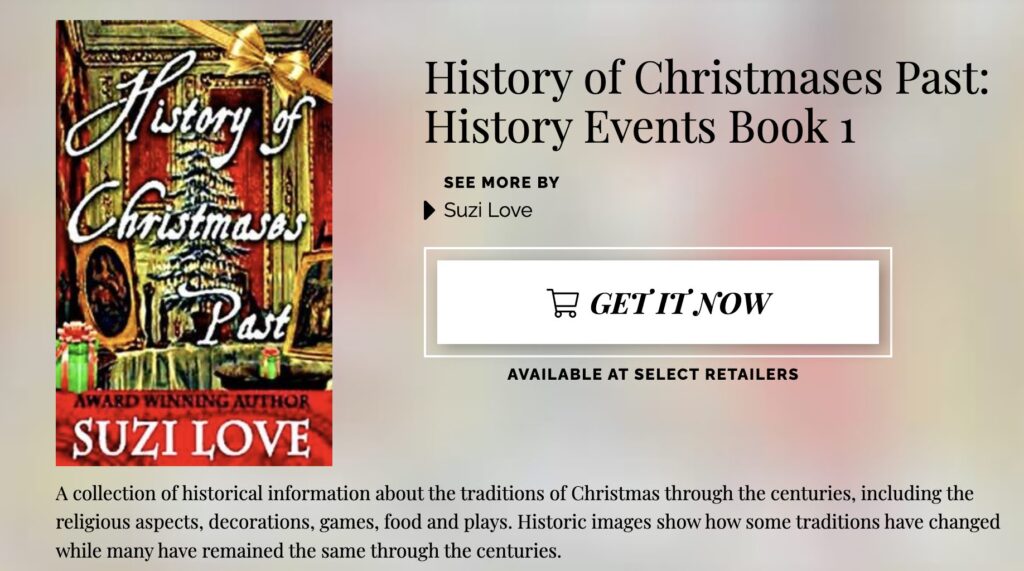
How did they celebrate Christmas in Bridgerton and Jane Austen times? Historical information about the traditions of Christmas through the centuries, including the religious aspects, decorations, games, food and plays. History Of Christmases Past has lots of information and images about Christmas through the centuries, including religious aspects, decorations, games, food and plays. Historic images show how some traditions have changed while many have remained the same through the centuries. books2read.com/suziloveHOCP
‘The following is a valued receipt that has been handed down in a Cornish family for many generations, and the hand-writing of the receipt book will vouch for its antiquity. ‘A pound of beef-suet chopped fine; a pound of raisins do. stoned. A pound of currants cleaned dry. A pound of apples chopped fine. Two or three eggs. Allspice beat very fine, and sugar to your taste. A little salt, and as much brandy and wine as you like. An ancient Cornish custom at Christmas.” A small piece of citron in each pie is an improvement.’ From: 1833 Christmas Carols, Ancient and Modern by William Sandys.
Mince meat pies, or Christmas or Twelfth Night pies, were always part of Christmas feasts. Originally the mince pies were oblong or oval but in the 1600’s, the pies became circular, although were quite large and could weigh up to 20 lbs. In London, they could be brought out on Lord Mayor’s Day which was the 9th of November.
Timeline of Mince Pies via Minced Pie Club.
In the 13th century, crusaders returned from the Middle Eastern with recipes containing meat, fruit and spices mixed together, which helped preserve meat without having to smoke, dry or salt.
1413 King Henry served a mincemeat pie at his coronation.
1588 Good Hous-Wiues Treasurie by Edward Allde: meats were still cut up to be eaten with a spoon and combined with fruits and heavy spices. His recipe for Minst Pye had practically the same ingredients as modern mince pies.
1657 Mince Pies were banned during the reign of Oliver Cromwell, along with other Christian traditions that were classed as gluttony.
1659 Oliver Cromwell’s Puritan influence spread to the American British Colonies and many towns banned mincemeat pies at Christmas time.
When pies were reintroduced in Britain, they were a lot smaller and could be served individually to guests and were named Wayfarer pies.
1832 Bill of Fare: no less than one hundred and eleven dishes of mince pies included.
More Minced Pie Trivia
When the monarchy was restored in 1660, the law regarding Minced Pies was disregarded but apparently never repealed so Mince pies are still, supposedly, illegal.
Pastry crusts sink in the middle and are thought to resemble Jesus’ manger so sometimes a small pastry doll was put in the middle and these were called crib pies.
Pies could last up to two months in cold weather.
Recipes varied by region, but usually included beef, poultry and other meats, suet, sugar, raisins or currants, spices, orange and lemon peel, eggs, apples and brandy.
Minced-meat was only supposed to be stirred clockwise, otherwise the stirrer would have bad luck in the coming year. bring bad luck for the coming year.
Filling included cinnamon, cloves and nutmeg to represent the gifts of the Magi to the infant Jesus and the star shaped pastry on top represents the star of Bethlehem.
If you ate minced pie every day of the twelve days of Christmas you were supposed to have twelve months of happiness, especially if the pies were baked by the dozen and offered by friends.
In 1931, Coca-Cola decided they wanted a more “wholesome” depiction of Santa, and contracted illustrator Haddon Sundblom to give him a makeover. Sundblom (1899-1976), who created expressive paintings of the magical Mr. Claus for the Coca-Cola Company over a period of 33 years. In 1931, Coca-Cola employed illustrator, Haddon Sundblom, to create a happier image of Santa Claus and he drew a new advertisement each year.
Clement Moore’s 1823 poem “A Visit from St. Nicholas” may have described the jolly old elf in detail, and Thomas Nast’s 1881 caricature of Saint Nick may have brought the image of Santa into focus, but not until the middle of the 20th century did one artist perfect the image of Santa and make it stick. Though he was not the first artist to create an image of Santa Claus for Coca-Cola advertising, Sundblom’s version became the standard for other Santa renditions and is the most-enduring.
Christmas pudding originated as a 14th century porridge called ‘frumenty’ , made of beef and mutton with raisins, currants, prunes, wines and spices. Often more like soup, it was eaten as a fasting meal in preparation for Christmas festivities. By 1595, frumenty changed into a plum pudding thickened with eggs, breadcrumbs, dried fruit and flavoured with beer and spirits. It became the customary Christmas dessert around 1650, but in 1664 the Puritans banned it as a bad custom. In 1714, King George I re-established it as part of the Christmas meal, having tasted and enjoyed Plum Pudding.
“In December, the principal household duty lies in preparing for the creature comforts of those near and dear to us, so as to meet old Christmas with a happy face, a contented mind, and a full larder; and in stoning the plums, washing the currants, cutting the citron, beating the eggs, and mixing the pudding, a housewife is not unworthily greeting the genial season of all good things.” Via 1861 Beeton’s Book of Household Management.
The Sunday closest to St. Andrew’s Day was Stirring-up Sunday, and the day to prepare the family’s Christmas pudding. The eldest member of the household or a visitor would give the first stir and charms were stirred into the pudding. A ring meant a coming marriage, a button was bachelorhood, a thimble meant spinsterhood, and a sixpence was good luck. Puddings were steamed in a pudding bag and stored in a cool place until Christmas Day.