1800 ca. Tan Corduroy Breeches. Drop down front flap, or ‘fall’, with two buttons, three silver metal buttons at the waistband, watch pocket, corner pockets with buttons, pieced back with waist tie, saggy back with extra fabric to allow for easier movement when riding or sitting, four buttons and silk ties at knee. via Whitaker Auction whitakerauction.smugmug.com. https://books2read.com/SuziLoveFashionMen1800-1819.
Typical of a gentleman’s breeches worn during the early 1800s, or the Regency Era, or Jane Austen’s times. They have a front flap, or fall, which unbuttons and drops down and a back waist tie to adjust the waist size and there are buttons and ties to secure the breeches below the knee.
1800 ca. Tan Corduroy Breeches. Drop down front flap, or ‘fall’, with two buttons, three silver metal buttons at the waistband, watch pocket.1800 ca. Tan Corduroy Breeches. saggy back with extra fabric to allow for easier movement when riding or sitting.1800 ca. Tan Corduroy Breeches. Drop down front flap, or ‘fall’1800 ca. Tan Corduroy Breeches. four buttons and silk ties at knee. 1800 ca. Tan Corduroy Breeches. four buttons and silk ties at knee. https://books2read.com/SuziLoveFashionMen1800-1819
1800-1815 ca. Sprigged Mull Dress. Typical of the white cotton high-waisted dresses in vogue in the early 1800s. They replaced the more formal gowns from the end of the 18th Century and moved away from heavier and more decorative fabrics. This is the type of dress Jane Austen and her contemporaries would have worn on a daily basis. via Whitaker Auctions.
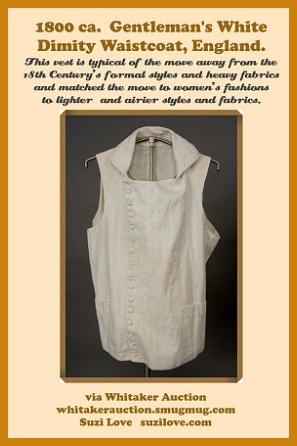
1800 ca. Gentleman’s White Dimity Waistcoat, England. This vest is typical of the move away from the 18th Century’s formal styles and fussy fabrics and matched the shift of women’s fashions towards lighter and airier styles and fabrics. via Whitaker Auction whitakerauction.smugmug.com Typical of a gentleman’s waistcoat, or vest, worn during the early 1800s, or Regency Era, or Jane Austen’s times.
1800 ca. Gentleman’s White Dimity Waistcoat, England. via suzilove.com and Whitaker Auctions.
From the finish of the 18th century until 1820, men’s fashions in European and European-influenced countries moved away from the formal wear of brocades, lace, wigs and powder to more informal and relaxed styles. Focus was on undress rather than formal dress. Typical menswear in the early 1800s included a tailcoat, a vest or waistcoat, either breeches, pants, or the newer trousers, stockings, shoes or boots, all worn with an overcoat and hat. This basic ensemble was accessorized with some form of neckcloth or cravat, gloves, walking stick, cane or riding crop, handkerchief, fobs, watch and perhaps a quizzing glass or eye glass.
Skirted coats were replaced with short-fronted, or cutaway, tailcoats worn over fitted waistcoats and plain, white linen shirts. Knee breeches were gradually replaced by tight-fitting pantaloons and later trousers, decorative shoes with buckles were replaced with a variety of boot styles, and fussy and ruffled neckwear gave way to intricately tied, white linen neck cloths. A Regency Era, or early 1800s, gentleman was outfitted in more practical fabrics, such as wool, cotton and buckskin rather than the fussy brocades and silks of the late 1700s.