1880’s Corset, French, silk satin, steel busk, and bone. Women used corsets to get closer to an ‘ideal physical form’. Until the beginning of the 20th century, women’s waists were tightened by corsets. via Kyoto Institute, Japan.
Corsets 1880-1900 History Notes Book 20 This book shows how a fashionable silhouette became of paramount importance and how a well-fitted corset became a fashion essential. As well as a decorative fashion item, tight lacing gave a narrow waist and the desired feminine form under clothing. https://books2read.com/SuziLoveCorsetBook20
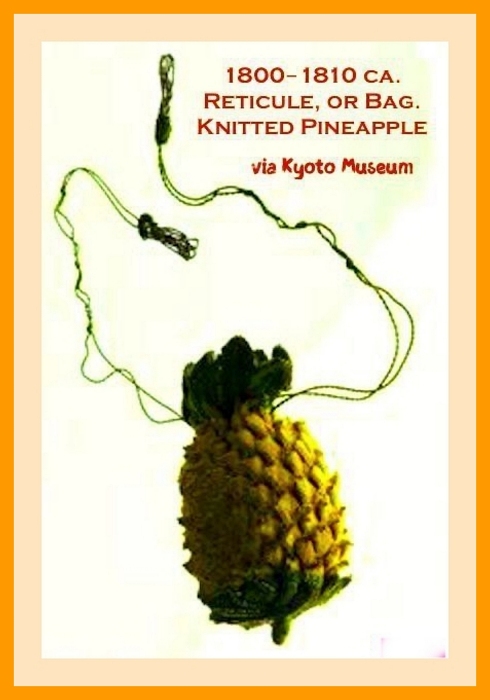
1800-1810 ca. Pineapple Reticule, or Bag. A knitted pineapple with long strings. In Jane Austen’s times, pineapples were a luxury imported item that most people in Great Britain had never seen, let alone tasted. When more pineapples were imported from hotter countries, or English gardeners started to grow some, pineapples became a much desired novelty and an exotic experience. Pineapple motifs appeared on dresses, furniture, household goods etc. Knitting pineapple reticules was part of this obsession with pineapples. via Kyoto Museum, Japan.
Definition Ridicule, Reticule, Indispensable, or Handbag: From the late 1700s, pockets could no longer be sewn into gowns, as skirts fell from just under the bust and were full and flowing. Instead, women began carrying small bags, known at first as ridicules and later as reticules, to keep necessary items on their person e.g. handkerchiefs, coins, vinaigrettes, calling cards, glasses etc. http://books2read.com/suziloveReticules
1800-1810 ca. Reticule, or Bag. A knitted pineapple with long strings. via Kyoto Museum, Japan.
In the early nineteenth century, reticules started to look like future handbags as they were often made from rigid card or molded mâché or card into a variety of shapes. Early bags were circular and with a drawstring but as women wanted their reticules to look individual they could be made with two halves and a hinged metal closure or with concertina sides. Materials varied from silk, cotton and string and shapes were round, hexagonal or lozenge shapes with shell shaped bags becoming very popular during the Regency and Romantic Eras.
1800s magazines were written for well bred women who could read, so they gave plenty of ideas for how ladies could make and embellish reticules for their own use and as pretty gifts. Needlework was highly encouraged as a pastime for a lady so bags were frequently embroidered or decorated with beading. By the 1820s, reticules became more like our modern handbags using soft leather gathered at the top or hard leather with a rigid fastener and metal chain for carrying.