1775-1825 ca. Bridgerton and Jane Austen Style Black Silk Breeches, American or European. #Bridgerton #JaneAusten #GeorgianEra #RegencyFashion books2read.com/SuziLoveFashionMen1800-1819
1798 Two ladies in Jane Austen style white walking dresses. Left: Dress has gold trim, white bonnet, green Parasol. Right: Stand up collar, short puffed sleeves, brown shawl and coiled head dresses, both with necklaces. via Rijks Museum, Amsterdam, Netherlands. rijksmuseum.nl
HN_1 Fashion Women Late 1700s History Notes Book 1 by Suzi Love.
What was fashionable for women in the late 1700s? Extravagant colors and fabrics and outrageous styles were all seen in these flamboyant fashions.
books2read.com/suziloveFashWomen1700s
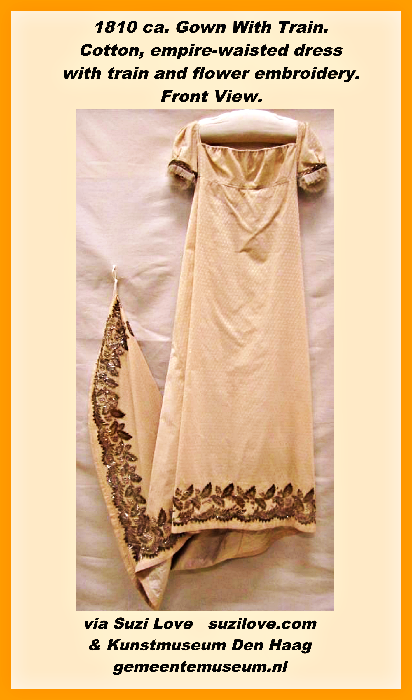
1810 Fawn Cotton Gown, with a train decorated with embroidered flowers. Regency fashion at its prettiest. The style of Empire style, or high-waisted, dress worn by Jane Austen and her contemporaries. via Gemeenteneun Museum Den Haag. Dutch Museum, the Netherlands. http://www.gemeentemuseum.nl
1810 ca. Front View. Gown With Train. Cotton, empire-waisted dress with train and flower embroidery. Gemeentemuseum Den Haag1810 ca. Back View. Gown With Train. Cotton, empire-waisted dress with train and flower embroidery. Gemeentemuseum Den Haag HN_27_D2D_fashwomen1810-1814
https://books2read.com/SuziLoveFashion1810-1814
1845-1865 ca. Black Faille Evening Slippers, French. Designed By Melnotte for Department Store J. Petit. Black slippers, which went with anything, were an essential for mid 1800s fashionable ladies. Generally made of satin so dull faille fabric is unusual so possibly for mourning. Label written largely in French of London shop, exclusive agent, plus other fashionable imported Parisian accessories. via Metropolitan Museum, NYC, U.S.A. metmuseum.org
1805-1815 ca. Capote, Or Bonnet, Netherlands. Black quilted bonnet with black ribbon chin ties. Jane Austen and her family and friends would have worn this style of bonnet. via Rijks Museum, Amsterdam, Netherlands. rijksmuseum.nl
Fashion Women 1805-1809 History Notes Book 26
What did Jane Austen and friends wear? This book looks at early 1800s fashions, which were elegant and pretty with high waists and fabrics that were almost transparent. These Empire style gowns, named after Napoleon’s first Empress, became popular throughout Europe, and were then copied around the world. Colorful outwear was added to make an ensemble more attractive and warmer.
https://books2read.com/SuziLoveFashionWomen1805-1809
1800-1810 ca. Flat Silk Slippers With Ankle Ties Worn By Empress Josephine Bonaparte and As Worn By Jane Austen And friends. #Regency #Shoes #JaneAusten #France
Shoes in the early 1800s were flat or low heeled and occasionally decorated with a bow or floral embellishments and it wasn’t until the 1820s that square, rather than rounded or pointed toes became fashionable. Made of soft kid or cloth, these delicate shoes were flimsy and wore out quickly. There was often no difference between a left or right shoe, so when one slipper had a hole it was easily replaced. Slippers were often bought in multiples at a time so there were spares.
1817 White Percale Dress, French. Dress has layers of decoration above hem, black velvet Spencer, or jacket, wide brimmed straw hat trimmed in blue, neck scarf and walking shoes. Fashion Plate via Journal des Dames et des Modes, or Costume Parisien.
Definition Spencers: Short jackets worn for warmth over the high-waisted Empire style gowns said to have originated when Earl Spencer tore the tails off his coat in a hunting accident. In support of military men fighting wars everywhere, fashions for Spencers leaned towards military style embellishments, such as loops, buttons, and braids. Puffed sleeves over long straight sleeves were also very popular. Jane Austen and her friends and family wore Spencers over their high-waisted dresses.
Definition Empire Style Dress: Named after the First Empire in France. Empire dresses had a low neckline and skirts started directly under the bust and flowed into the classical relaxed wide styles of Greece and Rome. This style of dress is associated with Jane Austen and her contemporaries as a high-waisted dress was worn most days. Cotton, silk or taffeta were the popular fabrics. Only the very wealthy could afford white dress in this style as the cottons were imported from India and had to be carefully cleaned, usually by a lady’s maid.
Fashion Women 1815-1819 History Notes Book 28 https://books2read.com/SuziLoveFashionWomen1815-1819
By 1700’s, a metal jeweled ornament hung from pockets, attached to belts, or by hooks into skirt waistbands
During 1800’s, women wore large collections of tools hung from chains
Young girls sewed and did needlework and needed to carry sewing notions eg scissors, thimbles
Worn by women of all classes, from workers to nobility
Varied depending on class and finances.
Made of silver, brass, steel, leather, or fabric
During 19th century, fashionable dresses often had no waist and nowhere to hang chatelaines
Chatelaines became decorative brooches
Often given as a wedding present from a husband to bride
Later became fashion accessories
D2D_RetailerBuyLink_HN_9. Chatelaines and Chains History Notes Book 9 By Suzi Love. #regency Women in charge of houses wore long chains holding important household items around their waist e.g. keys, pen, notebook, sewing. books2read.com/SuziLoveChatelaines
19th Century Early Green Silk Stockings With Gold Embroidery, French. via Metropolitan Museum, N.Y.C., U.S.A. metmuseum.org
In Jane Austen’s times, women, men, and children wore silk stockings, often embroidered in silk. In the Eighteenth Century, clocks had fallen out of fashion, but they were still being worn by wealthy aristocrats during the early 1800s.
In 1815, Rudolph Ackermann’s Repository Of Arts had an advertisement for silk stockings. ‘The cheapest and by far the largest stock ever produced by any one house now on Sale at the Manufacturer’s Warehouse, 51, Cheapside. The patterns are of the richest and most elegant description, beginning at the extraordinary low price of 8 shillings, usually sold for 10 shillings and 6 pence, to the very best and finest quality at 12 shillings 6 pence, usually sold for 16 shillings.’
1800-1815 ca. Unusual Skirt and Over Gown As Worn In Europe In Jane Austen’s Lifetime. From Holland. Gathered underdress and overdress with short puffed sleeves. via Dutch Museum – Gemeentemuseum Den Haag
The dresses worn in Holland and other parts of Europe were the same style as dresses worn by Jane Austen and her contemporaries. Empire waist gown defined women’s fashion during the Regency Era. ‘Empire’ is the name given to the loose gowns adopted by the aristocracy as a symbol of turning away from the fussy, elaborate and expensive clothing worn in the 1700s in France to the period when Napoleon built his French Empire.