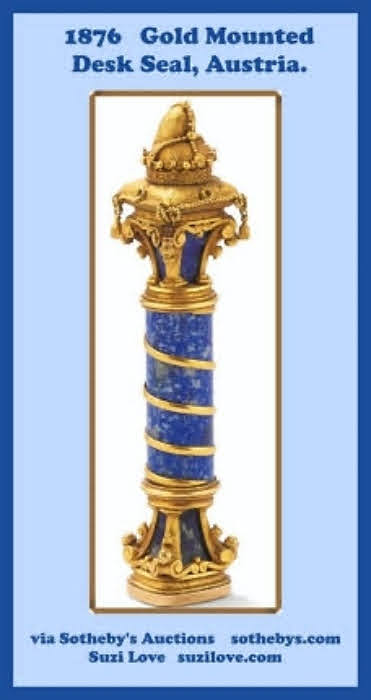
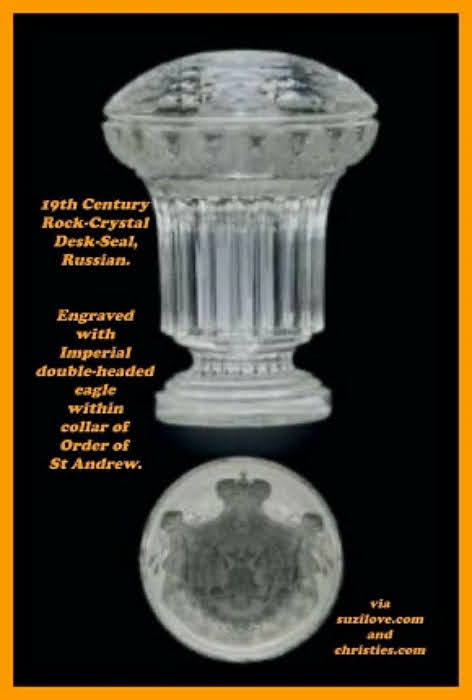
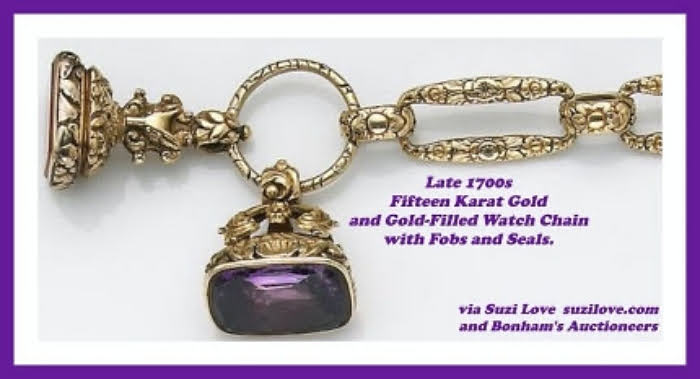
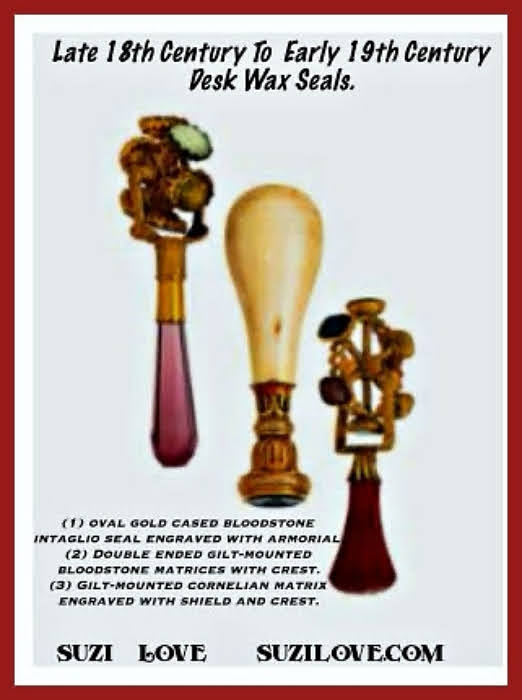
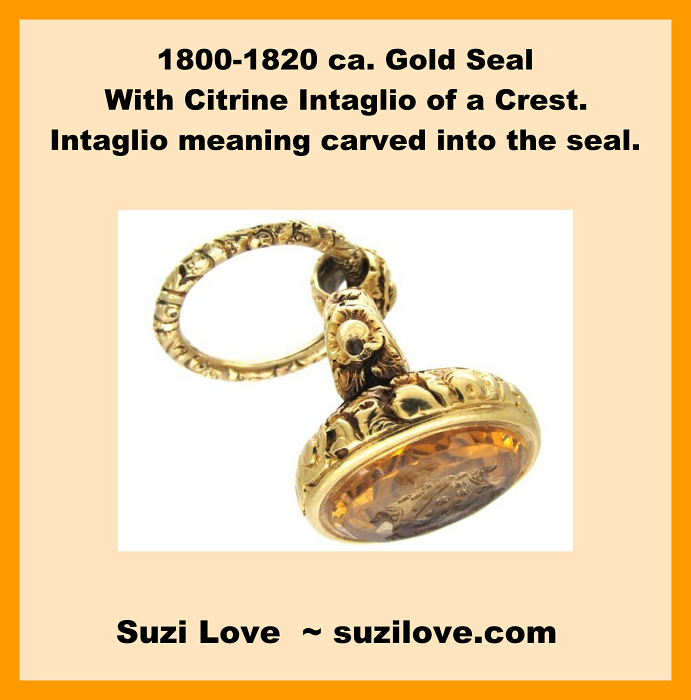
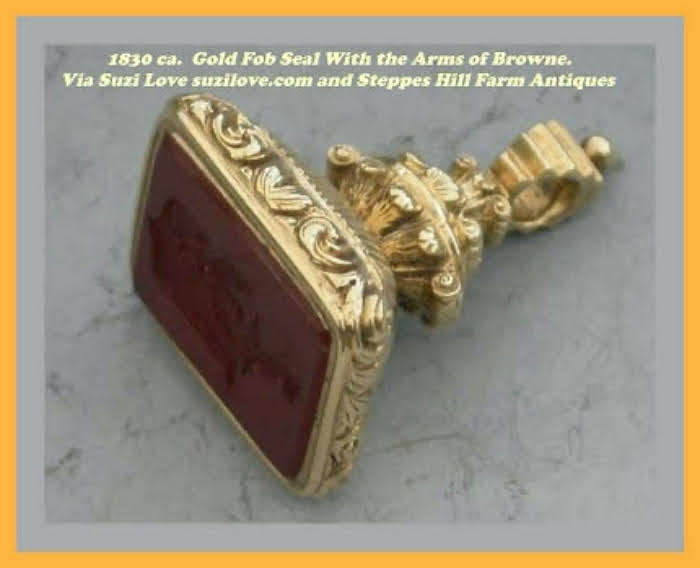
18th – 19th Century Seals For Letters and Posting. Used to seal hand written letters in the 18th and 19th centuries.
Definition: Wax Seals: Pressed onto a letter or envelope to show that a document is unopened or to verify the sender’s identity. A signet ring or was seal is pressed into a dollop of hot wax to seal a letter or envelope closed.
1802 Blue Riding Habit, French. Lady in a riding costume with a black fitted hat and a whip. Fashion Plate via Journal des Dames et des Modes, or Costume Parisien. Typical of the riding costumes worn by Jane Austen’s female contemporaries. The style is still in the Empire fashion of a high-waist with the skirt falling from just under the bust and worn under a matching short jacket or Spencer.
1811 Typical Regency Era Man’s Overcoat or Driving Coat. Fashion Plate via Journal des Dames et des Modes, or Costume Parisien. Overcoats were called many names: Greatcoat, Carrick or Garrick Coat, Coachman’s or Driving Or Box Coat. With many shoulder capes, or pelerines, to keep rain and snow off the body.
1800 Gentleman In Morning Dress French. Looking In Mirror, Double breasted, long coat high black boots with tan tops red cravat walking stick. Fashion Plate via Journal des Dames et des Modes, or Costume Parisien.
During the early 1800s skirted coats were replaced with short-fronted, or cutaway, tailcoats worn over fitted waistcoats and plain, white linen shirts. Knee breeches were gradually replaced by tight-fitting pantaloons and later trousers, decorative shoes were replaced with boot, such as the tan topped boots worn here, and fussy neckwear gave way to intricately tied, white linen neck cloths. A Regency Era, or early 1800s, gentleman was outfitted in more practical fabrics, such as wool, cotton and buckskin rather than the fussy brocades and silks of the late 1700s. The men in Jane Austen’s life would have worn an elegant outdoor ensemble like this for everyday excursions around the countryside.
What did the lady of the house use to pen notes in Bridgerton and Jane Austen’s years? What sat on the desk of Jane Austen’s male contemporaries when they managed household and estate accounts? books2read.com/SuziLoveWritingTools. Writing Tools, History Notes Book 13.
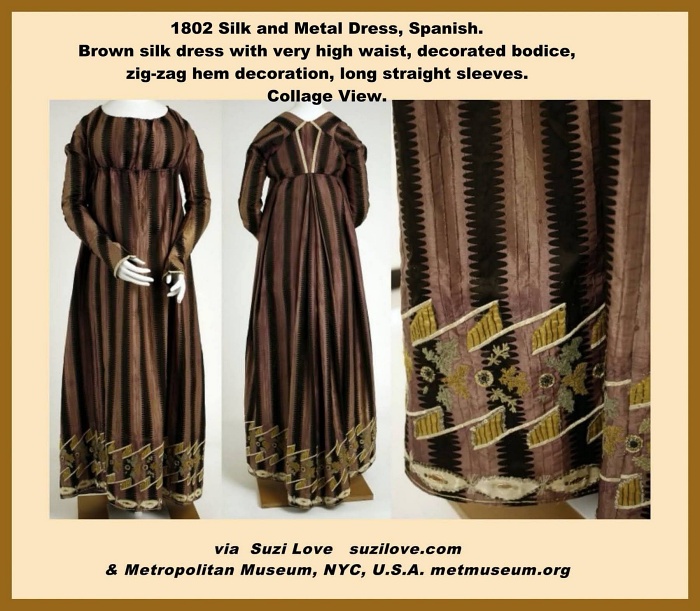
1802 Silk and Metal Dress, Spanish. Brown silk dress with very high waist, decorated bodice, zig-zag hem decoration, long straight sleeves. I can picture Jane Austen and her female friends and family wearing this sort of dress to a dinner party or musical evening. via Metropolitan Museum, NYC, U.S.A. metmuseum.org
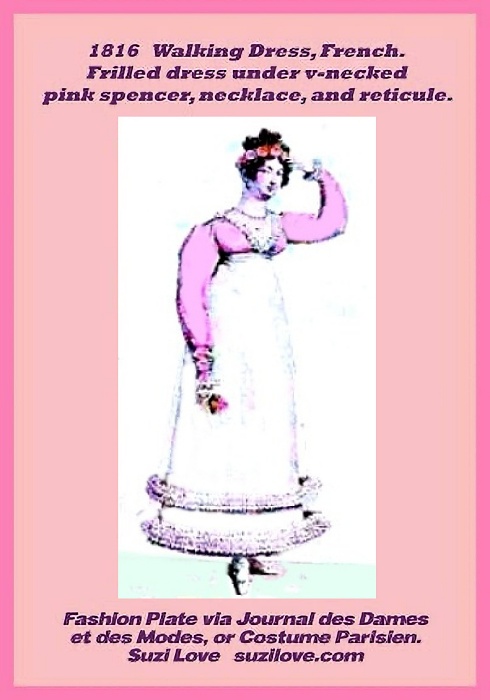
1816 White Walking Dress of short length and double row of frills at the hem. With pretty pink V-necked Spencer and carrying a reticule, walking shoes and floral wreath in her hair. Fashion Plate via Journal des Dames et des Modes, or Costume Parisien. Jane Austen and her contemporaries often walked to places and so would have needed the warmth of a Spencer over her dress in the cold British winters. https://books2read.com/SuziLoveFashionWomen1815-1819
Definition Spencer: Short jacket, cropped at the waist, worn over a dress, or gown. These close-fitting, tight sleeved, waist length jackets were modeled on a gentleman’s riding coat, but without tails. Delicate and regency dresses provided so little protection from the cold, so over garments were essential for warmth, modesty and good health.
Definition Ridicule, Reticule, Indispensable, or Handbag: From the late 1700s, pockets could no longer be sewn into gowns, as skirts fell from just under the bust and were full and flowing. Instead, women began carrying small bags, known at first as ridicules and later as reticules, to keep necessary items on their person e.g. handkerchiefs, coins, vinaigrettes, calling cards, glasses etc.
Definition Empire Style Dress: Named after the First Empire in France. Empire dresses had a low neckline and skirts started directly under the bust and flowed into the classical relaxed wide styles of Greece and Rome. This style of dress is associated with Jane Austen and her contemporaries as a high-waisted dress was worn most days. Cotton, silk or taffeta were the popular fabrics. Only the very wealthy could afford white dress in this style as the cottons were imported from India and had to be carefully cleaned, usually by a lady’s maid.
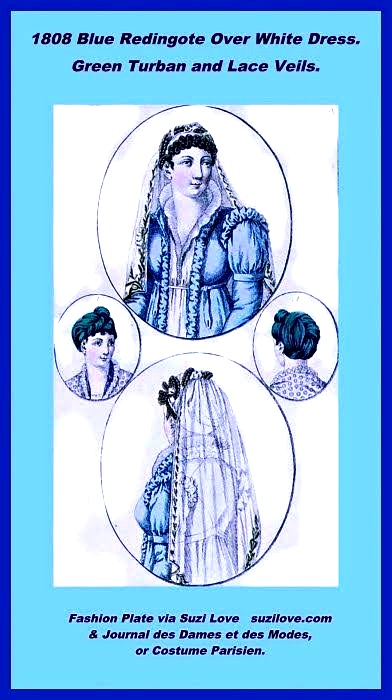
1808 Jane Austen Style Blue Redingote Over A White Dress. Green turban and lace veils. Bodice. Fashion Plate via Journal des Dames et des Modes, or Costume Parisien.
French fashions like this were copied by English magazines so these styles of hats would have been worn by Jane Austen and her contemporaries.
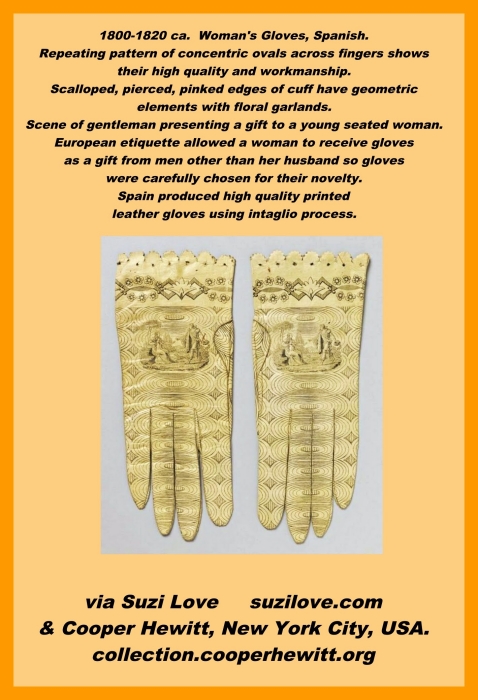
1800-1820 ca. Woman’s Gloves, Spanish. Repeating pattern of concentric ovals across fingers shows their high quality and workmanship. Scalloped, pierced, pinked edges of cuff have geometric elements with floral garlands. Scene of gentleman presenting a gift to a young seated woman. European etiquette allowed a woman to receive gloves as a gift from men other than her husband so gloves were carefully chosen for their novelty. Spain produced high quality printed leather gloves using intaglio process. via Cooper Hewitt, New York City, USA. collection.cooperhewitt.org
Now surviving in museum collections throughout Europe and North America, this style of glove must have been a brief, but very popular fad of the last years of the 18th century. As gloves were one of the few gifts a man could give to a single woman he was not engaged to marry, new designs and colours were eagerly sought after to provide variety in this staple form of present.
Printed kidskin gloves of this type were fashionable from the last decade of the 18th century until the 1820s. They were suitable for wearing with the long sleeved day dresses which women adopted in the last decade of the century. Long gloves continued to be required for court dress which retained its short sleeves. By this date many European countries were manufacturing gloves, both in leather and in woven or knitted textiles made of silk, cotton, linen or wool. Printed kidskin was used for gloves and for the backing for fans. English fan makers were printing on leather before 1720. The intaglio method of printing used a copper plate. The design was engraved with a buril or dry point into the plate, then the plate was immersed in ink and the leather placed on it in a screw press. Several different pairs of gloves could be printed at a time and if the pattern wore off with use, they could be reprinted.
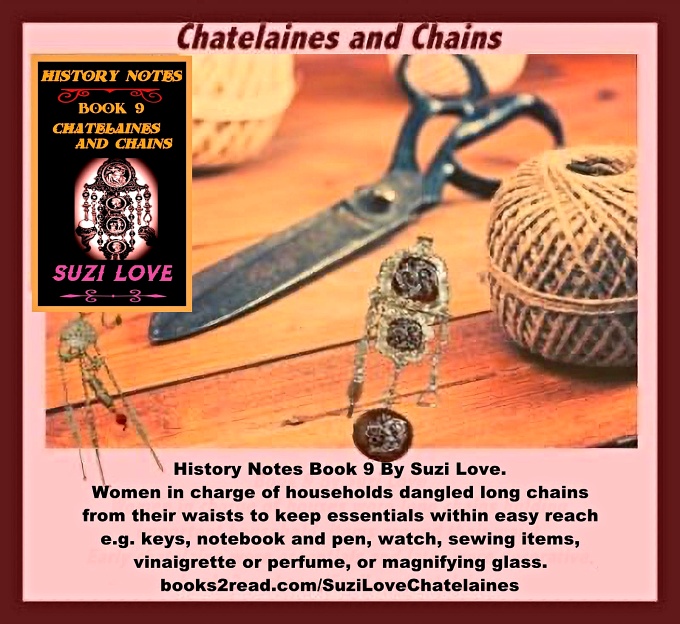
Love the charming chatelaines and chains women wore in Jane Austen’s and Bridgerton’s times? Check out this fascinating read! #bridgerton #janeausten #chatelaine #suzilovebooks books2read.com:SuziLoveChatelaines
The Bridgerton women and Jane Austen and contemporaries carried keys, writing tools, sewing items and other personal necessities on their person by long chains, or a chatelaine, that hung from their waist. Early chatelaines were simple essentials but later chatelaines were decorative and expensive. http://books2read.com/SuziLoveChatelaines
Definition Chatelaine: The word Chatelaine is French and means the keeper of the keys. Chatelaine” derives from the Latin word for castle. In Medieval times, the chatelaine was in charge of the day-to-day running of the castle. Women in charge of households dangled long chains from their waists to keep essentials within easy reach e.g. keys, notebook and pen, watch, sewing items, vinaigrette or perfume, or magnifying glass. Early chatelaine were simple essentials. Later chatelaine were decorative and expensive.books2read.com/SuziLoveChatelaines
What did a chatelaine do? Most important task was keeper of the keys. Also ordered supplies, did bookkeeping, supervised servants, taught castle children, and organized guests.