1810-1820s ca. Woman’s Green Slippers. Possibly French, worn in America. The type of shoes worn by Jane Austen and her female friends and family and by the female members of the Bridgerton family. via Museum of Fine Arts, Boston. mfa.org
Shoes in the early 1800s were flat or low heeled and occasionally decorated with a bow or floral embellishments and it wasn’t until the 1820s that square, rather than rounded, toes became fashionable. Typical Regency Era women’s footwear were shoes that had low heels, slightly rounded toes, embellished with a bow and with ribbon ties for the ankles. Made of soft kid or cloth, these delicate shoes were flimsy and wore out quickly. Slippers were often bought in multiples at a time and with no difference between left or right foot so when one slipper had a hole it was easily replaced.
1808 Gorgeous Women’s Fashion In The Times Of Jane Austen. Fashion plates from Journal des Dames et des Modes or Costume Parisien. Dresses, coats or Redingotes, Spencers in purple and red, shawls, fichu or shoulder cape, shoes, hats and headdresses, gloves, and Reticules or bags. Empire style, high-waisted dresses of lightweight cotton with softly falling, gathered, long skirt and with a train were commonly worn. In Jane Austen years, high-waisted and short sleeved dresses were the Neo-classical dresses which imitated the Greek and Roman clothing seen in sculptures. White muslin fabrics were either imported from India, or made in Europe to imitate Indian materials.
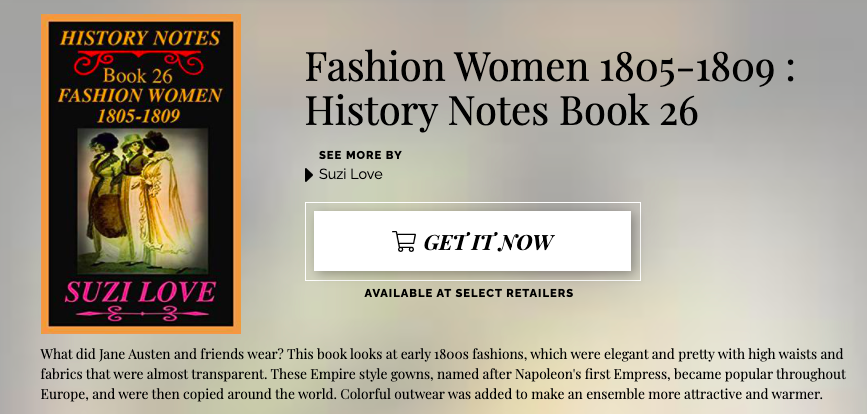
Fashion Women 1805-1809 History Notes Book 26 What did Jane Austen and friends wear? This book looks at early 1800s fashions, which were elegant and pretty with high waists and fabrics that were almost transparent. These Empire style gowns, named after Napoleon’s first Empress, became popular throughout Europe, and were then copied around the world. Colorful outwear was added to make an ensemble more attractive and warmer. https://books2read.com/SuziLoveFashionWomen1805-1809
Definition Reticule Or Ridicule Or Bag or Purse or Handbag: Often with a drawstring to pull closed and usually made of cloth or covered cardboard and often decorated with beading or embroidery. A reticule, or purse, or handbag, was usually carried by a woman during the Regency period to carry all their daily necessities. Earlier, women used pockets that tied at the waistline and were hidden in the folds of their skirts. Empire style, or early 1800s, high-waisted dresses made it impossible to either sewn in a pocket or to tie on a pocket. So women began carrying small, decorated bags called Reticules, or ridicules, which generally pulled close at the top with a drawstring.
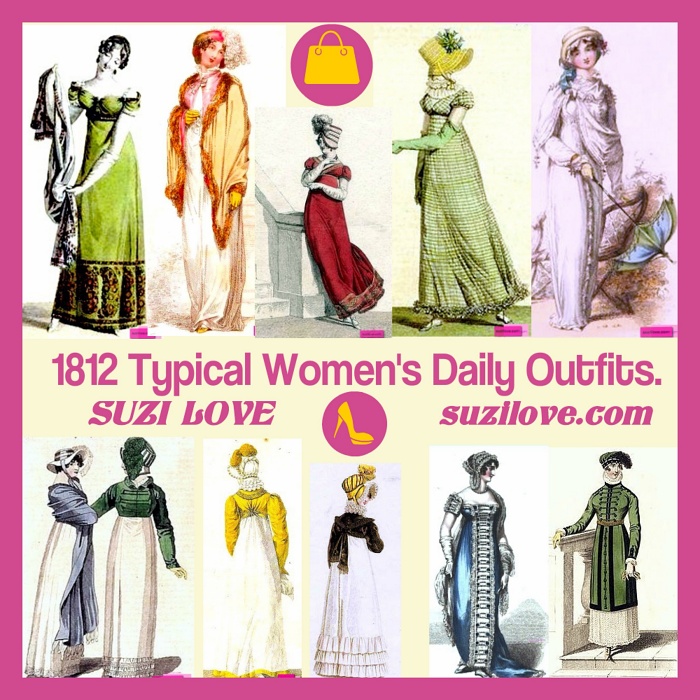
1808 High-Waisted White Dress, French. White Fichu over the shoulders, pale blue shoes, pink striped hat.1808 White Dress With Purple Spencer, French. 1800 White Dress, French. Black ribbon criss-crossing the back bodice. 1808 White Dress With Train Under A Red Spencer, French. Pointed shawl bodice and long sleeves.1808 Negligee Or At-Home Dress, French. Orange redingote, or coat, white shawl, blue gloves and shoes.1808 Lady in a white At-Home dress and cap sitting at her dressing table, French. Fashion Women 1805-1809 History Notes Book 26
What did Jane Austen and friends wear? This book looks at early 1800s fashions, which were elegant and pretty with high waists and fabrics that were almost transparent. These Empire style gowns, named after Napoleon’s first Empress, became popular throughout Europe, and were then copied around the world. Colorful outwear was added to make an ensemble more attractive and warmer.
https://books2read.com/SuziLoveFashionWomen1805-1809
I love Pinterest for keeping thousands of historical images in some sort of order.And I love using Pinterest Boards as inspiration for my romance books.What about you? Do you use Pinterest for planning something, or just for fun?Need more hints for what to do with your boards and pins? Take a look at these fascinating articles on Pinterest. if you want even more Pinterest information and tips for becoming a power user, check out my Suzi Love Pinterest Boards
What did Jane Austen and friends wear? Early 1800s fashions were elegant and pretty with high waists and fabrics that were almost transparent. These Empire style gowns, named after Napoleon’s first Empress, became popular throughout Europe, and were then copied around the world. Colorful outwear was added to make an ensemble more attractive and warmer. History Notes Book 26 Fashion Women 1805-1809. https://books2read.com/SuziLoveFashionWomen1805-1809
The Empire waist gown defined women’s fashion during the Regency Era. ‘Empire’ is the name given in France to the period when Napoleon built his French Empire. High-waisted, loose gowns were adopted by the aristocracy as a symbol of turning away from the fussy, elaborate and expensive clothing worn in the 1700s. Jean-Jaques Rousseau advocated copying peasants and returning to a simpler life and more natural fashions. Unrestricting clothing was part of the new Democracy in France and these simpler and flowing fashions were adopted all over Europe, including Britain and despite the continual wars being fought against France during the early 1800s. Not even war stopped fashions from being copied everywhere.
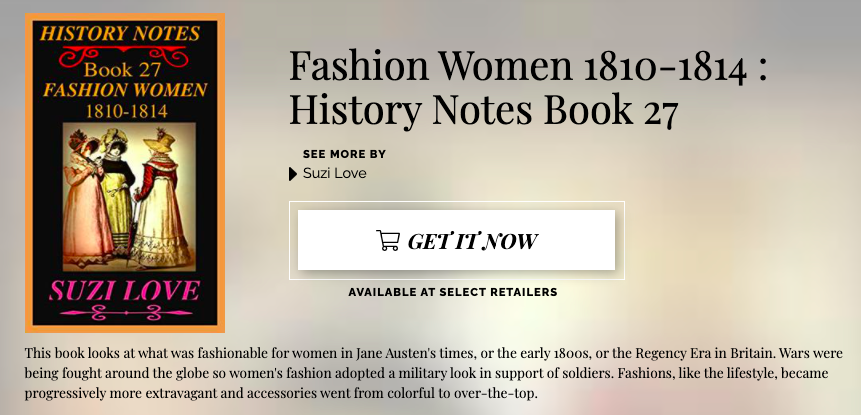
Fashion Women 1805-1809 History Notes Book 26 What did Jane Austen and friends wear? This book looks at early 1800s fashions, which were elegant and pretty with high waists and fabrics that were almost transparent. These Empire style gowns, named after Napoleon’s first Empress, became popular throughout Europe, and were then copied around the world. Colorful outwear was added to make an ensemble more attractive and warmer. https://books2read.com/SuziLoveFashionWomen1805-1809HN_26_D2D_FsshionWomen1805-1809
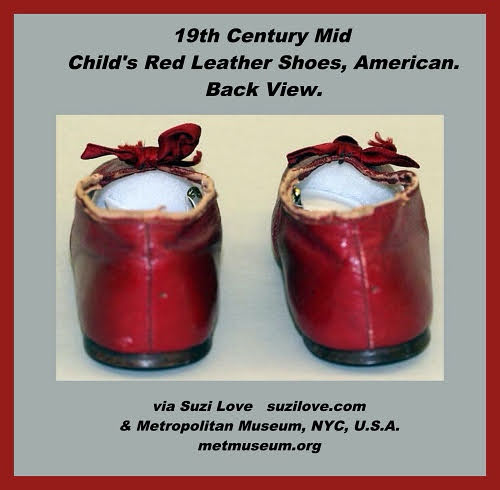
1830-1835 ca. Canary Yellow Leather and Silk Slippers, British. Silk satin lined, kid leather and linen. via Victoria and Albert Museum, London, UK. collections.vam.ac.uk.
1830s Shoes: Producing different shoes for right and left feet started around 1830 in France. In these first attempts, little paper labels on the insoles of the shoes indicated left and right. However, the shoes were still made on straight lasts with no differentiation between the left and right foot. By the end of the 19th century, producing left and right shoes had become common as shoemakers then worked with combinations of sole and vamp cuts tailored to fit either the right or the left foot. The first steps towards the mechanisation of shoemaking were taken during the Napoleonic Wars. In 1810, engineer Marc Brunel developed a machinery that could mass-produce nailed boots for the soldiers of the British Army. But after the end of the war in 1815, manual labour became cheap, and the demand for military shoes declined. The industrialization of shoemaking began around 1830.
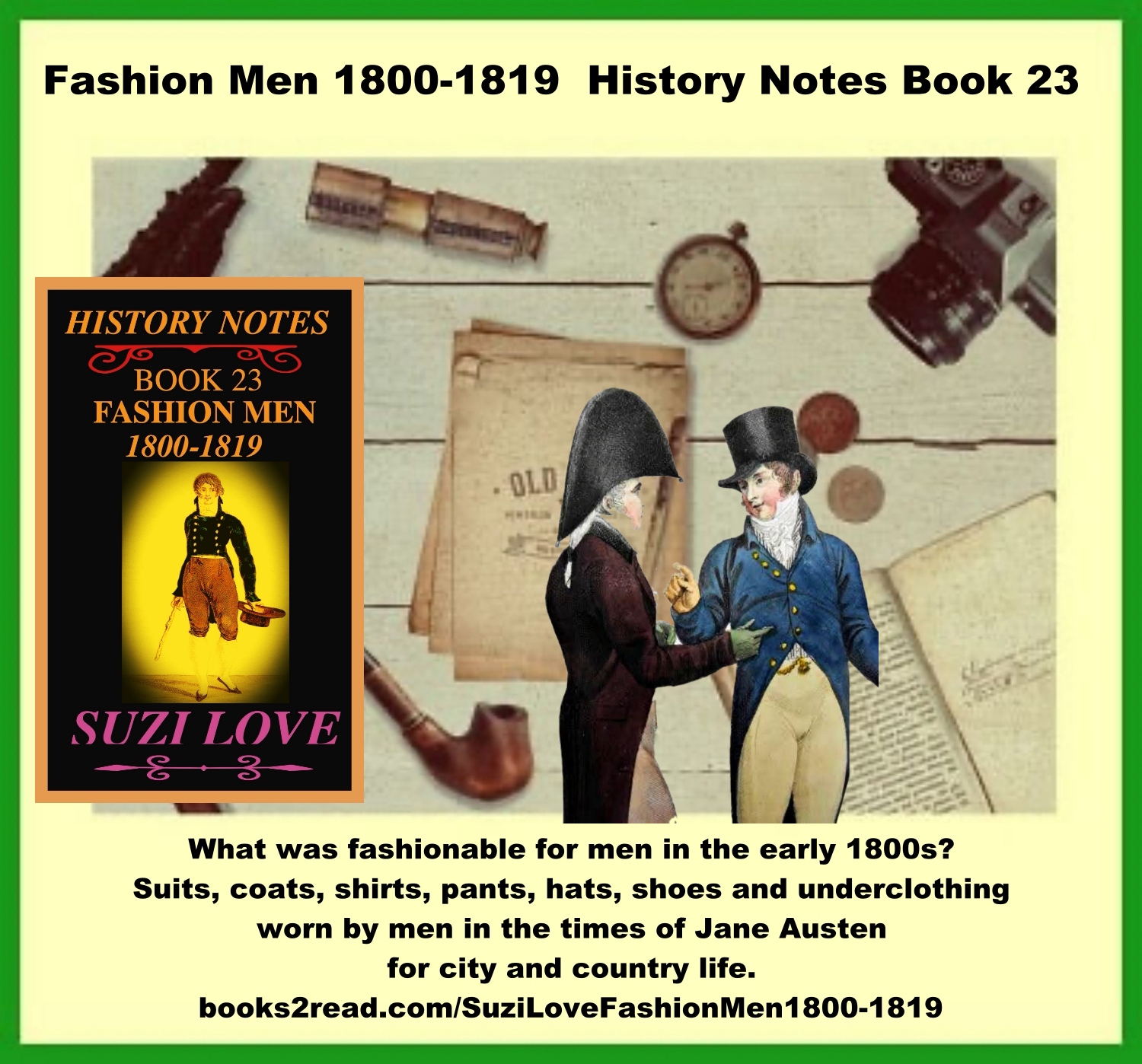
LLove the Bridgerton Series? Fan of Jane Austen? What did men wear in the early 1800s? Suits, hats, shoes, underclothing, military and bedroom fashions. #Bridgerton #RegencyFashion #JaneAusten #BritishHistory
A Regency Era, or early 1800s, gentleman was outfitted in more practical fabrics, such as wool, cotton and buckskin rather than the fussy brocades and silks of the late 1700s. French fashions and Georgian and Regency Era fashions from Great Britain were copied around the world. Take a look at the outfits worn by gentlemen in the Bridgerton series and in Jane Austen’s lifetime.
The British Regency was the period from 1811-1820. King George III was deemed mad and unfit to rule so his son became his proxy, the Prince Regent, or Prinny to his close friends. This was the situation when Jane Austen was alive. The Regency Era was famous for its beautiful clothing as well as the magnificent buildings erected and furnished in the ‘Regency Style’ under orders from the extravagant Prince Regent.The Regency Era saw a wide variety of acceptable pants for men. Breeches were worn as part of a man’s daily outfit during the early 1800s and were necessary for formal occasions, such as court appearances, during the entire Regency Era. However, younger gentlemen moved away from breeches for daytime wear around 1807 and adopted a variety of long pants called trousers, pantaloons, buckskins or inexpressables. Knee-length breeches, worn with stockings, continued to be worn by older gentlemen through the entire Regency Era.
Around 1807, upper class gentlemen wore trousers held up by suspenders or pantaloons, which were closely fitted and worn with tall boots. Buckskins, made from deerskin, were comfortable to wear for riding. Inexpressibles were very tight leggings that left little to the imagination of young ladies. Every Regency man’s outfit included a hat, gloves, shoes or boots, and a selection of added accessories from a walking stick, watch on a chain, fobs, coin purse and a handkerchief.
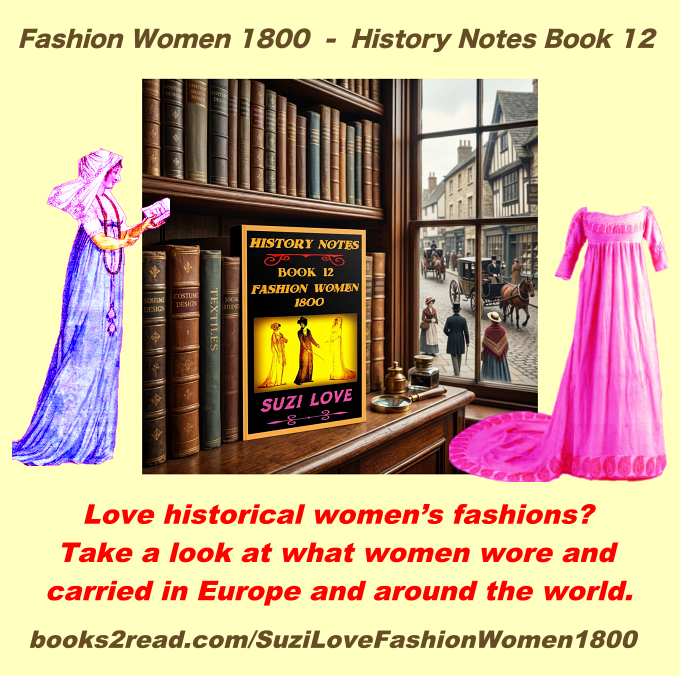
Fashion Women 1800 By Suzi Love History Notes Book 12 #Regency #Fashion Love gorgeous historical women’s fashions? Take a look at what women wore and carried in 1800 in Europe and around the world. This is the world Jane Austen lived in and the fashions she wore. books2read.com/SuziLoveFashionWomen1800
Women’s dress changed dramatically after 1785. The rich fabrics and complicated, formal shapes of the late 18th century gave way to simple, light fabrics that draped easily. These new gowns achieved something of the effect of the simple tunics shown on classical Greek and Roman statues and vases. Inspired in part by the statuary of ancient Greece and Rome, the new fashion was epitomised by light cotton gowns falling around the body in an unstructured way, held around the high waist with a simple sash and accompanied by a soft shawl draped around exposed shoulders. This style was ideal for the Indian imports like Kashmiri shawls and Bengali muslin, as used in this embroidered gown. Championed by such influential figures as Emma Hamilton in England and Madame Récamier in France, the so-called ‘Empire’ style catapulted Indian muslin into the forefront of fashion.
Empire Dress: Owes its name, physical emancipation, popularity, and even its sexiness to France. In this English example, French style is slavishly followed in the gown’s high waist and modish stripes.
Empire style, or early 1800s, high-waisted dresses made it impossible to either sewn in a pocket or to tie on a pocket. So women began carrying small, decorated bags called Reticules, or ridicules, which generally pulled close at the top with a drawstring.
Inspired in part by the statuary of ancient Greece and Rome, the new fashion was epitomised by light cotton gowns falling around the body in an unstructured way, held around the high waist with a simple sash and accompanied by a soft shawl draped around exposed shoulders. This style was ideal for the Indian imports like Kashmiri shawls and Bengali muslin, as used in this embroidered gown. Championed by such influential figures as Emma Hamilton in England and Madame Récamier in France, the so-called ‘Empire’ style catapulted Indian muslin into the forefront of fashion.
HN_12_Fashion Women 1800 By Suzi Love History Notes Book 12 #Regency #Fashion Love gorgeous historical women’s fashions? Take a look at what women wore and carried in 1800 in Europe and around the world. books2read.com/SuziLoveFashionWomen1800HN_12 D2D_RetailerBuyLink_HN_12 books2read.com/SuziLoveFashionWomen1800
1812 August. Ball Dress, English. Dress with lower waistline than normal in the Empire period, pink laced bodice, with decorative sleeves, skirt with pink hem decoration, pink hat with pretty plume, and yellow gloves. Fashion Plate via John Belle’s ‘La Belle Assemblee’, London. https://books2read.com/SuziLoveFashion1810-1814
Definition: Ball Gown or Dress: From the early 19th century onwards, ball gowns were regularly illustrated and described in women’s magazines as minute distinctions between ball, dinner, evening and opera gowns. Ball gowns were of expensive silk fabrics, light or heavy, decorated with lace, embroidery or beading, with low-cut bodice, short or no sleeves, and a full skirt.
Writer Or Reader Of Regency Era?What did Jane Austen and friends wear? Women’s clothing changed dramatically in early 1800s. New silhouette copied simplistic styles of Greeks and Romans. High-waisted white dresses and flowing skirts with color and warmth added by outerwear and accessories. Fashion Women 1801-1804 History Notes Book 25 https://books2read.com/SuziLoveFashionWomen1801-1804
Definition Empire Style Dress: High-waisted white gowns defined women’s fashion during the Regency Era. ‘Empire’ is the name given to the period when Napoleon Bonaparte built his French Empire. High-waisted, loose gowns were adopted by the aristocracy as a symbol of turning away from the elaborate clothing worn in the 1700s. This sort of high-waisted dress would have been worn by Jane Austen and her contemporaries in England.
Definition Shawls: The shawl started off in India as a fine wool garment for men that could be worn as a scarf, turban or as a mantle: the word comes from the Persian shäl. Originally imported from the East, European Kashmir shawls were made first in Norwich and Edinburgh in Britain in the late 18th century. Shawls were an essential item in the early 1800s to cover the thin gowns women wore. They were made of muslin, gauze, silk, wool, and velvet, though cashmere shawls were the softest and most prized.
Fashion Women 1801-1804 History Notes Book 25 This book looks at the changes to women’s clothing in the early 1800s and the move away from complicated styles and heavy fabrics. The new silhouette copied the simplistic styles of the Greeks and Romans. White dresses were high-waisted and skirts were flowing, with color and warmth added by outwear and accessories. https://books2read.com/SuziLoveFashionWomen1801-1804