“Know your own happiness. Want for nothing but patience – or give it a more fascinating name: Call it hope.ā Jane Austen Sense and Sensibility (1811)


“Know your own happiness. Want for nothing but patience – or give it a more fascinating name: Call it hope.ā Jane Austen Sense and Sensibility (1811)


1813 October White Empire style, or high-waisted, Carriage Dress, English. Brown shawl, brown boots, and a lace cap tied under the chin. Typical of the carriage fashions that would have been worn by Jane Austen and her contemporaries. Fashion Plate via The Lady’s Magazine Or Entertaining Companion for the Fair Sex.
Definition Empire Style Dress: High-waisted white gown defined womenās fashion during the Regency Era. ‘Empire’ is the name given to the period when Napoleon Bonaparte built his French Empire. High-waisted, loose gowns were adopted by the aristocracy as a symbol of turning away from the fussy, elaborate and expensive clothing worn in the 1700s. https://books2read.com/SuziLoveFashion1810-1814


1800s Early Women’s Half Boots, British, as worn by Jane Austen and her family and the Bridgerton ladies. Walking was encouraged for women so lace-up half-boots became a popular replacement for flimsy slippers for outdoor wear. Made of nankeen, a durable, yellow-colored, natural cotton from China or from colored leather. via Victoria and Albert Museum, London, UK. collections.vam.ac.uk
In Bridgerton and Jane Austen years, people were encouraged to partake in outdoor pursuits to maintain good health so walking became a daily pastime. Fragile slippers were worn for balls and evening events but for walking sturdier shoes were needed, In the early 1800s, these were typically made of leather, had a very small heel, slightly rounded toes and were laced up on the top.


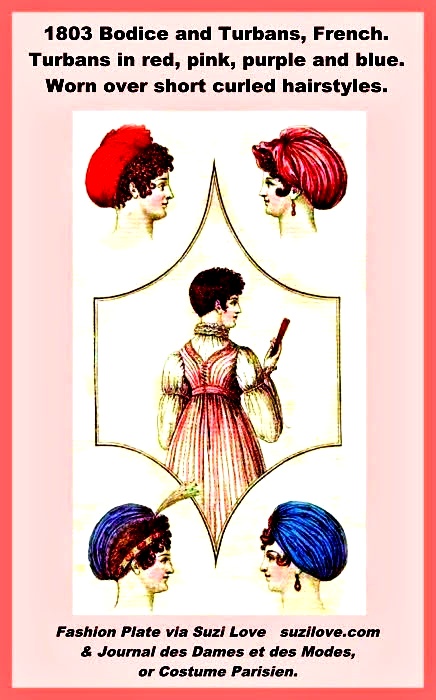
1804 London Hairstyles,Turbans and Hats. Gold, Pink, and White With Feathers. Jane Austen and her friends would have worn gorgeous hats and turbans like these. via Fashion Plate via Fashions of London and Paris, Published By Richard Phillips, St. Paul’s Church Yard, London, UK.


1800-1810 ca. Gown, dark green taffeta, square neckline, long sleeves. the type of high-waisted dress worn across Europe in Jane Austen’s time. Gemeentemuseum Den Haag


1813 Spa Terrace. From: Poetical Sketches of Scarborough. Meant as souvenirs and not intended for publication. By Thomas Rowlandson & Aquatint by John Bluck and Joseph Stadler. Via Wikimedia Commons commons.wikimedia.org (PD-ART) Spa towns were very fashionable retreats from London’s pollution for people in Jane Austen’s times.


1850ā1859 ca. Silk Whalebone and Steel Corset, French. Pale green watered silk corset with black flossing and contrast stitching. via Fine Arts Museums Of San Francisco https://art.famsf.org


An overview of women’s fashions in the first twenty years of the 19th century. What was fashionable for women in Jane Austen’s times, or the early 1800s. Wars were being fought around the globe so women’s fashion adopted a military look in support of soldiers. In Britain, the Prince Regent ruled instead of his father, King George III, so fashions, like the lifestyle, became more extravagant and accessories went from pretty to opulent.
Reader Or Writer of Regency Era? Love Jane Austen and Bridgerton fashions? What was fashionable for women in Jane Austen’s times, or 1800s, or Regency Era. High-waisted dresses were extravagantly accessorized and hats, shoes, parasols and bags were added. Set includes History Notes Books 12, 25, 26, 27 and 28. https://books2read.com/SuziLoveFashionWomenBoxSet
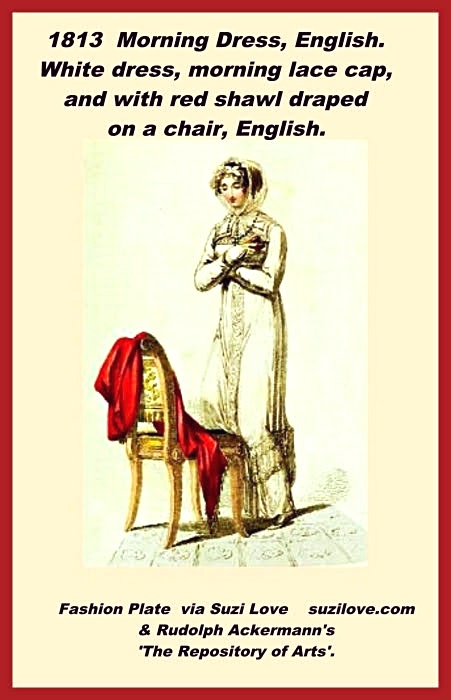
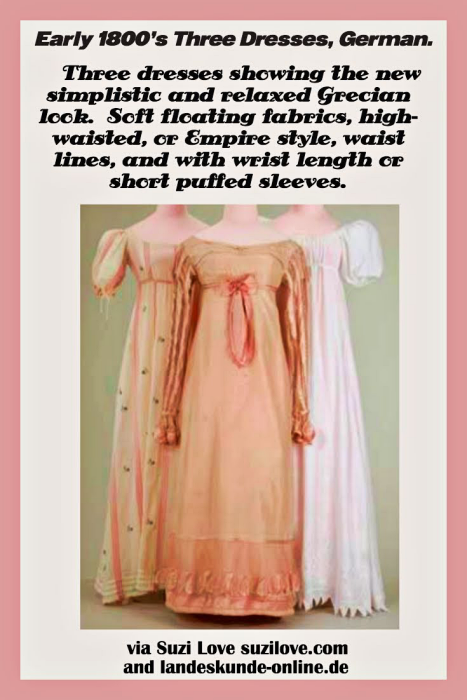
Ladies clothing in the early 1800’s featured a high waist line called an Empire Line, or Empire style dress, with a waist line just under the natural bust line and much higher than the natural waist. The high-waisted, or short-bodied, Regency styles shifted focus away from the natural waist and so left the natural waist unconstricted, in direct contrast to previous and future styles. Britain took these simple European styles and progressively made them more elaborate by adding more and more complicated embroidery onto white fabrics to create the white on white look popular for many years.
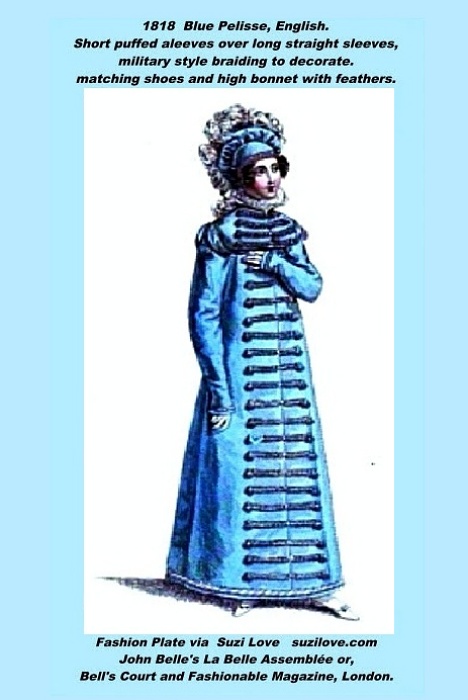
The empire look of fine muslin dresses left women more exposed than in the Georgian Era when fabrics had been thicker and styles bulkier. Women, especially in England, preserved their modesty by adding lace, frills, flounces, ruches, and fabric plaits to dresses to adequately cover any parts that might inadvertently be exposed. Outer layers, such as Spencers, Redingotes or Pelisses or coats, and shawls, were also added for warmth and to brighten outfits. This Empire fashion was totally dependent on a supply of fine, translucent cotton muslin ā at first imported from India, then later, less exclusive imitations often woven and printed or embroidered in Britain. Fabrics were soft and lightweight and muslins and other cotton fabrics from India and other Asian countries were in high demand.


1811 Walking Dress, French. High-waisted lavender Redingote over a white dress, paisley shawl, white gloves, slippers, and a ruched, or gathered fabric, hat to match the high ruched neck frill. Fashion Plate via Journal des Dames et des Modes, or Costume Parisien.


1810-1829 ca. Green Silk Street Shoes, Probably British. As Worn by Jane Austen and her contemporaries and the Bridgerton family. Heavier sole than ordinary day shoes, although the silk fabric meant they were only worn for easy promenades. Rounded toe means prior to 1830, when toes became square. Strong colors in shoes complimented fashionable colorful garments of the time. via Metropolitan Museum, NYC, U.S.A. metmuseum.org