1820 ca. Groups of Dandies fashionably dressed. Hand Colored etching. Published By J. Le Petit, Dublin, U.K. Via British Museum, London, UK. britishmuseum.org (PD-Art)
A dandy is a man who places a lot of importance on his appearance, on having refined language living his life in a leisurely manner. A dandy didn’t have to be an aristocrat. He could also be a middle class man or a self-made man of wealth who could afford to place all his emphasis on his clothing and his leisure time.
Reader or Writer of Regency Era Books? Love the Bridgertons and Jane Austen? Nonfiction book, Older Gentleman’s Day, gives an overview of his daily life by Award Winning researcher and author, Suzi Love. A sometimes comical look at an older gentleman’s clothing, social life, and responsibilities in the early 1800s. Take a look at where he went, what he wore, and how he managed the family’s finances. Older Gentleman’s Day, Regency Life Series Book 3 books2read.com/suziloveOGD
Regency Era: Images, information, funny anecdotes give overview of Jane Austen’s and Bridgerton times. #bridgerton #RegencyEra #JaneAusten #BritishHistory https://books2read.com/suziloveROver
1801 November 9th Playing Cards. Men and women play cards at round table. Supreme Bon Ton Plate 2. Published by S W Fores. Men and women play cards at round table. Man and woman talk to players. Woman sleeps in upright chair, two others, one with parasol and other fan, walk off arm-in-arm.Men: High-waisted coats, high collars, huge neck-cloths, with pumps or Hessian boots. Women: High-waisted dresses, short sleeves, long trains, very low necklines, short ringlets, two in caps. Via British Museum, London, UK. britishmuseum.org (PD-Art)
In Jane Austen’s times, cartoons posted in the windows of shops were one of the main ways people found news. Common people couldn’t afford newspapers so cartoonists ridiculed the people and the places with cartoons of the daily events happening in London and other cities. The ridiculous fashion trends of the late 1700s and early 1800s were easy targets for satirical cartoons as was the addiction to gambling by women and men alike.
What did an older lady do in the Bridgerton family’s and Jane Austen’s times, or the early 1800s. An easy to read overview of what an older lady did, wore, and how she lived in the early 19th Century. Information for history buffs and pictures for readers and writers of historical fiction. Older Lady’s Day, Regency Life Series, Book 5, by Suzi Love. books2read.com/suziloveOLD
Through historic images, historical information, and funny anecdotes, it shows how an older lady in Jane Austen’s times fills her day, where she goes, and with whom she spends her time. This light-hearted look at the longer Regency years is an easy to read overview of what people did and wore, and where they worked and played. There is plenty of information to interest history buffs, and lots of pictures to help readers and writers of historical fiction visualize the people and places from the last years of the 18th Century until Queen Victoria took the throne.
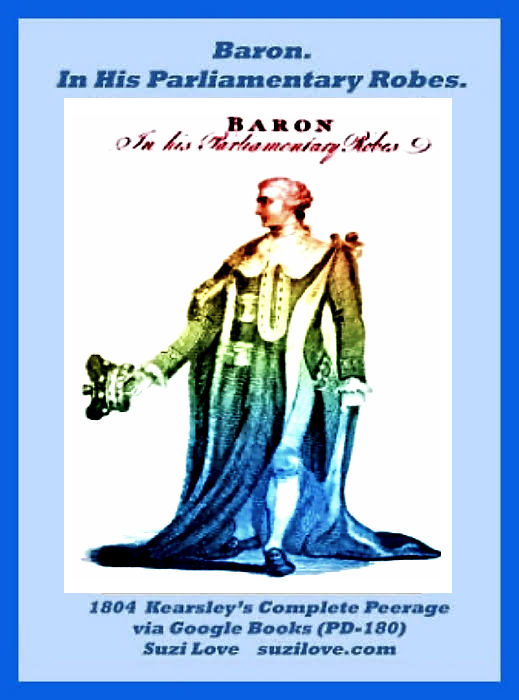
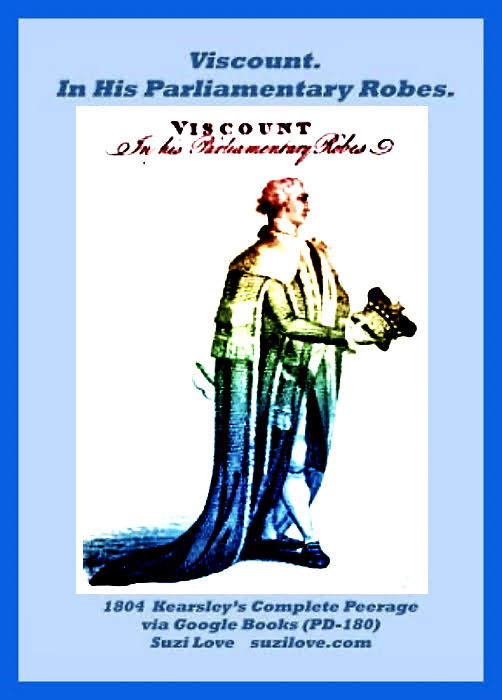
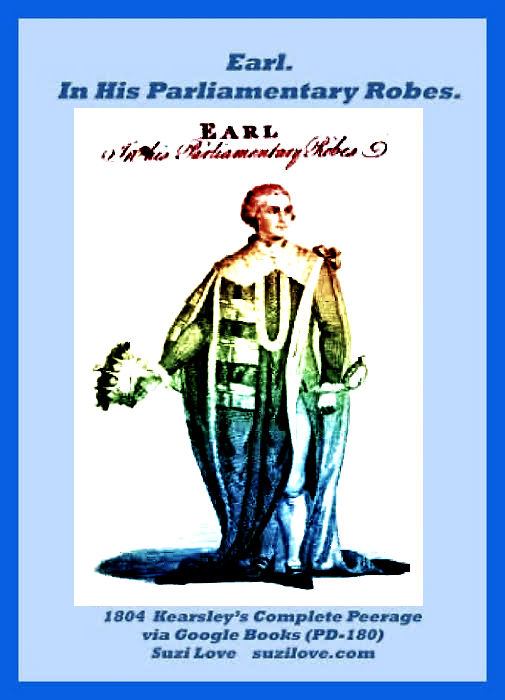
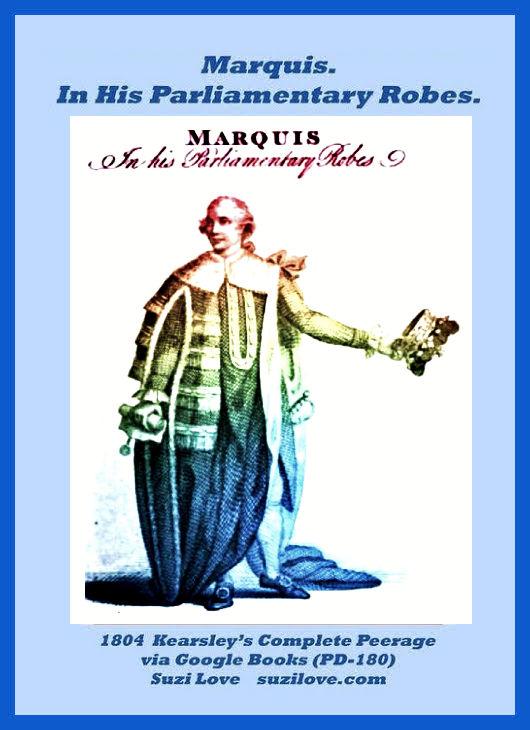
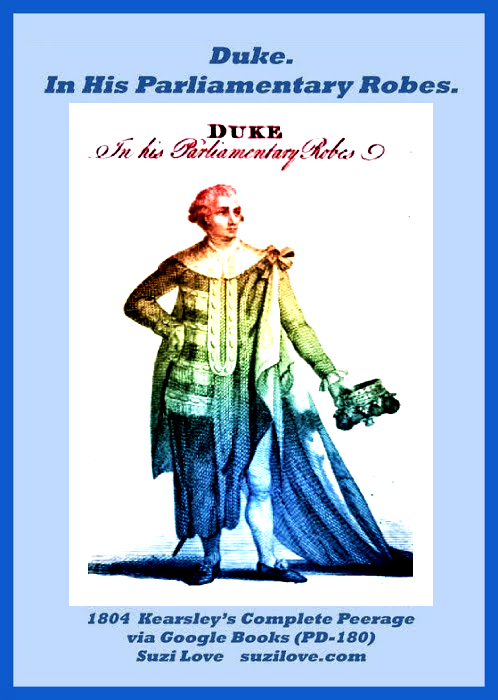
1800s Different Degrees Of Nobility In Great Britain and Ireland. FIVE LEVELS.
BENEATH THESE COME THE BARONS: The rank and precedence of Baronets is immediately after the younger sons of Barons, and before all Knights, whether of the Order or Knights. When the Order of Baronets was first instigated, its numbers were limited to 200. Members were carefully selected from the most wealthy and distinguished families of landed gentry. In the reign of the first Charles, it was the stimulus and reward for devoted loyalty. Later, it was often bestowed as an honorary recompense for sufferings and attachment when royalty was unable or unwilling to give solid remuneration. FROM: 1835 Debrett’s Baronetage of England
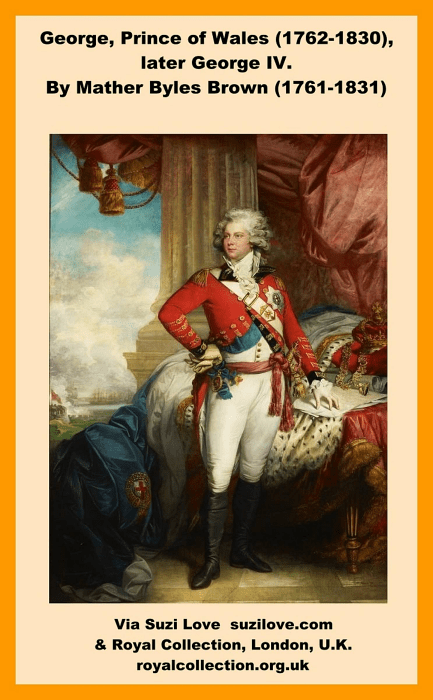
PRINCES of the BLOOD ROYAL: The Sovereign’s sons, brothers, and uncles are styled Princes of the Blood Royal, and have precedency of all other dukes, with the title of Royal Highness, which title was also, by special warrant, in 1816, conferred on the duke of Gloucester, deceased, and, 6th April 1818, on Prince Leopold of Saxe Cobourg (King of the Belgians). FROM: 1840 Debrett’s Peerage of the UK
THE PRIVILEGES OF THE PEERS OF THE UNITED KINGDOM OF GREAT BRITAIN AND IRELAND. The nobility of England enjoy many great privileges, the principal of which are as follow:-
1. They are free from all arrest for debts, as being the king’s hereditary counsel
lors. Therefore a peer cannot be outlawed in any civil action and no attachment lies against his Person. This privilege extended also to their members of the lower house, till the year 1770, when their lordships joined the house of commons in a bill for abolishing it.
2. In criminal causes they are only tried by their peers, who give their verdict, not upon oath as other juries, but only upon their honor: and then a court is fitted up for the purpose in the middle of Westminster hall, at the king’s charge.
3. To secure the honor of, and prevent the spreading of any scandal upon peers, or any great officer of the realm,there is an express law called scanda lum magnutum by which any man convicted of making a scandalous report against a peer of the realm ( though true ) is condemned to an arbitrary fine , and to remain in custody till the same be paid .
4. Upon any great trial in a court of justice a peer may come into the court and sit there uncovered. No peer can be covered in the royal presence without permission for that purpose, except the lord baron of Kinsale, of his majesty’s kingdom of Ireland. In case of the poll tax, the peers bear the greatest share of the burden, they being taxed every one according to his degree.
I love Pinterest for keeping thousands of historical images in some sort of order.And I love using Pinterest Boards as inspiration for my romance books.What about you? Do you use Pinterest for planning something, or just for fun?Need more hints for what to do with your boards and pins? Take a look at these fascinating articles on Pinterest. if you want even more Pinterest information and tips for becoming a power user, check out my Suzi Love Pinterest Boards
What was fashionable for women in Jane Austen’s times? Mourning, riding, daytime, evening clothing, plus underclothing, corsets and accessories. Wars were being fought so women adopted military looks in support of soldiers. https://books2read.com/SuziLoveFashion1810-1814
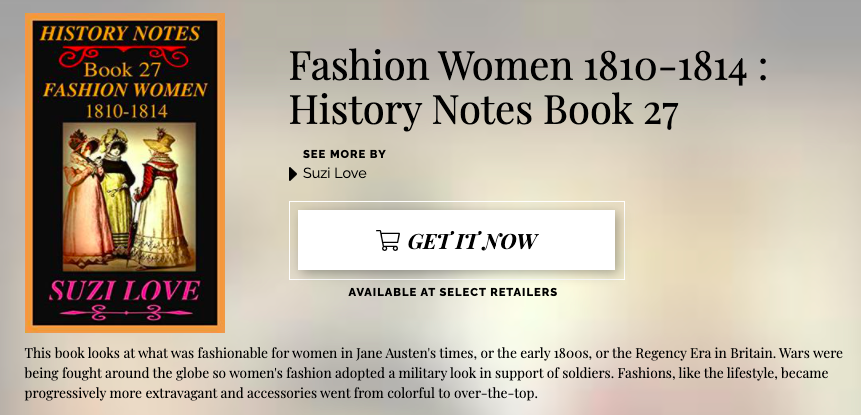
Fashion Women 1810-1814 History Notes Book 27 This book looks at what was fashionable for women in Jane Austen’s times, or the early 1800s, or the Regency Era in Britain. Wars were being fought around the globe so women’s fashion adopted a military look in support of soldiers. Fashions, like the lifestyle, became progressively more extravagant and accessories went from colorful to over-the-top. https://books2read.com/SuziLoveFashion1810-1814
What was fashionable for women in Jane Austen’s times? Mourning, riding, daytime, evening clothing, plus underclothing, corsets and accessories. Fashion Women 1810-1814 History Notes Book 27 This book looks at what was fashionable for women in Jane Austen’s times, or the early 1800s, or the Regency Era in Britain. Wars were being fought around the globe so women’s fashion adopted a military look in support of soldiers. Fashions, like the lifestyle, became progressively more extravagant and accessories went from colorful to over-the-top. https://books2read.com/SuziLoveFashion1810-1814
The Lady’s Magazine said of the basis of women’s fashion that was popular for the first twenty years of the 1800s, ‘White is still the prevailing color for robes. For morning dresses, linen gowns, in large diamonds or squares, are fashionable. Indian muslins, plain or embroidered, are preferred to Florence and satins. The designs of embroidery for shawls are of infinite variety. Long gloves, which reach above the elbow, are not yet laid aside. Medallions are hung around the neck from crossed chains and some of these medallions are shaped like the bags, called ridicules. These reticules are of the lozenge or hexagon shape, with a small tassel at each angle. Reticules, or ridicules, are in lozenge or hexagon shapes with a small tassel at each angle. In capotes, or hats, and ribbands, the violet and dark green prevail over jonquil. Bracelets in hair, pear-shaped ear-rings, medallions on square plates, saltiers of colored stones, are still in fashion.’