1818 May ‘Beau’s of 1818’ By George Cruikshank. Two Dandies shake hands while third watches. All wearing bell-shaped top-hats, extra high collars, short waists, long spurs and yellow gloves. One with moustache wears wide and short white trousers, one wears top-boots and riding-breeches and has monocle in his eye and third has very full trousers gathered above ankle. These are the sort of outfits that the Bridgerton men and Jane Austen’s male contemporaries would have worn. Hand colored etching. Via British Museum, London, UK. britishmuseum.org (PD-Art)
1818 May ‘Beau’s of 1818’ By George Cruikshank. Two Dandies shake hands while third watches. All wearing bell-shaped top-hats, extra high collars, short waists, long spurs and yellow gloves. One with moustache wears wide and short white trousers, one wears top-boots and riding-breeches and has monocle in his eye and third has very full trousers gathered above ankle. Hand colored etching. Via British Museum, London, UK. britishmuseum.org (PD-Art)
1819 January ‘Going to White’s’. By Richard Dighton. Lord Alvanley walks on the pavement going to White’s Club for gentlemen in London wearing a top-hat, double-breasted coat, strapped trousers, and the high collar of a dandy. Via British Museum, London, UK. britishmuseum.org (PD-Art)
White’s was an exclusive Gentlemen’s Club on St. James Street, London, U.K where well-dressed men, or Dandies, gathered at a special table in front of the large bow window looking out at the street. This became known as a seat of privilege and was used by London’s most famous Dandy, Beau Brummell. Other well-known dandies were William Arden, Joshua Allen, Thomas Raikes and Ball Hughes. Cartoonists loved to ridicule these high-in-the-instep gentlemen who wore the most fashionable clothes and set the fashion trends for the Regency years, and the years when Jane Austen was writing her famous novels.
1812 Woman wearing an extraordinary hat, flounced dress and a cashmere shawl. 1801-1818 Le Bon Genre Fashion Series Plate 50. Published by: Pierre La Mésangère. Via British Museum, London, UK. britishmuseum.org (PD-Art)
1800 Un salon, or public Room, at Frascati, Paris. This plate depicts a group of people at Frascati’s. The man in the foreground is plainly dressed in dark colors while pastels are favored by the women. From: Illustrations by Francois Courboin from Octave Uzanne’s Les Modes de Paris. (PD-Art) Although this is in Paris, there were similar places in England where Jane Austen and her contemporaries would meet to eat, drink and play games.
Frascati’s was a cafe in Paris, described by the text as “‘A stream of human beauty’, as the expression of the period has it, was still to be seen flowing through the galleries of Greek and Roman antiquities, spreading through the porticos, into the saloons, and smaller chambers, pouring and winding along the garden alleys, and disappearing at last into the kiosks where it was lost to sight. The great mirror at the end of the garden reflected, as in a wonderful prismatic vision, the surging crowd of veiled or turbaned heads of ever-changing couples, each whispering and fondly clasped. While farther off seated at tables in the open air, thirsty nymphs called for creams and tutti frutti and all the various iced compounds then so eagerly consumed.”
1800 Un Salon, or Public Room, at Frascati, Paris. Frascati’s was a popular cafe in Paris where people walked through the galleries of Greek and Roman antiquities, past the porticos, into saloons and smaller chambers, winding along the garden alleys and disappearing into kiosks. The man wears darker clothing while the women are in colorful dresses. via Suzi Love ~ suzilove.com
& Illustrations by François Courboin, French librarian (1865-1926)
From Octave Uzanne’s ‘Les Modes de Paris, or Fashion in Paris,’ the various phases of feminine taste and aesthetics from 1797 to 1897.
(PD-Art) via Brown University Library, U.S.A.
From the finish of the 18th century until 1820, men’s fashions in European and European-influenced countries moved away from the formal wear of brocades, lace, wigs and powder to more informal and relaxed styles. Focus was on undress rather than formal dress. Typical menswear in the early 1800s included a tailcoat, a vest or waistcoat, either breeches, pants, or the newer trousers, stockings, shoes or boots, all worn with an overcoat and hat. This basic ensemble was accessorized with some form of neckcloth or cravat, gloves, walking stick, cane or riding crop, handkerchief, fobs, watch and perhaps a quizzing glass or eye glass.
Skirted coats were replaced with short-fronted, or cutaway, tailcoats worn over fitted waistcoats and plain, white linen shirts. Knee breeches were gradually replaced by tight-fitting pantaloons and later trousers, decorative shoes with buckles were replaced with a variety of boot styles, and fussy and ruffled neckwear gave way to intricately tied, white linen neck cloths. A Regency Era, or early 1800s, gentleman was outfitted in more practical fabrics, such as wool, cotton and buckskin rather than the fussy brocades and silks of the late 1700s.
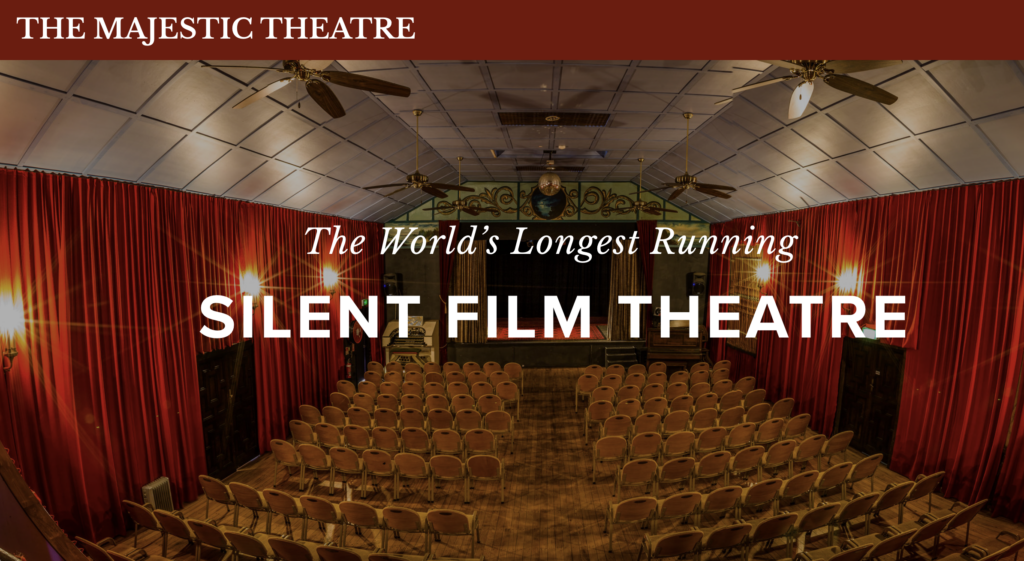
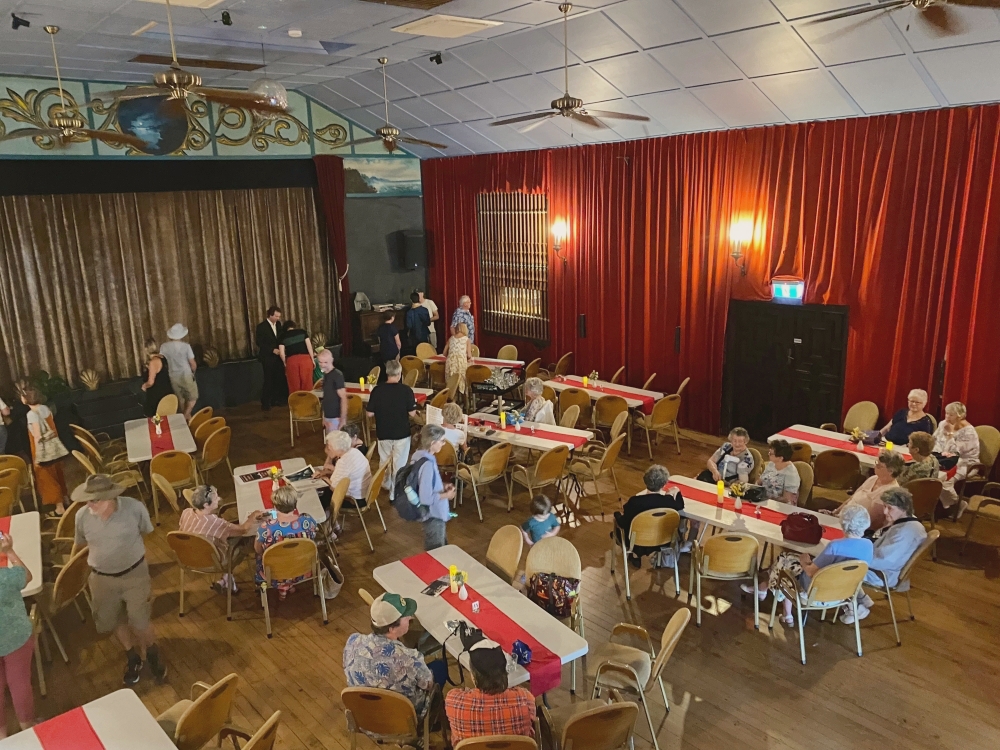
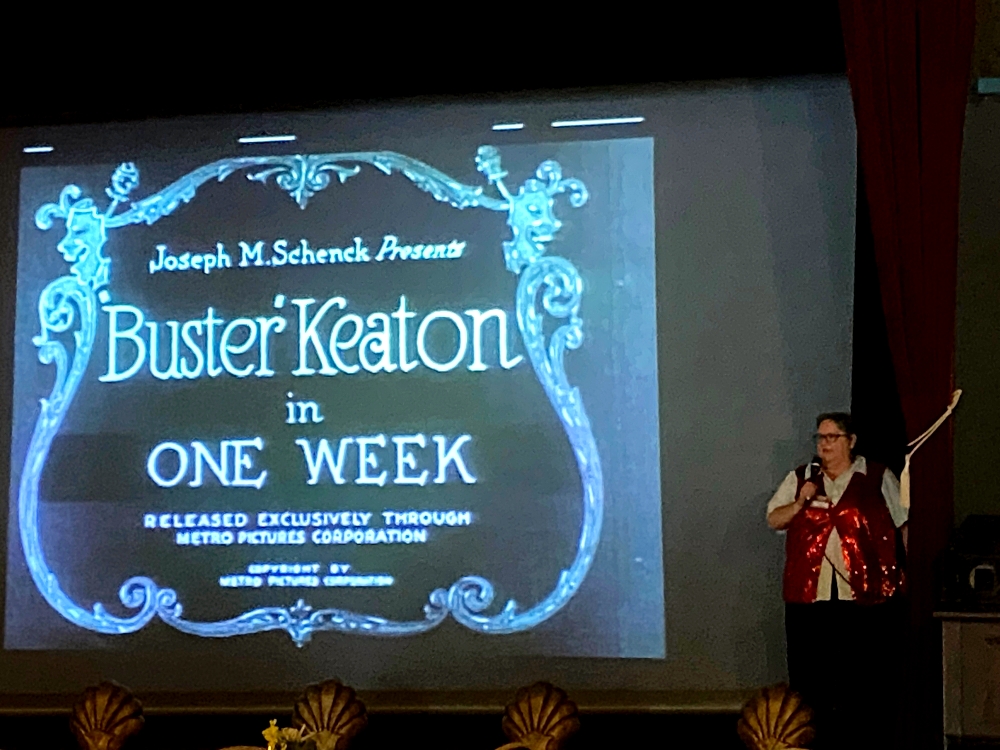
The Majestic Silent Theatre in Pomona, Sunshine Coast, Queensland, Australia was far from silent when movie goers were treated to two short movies, One Week and Haunted House, by the hilarious Buster Keaton who was famous for doing all his own stunts. The Theatre was originally built as a social hall with attached shops in 1921 and is the oldest authentic silent movie theatre in the world and the longest continuously operating movie theatre in Australia.
The hall was designed to serve several functions: to show silent movies, for vaudeville productions, and to act as a social centre for the town. Over time it served as a venue for dances, balls, concerts, and wedding functions, roller skating, boxing, and church services. Constructed of unseasoned milled hardwood, the hall was about 12 metres wide by 18 metres long, with seating for 198 people and included a sprung dance floor of ¾ inch crow’s ash timber and was raised on stumps to avoid flooding. On the left hand side was the Majestic Café, which also served as general store and the right hand side’s shop accommodated at various times a dentist, radio shop, and a mechanic. https://www.themajestictheatre.com.au
The theatre’s busiest period was during World War II, when a Tank Attack (anti-tank gun) Regiment was stationed near Pomona. The troops had priority for seats and local civilians were irate when they could not get in. Often people would watch from outside, standing in the middle of the road, which was the State’s main north to south highway. The theatre remained popular after the war, and throughout the 1940s to the 1960s films were shown on Wednesday and Friday evenings and Saturday afternoon, with a cartoon and two movies for four shillings and sixpence.
The electrical 1937 Compton organ is the only one in a Queensland theatre and comes from the Regal Cinema in South Shields, Chester England. The pipe chamber contains 1930s electrical organ switches from the Theatre Royal in Halifax. Three ranks of Christie pipes in the chamber were originally from a theatre in Dunedin, New Zealand, and were owned by a church in Sydney before they were acquired by West in 1985. Other ranks of pipes have been obtained, with the hope of eventually having 12 ranks. West did not just collect pipe organ parts – the timber organ grill that separates the organ room from the auditorium is made of Oregon pine, and comes from the Roxy Theatre in Parramatta. It took six and a half years to restore the organ and was launched on 6th July 2019. Stage drapes, furnishings and equipment were salvaged from the Regent, Wintergarden, Her Majesty’s theatres in Brisbane, and the Wintergarden in Ipswich.
Joseph Frank “Buster” Keaton (October 4, 1895 – February 1, 1966) was an American actor, comedian, and director best known for his silent film work, in which his trademark was physical comedy accompanied by a stoic, deadpan expression that earned him the nickname “The Great Stone Face”.Critic Roger Ebert wrote of Keaton’s “extraordinary period from 1920 to 1929” when he “worked without interruption” as having made him “the greatest actor-director in the history of the movies”. In 1996, Entertainment Weekly recognized Keaton as the seventh-greatest film director, writing that “More than Chaplin, Keaton understood movies: He knew they consisted of a four-sided frame in which resided a malleable reality off which his persona could bounce. A vaudeville child star, Keaton grew up to be a tinkerer, an athlete, a visual mathematician; his films offer belly laughs of mind-boggling physical invention and a spacey determination that nears philosophical grandeur.” In 1999, the American Film Institute ranked him as the 21st-greatest male star of classic Hollywood cinema.
‘One Week’ is the story of a newly-wed couple given a kit house as a wedding present and Buster Keaton and his long-suffering wife try to erect the house by following numbers on the boxes, except that a rejected suitor tries to foil their attempts. ‘Haunted House’ has Keaton as a bank teller whose manager and his gang are trying to pull off a bank heist and hide in an old house that has been booby-trapped to make it appear haunted. Both these short and silent features have the audience laughing uproariously. The movies may be silent but the audience isn’t.