19th Century Early Chemise or Shift, American. White linen and embroidery. via Metropolitan Museum New York City, U.S.A. metmuseum.org
Chemise Or Shift: Sleeveless, mid-calf length garment of white cotton or muslin was worn next to the skin under stays or corset. Called ‘Shift’ from early Georgian (1700-1750) until Late Georgian (1750-1790) to replace ‘Smock’. By 1800, name replaced by ‘Chemise’. The sort of undergarment that Jane Austen would have worn next to her skin and under her stays, or corset.
From 1700 until the early 1800s, pockets with waist ties were worn by women to keep essential items on their person. Generally of linen or some other cotton fabric, they were often quilted, or embroidered and gifted or handed down to others. In the 18th century, women’s pockets were not sewn into their gowns. Instead they were attached to a tape and tied around the waist as separate garments. Worn under the hoops and petticoats, they were accessed through openings in the gown and petticoat seams. By the early 1800s, round gowns were both flowing and almost transparent so pockets could no longer be worn under dresses, so ridicules, or bags, or reticules were carried instead. Jane Austen and her female friends and family would have worn pockets under their out layers.
From the Curator Victoria and Albert Museum, London: Quilting was a popular form of decoration for a variety of garments including pockets. However, hand-quilting was a time-consuming method of decoration. The increased demand for quilted petticoats, waistcoats and pockets led to the invention of woven quilting.
1700-1725 ca. Pair of Linen Twill Women’s Pockets With Crewel Embroidery and Waist Ties, British. Embroidered in yellow, green and pink worsted thread with chain and stem stitches, design of flower pot with flowering plant, bound with green worsted tape and sewn to linen tape tie. Designs are similar but not identical, suggesting both hand-drawn and possibly work of an amateur. Pockets may have been handed down to another person who found them too small as each pocket has been extended at top by 4 cms. via Victoria and Albert Museum, London, UK. collections.vam.ac.uk.
by 4 cms. via Victoria and Albert Museum, London, UK. collections.vam.ac.uk.
1750-1800 ca. Woman’s Pocket With Waist Ties, New England, America. Linen plain weave, cotton plain weave, wool embroidery. Dimensions 39.5 cm x 27.5 cm. Polychrome crewels on cotton and linen, vine with buds, flowers and leaves and initials M.W. in center. In 18th century, women’s pockets were tied around waist with tape as separate garments, worn under hoops and petticoats, accessed through openings in gown and petticoat seams. via Museum of Fine Arts, Boston, U.S.A. mfa.org
1750-1800 ca. Woman’s 1750-1800 ca. Woman’s Pocket With Waist Ties, New England, America. Linen plain weave, cotton plain weave, seams. via Museum of Fine Arts, Boston, U.S.A. mfa.orgHN_1 Fashion Women Late 1700s History Notes Book 1 by Suzi Love.
What was fashionable for women in the late 1700s? Extravagant colors and fabrics and outrageous styles were all seen in these flamboyant fashions.
books2read.com/suziloveFashWomen1700s
19th Century Early Woman’s Plain Weave Linen Chemise, Or Shift, American. Shift with scoop neck with drawstring, three-quarter length sleeves with drawstrings and lighter-weight linen ruffles. Lexington, Massachusetts, United States. Probably worn by Abigail Robbins (1759-1850) and Inherited by Ellen A. Stone; Gift to MFA, 1899. via Museum of Fine Arts, Boston, U.S.A. Type worn By the Bridgerton Ladies and Jane Austen.
Chemise Or Shift: Sleeveless, mid-calf length garment of white cotton or muslin was worn next to the skin under stays or corset. Called ‘Shift’ from early Georgian (1700-1750) until Late Georgian (1750-1790) to replace ‘Smock’. By 1800, name replaced by ‘Chemise’.
19th Century Early Type of Linen Chemise, or Shift, Worn By the Bridgerton Ladies and Jane Austen. #Bridgerton #Underclothing #JaneAusten #RegencyFashion https://books2read.com/SuziLoveFashionWomen1815-1819
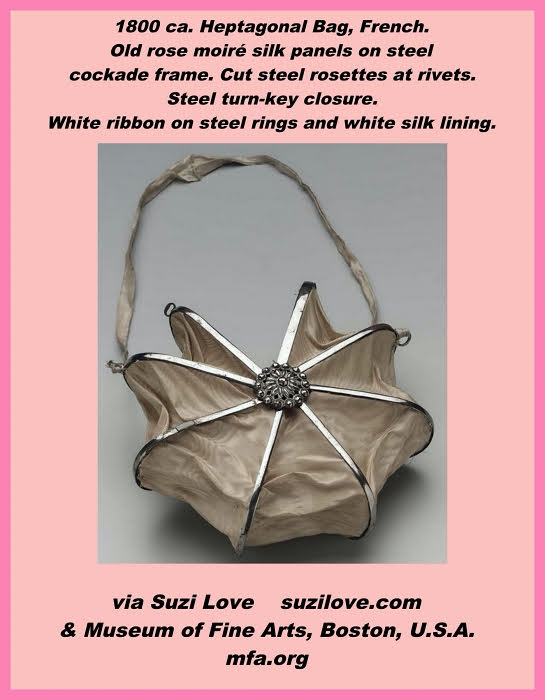
1800 ca. Heptagonal Bag, French. Old rose moiré silk panels on steel cockade frame. Cut steel rosettes at rivets. Steel turn-key closure. White ribbon on steel rings. White silk lining. Credit: The Elizabeth Day McCormick Collection via Museum of Fine Arts, Boston, U.S.A. mfa.org
Reticule Or Bag: As the silhouette of dresses became more form fitting and fabrics lighter and more transparent, pockets could no longer be hidden in the folds of skirts or underwear. Something else was needed to hold a lady’s essentials. Small purses, like men’s money pouches, were used by women to carry money for gambling, sewing necessities, and women’s daily requirements such as combs. A bag or purse, often with a drawstring to pull closed and usually made of cloth or covered cardboard and often decorated with beading or embroidery was called a reticule, or ridicule. They came in a variety of shapes, sizes, and materials. Jane Austen and her contemporaries would have purchased or hand made reticules, or bags, for each other for gifts and carried them with them whenever they went out.
1800 ca. Heptagonal Bag, French. Old rose moiré silk panels on steel cockade frame. Cut steel rosettes at rivets. Steel turn-key closure. White ribbon on steel rings. White silk lining. Credit: The Elizabeth Day McCormick Collection via Museum of Fine Arts, Boston, U.S.A. mfa.org
1800 ca. Heptagonal Bag Of Old Rose Moiré Silk Panels With A Steel Turn-Key Closure. #JaneAusten #France #Reticule books2read.com/suziloveReticules
1715-1775 ca. Flat Drawstring Bag, French. Strung glass beads, or sablé, held together by looping stitches. Polychrome Rococo design on white ground, shepherd, shepherdess, four sheep around orange tree center, border with cornucopias and flowers. Ecru silk cord drawstrings with floral bead-covered wood tassels. Blue silk lining. via Museum of Fine Arts, Boston.
1820-1850 ca. Cotton and Beadwork Reticule Or Bag, Dutch. Couple on shore, man in boat, house and windmill behind, musicians, dancers, onlookers. Yellow metallic frame and green braided silk cord. Beadwork on cotton foundation. Polychrome design: couple on shore, man in boat, house and windmill behind (obv.); musicians, dancers, onlookers (rev.); acanthus motif at base. Yellow metallic frame with dotted design, stud closure, green braided silk cord. Ecru silk lining. via Museum of Fine Arts, Boston, U.S.A. mfa.org
Definition Reticule Or Bag or Purse: Often with a drawstring to pull closed and usually made of cloth or covered cardboard and often decorated with beading or embroidery. A reticule, or purse, or handbag, was usually carried by a woman during the Regency period to carry all their daily necessities. Earlier, women used pockets that tied at the waistline and were hidden in the folds of their skirts. Empire style, or early 1800s, high-waisted dresses made it impossible to either sewn in a pocket or to tie on a pocket. So women began carrying small, decorated bags called Reticules, or ridicules, which generally pulled close at the top with a drawstring.
1820-1850 ca. Cotton and Beadwork Reticule Or Bag, Dutch. Couple on shore, man in boat, house and windmill behind, musicians, dancers, onlookers. Yellow metallic frame and green braided silk cord. via Museum of Fine Arts, Boston, U.S.A. mfa.org
1820-1850 ca. Cotton and Beadwork Reticule Or Bag, With Couple on Shore, Dutch. #holland #sewing #Reticule #RegencyEra #RomanticEra #HistoricalFashion #Antiques http://books2read.com/suziloveReticules
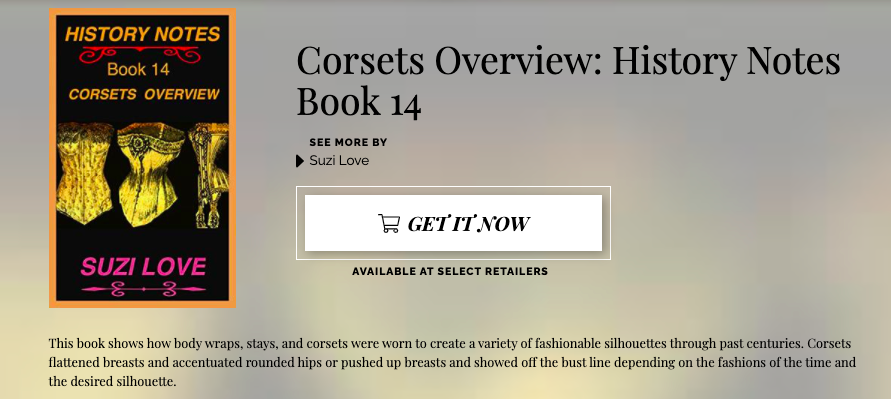
This book shows how corsets changed to fit well under clothing, give maximum support and comfort. Corsets pushed up breasts and showed off the bust line beneath a square-cut and low-cut neckline as in the early 1800s, or Regency years. Jane Austen and her female and friends wore these corsets. Corsets or stays worn during the early 1800s, or Jane Austen’s lifetime. https://books2read.com/SuziLoveCorsetBook17
Are you a Reader or Writer of Regency Era Fashions? Jane Austen and Bridgerton corsets. #corsets #historicalfashion #RegencyFashion #JaneAusten #Bridgerton https://books2read.com/SuziLoveCorsetBook17
1800s White Evening Dress. Long train on the dress, gold sash, evening hair style, and carrying a fan. via The Museum of Fine Arts, Boston.
Definition Empire Style Dress: Named after the First Empire in France. Empire dresses had a low neckline and skirts started directly under the bust and flowed into the classical relaxed wide styles of Greece and Rome. This style of dress is associated with Jane Austen and her contemporaries as a high-waisted dress was worn most days. Cotton, silk or taffeta were the popular fabrics. Only the very wealthy could afford white dress in this style as the cottons were imported from India and had to be carefully cleaned, usually by a lady’s maid.
18th Century Late – 19th Century Early Gloves as worn by women in Jane Austen’s and Bridgerton’s years, French. Silk embroidered with silk. via Museum of Fine Arts, Boston. mfa.org
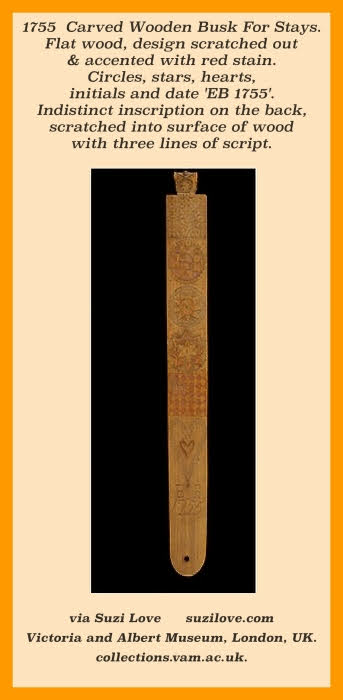
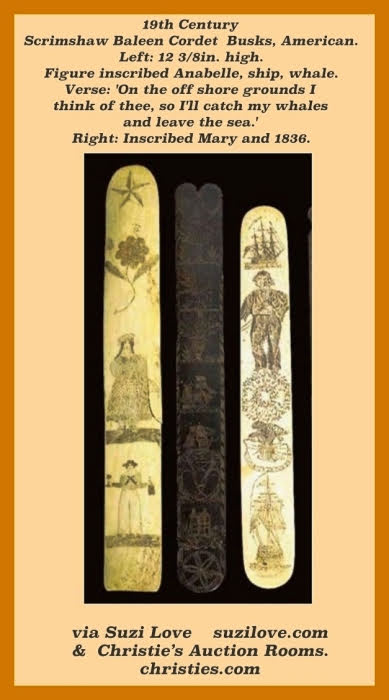
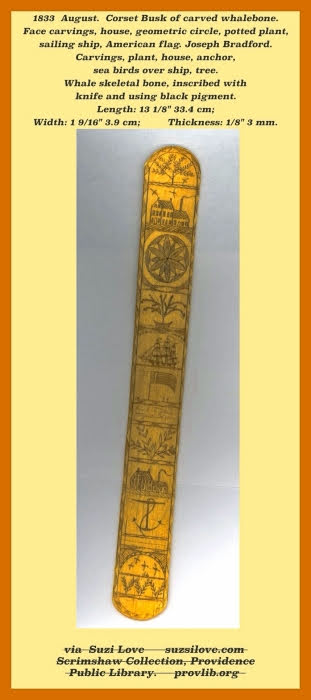
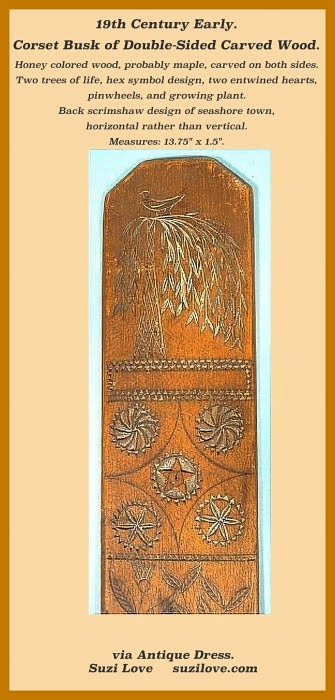
Busks shaped and reinforced the centre front of stays, or corsets. They were made from whalebone, wood, and bone, and were often inscribed with names, dates, and symbols of love because they were positioned close to the heart. The corsets worn in Jane Austen’s later years and by women in Bridgerton times often had busks to stiffen the corset and support the breasts.
1755 Wooden Busk For Stays, English. Flat piece of wood with design scratched or picked out, and accented with red stain. Design comprises of circles, stylized geometric stars, heart motifs, and the initials and date ‘EB 1755’. Indistinct inscription on the back, scratched into the surface of the wood with three lines of script.1800-1840 ca. Scrimshaw Corset Busk, American. Designs are of a ship and the places the sailor visited. Sailors made these as gifts to be worn close to the heart by their loved ones. Dimensions (inches) 12.5 (L) , 1.3 (W). Dimensions (centimeters). 31.7 (L) , 3.3 (W) via Winterthur Museum Collection.19th Century. Scrimshaw Baleen Corset Busks, American. The first with figure inscribed Annabelle, ship, whale, and verse On the off shore grounds I think of thee, so I’ll catch my whales and leave the sea; the second inscribed Mary and 1836 12 3/8in. high the longest. via Christie’s Auction Rooms. 1833 August. Corset Busk of carved whalebone. Face carvings, house, geometric circle, potted plant, sailing ship, American flag. Joseph Bradford. Carvings, plant, house, anchor, sea birds over ship, tree. Whale skeletal bone, inscribed with knife and using black pigment. Length: 13 1/8″ 33.4 cm; Width: 1 9/16″ 3.9 cm; Thickness: 1/8″ 3 mm.Busks shaped and reinforced front of corsets. Made from whalebone, wood and bone. Often inscribed with names, dates and symbols of love because they were positioned close to the heart. Via Hereford Museum. 1771 Wooden Corset Busk, American. Carved Maple wood. Via Winterthur Museum. 19th Century Early. Corset Busk of Double-Sided Carved Wood. Honey colored wood, probably maple, carved on both sides. Two trees of life, hex symbol design, two entwined hearts, pinwheels, and growing plant. Back has delicate scrimshaw-look design of seashore town, chapel, homes, lighthouse and ships, horizontal rather than front vertical. Measures: 13.75″ x 1.5″. via Antique Dress.18th Century Wooden Busk for Stays, European. Via metmuseum.org18th Century Late – 19th Early Carved Maple Wood Busk, American. Spirals top & bottom, two hearts meet at center, “PC” carved on reverse. Worn by member of Robbins family, inherited by Ellen A. Stone. Via Fine Arts Museum Of Boston, USA.