1826 Sights the Bridgertons and Jane Austen Saw Around Regency England. The sights that the families and friends would have seen around while traveling around England. via 1826 The English Spy By Robert Cruikshank via Google Books (PD-150)
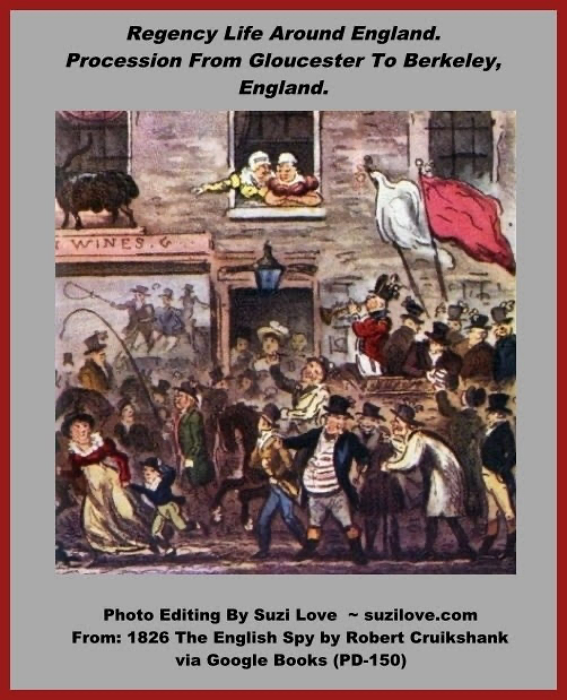
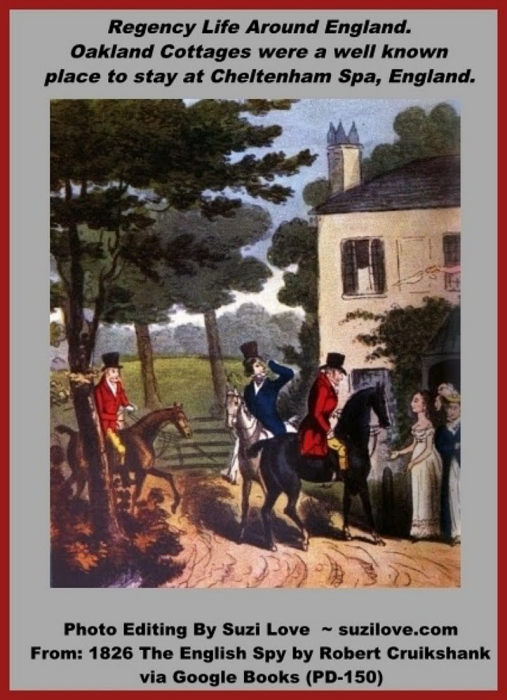
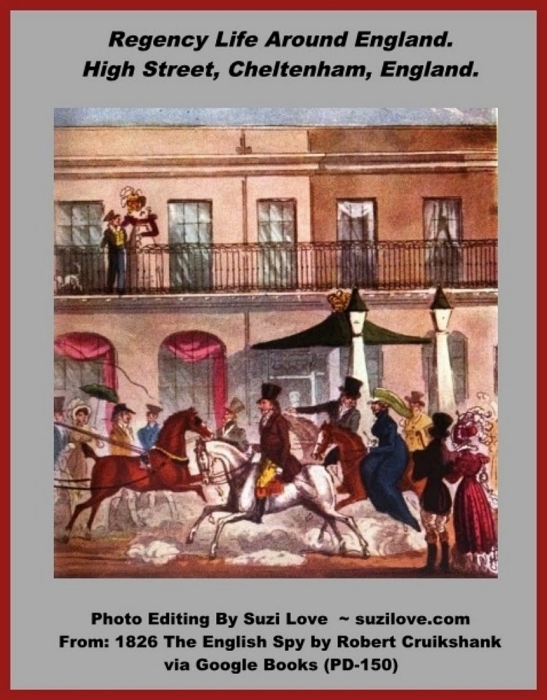
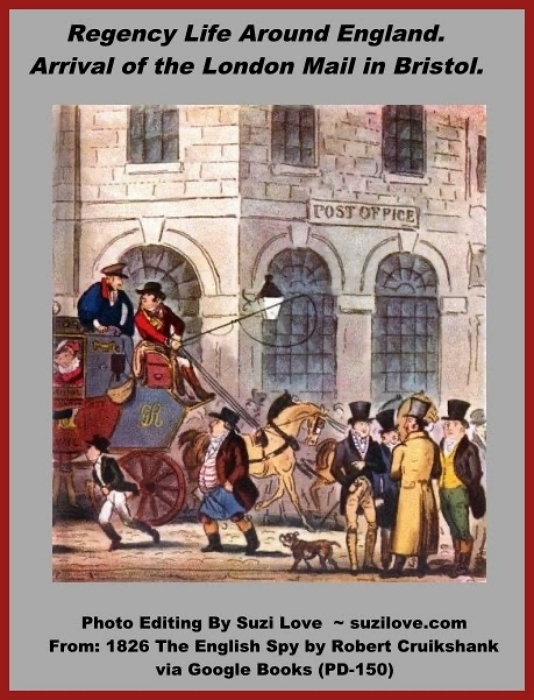
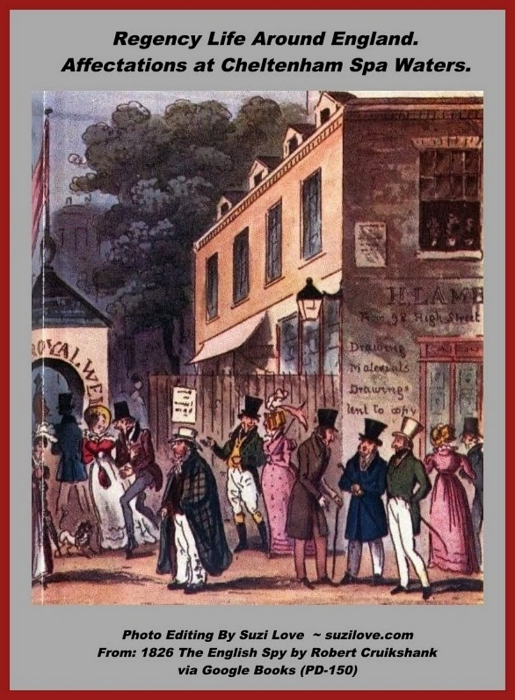
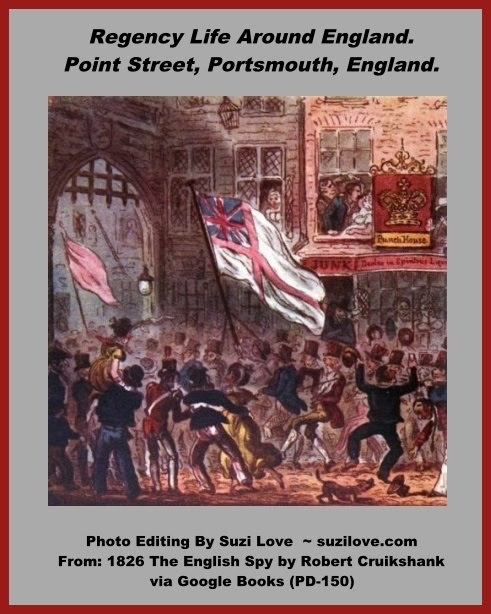
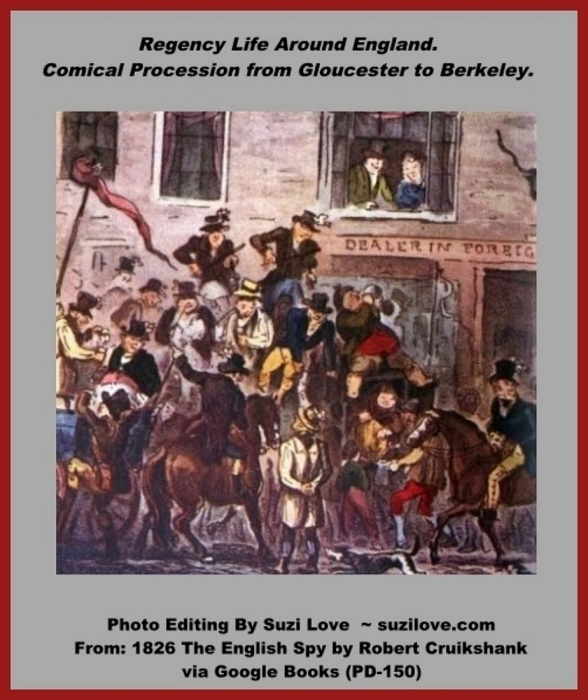


1826 Sights the Bridgertons and Jane Austen Saw Around Regency England. The sights that the families and friends would have seen around while traveling around England. via 1826 The English Spy By Robert Cruikshank via Google Books (PD-150)
1823 Hackney Cab, London, U.K. This small cabriolet was built by coach builder, David Davies, and licensed for public convenience. Name ‘hackney’ derived from village of Hackney, Middlesex, famous for horse drawn carriages. French word cabriolet was shortened to cab, hence ‘Hackney Cab’. In 1813, there were 1100 hackney coaches for hire in London. Designs changed constantly and in 1834 Joseph Hansom registered his design for a cabriolet named ‘Hansom Cab’.


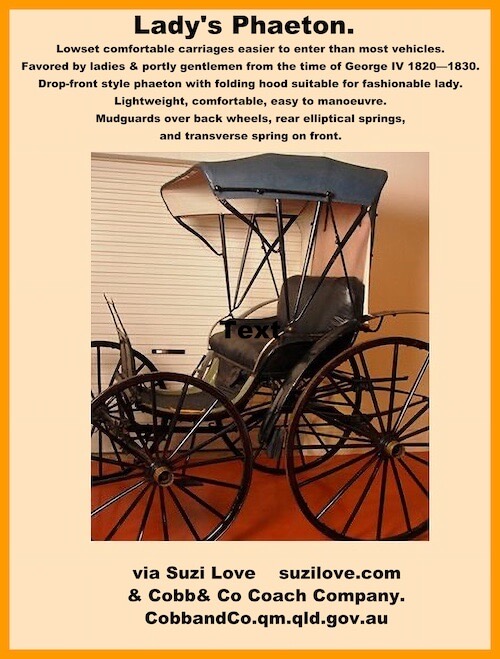
1800s Early A Lady’s Phaeton.
Drop-front phaeton with folding hood suitable for a fashionable lady as lightweight, comfortable and easy to manoeuvre. Mudguards over the back wheels, rear elliptical springs and transverse elliptical spring fitted to the front. via Cobb and Co. Museum, Toowoomba, Australia.
Definition Carriage Lady’s Phaeton: Low set comfortable carriages easier to enter than most vehicles. Favored by ladies and portly gentlemen from the time of George IV 1820-1830.
Definition Phaeton: Open, four-wheeled, doorless carriage, popular in the 18th and 19th centuries. One or two seats, usually a folding or falling top, and owner-driven. The type of carriage liked by young ladies in Jane Austen’s times as the lady could drive herself, The most spectacular phaeton was the English four-wheeled high-flyer was the top phaeton, with body of a light seat for two resting on two sets of springs and reached by a ladder.