1890-1905 ca. Chatelaine Purse Of Silvered Cast Brass, English. #VictorianEra #EdwardianEra #Chatelaine #Antique books2read.com/SuziLoveChatelaines
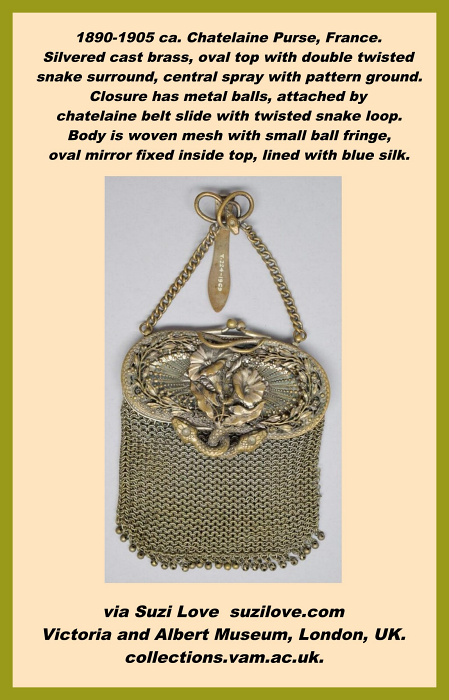


1890-1905 ca. Chatelaine Purse Of Silvered Cast Brass, English. #VictorianEra #EdwardianEra #Chatelaine #Antique books2read.com/SuziLoveChatelaines
An overview of women’s fashions in the first twenty years of the 19th century. What was fashionable for women in Jane Austen’s times, or the early 1800s. Wars were being fought around the globe so women’s fashion adopted a military look in support of soldiers. In Britain, the Prince Regent ruled instead of his father, King George III, so fashions, like the lifestyle, became more extravagant and accessories went from pretty to opulent. This set includes books 12, 25, 26, 27 and 28.
What was fashionable for women in Jane Austen’s times, or 1800s, or Regency Era. High-waisted dresses were extravagantly accessorized and hats, shoes, parasols and bags were added. Set includes History Notes Books 12, 25, 26, 27 and 28.
https://books2read.com/SuziLoveFashionWomenBoxSet


1860 ca. Gilt Chatelaine With Etui. Hanging chatelaine with seven carbochons, gilt tools inside etui, or small container, of scissors, bodkin, knife, stiletto, pencil case, combination tweezers and ear spoon and ivory aid memoire, or notepad. via Needle’s Work Antiques. needleworkantiques.com
Definition Chatelaine: The word Chatelaine is French and means the keeper of the keys. Chatelaine” derives from the Latin word for castle. In Medieval times, the chatelaine was in charge of the day-to-day running of the castle. Women in charge of households dangled long chains from their waists to keep essentials within easy reach e.g. keys, notebook and pen, watch, sewing items, vinaigrette or perfume, or magnifying glass. Early chatelaine were simple essentials. Later chatelaine were decorative and expensive. books2read.com/SuziLoveChatelaines


What did an older lady do and wear in the Regency Era? Information & pictures for readers and writers of early 1800s history, nonfiction and fiction. books2read.com/suziloveOLD
The older lady’s day usually started with her toilette in her bedroom, where her maid helped her dress for the day and styled her hair. After that, she would join her family downstairs for breakfast unless she preferred a tray with either tea or hot chocolate in her bedroom as she prepared for her busy day. Her day would be made up of speaking with the housekeeper and the cook about the week’s menus, assuring that the servants were all available that day and no one was ill, and checking the list of foods needed. She would also enquire if the laundry was up to date and that they had enough good linen to make up all the beds before extended family members and guests arrived. If she was in the country and hosting a weekend house party, she would assign rooms to the guests on her lists and query that all was in readiness for their arrival.
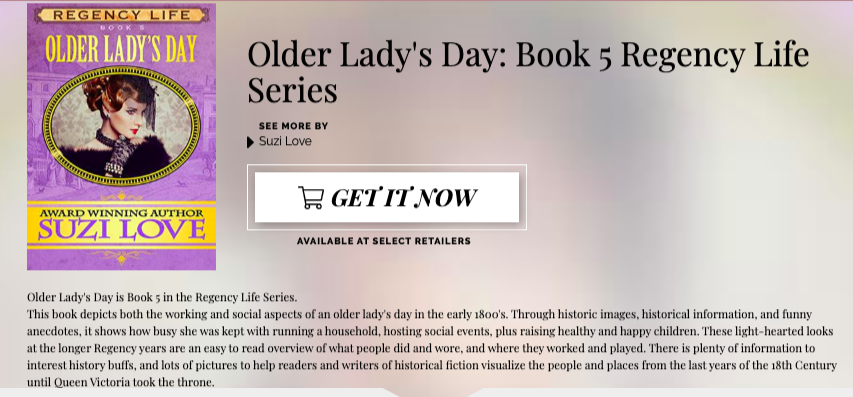
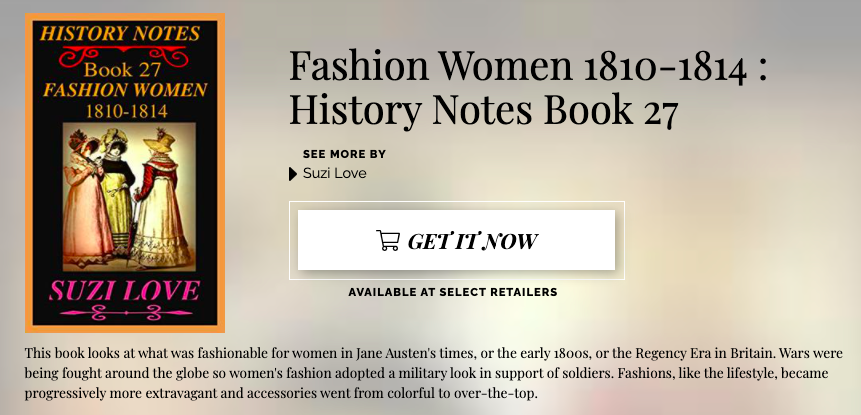
What was fashionable for women in Jane Austen’s times? Mourning, riding, daytime, evening clothing, plus underclothing, corsets and accessories. Fashion Women 1810-1814 History Notes Book 27 This book looks at what was fashionable for women in Jane Austen’s times, or the early 1800s, or the Regency Era in Britain. Wars were being fought around the globe so women’s fashion adopted a military look in support of soldiers. Fashions, like the lifestyle, became progressively more extravagant and accessories went from colorful to over-the-top. https://books2read.com/SuziLoveFashion1810-1814
The Lady’s Magazine said of the basis of women’s fashion that was popular for the first twenty years of the 1800s, ‘White is still the prevailing color for robes. For morning dresses, linen gowns, in large diamonds or squares, are fashionable. Indian muslins, plain or embroidered, are preferred to Florence and satins. The designs of embroidery for shawls are of infinite variety. Long gloves, which reach above the elbow, are not yet laid aside. Medallions are hung around the neck from crossed chains and some of these medallions are shaped like the bags, called ridicules. These reticules are of the lozenge or hexagon shape, with a small tassel at each angle. Reticules, or ridicules, are in lozenge or hexagon shapes with a small tassel at each angle. In capotes, or hats, and ribbands, the violet and dark green prevail over jonquil. Bracelets in hair, pear-shaped ear-rings, medallions on square plates, saltiers of colored stones, are still in fashion.’
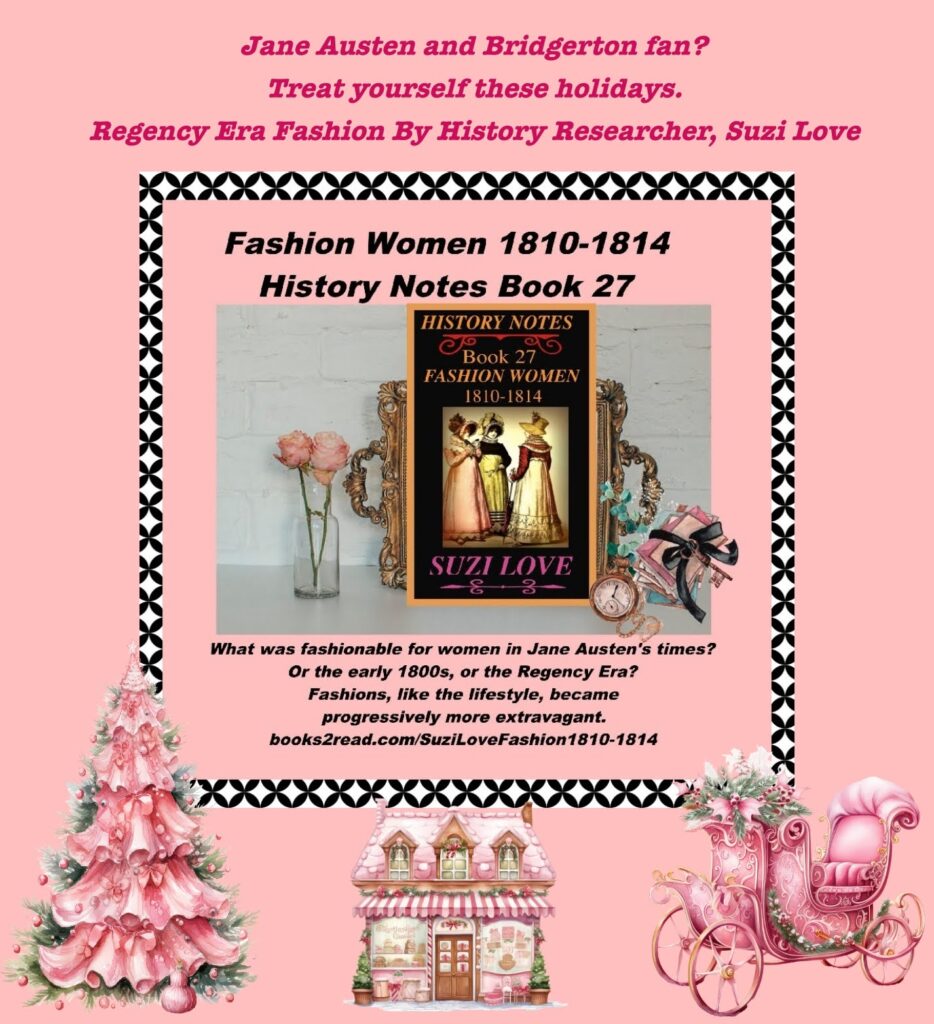
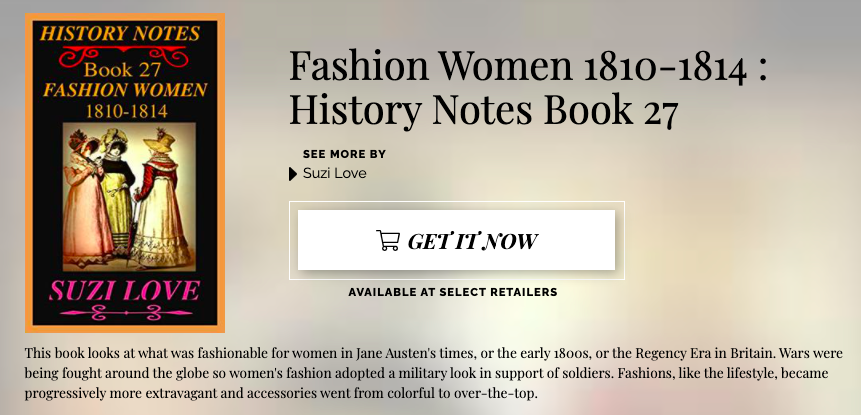
Are you a reader or writer of Regency Romance? Love Jane Austen’s books? Want to know more about the mourning, riding, underclothing and other Regency Era women’s fashions in Regency romances? What was fashionable for women in Jane Austen’s times? Mourning, riding, daytime, evening clothing, plus underclothing, corsets and accessories. This book looks at what was fashionable for women in Jane Austen’s times, or the early 1800s, or the Regency Era in Britain. Wars were being fought around the globe so women’s fashion adopted a military look in support of soldiers. Fashions, like the lifestyle, became progressively more extravagant and accessories went from colorful to over-the-top. https://books2read.com/SuziLoveFashion1810-1814

19th Century Silver Chatelaine. Thimble holder, vinaigrette as a trumpet, watch case, scissors and a notebook. via auction.fr
Definition
What did a chatelaine do?
What were chatelaines used for?

1800’s Chatelaine of Five Pieces Of Mother-Of-Pearl. Via Live Auctions ~ liveauctioneers.com
Definition
What did a chatelaine do?

What were chatelaines used for?
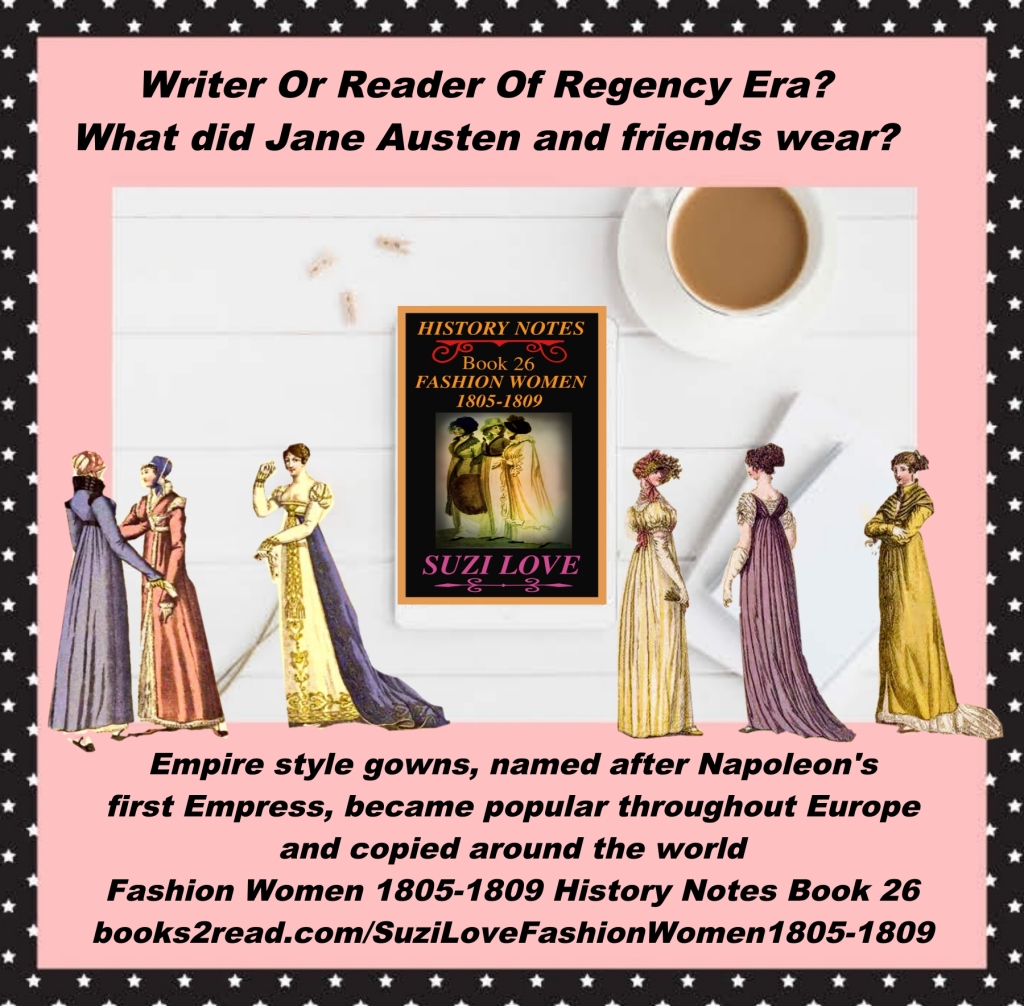
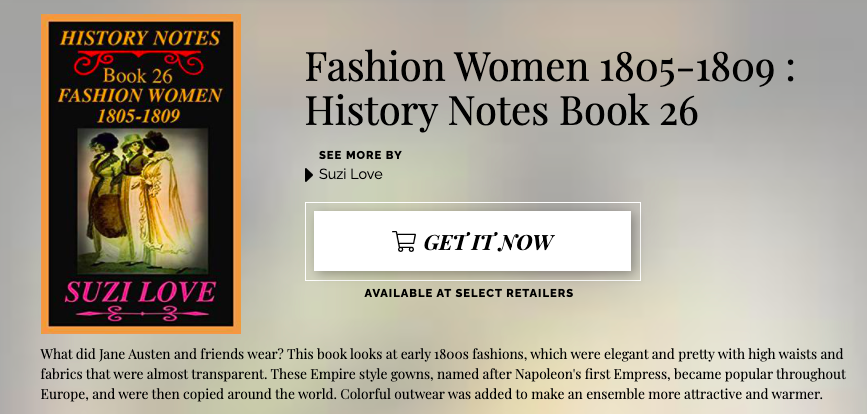
What did Jane Austen and friends wear? Early 1800s fashions were elegant and pretty with high waists and fabrics that were almost transparent. These Empire style gowns, named after Napoleon’s first Empress, became popular throughout Europe, and were then copied around the world. Colorful outwear was added to make an ensemble more attractive and warmer. History Notes Book 26 Fashion Women 1805-1809.
https://books2read.com/SuziLoveFashionWomen1805-1809
What was fashionable in the late 1700s? Extravagant colors and fabrics and outrageous styles were all seen in these flamboyant fashions. Take a look at their dresses, suits, hats, shoes and bedroom fashions. books2read.com/suziloveFashWomen1700s
books2read.com/suziloveFashMen1700s

18th Century Late Women’s Fashions. A conical body shape was still fashionable while the shape of the skirts changed. The wide panniers which held the skirts out at the sides mostly disappeared by 1780 for all but the most formal court functions and false rumps, or bum-pads or hip-pads were worn for a time. A low-necked gown, usually called in French a robe, was worn over a petticoat and most gowns had skirts that opened in front to show the petticoat worn beneath. As part of the general simplification of dress, the open bodice with a separate stomacher was replaced by a bodice with edges that met center front. Strapless stays which still were cut high at the armpit, to encourage a woman to stand with her shoulders slightly back, a fashionable posture. The fashionable shape was a rather conical torso, with large hips. The waist was not particularly small. Stays were usually laced snugly, but comfortably. Shoes had high, curved heels (the origin of modern “louis heels”) and were made of fabric or leather. Shoe buckles remained fashionable until they were abandoned along with high-heeled footwear and other aristocratic fashions in the years after the French Revolution,
18th Century Late Men’s Fashions. A man’s outfit consisted of a knee-length coat, knee breeches, a vest or long waistcoat, a linen shirt with frills and linen under drawers. Lower legs showed and were an important part of life. Men wore stockings and leather shoes with stacked heels of low or medium height. The whole ensemble would have been topped by a shoulder-length wig and a tricorne, or three-cornered, hat an upturned brim. By end of the 18th century, wigs were out of fashion except for the most formal occasions. Undergarments and knee breeches did not change very much. Coats gradually became less full and die front was cut in a curve towards the back. Waistcoats became shorter. The upper leg began to show more and more and by the end of the century breeches fitted better because they were often made of knitted silk. Shoes became low-heeled with pointed toes and were fastened with a detachable strap or ribbon on the front.
