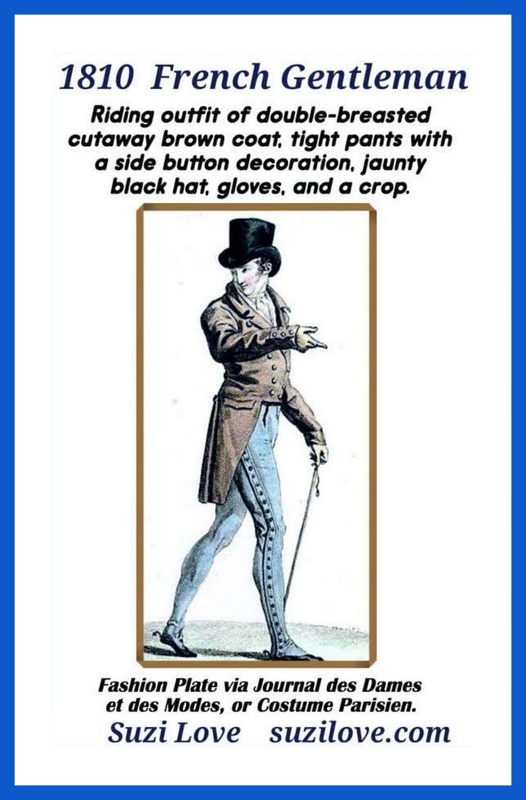
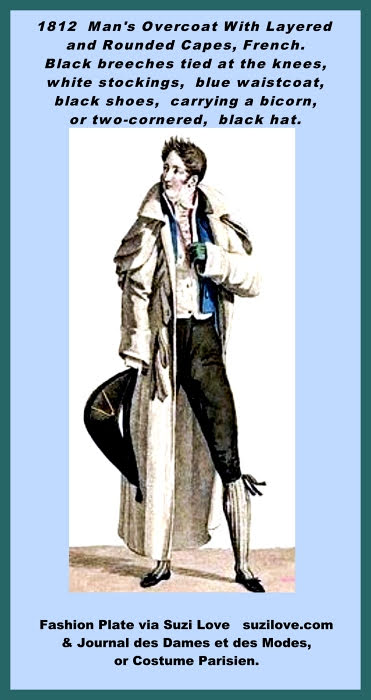
1818 November 6th A Dandy Cock in stays or- A new thing for the ladies.By Isaac Robert Cruikshank A dandy, much burlesqued, stands full-face, his head, which has a bird-like profile, turned to the left; his hair is brushed up at the back behind his hat to resemble the tail-feathers of a cock. He wears puffed-out breeches and top-boots with enormous spurs, and holds an umbrella. Via British Museum, London, UK. britishmuseum.org (PD-Art)
Music history from the 17th, 18th, and 19th Centuries. Pianos, pianofortes, harps, viols, violins played during Jane Austen’s times. Musical Instruments were so important in most of the more affluent households in history that large industries grew all around the world to manufacture instruments, musical accessories, and to print sheet music. Musical instruction and encouragement could be found everywhere and both young ladies and gentlemen were encouraged to have musical appreciation. And of course, playing music was on the list of social requirements for all young ladies desirous of becoming a wife and homemaker.
London became Europe’s leading centre for the manufacture of scientific instruments and this led to the manufacture of more musical instruments as well as factories developed and rail transport helped the faster distribution of goods to regional areas. One of the first places that music was used to tell stories and to share enjoyment was in Christmas music. Because music was such an integral part of households, music was always a feature in Magazines. There were advertisements everywhere for musical instruments for sale, for sheet music, and for music lessons. And of course, of most interest to the ladies were the hundreds of fashion plates included in magazines where people were depicted with their musical instruments.
The earl’s sigh whispered across the nape of Laura’s neck, lifted the fine hairs there, and sent a small shiver across her shoulders. For an idle moment, she savored the warm brush of air and imagined the same heat caressing other areas of bared flesh.
“… in the short term, my promise stands.” The Earl continued. “Until Sherwyn returns, the smooth running of the Jamison household is my responsibility.”
She shook her head and reeled in her wayward thoughts. “No need,” she said, unclenching her jaw and showing her teeth in a false but placating smile. “I’d be most distressed, kind sir, if you put yourself out on my account. Becca left me a list of instructions as long as my arm on which shares to buy and sell, and how to deliver my orders to our Stock Exchange agents. To excel at my duties, I need only follow each and every step. Rather like climbing a ladder.”
“People have been known to tumble from ladders. Land in the wrong place.”
She narrowed her gaze at him. “Very true. But for all I know, aligning myself with you may land me in deep water. How do I know you’re trustworthy? You could be copying those scoundrels Becca had imprisoned. Snaking into our household to steal our secrets.” She’d tried to appear apprehensive, but when his jaw went slack with shock, she couldn’t stop help but chuckled.
He waggled a finger. “You, pixie, are provoking me. Deliberately.”
“Do, please, stop calling me such a childish name. If you haven’t noticed, I became a woman several years ago.” His gaze flicked over her body, scorched where it touched and left her tingling in its wake. “Trust me, Laura, I’d noticed.”
Richard, Earl of Winchester has no time for their family friend and mad scientist, Lady Laura, yet when he’s with her, passion and desire explode. Lady Laura Jamison believes her extraordinary olfactory senses will sniff out her perfect match, but will Richard St. Martin, the Earl of Winchester, prove her theory wrong? https://books2read.com/suziloveSS Scenting Scandal By Suzi Love Book 2 Scandalous Siblings Series.
1800 ca. Sleeveless Chemise or Nightgown of white cotton and lace. Length just below knee. Gathered back and front onto yoke of lace and gathered fabric inserts. Gathers around neck by tape in casing. ‘Blanche’ embroidered centre front. Waist up to 50 in or more. via National Trust Collections, UK. nationaltrustcollections.org.uk
Definition Chemise Or Shift: Sleeveless, mid-calf length garment of white cotton or muslin was worn next to the skin under stays or corset. Called ‘Shift’ from early Georgian (1700-1750) until Late Georgian (1750-1790) to replace ‘Smock’. By 1800, name replaced by ‘Chemise’. Sometimes doubled as a nightshift, or nightrail. From around 1700, women wore a long garment, like a man’s shirt, next to their skin, day and night. ‘Costume In England’ describes this as originally a shirt or smock and adopted by women as an undergarment.
This undergarment fell from their shoulders to calves, and was called a chemise, shift, or vest. During the day, it was worn under stays, or a corset, and at night it could be worn as a nightshirt. Wealthier women could afford specific bedroom attire, but lower and working class women wouldn’t have had this luxury and so wore a chemise as both an undergarment and as sleepwear. The rich and the upper classes wore embroidered and otherwise decorated versions of this simple linen or cotton shift. Other classes of women wore a very simple version with little or no decoration as they had no time for decorative embroidery and no money to buy silk threads.
1807-1817 ca. Man’s Leather Breeches, American. These are the sort of pants that the men Jane Austen knew would have worn for riding or in the country. Drop front buttoned flap at the waist, a drawstring at the back waist to adjust waist size, and drawstrings and buttons at the calves to keep the breeches secure when worn with high boots. via Metropolitan Museum New York City, U.S.A. metmuseum.org
19th Century Cross Letter or Cross Writing or Cross Hatching. The writer reached the bottom of the page, turned the paper sideways and adds a second layer of text. During the 19th century, paper was expensive and postal delivery was charged per page, or by the size of the paper. Cross-writing was a way to save paper and postage in Jane Austen and Bridgerton times, and many of Jane Austen’s letters were written this way. Once it becomes familiar, the mind adapts easily and cross-writing letters are surprisingly legible. Charles Darwin also favored this technique.
Rates of Postage of single Letters in Pence.
From any post-office in England or Wales, to any place not exceeding 15 miles from such office – – – 3
For any distance above 15, and not exceeding 30 miles — — 4
For any distance above 30, and not exceeding 50 miles — 5
For any distance above 50, and not exceeding 80 miles – 6
For any distance above 80, and not exceeding 12O miles — 7
For any distance above 120, and not exceeding 170 miles – 8
For any distance above 170, and not exceeding 230 miles — 9
For my distance above 230, and not exceeding 300 miles — — 10
For any distance above 300, and not exceeding 400 miles – 11
For any distance above 400, and nut exceeding 500 mites — 12
1802 Picture of London Printed for R. Phillips via Google Books (PD-180)
And so in proportion; the postage increasing progressively one penny for a single letter for every like excess ok distance of 100 miles. 1802 Picture of London Printed for R. Phillips via Google Books (PD-180)
The Twopenny Post- Office.
There are two principal offices, one in the General Post—office yard, Lombard—street and the other in Gerrard-street, Soho. There are also numerous receiving houses in both the town and country.
There are SI X collections and deliveries of letters in town daily, (Sundays excepted) and there are two dispatches from, and three deliveries at, most places in the country, within the limits of this office.
1802 Picture of London Printed for R. Phillips via Google Books (PD-180)
1826 The Dinner Party. Social Life. From 1826 The English Spy By Robert Cruikshank. via Google Books (PD-180).
An older lady usually controlled the servants and the serving of meals. For more about this, take a look at Older Lady’s Day Regency Life Series Book 5 by Suzi Love. Overview of what an older lady did, wore, and how she lived in the early 19th Century. Information for history buffs and pictures for readers and writers of historical fiction. books2read.com/suziloveOLD
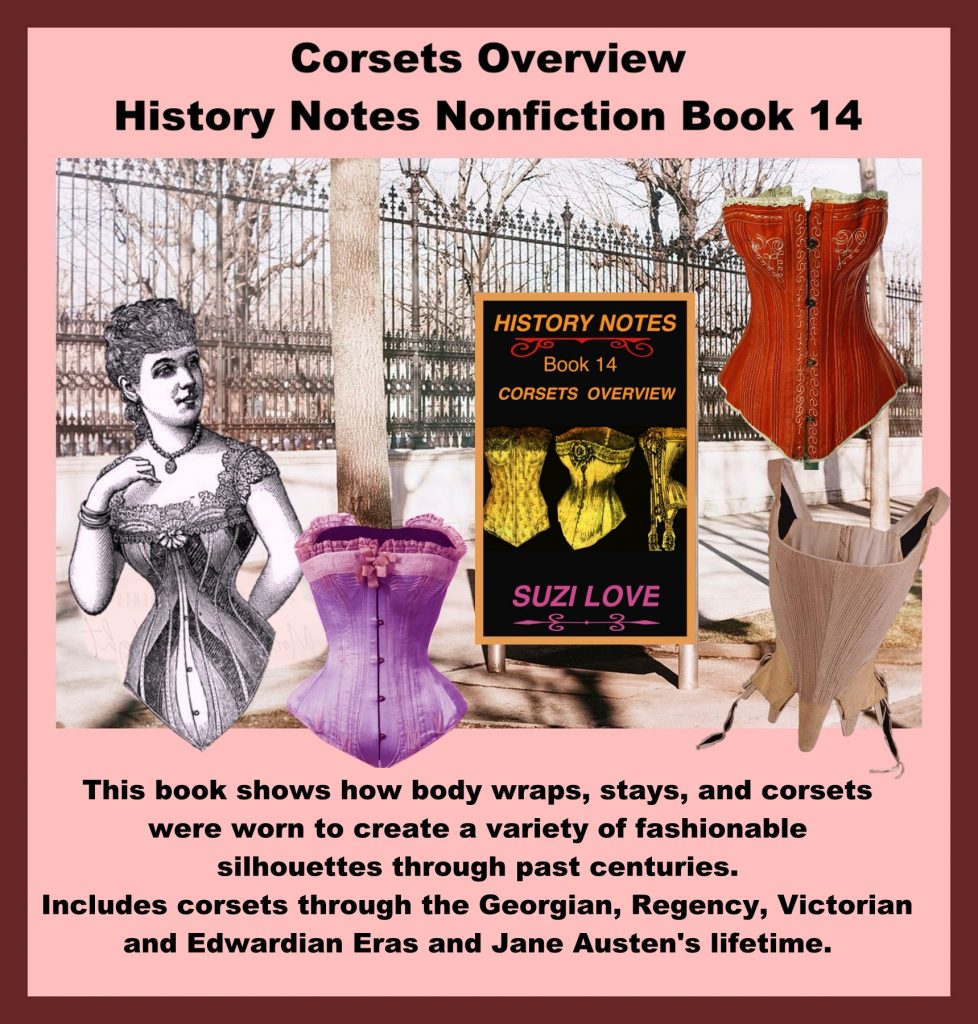
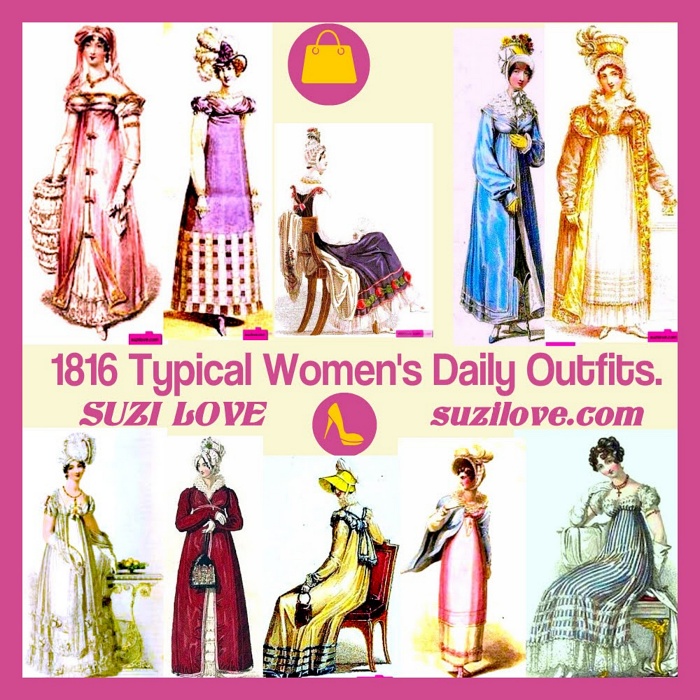
Do you need more factual and visual information for your historical fiction? Try History Notes Books 1-28. Non-fiction Series: Fashion, corsets, Regency Era, music and social manners in the 18th and 19th centuries e.g.
1800-1805 ca. White cotton petticoat of the sort worn by Jane Austen in the early 1800s. Worn under a sleeved, trained dress and over a loose knee length chemise and corset which covered the exposed bust area. The skirt of the petticoat has an apron front open down the side seams. Drawers were not commonly worn at the time. via The John Bright Collection. thejohnbrightcollection.co.uk
Petticoats were made to fit under the low cut bodices of the early 1800s fashions, and to not be seen under a wide and square bodice. This meant thin ribbons were sometimes attached at the shoulders so the petticoat would be virtually without a bodice.
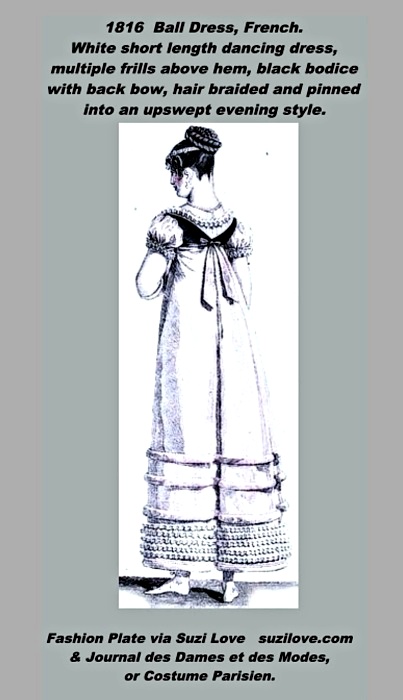
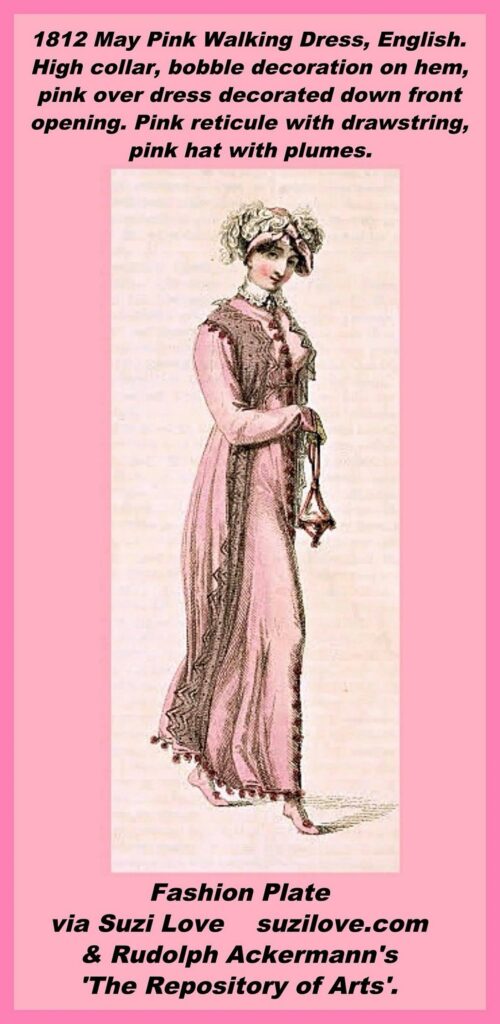
1819 White Percale Dress, French. Deep hem of bubbly muslin, matching Percale Spencer or jacket, pink parasol and flowered straw hat. Spencer has short puffed sleeves over long straight sleeves and military style trimmings. Fashion Plate via Journal des Dames et des Modes, or Costume Parisien. Even though this a French fashion plate, this is typical of the outdoor outfit worn by Jane Austen and her contemporaries when going outside. An Empire style, or high-waisted white cotton dress worn under a Spencer, or jacket, for warmth and with a parasol to protect fair complexions from the sun.
Description Spencer: Short jackets worn for warmth over the high-waisted Empire style gowns that were popular after the French Revolution, where there was a shift away from opulence and decadence to simpler fashion. This jacket with very short bodice and long sleeves was known as a Spencer and was named after the male coat made famous by the Earl Spencer and said to have originated in accident to Lord Spencer in hunting when coat tails torn off and a cropped jacket was invented. The dresses in the early 1800s therefore became looser, lighter, and flowing and women became cold due to their very low cut and short bodices. Short fitted jackets that went easily over the dresses and provided extra modesty and some warmth. As Europe and many other parts of the world were deep in wars in the late 1700s and early 1800s, men in uniform were found everywhere. In support of these military men, fashions leaned towards military style shoulder paddings, shoulder embellishments, loops, buttons, and braids.
Definition Percale or Perkale: From the Persian word pargalah. Fine cotton fabric, or cambric muslin of good quality, originally from India, generally bleached, printed and finished without gloss. Contains more dressing than ordinary muslin, but without the glossy finish of cambric and is printed in fancy patterns on white and colored grounds. In May 1816, Percale was commented on in Rudolph Ackermann’ Repository Of Arts, “Perkale, as they call cambric muslin, is now almost the only thing worn in the morning costume: you must not, however, fancy that this proceeds from a wish to encourage English manufacture, but partly from a love for novelty, and partly because it is less expensive than cambric, and equally fashionable.”