1810 ca. Silk Dress, Probably French. High-waisted, or Empire line, dress with long straight sleeves, back opening, embroidery on neck frill and multiple rows of embroidery on the hem. via Metropolitan Museum New York City, U.S.A. ~ metmuseum.org


1810 ca. Silk Dress, Probably French. High-waisted, or Empire line, dress with long straight sleeves, back opening, embroidery on neck frill and multiple rows of embroidery on the hem. via Metropolitan Museum New York City, U.S.A. ~ metmuseum.org


1809 Blue Redingote, French. Back view of walking coat with military style trim, upstanding collar, white hat, black shoes and a handkerchief. Fashion Plate via Journal des Dames et des Modes, or Costume Parisien.
Redingotes or Pelisses were needed to cover the flimsy dresses made of lightweight fabrics of the Regency years to provide warmth and some protection from windy conditions when gowns might lift and cause modesty issues. Jane Austen and her contemporaries often walked to places and so would have needed the warmth of a Pelisse or coat in the cold British winters.
In Europe, a Redingote was a coat or robe like garment worn both indoors and out, indoors left open to reveal a dress while the outdoor version was made of heavier materials and of darker colors than the type worn indoors. The name comes from the term ‘riding coat.’


How did Jane Austen and her family? Did they go by stagecoach? The dreadful condition of British roads caused great apprehension to all classes of travelers. Making a journey anywhere in the country was a big undertaking and often a gentleman composed his last will and testament before his departure. Traveling in vehicles was only possible during the day or on the nights with very bright moonlight with few vehicles attempting road travel in winter and any travel on a Sunday was frowned upon.
Description of Stage Coach Travel in England. via 1815 Journal Tour of Great Britain. “The gentlemen coachmen, with half-a dozen great coats about them, immense capes, a large nosegay at the button-hole, high mounted on an elevated seat, with squared elbows, a prodigious whip, beautiful horses, four in hand, drive in a file to Salthill, a place about twenty miles from London, and return, stopping in the way at the several public-houses and gin-shops where stage-coachmen are in the habit of stopping for a dram, and for parcels and passengers on the top of the others as many as seventeen persons. These carriages are not suspended, but rest on steel springs, of a flattened oval shape, less easy than the old mode of leathern braces on springs. Some of these stage coaches carry their baggage below the level of the axletree.”


1806 Two Ladies In White Walking Dresses, French. Puffed sleeves, extra long gloves, bonnets tied under chins and decorated with flowers, walking boots, green cashmere shawl. Fashion Plate via Journal des Dames et des Modes, or Costume Parisien. These fashionable ensembles with a variety of fashionable and practical accessories would have been worn by Jane Austen and her family and friends during the day when out walking in the park or visiting village shops. Hats were a necessity to protect fair skin from the sun and scarfs and shawls added color and warmth to an outfit.


1804 London Hairstyles, Gorgeous Gold Hats. via Fashion Plate via Fashions of London and Paris, Published By Richard Phillips, St. Paul’s Church Yard, London, UK. These styles of hats and hairstyles would have been worn by Jane Austen and her contemporaries as hats were an essential fashion item during the Regency years.


1810 ca. Muslin, or Cotton, Bodiced Petticoat With Sleeves, British.The sort of petticoat Jane Austen wore beneath her dresses, for both modesty and warmth. via Killerton House. National Trust, U.K. nationaltrustcollections.org.uk
In Jane Austen’s years of the early nineteenth century, women often wore light-weight dresses under which was worn a range of underclothing to stop gowns appearing transparent and sticking to a lady’s body. To preserve modesty, underclothing included a chemise next to the skin, then a corset, and then petticoats to give shape to a dress and to keep it away from her body.


1804-1815 ca. Wedding Dress. Silk dress with square bodice and very small bodice, short puffed sleeves, beautiful train decorated in gold. via Palais Galliera, or Musée de la Mode de la Ville de Paris. City of Paris Fashion Museum, formerly Musée Galliera. https://books2read.com/SuziLoveFashionWomen1805-1809


1805 Breeches, part of the Royal Naval Uniform of surgeon Joshua Horwood , who served as surgeon’s mate in HMS ‘Prince’ at Trafalgar, and was promoted to surgeon in 1807. via Royal Museums Greenwich, London, U.K. collections.rmg.co.uk

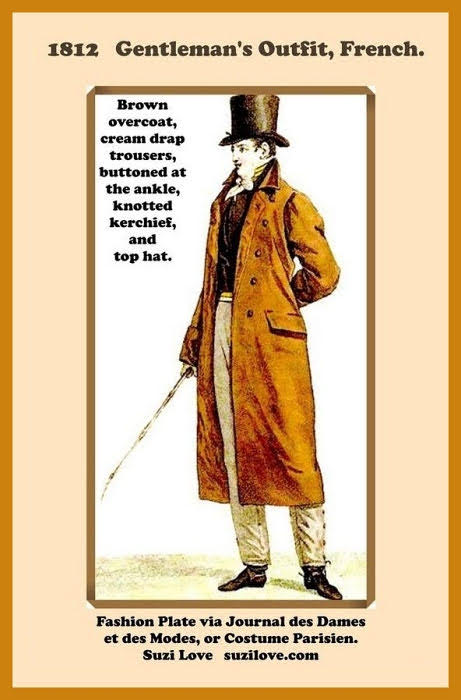
From the finish of the 18th century until 1820, men’s fashions in European and European-influenced countries moved away from the formal wear of brocades, lace, wigs and powder to more informal and relaxed styles. Focus was on undress rather than formal dress. Typical menswear in the early 1800s included a tailcoat, a vest or waistcoat, either breeches, pants, or the newer trousers, stockings, shoes or boots, all worn with an overcoat and hat. This basic ensemble was accessorized with some form of neckcloth or cravat, gloves, walking stick, cane or riding crop, handkerchief, fobs, watch and perhaps a quizzing glass or eye glass.
Skirted coats were replaced with short-fronted, or cutaway, tailcoats worn over fitted waistcoats and plain, white linen shirts. Knee breeches were gradually replaced by tight-fitting pantaloons and later trousers, decorative shoes with buckles were replaced with a variety of boot styles, and fussy and ruffled neckwear gave way to intricately tied, white linen neck cloths. A Regency Era, or early 1800s, gentleman was outfitted in more practical fabrics, such as wool, cotton and buckskin rather than the fussy brocades and silks of the late 1700s.
1804 Men's Fashions In The Time Of Jane Austen. #Regency #Fashion #JaneAusten Share on X
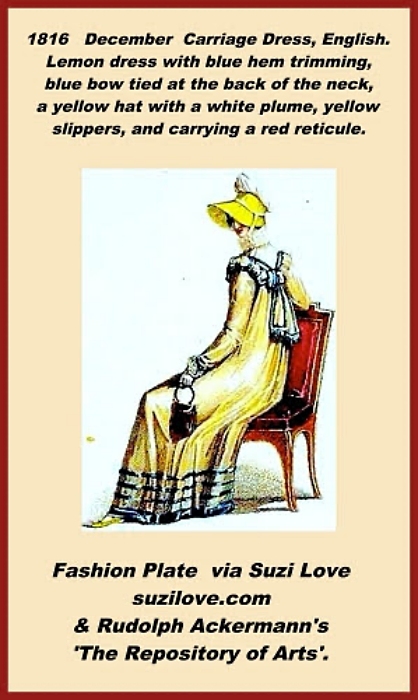
1823 December Red Carriage Costume, English. Gorgeous red dress with waistline a couple of inches below the bust, puffed short sleeves over long straight sleeves, wide white fur hem trim to match the white fur muff, white ruffle at the neck. High bonnet with a feather tied under the chin with a red bow. Fashion plate via John Belle’s ‘La Belle Assemblee’, England.
Definition Redingote Or Pelisse Or Walking Dress Or Carriage Dress Or Coat: French word developed from English words, riding coat. Long fitted outdoor coat worn over other garments for warmth. Often left open at the front to show off the dress underneath. Sometimes cut away in front. Originally made with several capes and trimmed with large buttons. French fashion plates call these coats Redingotes and they are designed for women, men and children. English fashion plates call them a Pelisse, a walking dress, Promenade dress, or Carriage dress. books2read.com/suzilovePelisse


From 1700 until the early 1800s, pockets with waist ties were worn by women to keep essential items on their person. Generally of linen or some other cotton fabric, they were often quilted, or embroidered and gifted or handed down to others. In the 18th century, women’s pockets were not sewn into their gowns. Instead they were attached to a tape and tied around the waist as separate garments. Worn under the hoops and petticoats, they were accessed through openings in the gown and petticoat seams. By the early 1800s, round gowns were both flowing and almost transparent so pockets could no longer be worn under dresses, so ridicules, or bags, or reticules were carried instead. Jane Austen and her female friends and family would have worn pockets under their out layers.
From the Curator Victoria and Albert Museum, London: Quilting was a popular form of decoration for a variety of garments including pockets. However, hand-quilting was a time-consuming method of decoration. The increased demand for quilted petticoats, waistcoats and pockets led to the invention of woven quilting.
1700-1725 ca. Pair of Linen Twill Women’s Pockets With Crewel Embroidery and Waist Ties, British. Embroidered in yellow, green and pink worsted thread with chain and stem stitches, design of flower pot with flowering plant, bound with green worsted tape and sewn to linen tape tie. Designs are similar but not identical, suggesting both hand-drawn and possibly work of an amateur. Pockets may have been handed down to another person who found them too small as each pocket has been extended at top by 4 cms. via Victoria and Albert Museum, London, UK.
collections.vam.ac.uk.

1750-1800 ca. Woman’s Pocket With Waist Ties, New England, America. Linen plain weave, cotton plain weave, wool embroidery. Dimensions 39.5 cm x 27.5 cm. Polychrome crewels on cotton and linen, vine with buds, flowers and leaves and initials M.W. in center. In 18th century, women’s pockets were tied around waist with tape as separate garments, worn under hoops and petticoats, accessed through openings in gown and petticoat seams. via Museum of Fine Arts, Boston, U.S.A. mfa.org