1800-1805 ca. Pink Silk Bonnet, French. Similar to hats worn in England by Jane Austen and friends. Silk net, silk satin ribbon, and silk flowers. via Museum of Fine Arts, Boston, U.S.A. mfa.org


1800-1805 ca. Pink Silk Bonnet, French. Similar to hats worn in England by Jane Austen and friends. Silk net, silk satin ribbon, and silk flowers. via Museum of Fine Arts, Boston, U.S.A. mfa.org


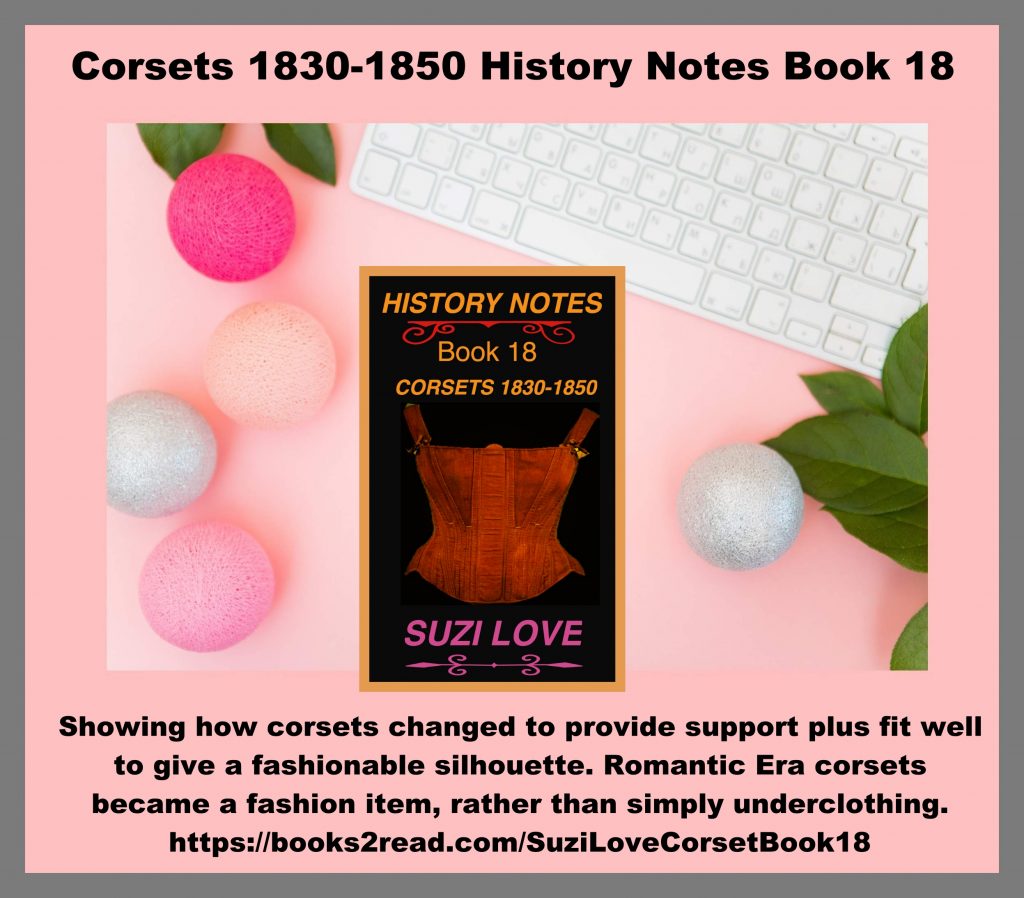
Box Set combining Corset books 14-21 to give a complete picture of the progression of corset styles from 1700 through to the 1900s, including Jane Austen’s lifetime. https://books2read.com/SuziLoveCorsetBook22
This Box Set combines corset books 14-21 to give a complete picture of the progression of corset styles from 1700 through to the 1900s, including Jane Austen’s lifetime and the Bridgerton years. These books show how body wraps, stays, and corsets were worn through the centuries to create a variety of fashionable silhouettes through various historical eras. Corsets flattened breasts and accentuated rounded hips or pushed up breasts and showed off the bust line depending on the fashions of the time and the desired silhouette.


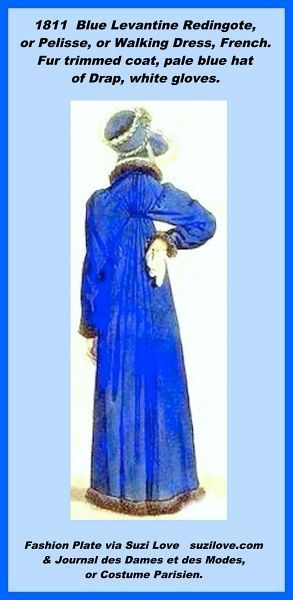
1818 Women’s outdoor fashions In the times of Jane Austen. Pelisses or coats or Redingotes, with matching hats, shoes, goves, reticules or bage, plus other accessories as displayed in various fashion magazines. Definition Redingote Or Coat Or Pelisse: Long fitted outdoor coat worn over other garments for warmth. French word developed from English words, riding coat. French fashion plates call these coats a Redingote and English plates call them a Pelisse, Or Walking Dress, or Carriage Costume.


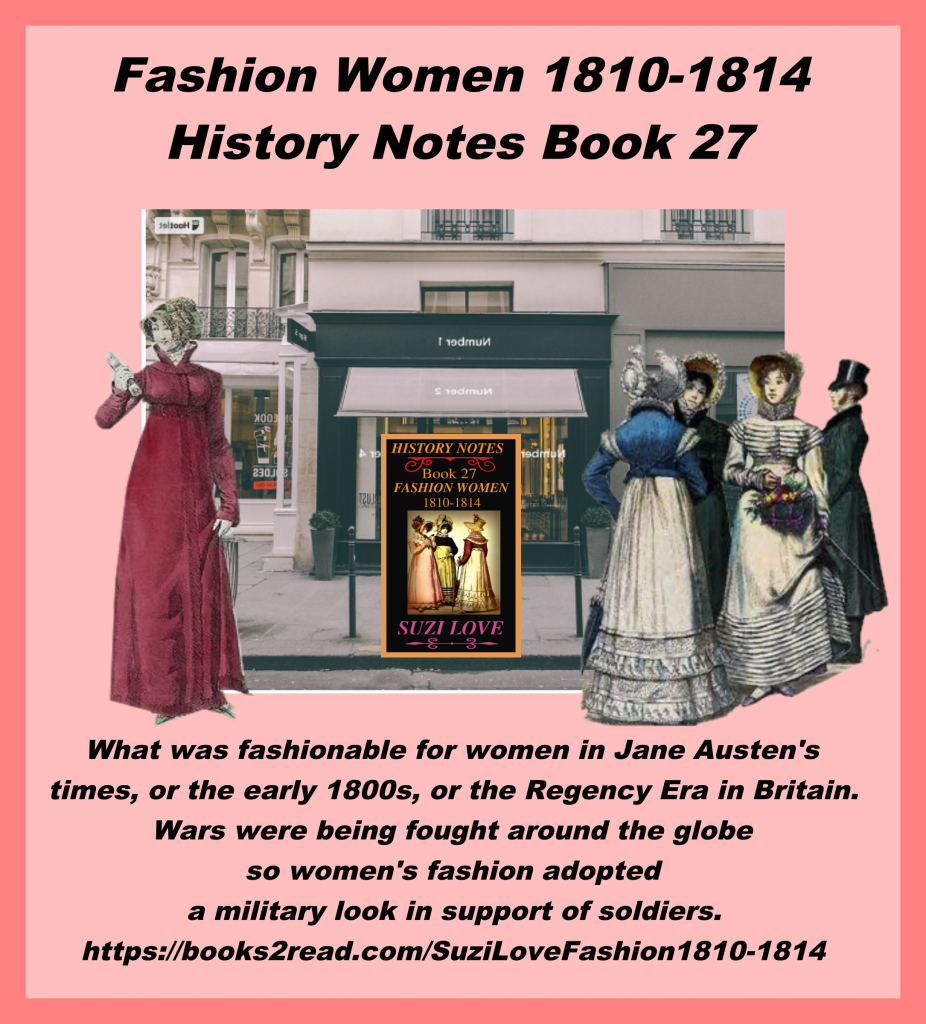
1812 Red Dress, French. High-waisted red Merino wool dress with short puffed sleeves, high Chako hat with a plume long white gloves and white shoes. Jane Austen and her family and friends would have worn this style of dress. Fashion Plate via Journal des Dames et des Modes, or Costume Parisien.


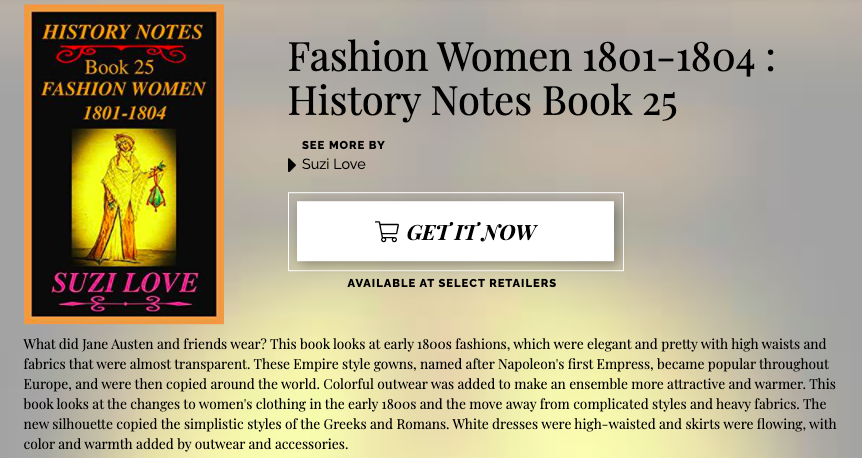
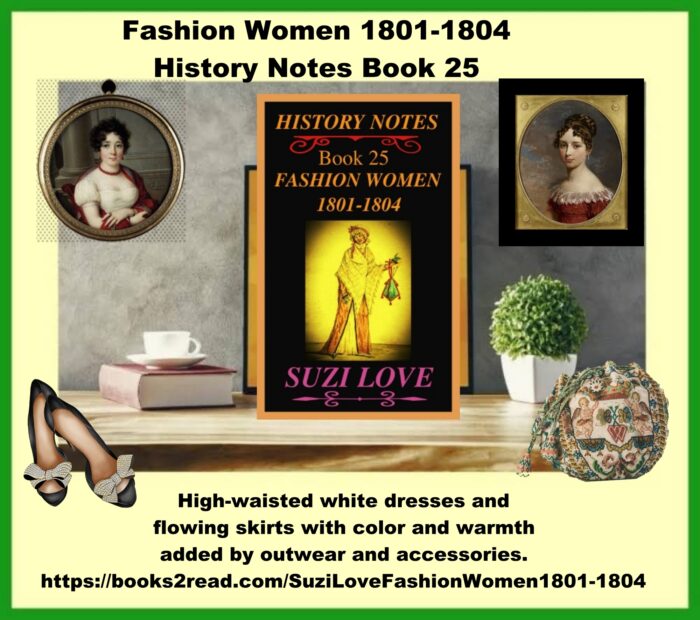
Lover of Jane Austen and the Regency Era fashions? History Notes Book 25. #JaneAusten #RegencyFashion #HistoricalFashion books2read.com/SuziLoveFashionWomen1801-1804
Continue reading →1816 Crossing The Pont des Arts, Paris. Illustrations by Francis Courboin. via Les Modes de Paris. (PD-Art) suzilove.comThis plate depicts two women crossing the Pont des Arts, which is also known as the Passerelle des Arts. The women wear very high-waisted dresses. Both women wear a large white feather in their hats, symbolic of the white plume of Henri IV’s famous battle cry, “Ralliez-vous à mon panache blanc!” and made popular by the 1814 restoration of Louis XVIII on the throne. Restoration also brought back various styles, especially those denoting luxury, from the Ancien Regime. The woman on the left wears an ‘old-fashioned’ lace collar and the resurgence of luxury materials, such as fur are indicative of feminine styles of the Restoration period. (PD-Art) Illustrations by François Courboin from Octave Uzanne’s Les Modes de Paris. Variations du goût et de l’esthétique de la femme, 1797-1897, L. Henry May, Paris, 1898, or from the English translation of the same work: Fashion in Paris : the various phases of feminine taste and aesthetics from 1797 to 1897, William Heinemann, London, 1898. Modes De Paris


1806 Nankin Riding Habit, French. Red scarf, green gloves, riding boots, straw hat decorated with taffeta. The type of outfit Jane Austen and her friends would have worn if they went horse riding. Nankeen Or Nankin Fabric: Durable, buff colored cloth, made of Chinese cotton which is naturally brownish yellow. Originally brought from Nanking.


1819 Typical Gentleman’s Outfit, French. The type of outfit worn by Jane Austen’s male family and friends. Brown cutaway coat with extra long tails, white trousers, high white cravat, heeled black boots with spurs, gloves, black top hat and a cane. Fashion Plate via Journal des Dames et des Modes, or Costume Parisien.


19th Century Late Mechanical Tantalus, French. Ormolu, Bronze, Crystal, and Gilt with a lock and key to open. Earlier versions of this type of small drinks cabinet would have been used in most households during Jane Austen’s times, unless the householders were teetotalers. via 1st Dibs Auctions 1stdibs.com
Tantalus: A small wooden cabinet containing drink decanters. The box has a lock and key to keep unauthorised people from drinking the contents e.g. servants and younger sons, yet still allowing the decanters of drinks to be on show. The word, Tantalus, is a reference to the unsatisfied temptations of the Greek mythological character Tantalus. Patented in the UK in 1881 by George Betjemann, a cabinet maker from the Netherlands, whose workshop was on Pentonville Road, London from the 1830s.


1807 Game of Billiards By Louis Leopold Boilly, French. Ladies playing billiards as they did in Jane Austen’s time. via Heritage Museum, Russia ~ heritagemuseum.org