1802 Two Bodices, French. Two bonnets, one with a veil. Fashion Plate via Journal des Dames et des Modes, or Costume Parisien. https://books2read.com/SuziLoveFashionWomen1801-1804
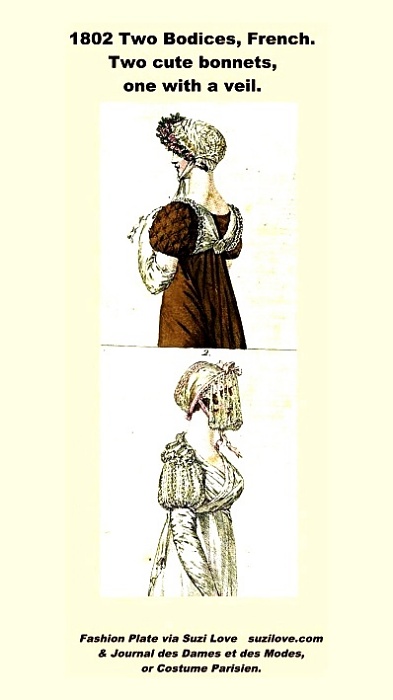


1802 Two Bodices, French. Two bonnets, one with a veil. Fashion Plate via Journal des Dames et des Modes, or Costume Parisien. https://books2read.com/SuziLoveFashionWomen1801-1804
1813 April Carriage Dress, English. Green coat over white Empire style dress of jaconet or cambric muslin, plaited bodice, long sleeve, deep frill, with a vandyke of needle-work. Russian mantle is made of Pomona or spring green sasnet, lined with white satin, trimmed with a rich frog fringe and closed with a cord or tassel. Close-fitting cottage slouch bonnet of the same material and edged with scalloped lace, tied on the left under the chin with ribbon, and decorated with a small cluster of spring flowers. Reticule, or bag, of the sam fabric, slippers of green kid, and gloves of primrose kid. Fashion Plate via Rudolph Ackermann’s ‘The Repository of Arts’.


1840 Group In An Outdoor Setting, French. Two men in top hats. Modes de Longchamps’. Men’s outfits, a woman’s riding habit and a small boy, all tailored by Robin of 21 Rue Saint Marc, Paris. via Le Bon Ton. via Victoria and Albert Museum, London, UK. collections.vam.ac.uk.


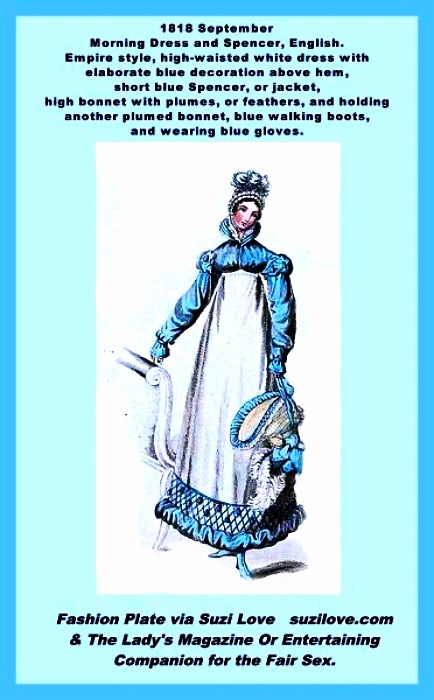
1818 September Morning Dress and Spencer, English. Empire style, high-waisted white dress with elaborate blue decoration above hem, short blue Spencer, or jacket, with puffs at the shoulders and straight sleeves, cap with plumes, or feathers, tied under her chin and holding another plumed bonnet, blue walking boots, and wearing blue gloves. Fashion Plate via Ladies Magazine.
Definition Empire Style Dress: High-waisted white gown defined women’s fashion during the Regency Era. ‘Empire’ is the name given to the period when Napoleon Bonaparte built his French Empire. High-waisted, loose gowns were adopted by the aristocracy as a symbol of turning away from the fussy, elaborate and expensive clothing worn in the 1700s.
Definition Spencer: Short jacket, cropped at the waist, worn over a dress, or gown. These close-fitting, tight sleeved, waist length jackets were modeled on a gentleman’s riding coat, but without tails. Delicate and regency dresses provided so little protection from the cold, so over garments were essential for warmth, modesty and good health.

Light-hearted look at Young Lady in Jane Austen’s times, or early 1800s. A glimpse into both the frivolous and more serious occupations filling a young lady’s day in the lifetime of Jane Austen, or the Regency Era, or the early 19th Century. Historic images and historical information show her fashions and frolics.
https://books2read.com/suziloveYLD


1812 Two Ladies, French. Orange sleeveless Redingote over a white dress with high neck frill and interesting sleeves. High-waisted white dress with blue pattern on the short sleeves and hem. Both with gloves, matching bonnets and shoes. Fashion Plate via Journal des Dames et des Modes, or Costume Parisien.

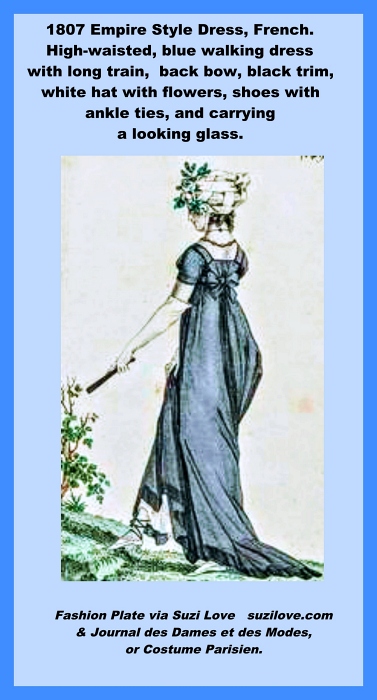
1807 Blue Walking Dress, French. Although this is a French fashion plate, this is the sort of dress that Jane Austen and her friends would have worn when walking together. Back bow, a train and black trim, a white hat with flowers and holding a looking glass. Fashion Plate via Journal des Dames et des Modes, or Costume Parisien.
Definition Empire Style Dress: High-waisted white gown defined women’s fashion during the Regency Era. ‘Empire’ is the name given to the period when Napoleon Bonaparte built his French Empire. High-waisted, loose gowns were adopted by the aristocracy as a symbol of turning away from the fussy, elaborate and expensive clothing worn in the 1700s.
Definition Walking Dress: Worn for walking in a park or the country estate. This sort of outfit needed to be presentable and warm, but not overly accessorized.
1814 Gentleman’s Ensemble, French. Gentleman in brown tailcoat, white vest, high collared white shirt, knotted white cravat, white pants and white gaiters above black shoes. The style of outfit worn by the men in Jane Austen’s life. Fashion Plate via Journal des Dames et des Modes, or Costume Parisien.


1811 August Walking Dress for a Mother and a child, English. Mother wears a typical Regency or Jane Austen style high round robe with full long sleeve trimmed with Van Dyke lace at the throat and cuffs and ornamented around the bottom with a Tuscan border in needlework. Short capuchin cloak of buff shot sarsenet fastened with broaches on shoulders and trimmed with deep Chinese silk fringe. Moorish turban bonnet gathered into a broach in centre of the forehead. Purple ridicule, or bag, with gold snap and tassels. Buff kid half boots, parasol with deep Indian awning. Child wears a short sleeved Spanish vest and trousers in one, which looks like a skeleton suit, a tight coat or jacket buttoned to a pair of high-waisted trousers. An Indian dimity waistcoat with long sleeves and collar trimmed with a narrow border of muslin, high shoes of purple morocco and a college cap of purple velvet with a crimson band and carries a parasol. via Rudolph Ackermann’s ‘The Repository of Arts’.
Definition Skeleton Suit: Shirt and trousers made as one connecting piece, often buttoned together, and were one of the earliest fashions designs made especially for children and were worn from the 1790s to the 1820s.

1808 Blue Grey Redingote, French. High waist, coordinating trim, short puffed sleeves over long straight sleeves, yellow striped bandana in her hair, yellow gloves and yellow walking boots. Jane Austen and her female contemporaries wore coats like these when outdoors because they needed the warmth over the fashionable light muslin dresses that all women wore. Redingotes could be both comfortable and decorative. They often had military elements in support of the thousands of men involved in ongoing wars. Fashion Plate via Journal des Dames et des Modes, or Costume Parisien.
Definition Redingote Or Pelisse Or Walking Dress Or Coat: Long fitted outdoor coat worn over other garments for warmth. Often left open at the front to show off the dress underneath. French word developed from English words, riding coat.
Bandeau: Narrow strip or band worn around head to confine hair. Made of either twisted fabric, length of pearls, flowers, jewels or feathers. From the French word for “strip.
