Light-hearted look at Young Lady in Jane Austen’s times, or early 1800s. A glimpse into both the frivolous and more serious occupations filling a young lady’s day in the lifetime of Jane Austen, or the Regency Era, or the early 19th Century. Historic images and historical information show her fashions and frolics. https://books2read.com/suziloveYLD
1930-1939 ca. Louis Vuitton Wardrobe Trunk. Monogrammed coat hangers, leather handle.1930-19391930-1939 ca. Louis Vuitton Steamer Trunk.18th Century Late – 19th Century Early. Hide covered, two tier traveling chest or box. Via Bonham’s Auctions.17th Century Iron Trunk With Locking Mechanism. 1900s Early Bags and Suitcases.
1st Dibs Auctions. 1859 ca. Packing Case or Trunk By Louis Vuitton, French. Iron trim, wooden slats, brass studs and locks.17th – 20th Centuries Luggage For Travel. #RegencyEra #VictorianEra #EdwardianEra books2read.com/SuziLoveTravel Share on XHN_10_D2D_RetailerBuyLink_ History Notes Book 10 books2read.com/SuziLoveTravel
What did the Bridgerton ladies and Jane Austen use to carry her personal items? Ridicule, Reticule, Or Handbag? Call them what you like: purses, bags, handbags, reticules, ridicules, clutches, or pocket replacements. They all did the same job and they changed greatly with the prevailing fashions of time. books2read.com/suziloveReticules
Definition Of A Reticule; Bag or purse, often with a drawstring to pull closed and usually made of cloth or covered cardboard and often decorated with beading or embroidery. A reticule, or purse, or handbag, was usually carried by a woman during the Regency period to carry all their daily necessities. Earlier, women used pockets that tied at the waistline and were hidden in the folds of their skirts. Empire style, or early 1800s, high-waisted dresses made it impossible to either sewn in a pocket or to tie on a pocket, so women began carrying small, decorated bags called Reticules, or ridicules, which generally pulled close at the top with a drawstring. These Reticules, or bags, were the forerunners of our modern day purses.
The term ‘ridicule’ derived from the Latin ‘ridiculum’ and first used in France during the 17th century and meant subjecting something or someone to mockery. As women’s tiny bags were mocked, or ridiculed, for being a useless fashion accessory carried outside when they were first used in the late 1700s, it’s likely this is how the name ‘ridicule’ started. The later term ‘reticule’ derived from the Latin reticulum, meaning ‘netted bag’ and was applied when bags became larger and often made from netting. In the late 1700s and early 1800s, they were also known as indispensables as they carried all the personal items a lady needed upon her person every day. They were easily made by ladies, easy to carry and became an indispensable fashion accessory.
In the early nineteenth century, reticules started to look like future handbags as they were often made from rigid card or molded mâché or card into a variety of shapes. Early bags were circular and with a drawstring but as women wanted their reticules to look individual they could be made with two halves and a hinged metal closure or with concertina sides. Materials varied from silk, cotton and string and shapes were round, hexagonal or lozenge shapes with shell shaped bags becoming very popular during the Regency and Romantic Eras.
1800s magazines were written for well bred women who could read, so they gave plenty of ideas for how ladies could make and embellish reticules for their own use and as pretty gifts. Needlework was highly encouraged as a pastime for a lady so bags were frequently embroidered or decorated with beading. By the 1820s, reticules became more like our modern handbags using soft leather gathered at the top or hard leather with a rigid fastener and metal chain for carrying.
For many centuries, road travel was the main way of getting from place to place, but roads were notoriously rutted and badly maintained, especially in Britain. The Romans laid down the roads but they very poorly maintained through the 17th and 18th Centuries. It wasn’t until the 19th Century that improvements were made and rose travel opened up.
Roman Road Construction. Roman roads were constructed in layers. Rubble, slabs of stone, pebbles and gravel, smooth paving stones. Average width of road was 15 to 18 feet.
The dreadful condition of British roads caused great apprehension to all classes of travelers. Making a journey anywhere in the country was a big undertaking and often a gentleman composed his last will and testament before his departure. Traveling in vehicles was only possible during the day or on the nights with very bright moonlight with few vehicles attempting road travel in winter and any travel on a Sunday was frowned upon.
From: 1815 Journal of Tour of Great Britain by a French Tourist via Google Books (PD-180) ‘The roads very narrow, crooked, and dirty, continually up and down. The horses we get are by no means good, and draw us with difficulty at the rate of five miles an hour. We change carriages as well as horses at every post house. They are on four wheels, light and easy, and large enough for three persons. The post boy sits on a cross bar of wood between the front springs, or rather rests against it. This is safer, and more convenient both for men and horse, but does not look well and, as far as we have seen, English post horses and postillions do not seem to deserve their reputation.’
If you’ve read Jane Austen you’ll know that it was improper for a woman to travel alone, which meant that well-bred women were dependent on male relations to accompany them or else they had to take a maid in the carriage with her and be accompanied by a driver and footmen, which of course added to the cost of carriage travel. Any woman traveling by herself on a mail coach would be subject to speculation and probably malicious gossip.
Mail coaches raced across these roads trying to stick to a time table but there were numerous accidents on roads that were often flooded, covered in snow, or up such steep hills that passengers had to alight and either push the coach or walk ups the hill.
1790 Turnpike Gates In The Vicinity Of London, U.K.
Tolls were collected on many roads in Britain but, because the turnpikes were mainly on land belonging to the nobility, money collected went into their personal coffers and very little went to road maintenance. This caused a continual push in parliament to make those who owned the land and collected the money responsible for repairing their roads, but these pleas fell on deaf ears as the lords in who sat in parliament had no interest in spending money to better travel for the common people.
Description of Stage Coach Travel in England. via 1815 Journal Tour of Great Britain.
“The gentlemen-coachmen, with half-a dozen great coats about them,—immense capes,—a large nosegay at the button-hole,—high mounted on an elevated seat,—with squared elbows,—a prodigious whip, beautiful horses, four in hand, drive in a file to Salthill, a place about twenty miles from London, and return, stopping in the way at the several public-houses and gin-shops where stage-coachmen are in the habit of stopping for a dram, and for parcels and passengers on the top of the others as many as seventeen persons. These carriages are not suspended, but rest on steel springs, of a flattened oval shape, less easy than the old mode of leathern braces on springs. Some of these stage coaches carry their baggage below the level of the axletree.”
1825 Observations on the Management of Turnpikes by John Loudon Mc Adam. Via Google Books (PD-150)
John Loudon McAdam, born Ayr, Scotland. (1756 -1836) He acted as a magistrate and assumed other civic roles including one as as trustee of the Ayrshire Turnpike in 1783, where he developed an interest in road construction and engineering, eventually becoming general surveyor for the Bristol Corporation in 1804. He wrote papers on the benefits of raising roads, making them from layers of stone and gravel, and giving priority to drainage. However, no roads were made this way until McAdam was put in charge of remaking the Bristol Turnpike in 1816, when he put his theories into practice and demonstrated macadamization, known as macadam. He made him numerous enemies on the Turnpike Trusts, who preferred to keep the money made from tolls rather than ploughing it back into road improvements but Macadam was soon in widespread use.
John Loudon McAdam (1756 – 1836), Scottish engineer and road-builder who started a new way of raising roads called ‘macadamization’. Via Wikimedia Commons.
1825 John McAdam Observation of English Roads. “In a Country like England, inhabited by an ‘ intelligent people, well educated, active, and enterprising, where every hint at improvement is eagerly caught at and prosecuted with spirit, it is only possible to account for the apathy respecting Roads, and the want of exertion in prosecuting the means given for improvement, by showing that a strong counteracting principle exists in the defects of the Road Laws, and that although much want of encouragement has arisen from the prejudices of old practitioners— the great obstacle to success remains in the zealous opposition of those who profit by mismanagement in various ways.”
McAdam Report on Bristol District Roads, March, 1815.
Expenditure and Debt.
• 1802 – 1812 only two roads maintained themselves.
• Neither able to pay £100 of the debt they owed.
• No other roads supported themselves at all.
McAdam’s List of Reasons for Bad Roads.
• Ignorance and incapacity of Surveyors
• Lack of any control over the lavish spending of Road Trusts
• Trust accounts being in an inexplicable mess
• No system or scientific mode of constructing roads
• Every part of a road being differently formed
• Each road managed by a different person
• Each area managed by a different Turnpike Trust
• Winford Road Trust produced no account books
McAdam informed the Road Trusts that smooth roads were the most useful and lasted longer because carriages do little damage to a smooth road because the horses exert themselves less and the carriages do not rock and roll.
Unfortunately for travelers in the late 1700s and early 1800s, the smoothness of a road surface depended on the preparation and distribution of the road building materials used and was therefore entirely in the hands of each individual road-maker. In 1816, Mc Adam reported to the Bristol District the difference in revenue if roads were built of good material, regularly maintained, and if the finances of Turnpike Trusts were under someone’s control.
1823 ‘Construction of a Macadam Road’ by Carl Rakeman. Via Wikimedia Commons.
Travel on these roads was also dangerous as highwaymen stopped and robbed anyone who came along. Male or female made no difference to highwaymen in Britain, nor to the bushrangers in Australia or the gangs on American roads, as they robbed indiscriminately and often with violence.
By the end of the 18th Century, however, travel as a pleasurable pursuit came into vogue and numerous guides were written for traveling all over the British Isles as well as on the continent.
The 1812 ‘Tour Of Dr. Syntax’ was an ironic look at the new obsession of travel and travel guides. Before he set off for the Lake District, Dr. Syntax said to his wife, “You well know what my pen can do, and I’ll employ my pencil too: I’ll ride and write, and sketch and print and thus create a real mint: I’ll prose it here, I’ll verse it there and picturesque it everywhere. I’ll do what all have done before; I think I shall and somewhat more.”
Georgian and Regency travelers were envious of aristocrats, even if they were of the nobility themselves, and loved to view all the British Great Houses.
A gentleman and his wife would even drive up to the front door of a mansion house and demand to be given a tour of the house. If they weren’t admitted, they would write in their journals of the inhospitable nature of the people on a particular estate. Thomas Pennant, William Mavor, and others, loved to write about these bad experiences and have them published. Paterson’s British Itinerary, a travel guide had 17 editions between 1785-1832 – it outlined the roads used by the stage and mail coaches, the tolls, the bridges, etc.
This new touring craze created an industry of hospitality that encompassed more than simple mail coach trips from place to place, and more than a noble family traveling from their country seat to the Metropolis of London for parliamentary sittings. Inns had to improve the quality of the linens and meals if they wanted to attract the wealthier traveling class. Before that, many travelers carried their own linen, crockery, glasses, and utensils, as they didn’t trust the hygiene or standards of country inns.
Travel became something written about by poets with many sonnets written to the beauty of places like the Lake District in England, or the pyramids in Egypt. Inns became cleaner and more respectable so they could welcome travelers of the upper classes. This also meant that women could travel more as roads were slowly improved from rutted tracks that were only suitable for horse riding to roads that family coaches could travel along, though these roads were still narrow and subject to extremes of weather, such as flooding. The race was on to travel from places like London to Edinburgh in the fastest possible time.
1817-1875 ca. Vehicles. From: Pierre Larousse’s World Dictionary Of the 19th Century.
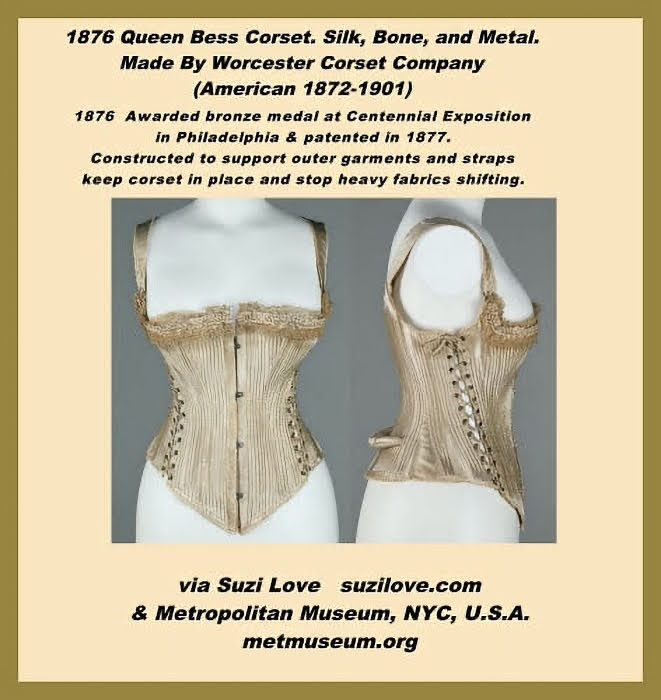
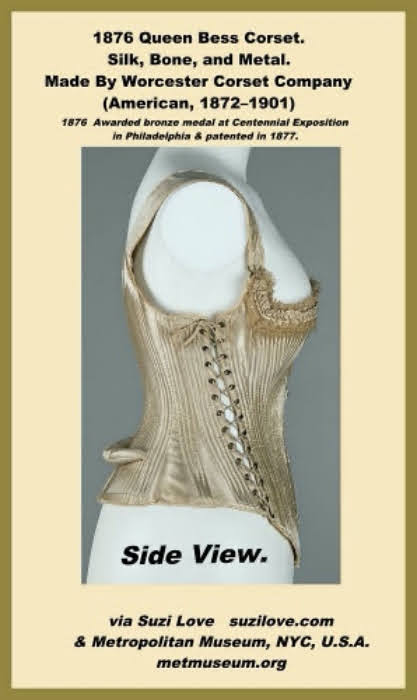
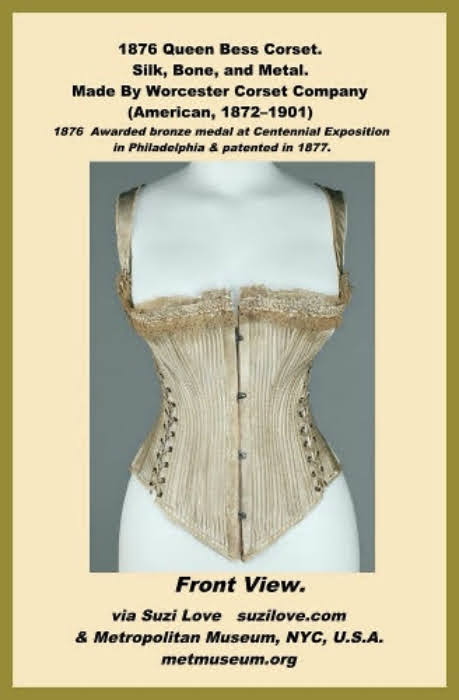
Busks shaped and reinforced the centre front of stays, or corsets. They were made from whalebone, wood, and bone, and were often inscribed with names, dates, and symbols of love because they were positioned close to the heart. The corsets worn in Jane Austen’s later years and by women in Bridgerton times often had busks to stiffen the corset and support the breasts.
1755 Wooden Busk For Stays, English. Flat piece of wood with design scratched or picked out, and accented with red stain. Design comprises of circles, stylized geometric stars, heart motifs, and the initials and date ‘EB 1755’. Indistinct inscription on the back, scratched into the surface of the wood with three lines of script.1800-1840 ca. Scrimshaw Corset Busk, American. Designs are of a ship and the places the sailor visited. Sailors made these as gifts to be worn close to the heart by their loved ones. Dimensions (inches) 12.5 (L) , 1.3 (W). Dimensions (centimeters). 31.7 (L) , 3.3 (W) via Winterthur Museum Collection.19th Century. Scrimshaw Baleen Corset Busks, American. The first with figure inscribed Annabelle, ship, whale, and verse On the off shore grounds I think of thee, so I’ll catch my whales and leave the sea; the second inscribed Mary and 1836 12 3/8in. high the longest. via Christie’s Auction Rooms. 1833 August. Corset Busk of carved whalebone. Face carvings, house, geometric circle, potted plant, sailing ship, American flag. Joseph Bradford. Carvings, plant, house, anchor, sea birds over ship, tree. Whale skeletal bone, inscribed with knife and using black pigment. Length: 13 1/8″ 33.4 cm; Width: 1 9/16″ 3.9 cm; Thickness: 1/8″ 3 mm.Busks shaped and reinforced front of corsets. Made from whalebone, wood and bone. Often inscribed with names, dates and symbols of love because they were positioned close to the heart. Via Hereford Museum. 1771 Wooden Corset Busk, American. Carved Maple wood. Via Winterthur Museum. 19th Century Early. Corset Busk of Double-Sided Carved Wood. Honey colored wood, probably maple, carved on both sides. Two trees of life, hex symbol design, two entwined hearts, pinwheels, and growing plant. Back has delicate scrimshaw-look design of seashore town, chapel, homes, lighthouse and ships, horizontal rather than front vertical. Measures: 13.75″ x 1.5″. via Antique Dress.18th Century Wooden Busk for Stays, European. Via metmuseum.org18th Century Late – 19th Early Carved Maple Wood Busk, American. Spirals top & bottom, two hearts meet at center, “PC” carved on reverse. Worn by member of Robbins family, inherited by Ellen A. Stone. Via Fine Arts Museum Of Boston, USA.
Do you need more factual and visual information for your historical fiction? Try History Notes Books 1-13. Non-fiction Series: Fashion, music and social manners in the 18th and 19th centuries e.g.
Want a glimpse into the life of a young lady in Jane Austen and the Bridgerton years? #bridgerton #RegencyEra #JaneAusten
Young Lady’s Day is Book 4 in the Regency Life Series. This book depicts the often-frivolous life and fashions of a young lady in the early 1800’s, but also gives a glimpse into the more serious occupations a young lady may undertake. Through historic images, historical information, and funny anecdotes, it shows how a young lady fills her day, where she is permitted to go, and who she is allowed spend time with. These light-hearted looks at the longer Regency years are an easy to read overview of what people did and wore, and where they worked and played. There is plenty of information to interest history buffs, and lots of pictures to help readers and writers of historical fiction visualize the people and places from the last years of the 18th Century until Queen Victoria took the throne. https://books2read.com/suziloveYLD
Outback Arrival : A contemporary medical set in an outback Australian hospital. A city nurse follows the doctor she loves to the bush town where he manages his family’s cattle properties, determined to prove her love for him. But can he accept that she is carrying his baby and that those he trusts have lied?
‘No, no, no! Bodies don’t stand up and walk out of hospitals.’
‘I’m real sorry, Nurse Kristie.’ The weather beaten grounds-man shuffled his feet in front of her office desk, distress adding a decade to his sixty something years.‘Looked everˈwhere. Can’t find it.’
‘This can’t be happening, Joey. A corpse cannot just disappear. Somebody must have noticed something.’
‘Sure ain’t sometin´ no normal person’d tuck un’erneath their arm. Walk out with, when visitors go ‘ome.’
Kristie adopted the calm and confident demeanor that had helped her tackle hundreds of emergency room dramas without showing a moment of panic. Casualty nurses joked that no matter how many crazy things you’d dealt with, something stranger was always about to walk in your door. Or in today’s case, walk out of the morgue’s door.
She hauled in a deep breath, while mentally chastising herself for not making more time to attend yoga classes, for Joey’s sake if not her own. She faked a confident smile. ‘We have to find his body, Joey. Quickly. Before the board’s fusspots hear what’s happened. Or we’ll have them arriving, en masse, and breathing down our necks.’
When she’d arrived four weeks earlier, the majority of the board members had welcomed her with open arms. Enticing an experienced nurse away from a city hospital to a remote outback town didn’t happen every day and the town had seen them as heroes saving their stretched outback health system. The few remaining few board members, however, were old-fashioned, staid, and highly suspicious of her motives.
Kristie had learned to be vigilant at work and circumspect when off duty. During her three months’ probation as Director of Nursing, she couldn’t afford any slip ups or she wouldn’t be contracted for a permanent position, no matter how desperate rural towns were to keep medical staff.. Those board members, the ones lacking a sense of humor, would be horrified that a recently deceased member of their small community had mysteriously disappeared from the hospital’s morgue. Although morgue was a loose term for a brick shed which housed a refrigerator, a work bench, and was supposedly cooled by a temperamental air-conditioner. Misplacing a body, without any of her rostered staff noticing, would be classified by the board as her first mistake, a huge mistake.
Writing and Publishing? Tips and Tricks in Self Publishing: Absolute Beginner’s Guide. Information, contacts, and checklists steer you towards professionally produced books. Helps both fiction and non-fiction authors and available in digital and paperback. Co-Authored by two Australians: multi-published Imogene Nix and best-selling and award winning Suzi Love. books2read.com/selfpublishing