Are you a Bridgerton fan? Love Jane Austen? Love history? Take a look at a Young Gentleman’s Day in early 1800s. Young Gentleman’s Day Regency Life Series Books 2 by Suzi Love. Easy to read books on what a young gentleman did, wore, and lived during the early 1800s, or the Regency Era when King George 3rd was mad and his son, Prince George, was the Regent in Britain. #Regency #JaneAusten #amwriting books2read.com/suziloveYGD
19th Century Early Men’s Trousers as worn by the men in Jane Austen’s family and life. Textured cotton woven with small dash motif. Wide waistband double row five ivory bone buttons, fall front bone buttons plus button centre front, two large pockets, full width flap with buttonholes and with wide legs. via Meg Andrews, Costumes and Textiles. Meg-andrews.com
1803 White Redingote, Or Overcoat, French. Striped vest, casually knotted white cravat, blue trousers tucked into high boots. Fashion Plate via Journal des Dames et des Modes, or Costume Parisien.
Definition Redingote Or Pelisse Or Walking Dress Or Coat: French word developed from English words, riding coat. Long fitted outdoor coat worn over other garments for warmth. Originally made with several capes and trimmed with large buttons. For women, the coat was often cut away in the front or left open to show off the dress underneath. French fashion plates call these coats Redingotes and they were worn by men, women, and children. English fashion plates call the coats a Pelisse, a walking dress, Promenade dress, or Carriage dress. books2read.com/suzilovePelisse
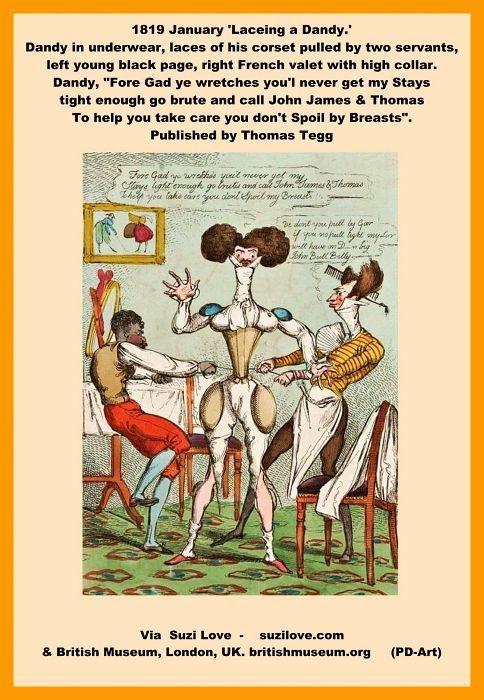
1819 January ‘Laceing a Dandy.’ Dandy in underwear, laces of his corset pulled by two servants, left young black page, right French valet with high collar. Dandy, “Fore Gad ye wretches you’ll never get my Stays tight enough go brute and call John James & Thomas, To help you take care you don’t Spoil by Breasts”. Published by: Thomas Tegg. Hand colored etching. Via British Museum, London, UK. britishmuseum.org (PD-Art)
1807 Regency Couple, French.Dressed As In Jane Austen’s times.Back view of a lady’s white dress with a cute back bow, long draping scarf with knotted ends, and straw bonnet with a blue ribbon and bows. Gentleman in a long grey coat, orange vest, extremely high collar of a ruffled shirt, tight taupe pants tucked into topped boots, and with a fashionable short curly hairstyle. Fashion Plate via Costume Parisien.
Fashion Women 1805-1809 History Notes Book 26
What did Jane Austen and friends wear? This book looks at early 1800s fashions, which were elegant and pretty with high waists and fabrics that were almost transparent. These Empire style gowns, named after Napoleon’s first Empress, became popular throughout Europe, and were then copied around the world. Colorful outwear was added to make an ensemble more attractive and warmer.
https://books2read.com/SuziLoveFashionWomen1805-1809
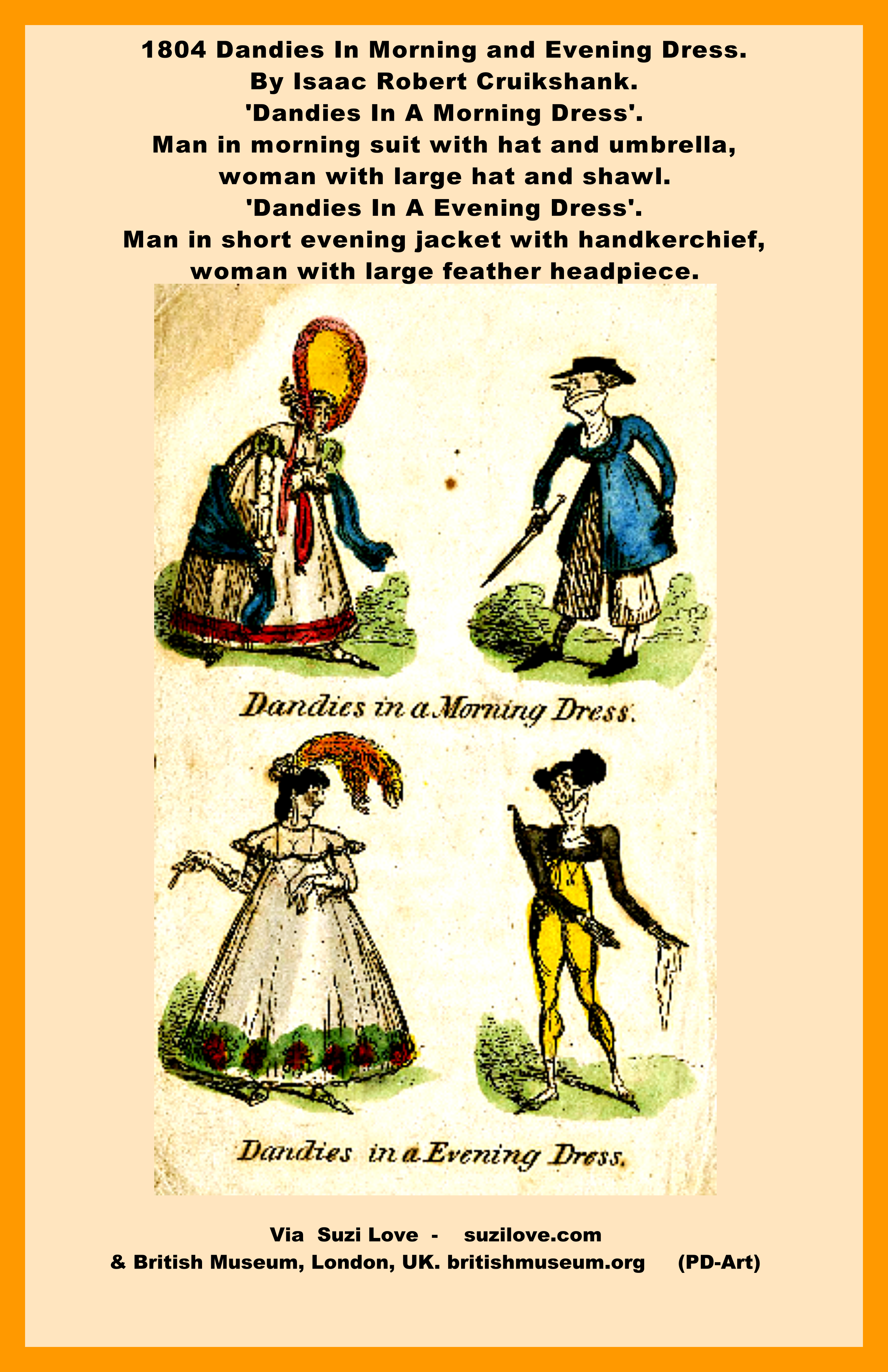
1804 Dandies In Morning and Evening Dress. By Isaac Robert Cruikshank. ‘Dandies In A Morning Dress’. Man in morning suit with hat and umbrella, woman with large hat and shawl. ‘Dandies In A Evening Dress’. Man in short evening jacket with handkerchief, woman with large feather headpiece. Via British Museum, London, UK. britishmuseum.org (PD-Art)
1807 Fashionable French Couple. Man: Blue cutaway coat and yellow breeches. Lady: Lemon and blue dress and bonnet. Typical of the ensembles worn by Jane Austen and her family and friends. Fashion Plate via Journal des Dames et des Modes, or Costume Parisien.
Fashion Women 1805-1809 History Notes Book 26 What did Jane Austen and friends wear? https://books2read.com/SuziLoveFashionWomen1805-1809
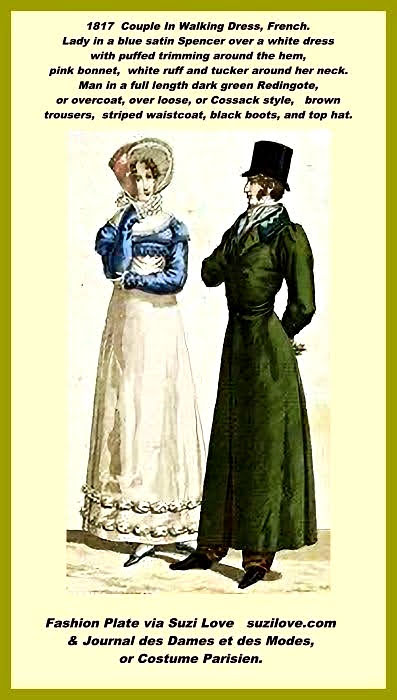
1817 Couple In Jane Austen and Bridgerton style Walking Dress and Gentleman in Same Green Redingote.
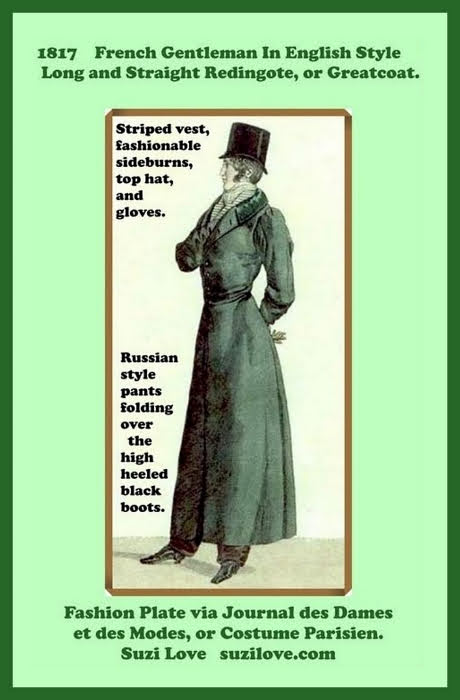
Lady: Blue satin Spencer over a white dress with puffed trimming around hem, pink bonnet, white ruff and tucker. Man: Long green Redingote, or overcoat, in the English style. Long brown trousers, striped waistcoat or vest, top hat, gloves and boots. Fashion Plate via Journal des Dames et des Modes, or Costume Parisien. Definition Redingote Or Coat Or Pelisse: Long fitted outdoor coat worn over other garments for warmth. French word developed from English words, riding coat. French fashion plates call these coats a Redingote and English plates call them a Pelisse, Or Walking Dress, or Carriage Costume. These are the types of outfits worn by Jane Austen and contemporaries in English magazines, where French fashions were obsessively copied despite the two countries being at war for many years.
This same Fashion Plate is seen below for the gentleman.
11817 Long Green Straight Redingote, or Greatcoat, French. Gentleman wearing an English style overcoat, long brown trousers, striped waistcoat or vest, top hat, gloves and boots. Fashion Plate via Journal des Dames et des Modes, or Costume Parisien.
HN_23_D2D_Fashion Men 1800-1819 History Notes Book 23
https://books2read.com/SuziLoveFashionMen1800-1819
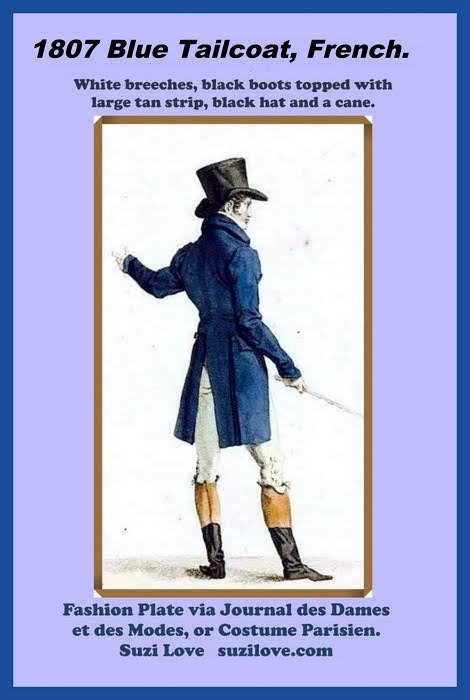
1807 Gentleman’s Blue Tailcoat, French. White breeches, black boots topped with large tan strip, black hat and a cane. Plate via Journal des Dames et des Modes, or Costume Parisien.
French fashions and Georgian and Regency Era fashions from Great Britain were copied around the world. This is what men wore in the times of Jane Austen for city and country life.
1815 Long Blue Overcoat with brown fur trim, white trousers, scarf, top hat and a cane. Fashion Plate via Journal des Dames et des Modes, or Costume Parisien. I can picture Jane Austen’s male friends and family and the Bridgerton men wearing this gorgeous coat when out walking or driving in the park.
1815 Long Blue Overcoat with brown fur trim, white trousers, scarf, top hat and a cane. Fashion Plate via Journal des Dames et des Modes, or Costume Parisien. https://books2read.com/SuziLoveFashionMen1800-1819