1795-1805 ca. Green Silk and Metal Vest, Or Waistcoat, Probably French. The style of waistcoat worn by men in Jane Austen’s times. Interesting cross-over front and tasteful embroidery, standing collar, back has ties to adjust the fit. via Metropolitan Museum, N.Y.C., U.S.A. metmuseum.org
1798 Gentleman’s Outfit, French. Long green overcoat with yellow buttons, tan gloves, black boots topped with yellow band, gloves with three seams across the back of the hand, high white cravat, black hat, fob at his waist and holding a cane. Fashion Plate via Journal des Dames et des Modes, or Costume Parisien.
HN_2_D2D_Fashion Men 1700s
books2read.com/suziloveFashMen1700
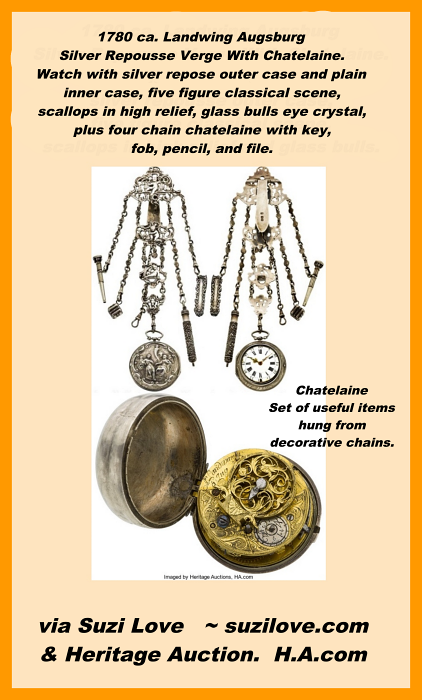
1780 Watch on a Chatelaine, Germany. Silver Repousse Verge With four chain chatelaine. via Heritage Auction H.A.com.
Definition Chatelaine: The word Chatelaine is French and means the keeper of the keys. Chatelaine” derives from the Latin word for castle. In Medieval times, the chatelaine was in charge of the day-to-day running of the castle. What did a chatelaine do? Most important task was keeper of the keys. Also ordered supplies, did bookkeeping, supervised servants, taught castle children, and organized guests. books2read.com/SuziLoveChatelaines
By 1700’s, a metal jeweled ornament hung from pockets, attached to belts, or by hooks into skirt waistbands
During 1800’s, women wore large collections of tools hung from chains
Young girls sewed and did needlework and needed to carry sewing notions eg scissors, thimbles
Worn by women of all classes, from workers to nobility
Varied depending on class and finances.
Made of silver, brass, steel, leather, or fabric
During 19th century, fashionable dresses often had no waist and nowhere to hang chatelaines
Chatelaines became decorative brooches
Often given as a wedding present from a husband to bride
Later became fashion accessories.
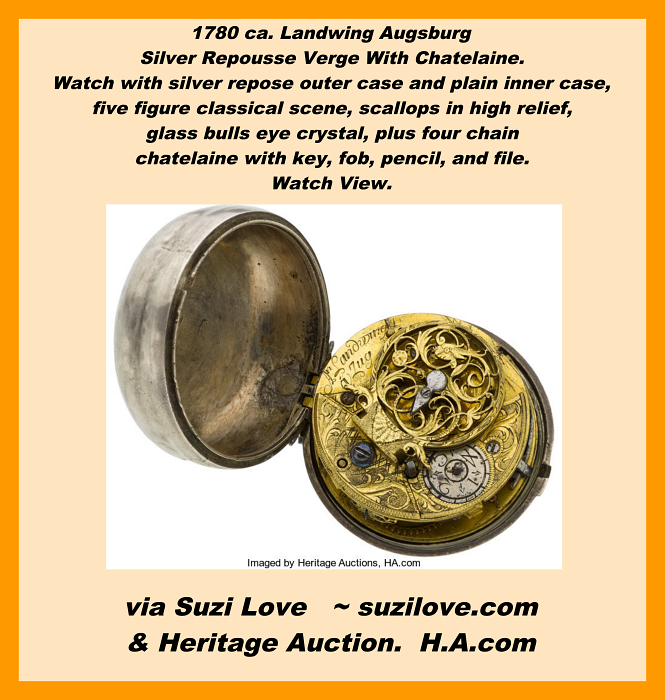
1780 ca. Watch. Landwing Augsburg
Silver Repousse Verge With Chatelaine. Watch with silver repose outer case and plain inner case, five figure classical scene, scallops in high relief, glass bulls eye crystal, plus four chain chatelaine with key, fob, pencil, and file. via Heritage Auctions
Chatelaine: Set of useful items hung from decorative chains.Chatelaines and Chains History Notes Book 9 By Suzi Love. #regency Women in charge of houses wore long chains holding important household items around their waist e.g. keys, pen, notebook, sewing. books2read.com/SuziLoveChatelaines
1775-1825 ca. Bridgerton and Jane Austen Style Black Silk Breeches, American or European. #Bridgerton #JaneAusten #GeorgianEra #RegencyFashion books2read.com/SuziLoveFashionMen1800-1819
1797 Elegant Couple Dancing At A Ball. Man: Bottle green tailcoat, yellow knee breeches, white stockings, red vest and black dancing slippers. Lady: White spotted dress with a pale pink overdress open at the front, high belted waist, red and green turban and a parure, or jewelry set. via Fashion Plate via Journal des Dames et des Modes, or Costume Parisien.
HN_2_D2D_Fashion Men 1700s
books2read.com/suziloveFashMen1700
What was fashionable for outer wear in past centuries? Different names in different countries: Pelisse, Redingote, Coat, Or Walking Dress. The Bridgertons and Jane Austen and her contemporaries wore long coats like these to keep warm when out and about, visiting, shopping etc. The thin muslin dresses worn in the early 1800s were little protection against European winters. http://books2read.com/suzilovePelisse
Pelisse, Redingote, Or Walking Dress. History Notes Book 5 By Suzi Love. What was fashionable for outer wear in past centuries? Call them what you like: Coat, Pelisse, Redingote, Walking Dress, Promenade Dress. Take a look at what was being worn by women, men, and children. books2read.com/suzilovePelisseD2D_RetailerBuyLink_HN_5_books2read.com/suzilovePelisse
1789-1790 ca. Man’s Red Riding Coat, England or France. Wool plain weave, full finish, with metallic-thread embroidery, tan breeches, black riding boots and crop. Credit: (M.2007.211.46) via Los Angeles County Museum of Art, California, USA. collections.lacma.org
1789-1790 Man’s Red Riding Coat, England or France. Wool plain weave, full finish, with metallic-thread embroidery Credit: (M.2007.211.46) via Los Angeles County Museum of Art, California, USA. collections.lacma.org suzilove.comHN_2_D2D_Fashion Men 1700s
books2read.com/suziloveFashMen1700
1700s Late Gentlemen’s Coats. A fitted coat was an essential part of a gentleman’s wardrobe in the late 1800s and were generally tailored and cut to fit tightly. Therefore, gentlemen needed a valet, or some other helper, to extricate himself and his shoulders from his glove-like coat. Breeches and a waistcoat in the same fabric usually completed the 18th century’s gentleman ensemble. Coats were generally worn long at the back and had elaborate decoration down the front openings, collars, and sleeve cuffs.
HN_2_D2D_Fashion Men 1700s
books2read.com/suziloveFashMen1700
Fashion Must Haves In Jane Austen’s Times: Reticules, Spencers, Redingotes. History Notes Series Books 3, 4, and 5.
Reticule Or Bag: Purse, often with a drawstring to pull closed and usually made of cloth or covered cardboard and often decorated with beading or embroidery. Carried by a woman during the Regency period to carry all their daily necessities. in the place of pockets.
Spencer: Short jacket, cropped at the waist, worn over a dress, or gown. Delicate and regency dresses provided so little protection from the cold, so over garments were essential for warmth, modesty and good health.
Pelisse Or redingote Or Walking Dress: Coat worn over clothing of both sexes for warmth and protection from the elements.
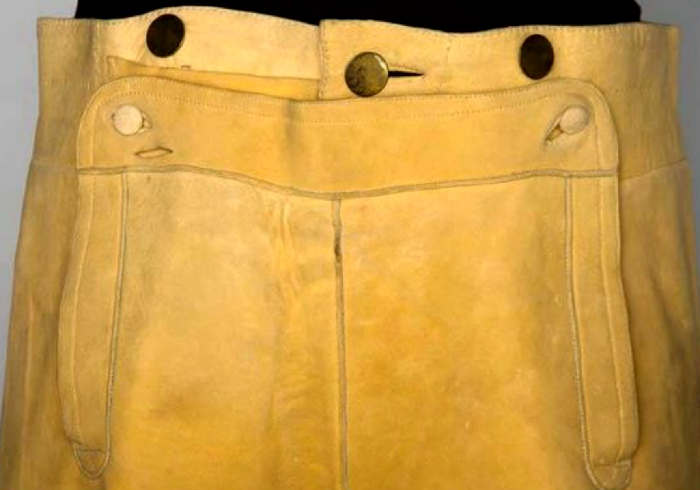
1790 British Consul’s Tan Leather Pants, Boston. Tan buckskin, fall front, brass and self covered buttons, breeches have leather ties at waist and at leg hems. via Augusta Auction ~ augusta-auction.com
1790 Closed Front Flap. 1790 Open Front Flap. 1790 Side View. 1790 Back Waist View. 1790 Front Waist View. RL_2_D2D_RetailerBuyLink_RL_2
https://books2read.com/suziloveYGD