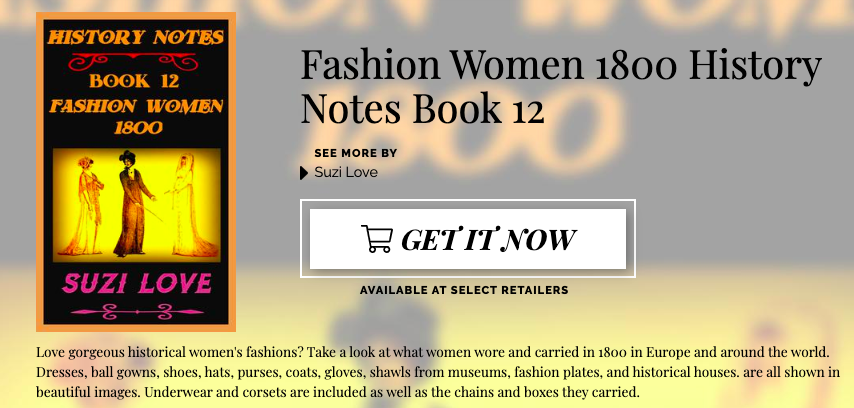
1800 White Muslin Dress, European. Empire style, high-waisted dress of light weight cotton, with softly falling gathered long skirt and with a train. via Los Angeles County Museum of Art, California, USA. collections.lacma.org books2read.com/SuziLoveFashionWomen1800
The type of dress worn across Europe in the early 1800s. This sort of high-waisted dress would have been worn by Jane Austen and her contemporaries in England. The Empire waist gown defined women’s fashion during the Regency Era. ‘Empire’ is the name given in France to the period when Napoleon built his French Empire. High-waisted, loose gowns were adopted by the aristocracy as a symbol of turning away from the fussy, elaborate and expensive clothing worn in the 1700s.
1800 White Muslin Dress, European. Empire style, high-waisted dress of light weight cotton, with softly falling gathered long skirt and with a train. via Suzi Love suzilove.com
& Los Angeles County Museum of Art, California, USA.
collections.lacma.org1800 White Muslin Dress, European. Empire style, high-waisted dress of light weight cotton, with softly falling gathered long skirt and with a train. via Suzi Love suzilove.com
& Los Angeles County Museum of Art, California, USA.
collections.lacma.org1800 White Muslin Dress, European. Empire style, high-waisted dress of light weight cotton, with softly falling gathered long skirt and with a train. via Suzi Love suzilove.com
& Los Angeles County Museum of Art, California, USA.
collections.lacma.orgHN_12 D2D_RetailerBuyLink_HN_12 books2read.com/SuziLoveFashionWomen1800
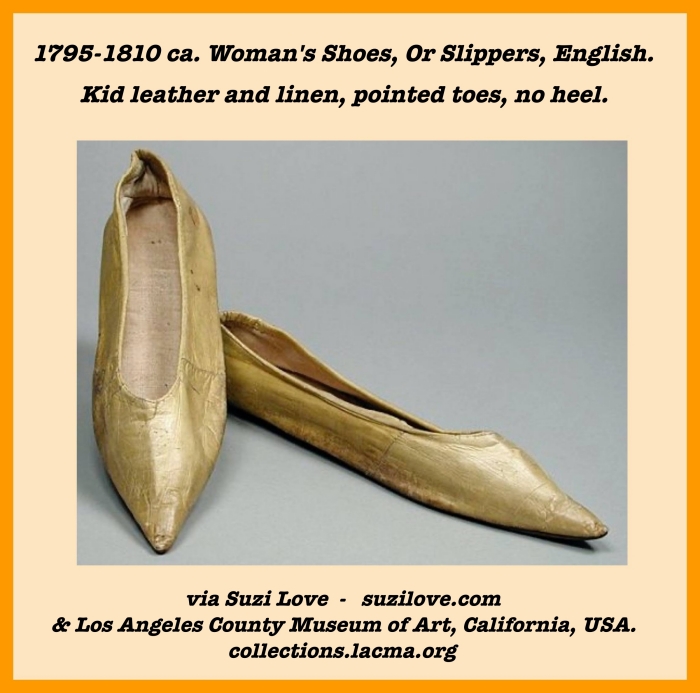
1795-1810 ca. Woman’s Shoes, Or Slippers, English. Kid leather and linen, pointed toes, no heel. via Los Angeles County Museum of Art, California, USA.
Digital Capture
1795-1810 ca. Jane Austen Style Woman’s Kid Leather Shoes, Or Slippers, English. #janeausten #shoes #regencyfashion https://books2read.com/SuziLoveFashionWomen1801-1804
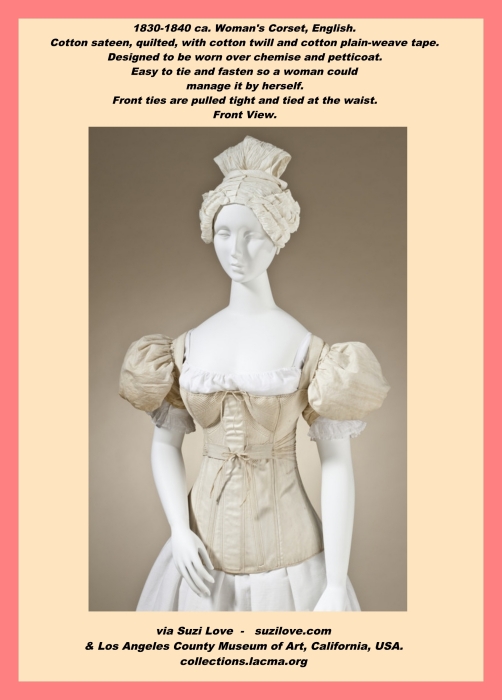
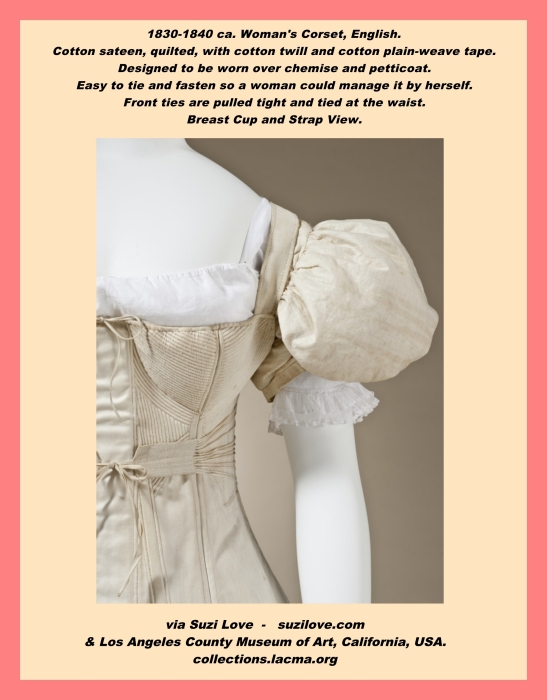
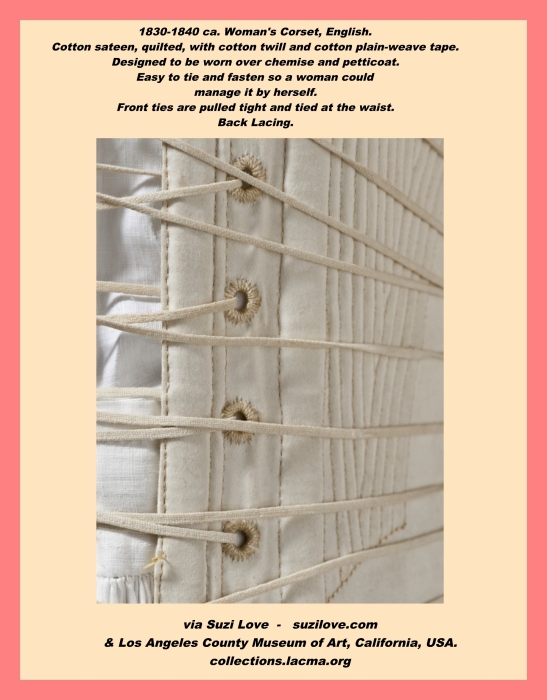
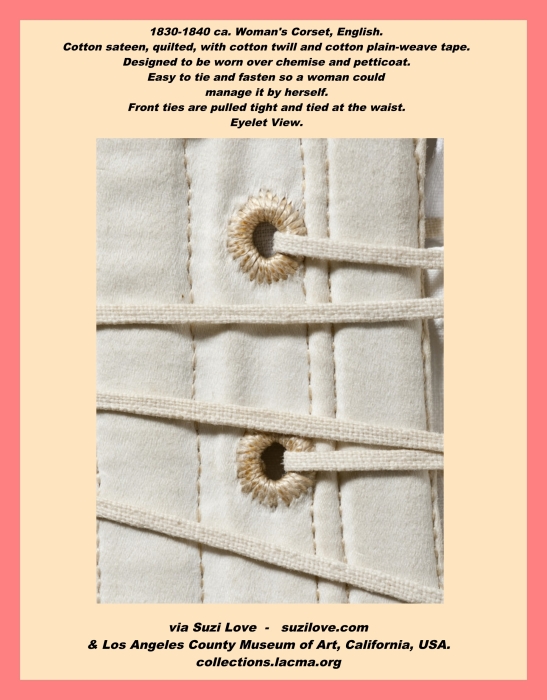
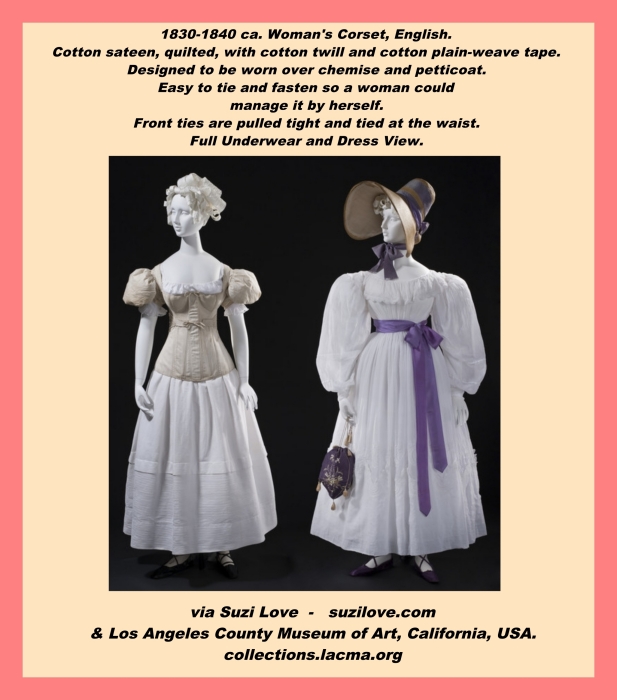
1830-1840 ca. Woman’s Corset, English. Cotton sateen, quilted, with cotton twill and cotton plain-weave tape. Designed to be worn over a chemise and petticoat. This corset is designed to be easy to tie and fasten so a woman could manage it by herself. The front ties are pulled tight and tied at the waist. Center back length: 15 7/8 in. (40.32 cm) via Los Angeles County Museum of Art, California, USA. via Los Angeles County Museum of Art. via Los Angeles County Museum of Art, California, USA.
. 1830-1840 ca. Woman’s Corset, English. Cotton sateen, quilted, with cotton twill and cotton plain-weave tape. Designed to be worn over a chemise and a petticoat. This corset is designed to be easy to tie and fasten so a woman could manage it by herself. The front ties are pulled tight and tied at the waist. Center back length: 15 7/8 in. (40.32 cm) via Los Angeles County Museum of Art, California, USA. HN_18_D2D_Corsets 1830-1850. https://books2read.com/SuziLoveCorsetBook18
1845 Woman’s Dress, Probably Made In England. Silk Taffeta and glazed linen plain weave. via Los Angeles County Museum of Art, California, USA. collections.lacma.org
1818 ca. Lemon Dress, England. High-waisted, or Empire style, as worn in the times of Jane Austen, or Regency Era. Linen and lace dress with short puffed sleeves. via Los Angeles County Museum of Art, California, USA. collections.lacma.org. https://books2read.com/SuziLoveFashionWomen1815-1819
Fashion Women 1815-1819 History Notes Book 28 https://books2read.com/SuziLoveFashionWomen1815-1819
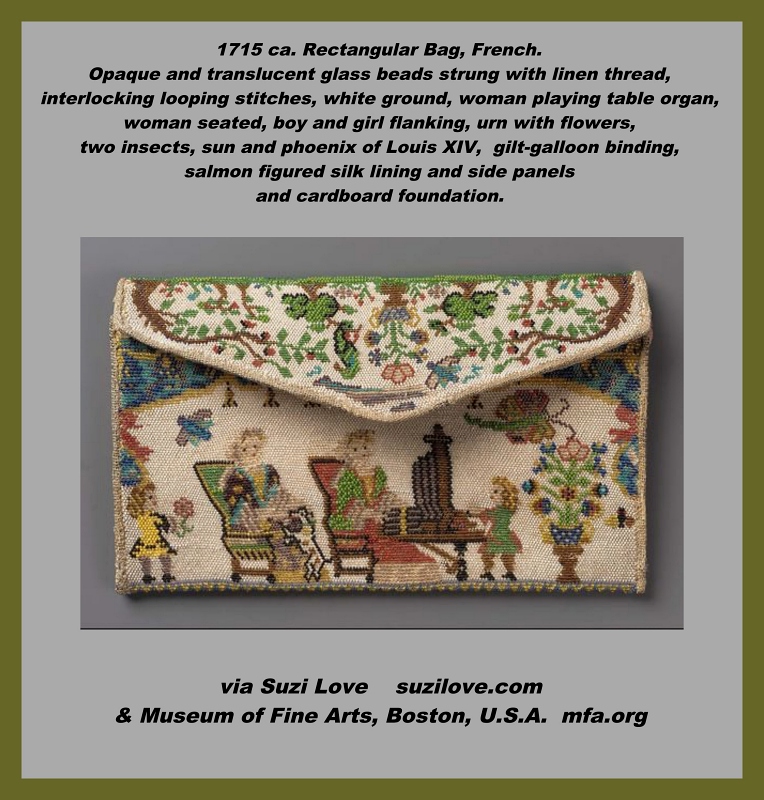
1715 ca. Rectangular Envelope Style Bag, French. Polychrome opaque and translucent glass beads strung with linen thread, held together by interlocking looping stitches (sablé). Design on white ground: woman playing table organ, woman seated, boy and girl flanking, urn with flowers right, two insects and curtain above (obv.); sun and phoenix of Louis XIV, ribbon above inscribed IE VIS SANS MOURIR, inscribed at bottom and right SI IE MEURS CE NEST QUE POVR REVIVRE (rev.); vegetative scene (flap). Gilt-galloon binding. Salmon figured silk lining and side panels. Cardboard foundation. via Los Angeles County Museum of Art, California, USA. collections.lacma.org
1790-1800 ca. Men’s Riding Boots. Black leather with wide tan leather tops, small heel and slightly rounded toes. via Los Angeles County Museum of Art, California, USA. collections.lacma.org
1840s Woman’s Shoes or Slippers, Probably United States. Square toes, silk satin, sueded leather, linen, and kid leather. via Los Angeles County Museum of Art, California, USA. collections.lacma.org Shoes in the early 1800s were flat or low heeled and occasionally decorated with a bow or floral embellishments. From the 1820s onwards, square toes became fashionable.
1840s Woman’s Shoes or Slippers, Probably United States. Square toes, silk satin, sueded leather, linen, and kid leather. via Suzi Love suzilove.com
& Los Angeles County Museum of Art, California, USA.
collections.lacma.org
1789-1790 ca. Man’s Red Riding Coat, England or France. Wool plain weave, full finish, with metallic-thread embroidery, tan breeches, black riding boots and crop. Credit: (M.2007.211.46) via Los Angeles County Museum of Art, California, USA. collections.lacma.org
1789-1790 Man’s Red Riding Coat, England or France. Wool plain weave, full finish, with metallic-thread embroidery Credit: (M.2007.211.46) via Los Angeles County Museum of Art, California, USA. collections.lacma.org suzilove.comHN_2_D2D_Fashion Men 1700s
books2read.com/suziloveFashMen1700
1845 Woman’s Dress, Probably Made In England. Silk Taffeta and glazed linen plain weave. via Los Angeles County Museum of Art, California, USA. collections.lacma.org
1845 Woman’s Dress, Probably Made In England. Silk Taffeta and glazed linen plain weave. via Los Angeles County Museum of Art, California, USA. collections.lacma.org