1810 Cotton Waistcoat. Blue black and white woven plaid, narrow double breast with self buttons, buttons create optional lapels, stand collar, hemline pockets, white cotton back with ties and cotton lining. via Whitaker Auction whitakerauction.smugmug.com
Typical of a gentleman’s waistcoat, or vest, worn during the early 1800s, or Regency Era, or Jane Austen’s times with a fancy collar, straight cut, and straight buttoned front.
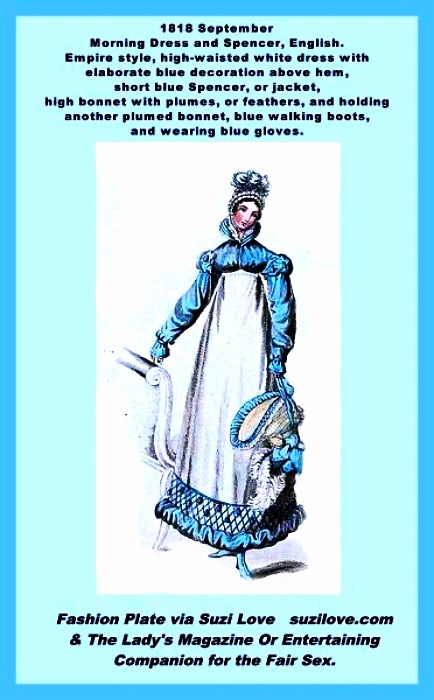
1818 September Morning Dress and Spencer, English. Empire style, high-waisted white dress with elaborate blue decoration above hem, short blue Spencer, or jacket, with puffs at the shoulders and straight sleeves, cap with plumes, or feathers, tied under her chin and holding another plumed bonnet, blue walking boots, and wearing blue gloves. Fashion Plate via Ladies Magazine.
Definition Empire Style Dress: High-waisted white gown defined women’s fashion during the Regency Era. ‘Empire’ is the name given to the period when Napoleon Bonaparte built his French Empire. High-waisted, loose gowns were adopted by the aristocracy as a symbol of turning away from the fussy, elaborate and expensive clothing worn in the 1700s.
Definition Spencer: Short jacket, cropped at the waist, worn over a dress, or gown. These close-fitting, tight sleeved, waist length jackets were modeled on a gentleman’s riding coat, but without tails. Delicate and regency dresses provided so little protection from the cold, so over garments were essential for warmth, modesty and good health.
Light-hearted look at Young Lady in Jane Austen’s times, or early 1800s. A glimpse into both the frivolous and more serious occupations filling a young lady’s day in the lifetime of Jane Austen, or the Regency Era, or the early 19th Century. Historic images and historical information show her fashions and frolics. https://books2read.com/suziloveYLD
1812 Two Ladies, French. Orange sleeveless Redingote over a white dress with high neck frill and interesting sleeves. High-waisted white dress with blue pattern on the short sleeves and hem. Both with gloves, matching bonnets and shoes. Fashion Plate via Journal des Dames et des Modes, or Costume Parisien.
1896 Sainted Prince Vladimir. Porcelain egg. Oval medallion on a golden background depicts Vladimir-wearing crown, a red mantle, and holding a cross. https://books2read.com/suziloveEasterAfter the painting by Victor Vasnetsov. Imperial Porcelain Factory, St Petersburg. Porcelain, overglaze polychrome painting and gilding/ Height: 11.4 cmOn the one side in an oval medallion on a golden background with plant ornament is a depiction of the Sainted Prince Vladimir wearing a crown and red mantle and holding a cross. The green frame is embellished with a garland of leaves. On the reverse, in another green frame with a garland of leaves on a pale blue background is an ornamented Greek cross with Christ Pantocrator in the centre. A pattern of stars and rosettes surrounds the cross.The prototype for the painting was the image of St Vladimir created by Victor Vasnetsov in St Vladimir’s Cathedral in Kiev.
20th Century Early Easter Egg. Side 1. The Resurrection of Christ. The Descent into Limbo. Side 2. The Most Orthodox Prince St. Vladimir. Made By Lukutin Factory Russia. Papier-mache and silk, painted in oil gilded and lacquered.
The production of the famous Fabergé jewelry firm that created eggs with surprises from gold, silver and precious stones won the world recognition. Jewelry miniature eggs
were very popular gifts and objects of collecting among rich Russians at the turn of the 20th century. They were used for making necklaces, pendants and bracelets that were worn during the Easter Week according to the well-established traditions.
Imperial and private fabrics and works, best artists, jewelers and craftsmen took part in creating Easter souvenirs.
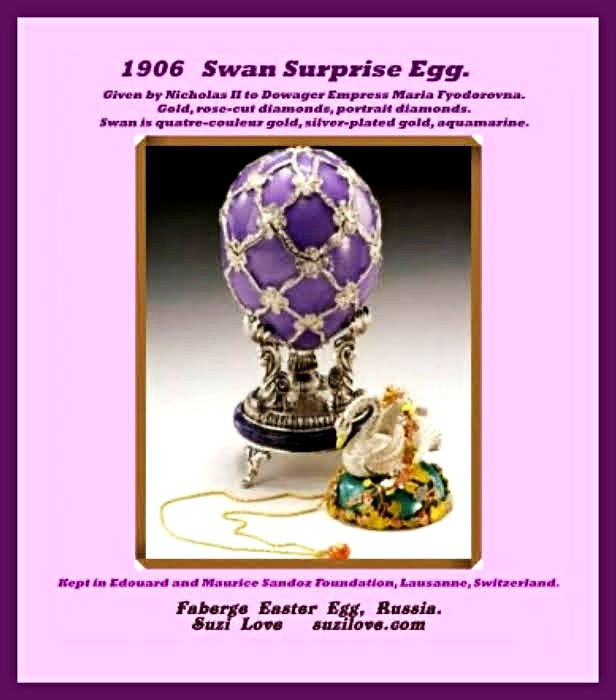
1906 Swan Imperial Faberge Surprise Easter Egg. Commissioned by Tzar Nicholas II and presented to the Dowager Empress Maria Feodorovna for her 40th wedding anniversary. Faberge Easter Egg, Russia.
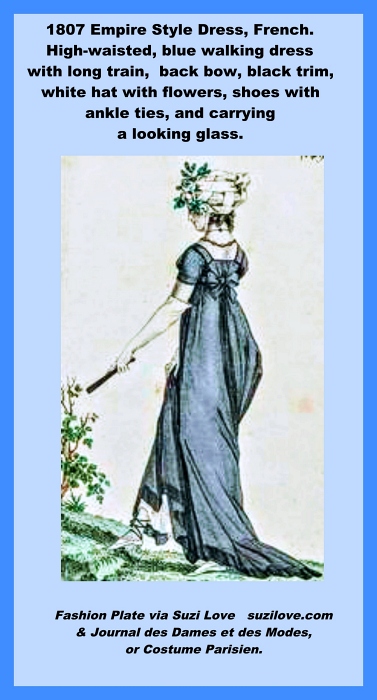
1807 Blue Walking Dress, French. Although this is a French fashion plate, this is the sort of dress that Jane Austen and her friends would have worn when walking together. Back bow, a train and black trim, a white hat with flowers and holding a looking glass. Fashion Plate via Journal des Dames et des Modes, or Costume Parisien.
Definition Empire Style Dress: High-waisted white gown defined women’s fashion during the Regency Era. ‘Empire’ is the name given to the period when Napoleon Bonaparte built his French Empire. High-waisted, loose gowns were adopted by the aristocracy as a symbol of turning away from the fussy, elaborate and expensive clothing worn in the 1700s.
Definition Walking Dress: Worn for walking in a park or the country estate. This sort of outfit needed to be presentable and warm, but not overly accessorized.