1805-1810 ca. Blue Silk Slippers With Silk Bow and Ribbon Ankle Ties. Woven square pattern and round toes. via Manchester City Galleries, UK.
Shoes in the early 1800s were flat or low heeled and occasionally decorated with a bow or floral embellishments and it wasn’t until the 1820s that square, rather than rounded or pointed toes became fashionable. Made of silk, soft kid or cloth, these delicate shoes were flimsy and wore out quickly. There was often no difference between a left or right shoe, so when one slipper had a hole it was easily replaced. Slippers were often bought in multiples at a time so there were spares.
Fashion Women 1805-1809 History Notes Book 26 What did Jane Austen and friends wear? https://books2read.com/SuziLoveFashionWomen1805-1809
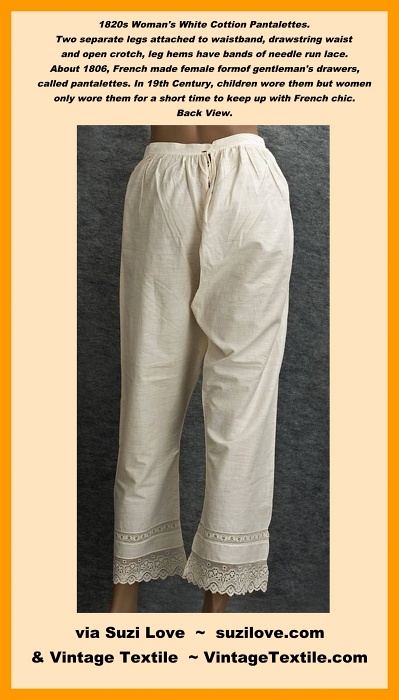
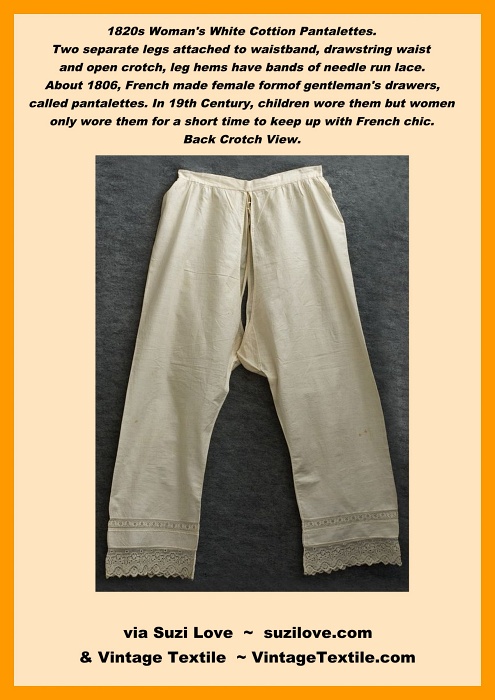
1820s Woman’s White Cotton and Lace Trimmed Pantalettes with Two Separate Legs. About 1806, French made female form of gentleman’s drawers, pantalettes. During the 19th Century, children wore them but women only wore them for a short time to keep up with French chic. The predecessor of women’s panties appeared about 1806 in the form of drawers like those worn by gentleman. Always the leader in forward chic, the French quickly came up with the female version—pantalettes. While the style persisted throughout the 19th century for children, pantalettes for adult women were only a passing fad. The pantalettes consist of two separate legs attached to a drawstring waistband, leaving the crotch open. The legs are bordered at the bottom with bands of needle run lace. The pantalettes are completely hand stitched and close in back with one mother-of-pearl button. The open edges of the crotch are finished with corded piping. via vintagetextile.com
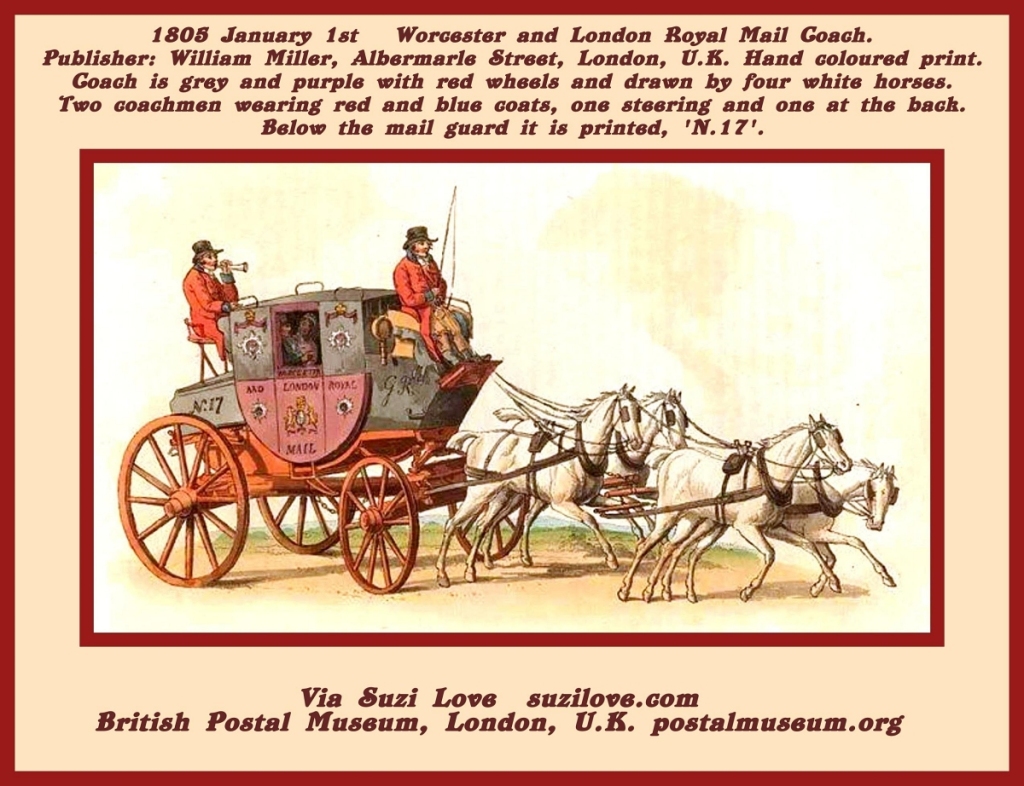
11805 January 1st Worcester and London Royal Mail Coach. The sort of mail coach that Jane Austen and famioy would have either ridden in or sent mail through. Publisher: William Miller, Albermarle Street, London, U.K. Hand colored print. Coach is grey and purple with red wheels and drawn by four white horses. Below the mail guard it is printed, ‘N.17’. Via British Postal Museum, London, U.K. postalmuseum.org
1805 January 1st Worcester and London Royal Mail Coach. Publisher: William Miller, Albermarle Street, London, U.K. Hand colored print. Coach is grey and purple with red wheels and drawn by four white horses. Below the mail guard it is printed, ‘N.17’. Via Suzi Love suzilove.com British Postal Museum, London, U.K. postalmuseum.orgD2D_RetailerBuyLink_HN_10. books2read.com/SuziLoveTravel
1807 June Couple In Morning Dress, English. Lady in white dress with lemon cape and an interesting white hat with a tassel. Gentleman in black tailcoat, white shirt and cravat, breeches tucked into high black boots with tan tops, fob and watch chain at his waist, black top hat and cane. via Le Beau Monde, or Literary and Fashionable Magazine, London, U.K.
Definition Morning Dress: Comfortable outfits worn either at home, out shopping, or for walking in the park or country. Presentable but not overly accessorized. For women it was often an Empire style, high-waisted, gown made from sprigged or plain muslin, cotton, or wool and either a Spencer or a coat to cover it for warmth, plus shoes and a bonnet. For men it was breeches or trousers, shirt, cravat, coat, boots and hat. This couple is dressed as a lady and gentleman of Jane Austen’s acquaintance would dress for a morning outing to a village, for shopping, or visiting friends.
Fashion Women 1805-1809 History Notes Book 26
What did Jane Austen and friends wear? This book looks at early 1800s fashions, which were elegant and pretty with high waists and fabrics that were almost transparent. These Empire style gowns, named after Napoleon’s first Empress, became popular throughout Europe, and were then copied around the world. Colorful outwear was added to make an ensemble more attractive and warmer.
https://books2read.com/SuziLoveFashionWomen1805-1809
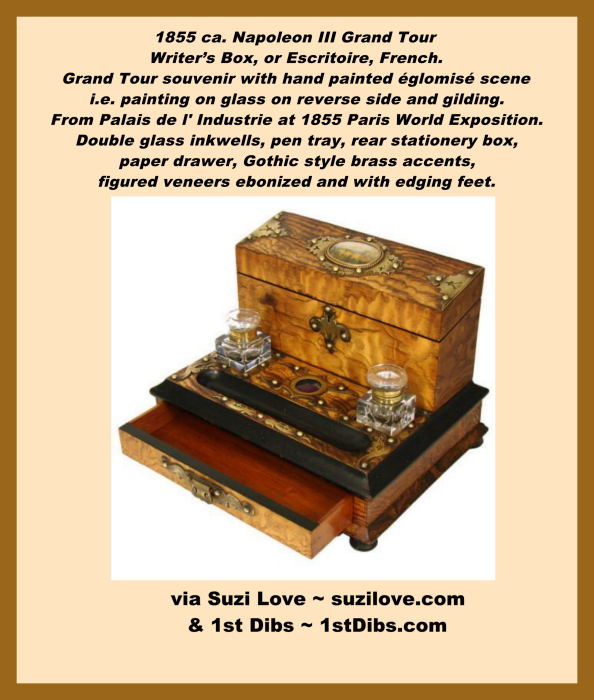
1855 ca. Napoleon III Grand Tour Influenced Travel Writer’s Box, Or Ecritoire, French. Double inkwell with rear stationery box, Gothic style brass accents and Grand Tour souvenir hand painted eglomise scene, the Palais de l’ Industrie from the 1855 Paris World Exposition! Figured veneers, ebonized edging, feet and pen tray and brass or bronze accents. via 1st Dibs 1stdibs.com
HN_13_D2D_WritingTools Book 13 What did the lady of the house use to pen notes? What sat on the desk of the man of the house when managing his accounts? #History #Nonfiction #travel books2read.com/SuziLoveWritingTools
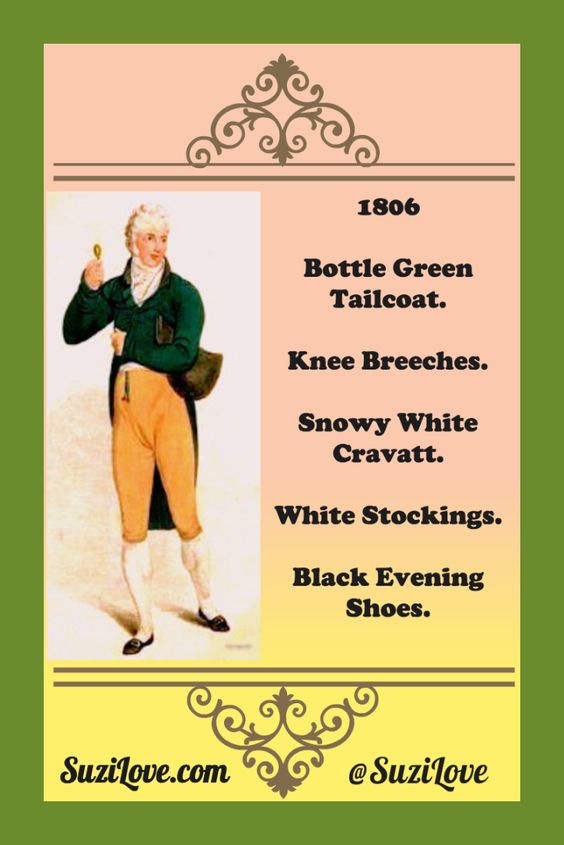
1806 Gentleman’s Daily Outfit, French. Bottle green tailcoat, knee breeches, snowy white cravat, white stockings, flat black shoes. Fashion Plate via Journal des Dames et des Modes, or Costume Parisien. French fashions and Georgian and Regency Era fashions from Great Britain were copied around the world. This is the normal daily outfit for a gentleman in the early 1800s, or in the times of Jane Austen, for daily city and country life. https://books2read.com/SuziLoveFashionMen1800-1819
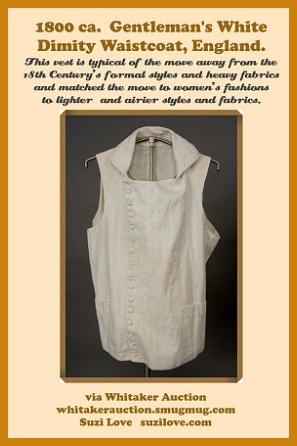
1800 ca. Gentleman’s White Dimity Waistcoat, England. This vest is typical of the move away from the 18th Century’s formal styles and fussy fabrics and matched the shift of women’s fashions towards lighter and airier styles and fabrics. via Whitaker Auction whitakerauction.smugmug.com
Waistcoats worn at the very beginning of the early 19th century generally had a straight bottom, double-breasted and with wide lapels. Not long after this, waistcoats began to be cut higher up to the waist in front so men during Jane Austen’s lifetime would have worn both styles.
1800 ca. Gentleman’s White Dimity Waistcoat, England. via suzilove.com and Whitaker Auctions.23_d2d_fashionmen1800-1819 https://books2read.com/SuziLoveFashionMen1800-1819
1810-1814 ca. Muslin Dress, Canada. White muslin embroidered in white cotton with a delicate all-over design of sprigs and sheaves of wheat worked in stem stitch and long and short stitch. Unboned high-waisted bodice with draw-tape casing at square neckline, back draw-tapes at neck and waist, extra-long sleeves, puffed sleeves with flounce and whitework embroidery, straight-cut skirt gathered in back, hem trimmed with crocheted loops in white cotton. Embroidered in white cotton sprigs and wheat sheaves. In 1810s, draw-tapes often replaced drawstrings for bodice adjustment. Skirts changed to flaring around 1815.
1810-1814 ca. White Muslin Dress, Canada. Sleeve View. via McCord Museum, Canada. musee-mccord.qc.ca1810-1814 ca. White Muslin Dress And Shawl, Canada. Back View. via McCord Museum, Canada. musee-mccord.qc.ca1810-1814 ca. White Muslin Dress Embroidered With White Sheaves Of Wheat, Canada. #Regency #JaneAusten #Fashion
The fit of this unboned bodice is controlled by a draw-tape in a casing at the square neckline. The back closure is controlled by draw-tapes at neckline and waist. The extra long sleeves have a narrow shoulder strap, are puffed and end with a flounce. Under the puff is a narrow horizontal insertion of whitework embroidery. The straight-cut skirt is fitted smoothly to the bodice in front, but is gathered to it in back. The hemline is trimmed with crocheted loops in white cotton. Lightweight muslin dresses like this one offered little warmth, so a stole was often needed to cover the shoulders. This dress was originally owned by the De Witt family of Quebec City. via McCord Museum, Canada. musee-mccord.qc.ca
1817 September Glengary Riding Habit, English, as would have been worn during Bridgerton and Jane Austen’s times. Pale blue cloth, richly ornamented with frogs and braiding, front braided on each side and fastens under the body of the habit, which slopes down on each side to define the figure. Epaulettes and jacket are braided to correspond with the front as is the bottom of the sleeve which is braided nearly half-way up the arm. Habit shirt is of cambric with a high standing collar and trimmed with lace. Cravat of soft muslin is richly worked at ends, tied in a bow, narrow lace ruffles at the wrists. Headdress is a Glengary cap of blue satin, trimmed with plaited ribbon of various shades of blue and a plume of feathers. Blue kid gloves are worn and half-boots. Fashion Plate via Rudolph Ackermann’s ‘The Repository of Arts’.
Male tailors made most women’s riding habits during the Regency years and they were constructed similarly to men’s riding outfits. Generally in two pieces, a jacket and a skirt, and with a shirt with a frilled collar or front opening underneath. The trains of a habit could be caught up for walking, usually with a button and loop, and unhooked and let down so that the skirt flowed over the woman’s legs when she rode side saddle. Due to the numerous wars during the early 1800s, it was seen as patriotic for women to add military style touches to outfits in support of military men. The shoulder and cuff trims resemble the epaulettes and coat trims of a military uniform.
1817 September Glengary Riding Habit, English. Pale blue cloth, richly ornamented with frogs and braiding, front braided on each side and fastens under the body of the habit, which slopes down on each side to define the figure. Headdress is a Glengary cap of blue satin, trimmed with plaited ribbon of various shades of blue and a plume of feathers. Blue kid gloves are worn and half-boots. Fashion Plate via Rudolph Ackermann’s ‘The Repository of Arts’. Fashion Women 1815-1819 History Notes Book 28 https://books2read.com/SuziLoveFashionWomen1815-1819