1800 ca. Chemisette, English. In Jane Austen’s times, there were several ways for women to keep their modesty when the fashion trend was for low cut bodices and loose flowing dresses e.g. Chemisette, Fichu, Pelerine etc. Chemisette: Sleeveless under-bodice covering neck, shoulders and breast, usually of muslin or lace and worn to fill in the neckline of a dress. French term for vestee, gilet, etc. via Killerton House, U.K. & National Trust.
1810 Couple In Walking Dress, French. Lady in a jade green Redingote, or coat, with paisley skirt, worn over a white dress with sleeves caught up, and hat tied under her chin. Man in a brown tailcoat, tight white pants that button down the sides, black hat and shoes and carrying a walking stick. Fashion Plate via Journal des Dames et des Modes, or Costume Parisien.
The sort of outfits a lady and gentleman in Jane Austen’s times would have worn while out walking, shopping, or going to visit friends.
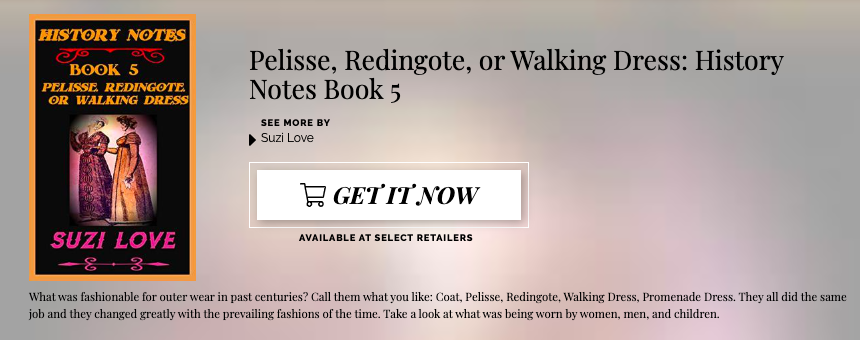
Pelisse, or Walking Dress, or Redingote. The Fashion Dictionary description of a Redingote is (réd’ing-göt; red ing gote). Pronounced: red ing gote Woman’s long, fitted coat often cut Princess style and worn open in front to show off the dress underneath. Sometimes cut away in front. Originally made for men with several capes and trimmed with large buttons. French word developed from English words, riding coat. reefer. Single- or double-breasted, fitted, tailored, over-all coat usually made from sturdy fabric but in the British Regency Era a Pelisse was often made from a lighter fabric, such as cotton.
What did an older lady do and wear in the Regency Era? Information & pictures for readers and writers of early 1800s history, nonfiction and fiction. books2read.com/suziloveOLD The older lady’s day usually started with her toilette in her bedroom, where her maid helped her dress for the day and styled her hair. After that, she would join her family downstairs for breakfast unless she preferred a tray with either tea or hot chocolate in her bedroom as she prepared for her busy day. Her day would be made up of speaking with the housekeeper and the cook about the week’s menus, assuring that the servants were all available that day and no one was ill, and checking the list of foods needed.
What did an older lady do and wear in #RegencyEra? Information & pictures for readers and writers of #History #nonfiction #Regency books2read.com/suziloveOLD
She would also enquire if the laundry was up to date and that they had enough good linen to make up all the beds before extended family members and guests arrived. If she was in the country and hosting a weekend house party, she would assign rooms to the guests on her lists and query that all was in readiness for their arrival.
1800 ca. Tan Corduroy Breeches. Drop down front flap, or ‘fall’, with two buttons, three silver metal buttons at the waistband, watch pocket, corner pockets with buttons, pieced back with waist tie, saggy back with extra fabric to allow for easier movement when riding or sitting, four buttons and silk ties at knee. via Whitaker Auction whitakerauction.smugmug.com
These are the sort of breeches that Jane Austen’s male contemporaries would have worn.
Fashion Must Haves In Jane Austen’s Times: Reticules, Spencers, Redingotes. History Notes Series Books 3, 4, and 5.
Reticule Or Bag: Purse, often with a drawstring to pull closed and usually made of cloth or covered cardboard and often decorated with beading or embroidery. Carried by a woman during the Regency period to carry all their daily necessities. in the place of pockets.
Spencer: Short jacket, cropped at the waist, worn over a dress, or gown. Delicate and regency dresses provided so little protection from the cold, so over garments were essential for warmth, modesty and good health.
Pelisse Or redingote Or Walking Dress: Coat worn over clothing of both sexes for warmth and protection from the elements.
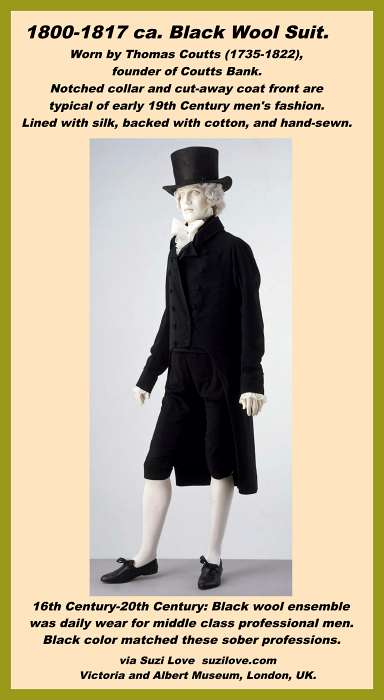
1800-1817 ca. Black Wool Suit, British. An ensemble made from black wool has been the uniform of the middle-class professional – doctor, lawyer, clergyman, academic, merchant, businessmen – since the late 16th century. This tradition continued through the 19th century and well into the 20th. The sombre color of this suit befits the sober profession of its wearer, Thomas Coutts (1735-1822), the founder of Coutts Bank. The notched collar and cut-away front of the coat reflect early-19th-century fashions. via Victoria and Albert Museum, London, UK. collections.vam.ac.uk. https://books2read.com/SuziLoveFashionMen1800-1819
This is the sort of suit that professional men in Jane Austen’s times would have worn, doctors, lawyers and clergymen. https://books2read.com/SuziLoveFashionMen1800-1819
1800-1817 ca. Black Wool Suit, British. An ensemble made from black wool has been the uniform of the middle-class professional – doctor, lawyer, clergyman, academic, merchant, businessmen – since the late 16th century. This tradition continued through the 19th century and well into the 20th. The sombre color of this suit befits the sober profession of its wearer, Thomas Coutts (1735-1822), the founder of Coutts Bank. The notched collar and cut-away front of the coat reflect early-19th-century fashions. via Victoria and Albert Museum, London, UK. collections.vam.ac.uk.1800-1817 ca. Professional Man's Typical Regency Ensemble Of Black Wool Suit, British. #JaneAusten #RegencyEra #Fashion https://books2read.com/SuziLoveFashionMen1800-1819 Share on X
1814 Long Dark Green Coat, Or Redingote, French. Horizontal front pockets, high white cravat, black top hat and high black boots. Fashion Plate via Journal des Dames et des Modes, or Costume Parisien.
Definition Redingote Or Coat: French word developed from English words, riding coat. Long fitted outdoor coat worn over other garments for warmth. Originally made with several capes and trimmed with large buttons. For women, the coat was often cut away in the front or left open to show off the dress underneath. French fashion plates call these coats Redingotes and they were worn by men, women, and children. English fashion plates call the coats a Pelisse, a walking dress, Promenade dress, or Carriage dress.
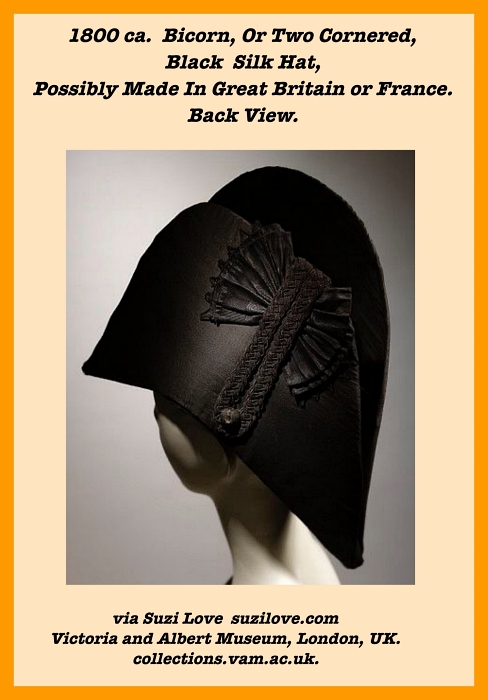
1800 ca. Bicorn, Or Two Cornered, Black Silk Hat, Possibly Made In Great Britain or France. via Victoria and Albert Museum, London, UK. collections.vam.ac.uk. The type of hats worn by the men in Jane Austen’s family around the turn of the century.
Definition: Bicorn Or Bicorne: Two cornered, or pointed, hats often worn by military men because the rain would drain off either side of the hat and away from the body. They could also be easily flattened to carry under arm.
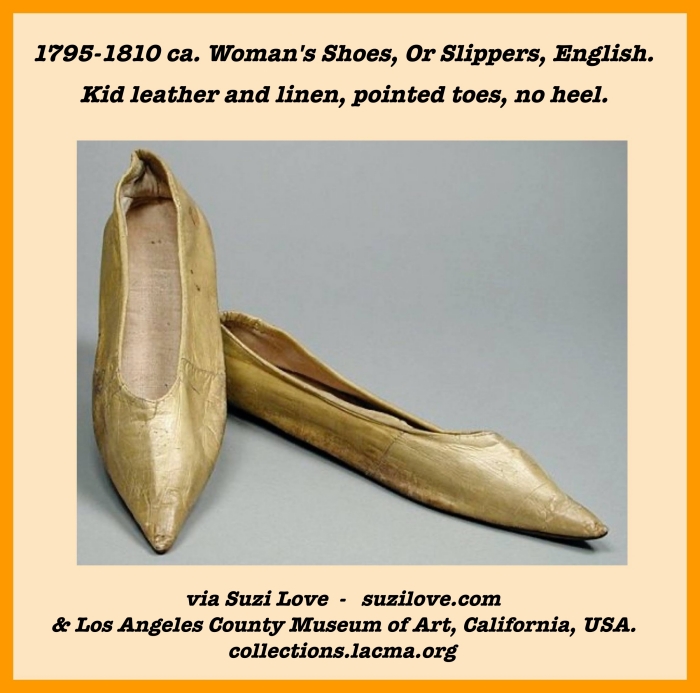
1795-1810 ca. Woman’s Shoes, Or Slippers, English. Kid leather and linen, pointed toes, no heel. via Los Angeles County Museum of Art, California, USA.
1800s Early Typical Regency Gentleman Riding His Horse. Fashions In The Time Of Jane Austen.
From the finish of the 18th century until 1820, men’s fashions in European and European-influenced countries moved away from the formal wear of brocades, lace, wigs and powder to more informal and relaxed styles. Focus was on undress rather than formal dress. Typical menswear in the early 1800s included a tailcoat, a vest or waistcoat, either breeches, pants, or the newer trousers, stockings, shoes or boots, all worn with an overcoat and hat. This basic ensemble was accessorized with some form of neckcloth or cravat, gloves, walking stick, cane or riding crop, handkerchief, fobs, watch and perhaps a quizzing glass or eye glass.
1800s Early A Gentleman Riding His Horse.
In 1806, the Journal des Dames et des Modes stated, ‘The informal outfit for a young man includes a coat of similar style, snug pantaloons which are probably knitted, and a striped waistcoat.’
Skirted coats were replaced with short-fronted, or cutaway, tailcoats worn over fitted waistcoats and plain, white linen shirts. Knee breeches were gradually replaced by tight-fitting pantaloons and later trousers, decorative shoes with buckles were replaced with a variety of boot styles, and fussy and ruffled neckwear gave way to intricately tied, white linen neck cloths. A Regency Era, or early 1800s, gentleman was outfitted in more practical fabrics, such as wool, cotton and buckskin rather than the fussy brocades and silks of the late 1700s.