↓
 

Suzi Love

Making history fun, one year at a time.

Header_
  • Home
  • Newsletter
  • Pre order form
  • Shop
    • Cart
    • Checkout
    • My account
    • Refund and Returns Policy
  • Blog
  • BOOKS
    • History Events
    • Kelly’s Justice
    • Outback Arrival
    • Irresistible Aristocrats
    • History Notes
    • Scandalous Siblings
    • Love After Waterloo
    • Regency Life Series
  • Privacy Policy
  • EVENTS
Home » military 1 2 3 >>

Tag Archives: military

Post navigation

← Previous Post

Somerset House, London, UK. London’s Best Places To Visit in Bridgerton and Jane Austen years. #Bridgerton #JaneAusten #London #RegencyEra #BritishHistory

Suzi Love Posted on August 6, 2026 by Suzi LoveAugust 1, 2026

Somerset House, London, UK.  London’s Best Places to Visit. Home to Royal Academy and The Great Institutions.

Demolition of the old house, between the Strand and the River Thames, began in 1775 and continued in stages as the new Somerset House was constructed around it. When the new building rose from the rubble, the Royal Academy, which had been one of the last occupants of the old Somerset House, became one of the first occupants of the apartments which fronted the Strand, providing tangible continuity between the old and the new.

1828 Map of London By Philip Horatio. Showing the English Opera House, Covent Garden, Lincolns Inn Fields, Drury Lane Theatre, The Strand, and Somerset House.
  • Timeline
  • 1547 Edward Seymour, Lord Protector and Duke of Somerset, starts building a palace for himself on the banks of the Thames
  • 1552 Seymour is executed at the Tower of London; ownership of his palace, nearly complete, passes to the Crown
  • 1553 Aged 20, Princess Elizabeth moves to Somerset House; she lives there until 1558, when she’s crowned Queen Elizabeth I
  • 1603 Anne of Denmark, wife of James I of England (James VI of Scotland), moves to Somerset House, which is renamed Denmark House in her honour
  • 1604 The Treaty of London, ending the 19-year Anglo-Spanish War, is negotiated and signed at Denmark House
  • 1609 Anne of Denmark invites Inigo Jones and other architects to redesign and rebuild parts of the palace; work continues until her death in 1619
  • 1625 Charles I is crowned king; his wife, Henrietta Maria of France, commissions Jones and others to undertake more construction and renovation work, including a lavish new Roman Catholic chapel completed in in 1636
  • 1642 The English Civil War begins; soon afterwards, General Thomas Fairfax takes over the palace as the headquarters for the Parliamentary Army
  • 1649 The Civil War ends and Charles I is executed; Parliament tries and fails to sell Denmark House, but successfully sells its contents for the then-huge sum of £118,000
  • 1652 Inigo Jones dies at Denmark House
  • 1660 After Charles II, her son, is crowned king at the start of the Restoration, Henrietta Maria returns to Denmark House; more new construction follows
  • 1665 The Plague sweeps London; Henrietta Maria moves back to France, where she dies in 1669
  • 1666 The Great Fire of London destroys much of the City of London, but stops just short of Denmark House
  • 1685 Charles II dies and his wife, Catherine of Braganza, moves into Denmark House; Sir Christopher Wren oversees yet more construction and renovation work
  • 1693 Catherine of Braganza leaves Denmark House, the last royal to live in the palace
  • early 1700s Denmark House is used as grace-and-favour apartments, offices, storage and stables
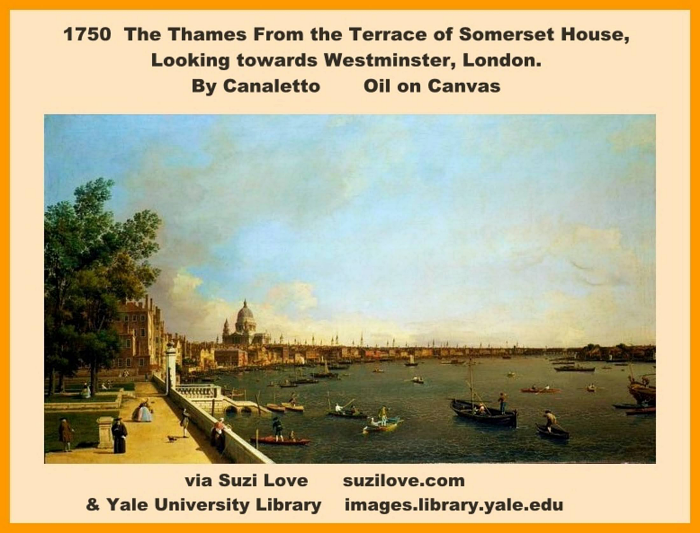
  • c.1750 Canaletto paints two views from the terrace
  • 1775 After decades of neglect, the original Somerset House is demolished; architect William Chambers immediately starts work on its replacement
  • 1779 The Royal Academy of Arts becomes the first resident of new Somerset House in what’s now known as the North Wing
  • 1780 The Royal Society and the Society of Antiquaries take up residence in the North Wing; Somerset House hosts the first Royal Academy Exhibition
  • 1786 The Embankment Building, known today as the South Wing, is completed; the East and West Wings are completed two years later
  • 1789 The Navy Board completes its move to Somerset House and eventually occupies one-third of the site; the Stamp Office, responsible for taxing newspapers and other documents, joins the board in the South Wing
  • 1795 William Chambers, then aged 72, retires; James Wyatt replaces him as the building’s architect
  • 1801 The new Somerset House is deemed complete, its construction having cost a mammoth £462,323
  • 1829 Sir Robert Smirke starts work on King’s College, which opens in 1831 and is finally completed in 1835
  • 1836 The General Register Office, responsible for births, deaths and marriages, is established here
  • 1837 One year after the final Royal Academy Exhibition at Somerset House, the academy moves to Burlington House on Piccadilly
  • 1849 Having merged in 1834, the Stamp Office and the Board of Taxes join with the Board of Excise to form the Inland Revenue, which remains in residence for more than 150 years
  • 1856 Seven years after James Pennethorne started work on its design, the New Wing is completed
  • 1857 The Royal Society moves out of Somerset House to join the Royal Academy of Arts at Burlington House; the Society of Antiquaries follows 17 years later
  • 1864 Work begins on the Victoria Embankment, designed by Sir Joseph Bazalgette; the embankment is completed in 1870
  • 1873 The Admiralty leaves Somerset House; its offices are taken over by the Inland Revenue
  • 1940s Near the start of World War II, the Inland Revenue temporarily moves out of Somerset House; the Ministry of Supply takes its place
  • 1950 Sir Alfred Richardson starts a two-year project to rebuild the Navy Staircase, known today as the Nelson Stair, which had suffered terrible bomb damage in 1940
  • 1970 After 134 years at Somerset House, the General Register Office moves out
  • 1989 The Courtauld Institute of Art moves into the North Wing
  • 1997 The Somerset House Trust is established to preserve and develop Somerset House for public use
  • 2000 The River Terrace opens to the public for the first time in more than a century; the Hermitage Rooms and the Gilbert Collection both open; then, in December, Somerset House installs a temporary ice rink for the first time
  • 2001 American band Lambchop plays the first gig in the Edmond J. Safra Fountain Court; a full programme of shows follows in 2002 and continues today as the Summer Series
  • 2009 London Fashion Week takes place at Somerset House for the first time
  • 2011 The HMRC (formerly the Inland Revenue) closes its offices at Somerset House

somerset_1819_Somerset House Terrace from Waterloo Bridge by John Constable ca. 1819 Oil on Panel ( @YaleBritishArt )
somerset_1788_Somerset House from the Thames by Edward Dayes 1788 (The Samuel Courtauld Trust, The Courtauld Gallery, London)_Lge_Sml
somerset_1750_The Thames from the Terrace of Somerset House, looking towards Westminster by Canaletto c. 1750 Oil on Canvas ( @YaleBritishArt )
somerset_1750_The Thames from the Terrace of Somerset House, looking towards Westminster by Canaletto c. 1750 Oil on Canvas ( @YaleBritishArt )_Lge_Sml
somerset_1745 Old Somerset House From the River Thames._By Canaletto_Oil on Canvas In A Private Collection_Lge_Sml
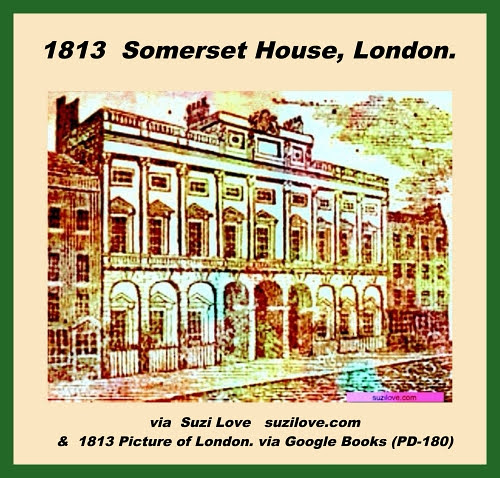
somerset_1813 Somerset House, London. From- 1813 Picture of London. via Google Books (PD-180)

The Royal Academy of Arts

George III, described as an “enthusiastic if undiscriminating collector and patron of the arts”, provided invaluable patronage for the three learned societies. When old Somerset House was relinquished by the Crown, the King reserved to himself the right to appropriate sufficient space in the new building for the Royal Academy of Arts, the Royal Society, and the Society of Antiquaries.

The Great Exhibition Room

somerset_1808_The Exhibition Room atSomerset House_Plate 2_Exhibition at Somerset House.
1808 The Exhibition Room at Somerset House.

The most important part of the building for the Royal Academy was its Exhibition Room. Situated at the top of the steep, winding staircase, it was roughly 53 x 43 feet and 32 feet high including the lantern, and was described by Joseph Baretti as, “undoubtedly at that date the finest gallery for displaying pictures so far built.” It was here that George III was given a preview of the first Royal Academy Exhibition held at his command in 1780. 

 Year by year, the exhibits increased. There were 547 in 1781, 1,037 in 1801, and 1,165 in 1821, so that the pictures had to be hung almost from floor to ceiling and with the frames touching one another. From 1832 onwards there was talk of the Royal Academy moving to more spacious rooms in what is now the National Gallery, which was being built at the north end of Trafalgar Square. Accordingly, the last exhibition at Somerset House was held in 1836.

 When the Academy moved, the most valuable decorations were taken down and reused in their new quarters. Later they were moved to Burlington House, the Royal Academy’s present home, where the ceiling paintings by Benjamin West and Angelica Kauffmann can now be seen in the entrance hall. The Academy’s old rooms at Somerset House were occupied by the Department of Practical Art, or Government School of Design.

The Royal Society

In 1776, they discovered they were to share the building to the east of the Strand entrance with the Society of Antiquaries, and complained to William Chambers that the accommodation would be inadequate; that the library would be too small and that there would be no room for the Society’s museum.

One of the first discoveries announced to the Society in its new quarters was that of a new planet, first observed by William Herschel in 1781. He wished to call the new planet Georgium Sidus in honour of the King, but other astronomers disagreed and today we know the planet as Uranus. Fellows of the Royal Society were keen to prevent war and politics interfering with the advancement of scientific discovery.

During the Napoleonic Wars of 1796-1815, the President of the Royal Society, Sir Joseph Banks, used his influence both in England and France to ensure that explorers of the two nations were not obstructed by the conflicting armed forces, and that French scientists should continue to be elected Fellows of the Society. When Sir Humphry Davy became president in 1820, the Society became oriented more towards pure scientific enquiry, to which ends, George IV founded two Gold Medals.

After the Royal Academy left Somerset House in 1837, the Royal Society remained there until 1857 when it joined the Academy at Burlington House.

The Society of Antiquaries

In 1776, the Antiquaries heard about the proposed new building at Somerset House, they decided to apply to George III, their Patron, for rooms there. After some intense lobbying by the President, the Reverend Dr Milles, the Society’s request for accommodation was favourably considered, and the King was, “most graciously pleased to order that the Society be accommodated with apartments in the new buildings at Somerset House.”

The resident Secretary of the Society was accommodated in the attic with three rooms “with deal dadoes, and Sienna marble and Sicilian jasper chimney-pieces”. The basement was hotly contested between the Royal Society and the Antiquaries, who were eventually allowed a kitchen, cellar, two vaults, and a privy. However, the lobby, originally intended for the footman in waiting, had to accommodate the Antiquaries’ porter as the Royal Society had taken possession of the Porter’s Lodge!

In the 1850s there was a proposal to move the Royal Society and the Antiquaries from Somerset House but, when the Royal Society moved out in 1857, the Antiquaries decided to remain, taking the opportunity to secure sole use of the disputed rooms, until they joined the other two learned societies at Burlington House in 1874.

The Navy Board

When the Admiralty moved into new premises in Whitehall in 1725, it was decided that the Navy Board, over whom the Admiralty had responsibility, should move to a site much closer; from Seething Lane behind the Tower of London to new offices at Somerset House. Chambers proposed to house the Navy Board on the west side of the south wing of the new building, in the part facing the river, with the Seamen’s Waiting Hall in the centre of the building providing an imposing entrance.

The related Sick and Hurt, Navy Pay, and Victualling Offices were to occupy the range of buildings on the west side of the courtyard. By 1789 the move was completed and, for nearly a century, more than a third of Somerset House was home to the various branches of the Navy Board.

 General Register Office

In 1836 the General Register Office was created to set up a comprehensive system for the registration of Births, Marriages and Deaths and appoint the first Registrar General based at Somerset House. It was not until 1970, after slightly less than a century and a half at Somerset House, that the General Register Office moved out.

Principal Probate Registry

 The Inland Revenue Stamp duty on documents, including newspapers, was only one of many revenue-raising methods administered by the Stamp Office, one of the government departments which moved to the new Somerset House in 1789. In 1834 the Stamp Office united with the Affairs of Taxes and in 1849 Stamps and Taxes joined the Excise to form a new Board of Inland Revenue. The Board of Inland Revenue today still occupies the east and west wings of Somerset House.

Somerset House, London, UK. London’s Best Places To Visit in Bridgerton and Jane Austen years. #Bridgerton #JaneAusten #London #RegencyEra #BritishHistory https://books2read.com/ROver
Post On X

RL_1_D2D_Regency Overview RetailerLinks
https://books2read.com/suziloveROver
RL_1_D2D_Regency Overview RetailerLinks https://books2read.com/suziloveROver
Posted in 1700s, 1800s, 1900s, art, Bridgerton, Jane Austen, London, Pastimes, postal, Regency Era, Royalty | Tagged art, Bridgerton, google books, Jane Austen, London, military, money, navy, postal, Regency Era, Regency Life, Regency London, Regency People, Regency Royalty

1819 Pale Blue Redingote, Or Coat, With Matching Bonnet as worn in Bridgerton times. #bridgerton #RegencyFashion #FashionPlate #French

Suzi Love Posted on July 23, 2026 by Suzi LoveJuly 12, 2026

1819 Pale Blue Redingote, Pelisse or Walking Dress, French. Blue redingote with pink bow showing off gorgeous neck frills and bonnet of castor decorated with tassels. The type of outfit young Regency Era ladies would have worn if they were out shopping on Bond Street, walking in a park, or taking a carriage ride through Hyde Park. Fashion Plate via Journal des Dames et des Modes, or Costume Parisien.

Definition Redingote Or Pelisse Or Walking Dress Or Coat: French word developed from English words, riding coat. Long fitted outdoor coat worn over other garments for warmth. Often left open at the front to show off the dress underneath. Sometimes cut away in front. Originally made with several capes and trimmed with large buttons. French fashion plates call these coats Redingotes and they are designed for women, men and children. English fashion plates call them a Pelisse, a walking dress, Promenade dress, or Carriage dress.

1819 Pale Blue Redingote, Pelisse or Walking Dress, French. Blue redingote with pink bow showing off gorgeous neck frills and bonnet of castor decorated with tassels. Fashion Plate via Suzi Love suzilove.com & Journal des Dames et des Modes, or Costume Parisien.
HN_28_D2D_FashionWomen 1815-1819 books2read.com/SuziLoveFashionWomen1815-1819
Posted in 1800s, 1800s women's fashion, Coat or Pelisse Or Redingote, fashion accessories, France, hats, Regency Era, Regency Fashion, Suzi Love Images | Tagged 1800s women's fashion, fashion accessories, Fashion Plate, gloves, Hats And Hair, Journal des Dames et des Modes, magazines, military, Redingote Or Pelisse Or Coat, Regency Fashion, sewing, Shoes

Love the Bridgerton Series? Fan of Jane Austen? What did men wear in the early 1800s? Suits, hats, shoes, underclothing, military and bedroom fashions. #Bridgerton #RegencyFashion #JaneAusten #BritishHistory

Suzi Love Posted on July 9, 2026 by Suzi LoveJuly 9, 2026

Love the Bridgerton Series? Fan of Jane Austen? What did men wear in the early 1800s? Suits, hats, shoes, underclothing, military and bedroom fashions. #Bridgerton #RegencyFashion #JaneAusten #BritishHistory.

The Regency Era saw a wide variety of acceptable pants for men. Breeches were worn as part of a man’s daily outfit during the early 1800s and were necessary for formal occasions, such as court appearances, during the entire Regency Era. However, younger gentlemen moved away from breeches for daytime wear around 1807 and adopted a variety of long pants called trousers, pantaloons, buckskins or inexpressables. Knee-length breeches, worn with stockings, continued to be worn by older gentlemen through the entire Regency Era.

Around 1807, upper class gentlemen wore trousers held up by suspenders or pantaloons, which were closely fitted and worn with tall boots. Buckskins, made from deerskin, were comfortable to wear for riding. Inexpressibles were very tight leggings that left little to the imagination of young ladies. Every Regency man’s outfit included a hat, gloves, shoes or boots, and a selection of added accessories from a walking stick, watch on a chain, fobs, coin purse and a handkerchief.

HN_23_Fashion Men 1800-1819 History Notes Book 23 What was fashionable for men in early 1800s, or Jane Austen's time, or Regency Era? Suits, hats, shoes, underclothing, fashion accessories, military and bedroom fashions. French fashions and Georgian and Regency Era fashions from Great Britain were copied around the world. https://books2read.com/SuziLoveFashionMen1800-1819
HN_23_D2D_Fashion Men 1800-1819
https://books2read.com/SuziLoveFashionMen1800-1819
HN_23_D2D_Fashion Men 1800-1819
Posted in 1800s, 1800s Mens Fashions, art, Australia, bedroom fashion, Bridgerton, Canada, cartoon, Coat or Pelisse Or Redingote, England, Europe, fashion accessories, France, Google Books, hats, History Notes, Jane Austen, London, military, pants, peerage, Regency Era, Regency Fashion, riding, Russia, shoes, Suit, Suzi Love Books, Suzi Love Images, U.S.A, underclothing, Vest or Waistcoat | Tagged 1800s men fashion, bedroom fashion, Book 23, boots, breeches, Bridgerton, British history, cravat, fashion accessories, Fashion Plate, gloves, Hats And Hair, History Notes, Jane Austen, Journal des Dames et des Modes, Le Beau Monde, military, pants, Regency Fashion, Regency Life, Regency Men, Shoes, Suzi Love Books, The Repository Of Arts, underclothing, Vest or Waistcoat

1808 Fashionable English Couple Dressed As In Jane Austen’s times. #RegencyFashion #JaneAusten #HistoricalFashion

Suzi Love Posted on July 9, 2026 by Suzi LoveJuly 9, 2026
HN_26_D2D Fashion Women 1805-1809
https://books2read.com/SuziLoveFashionWomen1805-1809
Fashion Women 1805-1809 History Notes Book 26 What did Jane Austen and friends wear? https://books2read.com/SuziLoveFashionWomen1805-1809

1808 Fashionable English Couple, Dressed As In Jane Austen’s times. Lady in a white dress with pointed hem decorations, fitted white hat tied under her chin with yellow ribbon, yellow shawl and pink slippers. Gentleman in formal dress of blue tailcoat, black knee breeches, white stockings, black shoes, black bicorn hat, curly hair style and sideburns and a sword. Interestingly, this is English style fashions from a French magazine. Fashion Plate via Journal des Dames et des Modes, or Costume Parisien.

1808 Fashionable English Couple. Lady in a white dress with pointed hem decorations, fitted white hat tied under her chin with yellow ribbon, yellow shawl and pink slippers. Gentleman in formal dress of blue tailcoat, black knee breeches, white stockings, black shoes, black bicorn hat, curly hair style and side burns and a sword. Fashion Plate via Journal des Dames et des Modes, or Costume Parisien.
HN_26_D2D Fashion Women 1805-1809
https://books2read.com/SuziLoveFashionWomen1805-1809
Fashion Women 1805-1809 History Notes Book 26 What did Jane Austen and friends wear? https://books2read.com/SuziLoveFashionWomen1805-1809
Posted in 1800s, 1800s Mens Fashions, 1800s women's fashion, Coat or Pelisse Or Redingote, Couple, Dress Or Robe, fashion accessories, France, hats, Jane Austen, pants, Regency Era, Regency Fashion, shoes, Suit, Suzi Love Images | Tagged 1800s men fashion, 1800s women's fashion, couple, court clothing, cravat, Dress Or Gown, England, fashion accessories, Fashion Plate, gloves, Hats And Hair, Jane Austen, Journal des Dames et des Modes, military, pants, Regency Fashion, shawls, Shoes, stockings, sword, Vest or Waistcoat

1805 Breeches, Royal Naval Uniform of Surgeon Joshua Horwood in the time of Jane Austen. #JaneAusten #RegencyEra #military #uniform

Suzi Love Posted on June 29, 2026 by Suzi LoveJune 14, 2026

1805 Breeches, part of the Royal Naval Uniform of surgeon Joshua Horwood , who served as surgeon’s mate in HMS ‘Prince’ at Trafalgar, and was promoted to surgeon in 1807. via Royal Museums Greenwich, London, U.K. collections.rmg.co.uk

1805 Breeches, part of the Royal Naval Uniform of surgeon Joshua Horwood , who served as surgeon's mate in HMS 'Prince' at Trafalgar, and was promoted to surgeon in 1807. via Royal Museums Greenwich, London, U.K. collections.rmg.co.uk 
https://books2read.com/SuziLoveFashionMen1800-1819

HN_23_D2D_Fashion Men 1800-1819
https://books2read.com/SuziLoveFashionMen1800-1819
Posted in 1800s, 1800s Mens Fashions, England, Jane Austen, London, military, pants, Regency Era, Regency Fashion, Suzi Love Images | Tagged 1800s men fashion, breeches, England, Jane Austen, military, pants, Regency Fashion, Royal Museums Greenwich, uniform

1812 April White Morning Walking Dress n Jane Austen style Under Green Military Style Coat. #RegencyFashion #JaneAusten #HistoricFashion

Suzi Love Posted on June 26, 2026 by Suzi LoveJune 26, 2026

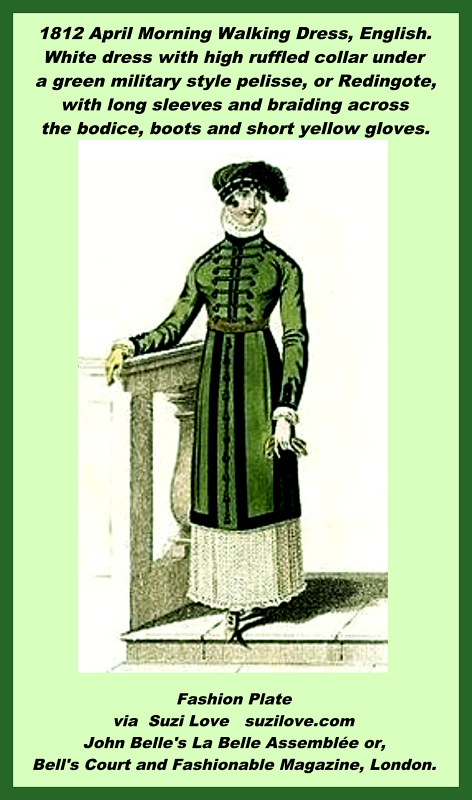
1812 April Morning Walking Dress, English, in Jane Austen style. White dress with high ruffled collar under a green military style coat, or pelisse, or Redingote, with long sleeves and braiding across the bodice, boots and short yellow gloves.

Definition Redingote, Pelisse, Walking Dress: The term, Redingote, was used more in France and other parts of Europe and Pelisse or Walking Dress was used more in England.  While the terms Redingote and Pelisse are often used interchangeably, the Redingote usually features a close fitted top and flares out at the hemline with a more tailored or military look than a Pelisse. Redingotes or Pelisses were needed to cover the flimsy dresses made of lightweight fabrics of the Regency years to provide warmth and some protection from windy conditions when gowns might lift and cause modesty issues. Jane Austen and her contemporaries often walked to places and so would have needed the warmth of a Pelisse or coat in the cold British winters.

1812 April Morning Walking Dress, English. White dress with high ruffled collar under a green military style pelisse, or Redingote, with long sleeves and braiding across the bodice, boots and short yellow gloves.
HN_27_D2D_FashWomen1810-1814https://books2read.com/SuziLoveFashion1810-1814
27_D2D_FashWomen1810-1814
Posted in 1800s, 1800s women's fashion, Coat or Pelisse Or Redingote, Dress Or Robe, England, fashion accessories, hats, Jane Austen, London, Regency Era, Regency Fashion, shoes | Tagged 1800s women's fashion, Dress Or Gown, fashion accessories, Fashion Plate, gloves, Hats And Hair, Jane Austen, La Belle Assemblee, military, Redingote Or Pelisse Or Coat, Regency Fashion, Shoes

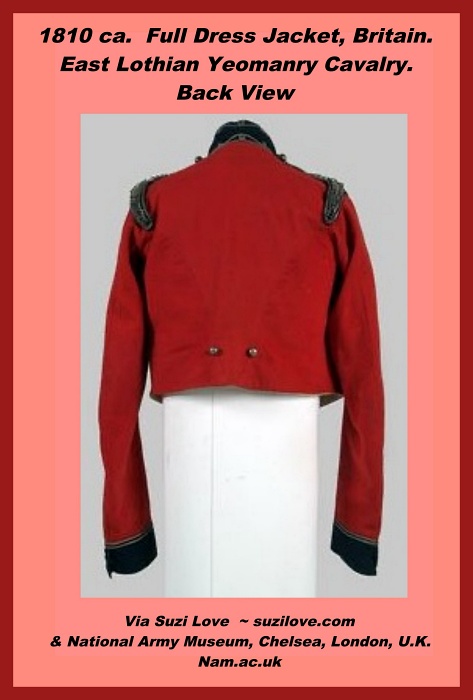
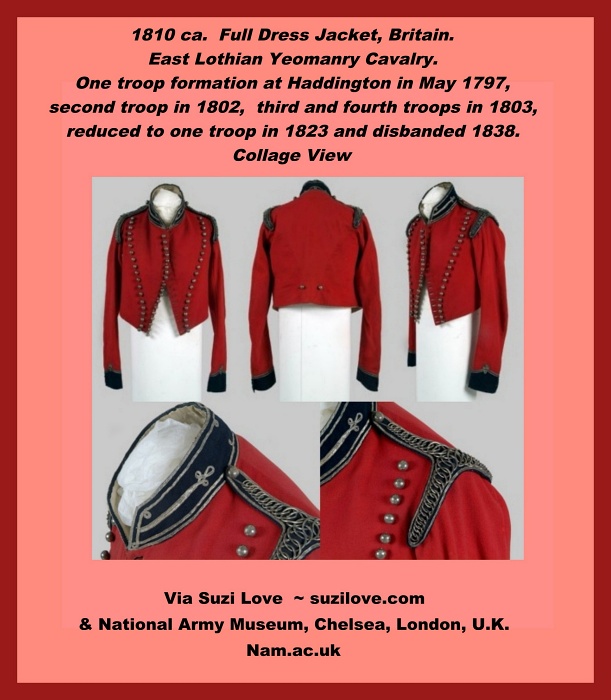
1810 ca. Full Dress Jacket, East Lothian Yeomanry British Cavalry Uniform, as worn in Jane Austen times. #JaneAusten #RegencyEra #Military #BritishHistory

Suzi Love Posted on April 18, 2026 by Suzi LoveFebruary 19, 2026

1810 ca. Full Dress Jacket, Lothian Yeomanry Cavalry, Britain. The East Lothian Yeomanry Cavalry was raised as a one troop formation at Haddington in May 1797. Five years later a second troop was raised and in 1803 a third and fourth troop. The regiment was reduced to one troop in 1823 and disbanded 15 years later. National Army Museum, London, UK.   https://books2read.com/SuziLoveFashionMen1800-1819 In Jane Austen’s time, or the early 1800s, gentlemen were seen in military coats like this often because many Englishmen were involved in the long lasting wars against Napoleon. .

1810 ca. Full Dress Jacket, Britain. East Lothian Yeomanry Cavalry. Via National Army Museum, Chelsea, London, U.K. Nam.ac.uk
HN_23_D2D_Fashion Men 1800-1819
https://books2read.com/SuziLoveFashionMen1800-1819
Posted in 1800s, 1800s Mens Fashions, Coat or Pelisse Or Redingote, England, Jane Austen, London, military, Regency Era, Regency Fashion, Suzi Love Images | Tagged 1800s men fashion, Jane Austen, military, National Army Museum, Regency Fashion, Tailcoat

1795-1812 ca. Lord Nelson’s Vice-Admiral Undress Blue Tailcoat. #RegencyEra #Military #Nelson #JaneAusten

Suzi Love Posted on March 23, 2026 by Suzi LoveFebruary 17, 2026

1795-1812 ca. Lord Nelson’s Vice-Admiral Undress Coat. Blue cloth tail coat, double breasted, nine gilt buttons on each lapel., two rows gold lace each sleeve with three buttons between, three buttons below each pocket flap, two buttons on skirt pleats, narrow band of wool cloth and two eyelet holes on shoulders to attach epaulettes, fastened edge to edge with three hooks and eyes, four embroidered stars of Nelson’s orders on left, Order of the Bath, Order of St Ferdinand Merit, Order of Crescent, Order of San Joachim. This is Nelson’s Trafalgar Coat worn by Nelson (1758-1805) at Battle of Trafalgar with bullet hole on left shoulder, close to epaulette. Damage to epaulette and blood stains on tails and left sleeve. National Maritime Museum, Greenwich, London, U.K. www.rmg.co.uk

For most of Jane Austen’s life, Britain was involved in conflicts and wars across the world. The Napoleonic Wars only ended in 1815, just two and a half years before Austen died. During her childhood, Britain was fighting the American Revolutionary War and when she was 14 years old, the French Revolution upset traditional roles of the monarchy, aristocracy and landed gentry in Britain, France and many other European countries.

1795-1812 ca. Lord Nelson's Vice-Admiral Undress Coat. Blue cloth tail coat, double breasted, nine gilt buttons on each lapel., two rows gold lace each sleeve with three buttons between, three buttons below each pocket flap, two buttons on skirt pleats, narrow band of wool cloth and two eyelet holes on shoulders to attach epaulettes, fastened edge to edge with three hooks and eyes, four embroidered stars of Nelson's orders on left, Order of the Bath, Order of St Ferdinand Merit, Order of Crescent, Order of San Joachim. via National Maritime Museum, Greenwich, London, U.K. www.rmg.co.uk
HN_23_D2D_Fashion Men 1800-1819
https://books2read.com/SuziLoveFashionMen1800-1819
Posted in 1700s, 1800s, 1800s Mens Fashions, Coat or Pelisse Or Redingote, England, Georgian Era, Jane Austen, London, military, Regency Era, Regency Fashion, Suzi Love Images | Tagged 1800s men fashion, Georgian Fashion, Jane Austen, military, National Maritime Museum, Redingote Or Pelisse Or Coat, Regency Fashion, Tailcoat, uniform | Leave a reply

1806 Silver Vinaigrette Commemorating The Battle Of Trafalgar in the times of the Bridgertons and Jane Austen. #Bridgerton #RegencyEra #JaneAusten #FashionAccessory

Suzi Love Posted on March 23, 2026 by Suzi LoveJanuary 25, 2026

1806 Silver and silver-gilt vinaigrette, Birmingham, England. Commemorating the Battle of Trafalgar in 1805. Rectangular with a hinged lid and a suspension loop. Gilded, pierced inner cover depicts HMS ‘Victory’ in relief inscribed ‘VICTORY’, ‘TRAFALGAR OCT 21 1805’. Via National Maritime Museum, Greenwich, London, U.K.

Vinaigrettes were used from the late 18th century through the 19th Century to revive a person who had fainted, having the vapors, or to mask unsanitary odors. Small containers, often a silver hinged box, held a tiny sponge dipped in an aromatic substance which had been dissolved in vinegar. The sponge was held beneath a grill or perforated cover so, by a flick of the fingers, the container was opened and the restorative substance held directly beneath a person’s nose. Jane Austen and her family and friends would have been very familiar with the use of vinaigrettes because Regency Era ladies were noted for having the vapors or fainting in hot ballrooms or dramatic situations. Ladies in the Romantic and Victorian Eras would have used them when tightly laced corsets became popular and ladies fainted because they were unable to draw in enough oxygen.

Both men and women used vinaigrettes in the late 1700s when people encountered foul aromas on a daily basis, but by the 1820s vinaigrettes were mainly used by women.These tiny containers were carried in a pocket, a reticule or bag, or suspended from the waist by chains as part of a chatelaine. Their sterling silver interiors were gilded to prevent discoloration from the acetic acid. Birmingham produced 90% of England’s silver vinaigrettes. As gold wasn’t affected by vinegar, craftsmen created some elaborate and decorative boxes on the container’s exteriors.

1806 Vinaigrette, English. Small bottle or container for holding smelling salts. via National Maritime Museum, greenwich, London. books2read.com/suziloveBoxesCases
HN_11_D2D_Craftsmen created containers of precious metals, leather, silks, and decorated them with jewels to make exquisite and expensive items as well as practical carrying cases. books2read.com/suziloveBoxesCases
Posted in 1800s, Box Or Container, Bridgerton, Decorative Item, England, fashion accessories, household, Jane Austen, London, medical, Regency Era, Regency Fashion, Suzi Love Images | Tagged 1800s men fashion, 1800s women's fashion, antiques, Box Or Container, Bridgerton, decorative, fashion accessories, Jane Austen, military, National Maritime Museum
1807 Man's Non-Regulation Cotton Linen Shirt With Collar and Monogram, British. #Regency #JaneAusten #BritishHistory #Military

1807 Non-Regulation Cotton Linen Shirt as worn by men in Jane Austen’s acquaintance, British. #RegencyFashion #JaneAusten #BritishHistory #Military

Suzi Love Posted on March 17, 2026 by Suzi LoveFebruary 19, 2026

1807 Cotton Linen Shirt, British. Non-regulation shirt worn under uniform. High collar to allow room for a stock, fullness and pleated sleeves enable wearer to fit into tight arms popular in coats. The men in Jane Austen’s life would have worn a shirt like this, especially if they were in the military as many men were during the Napoleonic Wars. via Royal Museums Greenwich collections.rmg.co.uk

1807 Man's Non-Regulation Cotton Linen Shirt With Collar and Monogram, British. #Regency #JaneAusten #BritishHistory #Military
HN_23_D2D_Fashion Men 1800-1819 History Notes Book 23 https://books2read.com/SuziLoveFashionMen1800-1819
Posted in 1800s, 1800s Mens Fashions, Jane Austen, London, Regency Era, Regency Fashion, sewing, Shirt | Tagged 1800s men fashion, Jane Austen, London, military, National Maritime Museum, navy, Regency Fashion, sewing, shirt

Post navigation

← Previous Post

SUBSCRIBE TO SUZI LOVE'S NEWSLETTER.

Recent Posts

  • 1811 Jane Austen Style White Dress With Spotted Tunic And Yellow Overdress. #JaneAusten #RegencyFashion #19thcenturydress
  • Somerset House, London, UK. London’s Best Places To Visit in Bridgerton and Jane Austen years. #Bridgerton #JaneAusten #London #RegencyEra #BritishHistory
  • 1825 Blue Redingote of Gros de Naples and Trimmed With Rouleaux, French. #RomanticEra #RegencyFashion #Pelisse
  • 1825 The Tower Of London in Jane Austen and Bridgerton years. #janeausten #bridgerton #london #Regencyera
  • Want to know about music in the households of Jane Austen and the Bridgertons? Music history from the 17th, 18th, and 19th Centuries. #Music #Bridgerton #RegencyEra #JaneAusten #GeorgianEra

Recent Comments

  1. Suzi Love on Book Hooks: Captain Belling said in a cold voice, “The only thing I don’t know is why the hell you and that child are still near Waterloo.” #MilitaryRomance #RegencyRomance #BattleofWaterloo
  2. Suzi Love on Book Hooks: Captain Belling said in a cold voice, “The only thing I don’t know is why the hell you and that child are still near Waterloo.” #MilitaryRomance #RegencyRomance #BattleofWaterloo
  3. Suzi Love on Book Hooks: Captain Belling said in a cold voice, “The only thing I don’t know is why the hell you and that child are still near Waterloo.” #MilitaryRomance #RegencyRomance #BattleofWaterloo
  4. Suzi Love on Book Hooks: Captain Belling said in a cold voice, “The only thing I don’t know is why the hell you and that child are still near Waterloo.” #MilitaryRomance #RegencyRomance #BattleofWaterloo
  5. Jana Richards on Book Hooks: Captain Belling said in a cold voice, “The only thing I don’t know is why the hell you and that child are still near Waterloo.” #MilitaryRomance #RegencyRomance #BattleofWaterloo

Login

  • Log in

Archives

  • August 2026
  • July 2026
  • June 2026
  • May 2026
  • April 2026
  • March 2026
  • February 2026
  • January 2026
  • December 2025
  • November 2025
  • October 2025
  • September 2025
  • August 2025
  • July 2025
  • June 2025
  • May 2025
  • April 2025
  • March 2025
  • February 2025
  • January 2025
  • December 2024
  • November 2024
  • October 2024
  • September 2024
  • August 2024
  • July 2024
  • June 2024
  • May 2024
  • April 2024
  • March 2024
  • February 2024
  • January 2024
  • November 2023
  • October 2023
  • September 2023
  • August 2023
  • July 2023
  • April 2023
  • March 2023
  • June 2022
  • April 2022

Categories

  • 1700s
  • 1700s Mens fashion
  • 1700s Womens Fashion
  • 1800s
  • 1800s Mens Fashions
  • 1800s women's fashion
  • 1900s
  • art
  • Australia
  • Bath
  • bedroom fashion
  • Book Hooks
  • Box Or Container
  • Bridgerton
  • Bus Trips
  • Canada
  • Carriage
  • cartoon
  • Celebrity
  • Chatelaine
  • children
  • Children
  • Christmas
  • Coat or Pelisse Or Redingote
  • Contemporary
  • Corset
  • Couple
  • Customs & Manners
  • dancing
  • December Scandal
  • Decorative Item
  • Dress Or Robe
  • Easter
  • Edwardian Era
  • Embracing Scandal
  • England
  • Ester In Images
  • Europe
  • Events
  • Fashion
  • fashion accessories
  • Food and Drink
  • Four Times A Virgin
  • France
  • furniture
  • Georgian Era
  • Georgian Fashion
  • Google Books
  • Grand Tour
  • Group
  • hats
  • History
  • History Events
  • History Notes
  • History Of Christmases Past
  • household
  • Hygiene
  • Irresistible Aristocrats
  • Jane Austen
  • Keanu Reeves
  • Kellys Justice
  • Legal
  • London
  • Love After Waterloo
  • Loving Lady Katharine
  • medical
  • military
  • money
  • mourning
  • Music
  • Outback Arrival
  • pants
  • Pastimes
  • peerage
  • People
  • Petunia and Pearl Diver
  • Places
  • Pleasure House Ball
  • postal
  • Queensland
  • Quotations
  • Regency Era
  • Regency Fashion
  • Regency Life Series
  • Reticule or Bag
  • riding
  • Romantic Era
  • Royalty
  • Russia
  • Scandalous Siblings Series
  • Scenting Scandal
  • Self Publishing
  • sewing
  • Shirt
  • shoes
  • Shopping
  • South Pacific
  • Spencer
  • sports
  • Suit
  • Sunday Snippet
  • Suzi Love
  • Suzi Love Books
  • Suzi Love Images
  • Suzi Love Writing
  • Swain Cove
  • THe Viscount's Pleasure House
  • travel
  • U.S.A
  • underclothing
  • Vest or Waistcoat
  • Victorian Era
  • Victorian Fashion
  • weapons
  • weddings
  • Writing Tools

1800s men fashion 1800s women's fashion antiques Bridgerton British history Cartoons Corset cravat decorative Dress Or Gown England europe fashion accessories Fashion Plate France Georgian era Georgian Fashion gloves google books Hats And Hair historical romance History Notes household Jane Austen jewelry Journal des Dames et des Modes London Metropolitan Museum NYC pants Redingote Or Pelisse Or Coat Regency Era Regency Fashion Regency London Regency Men reticule or bag riding sewing shawls Shoes Suzi Love Books Suzi Love Images Tailcoat The Repository Of Arts underclothing Vest or Waistcoat

©2026 - Suzi Love - Weaver Xtreme Theme Privacy Policy
↑