1800s A Young Lady Riding and Carriage Driving, England. #Riding #Regency #Victorian #Cartoon From: 1860 Mr. Sponge’s Sporting Tour by Robert Smith Surtees. via Google Books (PD-100)



1800s A Young Lady Riding and Carriage Driving, England. #Riding #Regency #Victorian #Cartoon From: 1860 Mr. Sponge’s Sporting Tour by Robert Smith Surtees. via Google Books (PD-100)
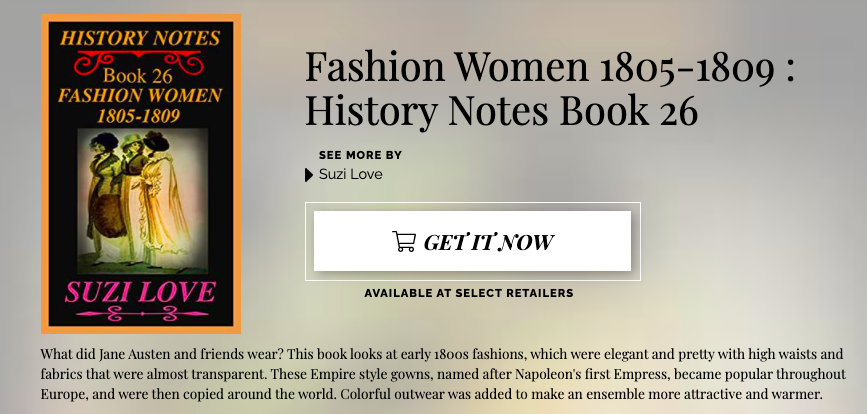
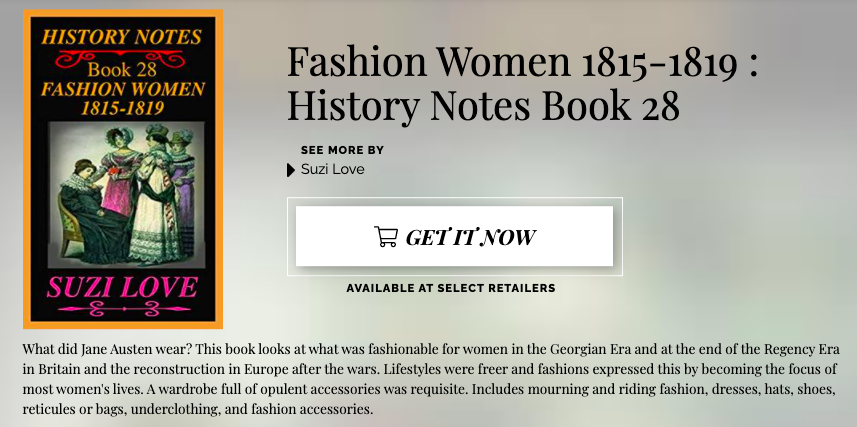
1805 Women’s Dresses and Fashion Accessories. Fashion plates from Fashions of London and Paris. Gorgeous Regency Era clothing came in a wide range of styles to suit every season and occasion. Ladies in Jane Austen’s times wore Empire style dresses which were usually of light fabric and floaty in style so accessories were essential to keep women warm. Accessory: item which contributes to the overall effect but is of secondary importance is the dictionary definition of an accessory, but the term has only been applied in relation to personal appearance since the 19th century. As defined by dress historians, accessories usually complete an outfit and are chosen to complement it. Accessories fall into two groups: Those worn, such as bonnets, caps and hats, boots and shoes, cravats and ties, gloves, mittens and muffs, jewellery, scarves and shawls, socks and stockings. Those that are carried, such as bags, canes, fans, parasols and umbrellas, and swords.


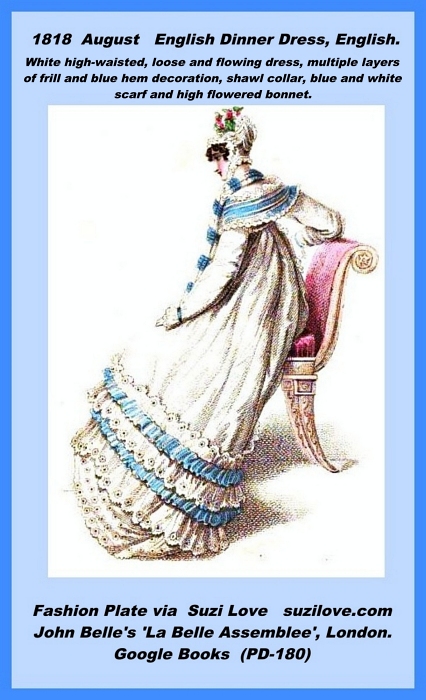
1818 August English dinner Dress. White high-waisted, loose and flowing dress, multiple layers of frill and blue hem decoration, shawl collar, blue and white scarf and high flowered bonnet. Fashion Plate John Belle’s La Belle Assemblée or, Bell’s Court and Fashionable Magazine, London.
1811 Half-Mourning Dress, French. Black dress, high white neck ruffle, black hat with white trim and white shoes. Jane Austen and her family would have worn this type of outfit when mourning a relative or friend. However, as black dresses, black tunics, and black lace shawls were popular throughout the Regency years, it is often hard to decide what was definitely made for mourning and what was simply fashionable wear. Fashion Plate via Journal des Dames et des Modes, or Costume Parisien.
In November, 1810, Princess Amelia, youngest daughter of George III, died. At the end of 1810 full mourning of complete black would have been worn but by the beginning of 1811, half mourning would still have been to respect the loss of a royal family member. Half-mourning allowed touches of silver, grey, mauve and white to be added to a mostly black outfit and would be worn after the period of full mourning was ended, times depending on the relationship to the deceased person. Garments and accessories could either be trimmed with black, jet jewelry worn, black ribbons added, or a layer of black net or gauze added to a dress or hat.
Definition Half or Slight Mourning: Allowed touches of grey and white to be added to full, or deep, mourning ensembles. Some lustre, or shine, was allowed in fabrics and accessories. After a time, mauve or deep purple could also be worn. https://books2read.com/SuziLoveFashion1810-1814


1812 February Winter Walking Dress, English. Scarlet Merino wool pelisse lined with straw colored sarsnet, trimmed with light colored spotted fur attached with loops of black silk cordon and rich frog tassels, broad fur in front forming a tippet, pointed at back, narrow fur passes from top of sleeves, worn over a white dress, yellow winter hat, gray gloves, and paisley shawl. Fashion Plate via John Belle’s La Belle Assemblee.
Definition Merino Wool: Finest quality wool, originating in Spain. Just before and during the Regency, Merino sheep were exported from Spain into Britain and other parts of Europe. Napoleon supported Merino growth in France. In 1808, after French invaded Spain, King George purchased additional 2000 Merinos for royal flock but Britain too wet for thriving industry. Other countries i.e. Australia, began producing fine quality Merino.
I can picture Jane Austen and her female friends and family wearing a Pelisse, or Walking Dress, Or Redingote, like this to keep them warm when shopping or paying visits to friends. During the Regency Era, out door activities were encouraged and outside clothing needed to be more practical and with thicker fabrics, such as Merino wool. Tunics gave an additional layer to thin dresses and walking dresses, pelisses, Redingotes and half cloaks were worn and accessorized with cashmere shawls and oversized fur muffs.


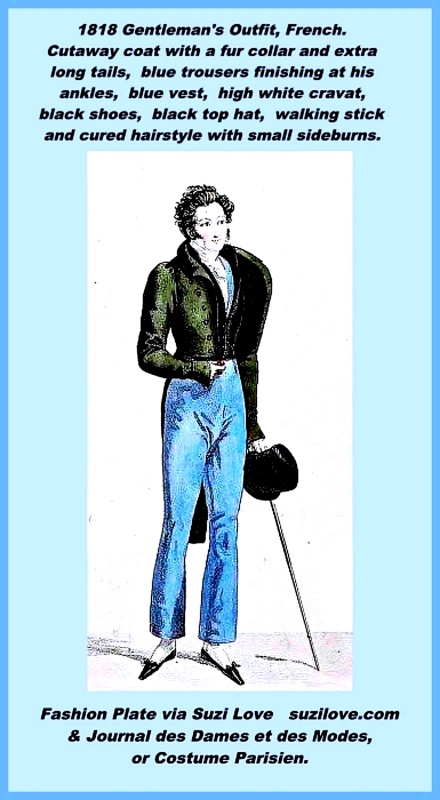
1818 Gentleman’s Outfit, French. Cutaway coat with a fur collar and extra long tails, blue trousers finishing at his ankles, blue vest, high white cravat, black shoes, black top hat, walking stick and cured hairstyle with small sideburns. Fashion Plate via Journal des Dames et des Modes, or Costume Parisien.

19th Century Early Caroline Bonaparte Murat, Wife and Queen Consort Of Joachim, King Of Naples. Wearing a Grand Parure, or jewelry set of tiara, necklace, earrings etc, of red coral, pearls and diamonds. By Salomon-Guillaume Counis, after Nicholas-Francois Dun.


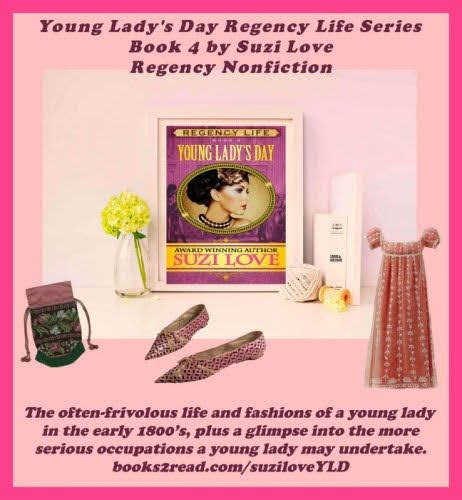
Want a glimpse into the life of a young lady in Jane Austen and the Bridgerton years? #bridgerton #RegencyEra #JaneAusten
Young Lady’s Day is Book 4 in the Regency Life Series.
This book depicts the often-frivolous life and fashions of a young lady in the early 1800’s, but also gives a glimpse into the more serious occupations a young lady may undertake. Through historic images, historical information, and funny anecdotes, it shows how a young lady fills her day, where she is permitted to go, and who she is allowed spend time with. These light-hearted looks at the longer Regency years are an easy to read overview of what people did and wore, and where they worked and played. There is plenty of information to interest history buffs, and lots of pictures to help readers and writers of historical fiction visualize the people and places from the last years of the 18th Century until Queen Victoria took the throne. https://books2read.com/suziloveYLD