1807 Cotton Linen Shirt, British. Non-regulation shirt worn under uniform. High collar to allow room for a stock, fullness and pleated sleeves enable wearer to fit into tight arms popular in coats. The men in Jane Austen’s life would have worn a shirt like this, especially if they were in the military as many men were during the Napoleonic Wars. via Royal Museums Greenwich collections.rmg.co.uk
Love the life of Jane Austen and her stories? Fan of the Bridgerton series? Reader or writer of the early 1800s, or Regency Era? For information and pictures, try Regency Life Series by Suzi Love. Light-hearted series about Regency Era, or early 1800s. For writers, readers and history lovers.
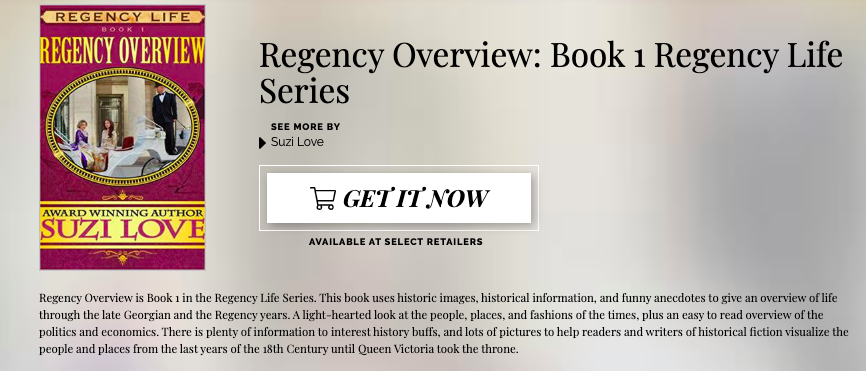
Thes books use historic images, historical information, and funny anecdotes to give an overview of life through the late Georgian and the Regency years. A light-hearted look at the people, places, and fashions of the times, plus an easy to read overview of the politics and economics. There is plenty of information to interest history buffs, and lots of pictures to help readers and writers of historical fiction visualize the people and places from the last years of the 18th Century until Queen Victoria took the throne.
Try Books 1-5 Regency Life Series by Suzi Love. Regency Overview – Young Gentleman’s Day – Older Gentleman’s Day – Young Lady’s Day – Older Lady’s Day
Regency Era Overview: Images, information and funny anecdotes give an overview of life in Jane Austen’s times or early 1800s. #Regency #JaneAusten #BritishHistory
“No need,” Lady Laura Jamison said to the Eal of Winchester, unclenching her jaw and showing her teeth in a false but placating smile. “I’d be most distressed, kind sir, if you put yourself out on my account. Becca left me a list of instructions as long as my arm on which shares to buy and sell, and how to deliver my orders to our Stock Exchange agents. To excel at my duties, I need only follow each and every step. Rather like climbing a ladder.”
“People have been known to tumble from ladders. Land in the wrong place.”
She narrowed her gaze. “Very true. But for all I know, aligning myself with you may land me in deep water. How do I know you’re trustworthy? You could be copying those scoundrels Becca had imprisoned. Sneaking into our household to steal our secrets.”
She’d tried to appear apprehensive, but when his jaw went slack with shock, she couldn’t stop help but chuckled.
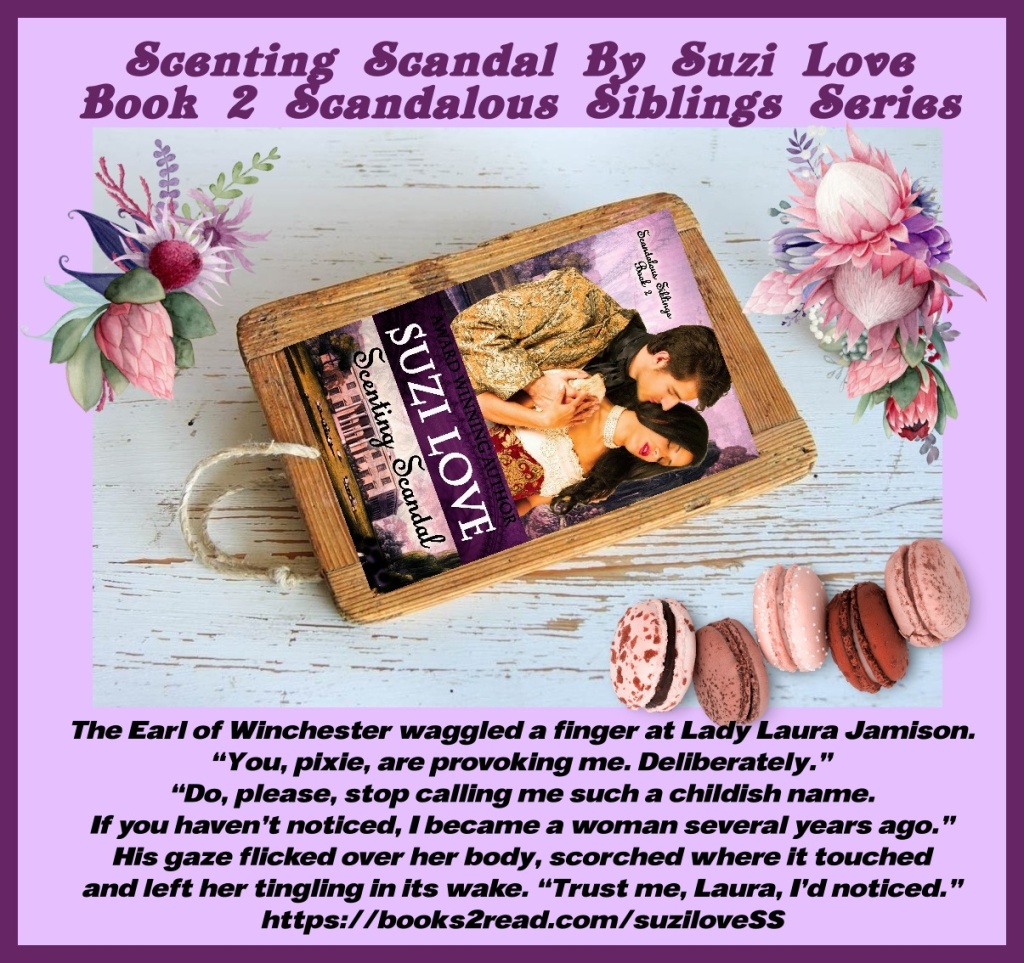
He waggled a finger. “You, pixie, are provoking me. Deliberately.”
“Do, please, stop calling me such a childish name. If you haven’t noticed, I became a woman several years ago.”
His gaze flicked over her body, scorched where it touched and left her tingling in its wake. “Trust me, Laura, I’d noticed.”
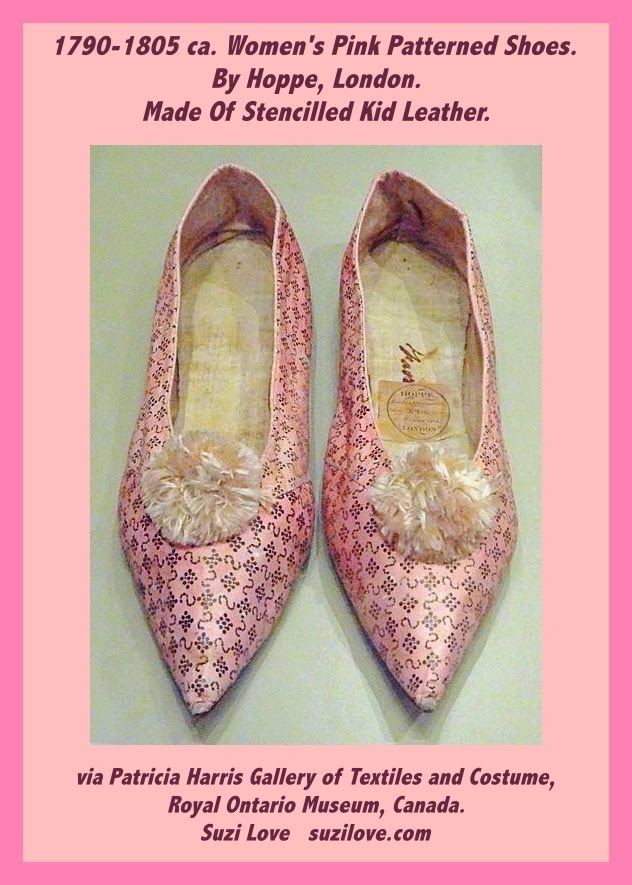
1790-1805 ca. Women’s pink patterned kid leather shoes as worn by Jane Austen and other ladies in her times. Made by Hoppe, London, of stencilled kid leather.
In Jane Austen’s years, fragile slippers were worn for balls and evening events but for walking sturdier shoes were needed, In the early 1800s, slippers were made of fabric such as satin or from leather, were flat or had a very small heel, slightly rounded toes and were laced up on the top. They were usually not made in right or left, but instead one shoe shape and in multiples so that when one slipper wore out, another was on hand to replace it.
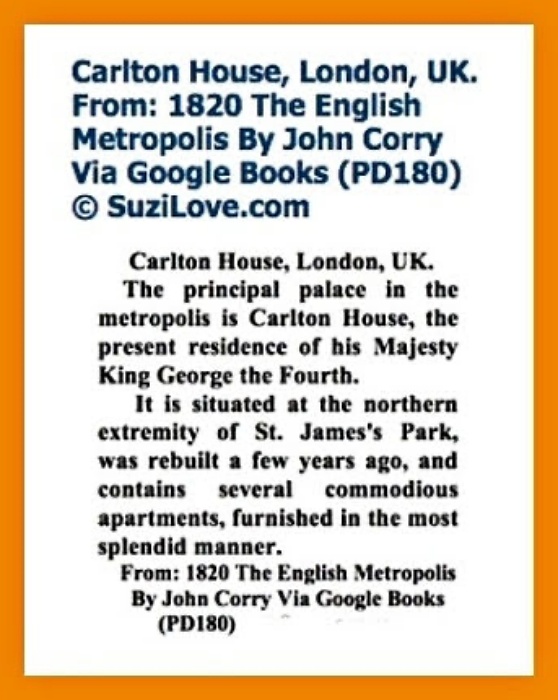
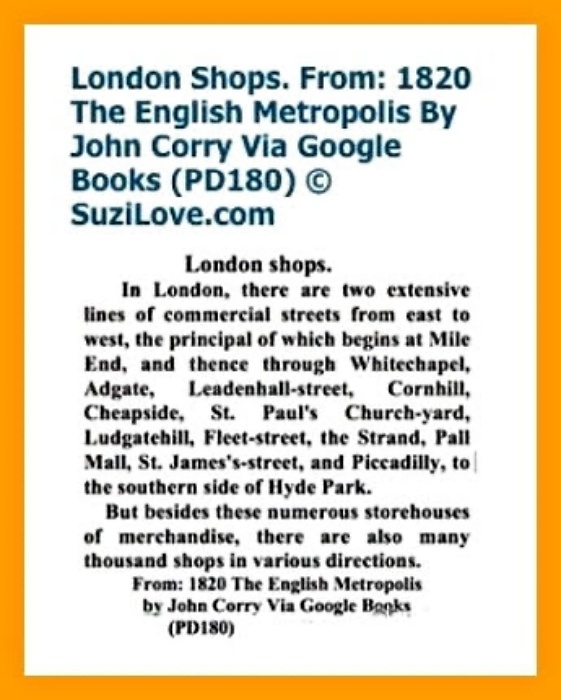
An Overview of Regency London From 1820 The English Metropolis by John Corry via Google Books (PD-180)
1820 London Morality. via The English Metropolis By John Corry. via google books. 1820 11. London Houses. via The English Metropolis By John Corry. via google books. 1820 10 Carlton House. via The English Metropolis By John Corry. via google books. 1820 9. Regency Criminals. via The English Metropolis By John Corry. via google books. 1820 8. Four In Hand Club. via The English Metropolis By John Corry. via google books. 1820 7 London Shops. via The English Metropolis By John Corry. via google books. 1820 6. Sudden Disappearance Of A Man Of Fashion. via The English Metropolis By John Corry. via google books. 1820 5. Moral Corruption. via The English Metropolis By John Corry. via google books. 1820 4. Bond Street. via The English Metropolis By John Corry. via google books. 1820 3. Population Of Regency London. via The English Metropolis By John Corry. via google books. 1820 2. London In 1820. via The English Metropolis By John Corry. via google books. 1820 1. London, the English Metropolis. via The English Metropolis By John Corry. via google books.
Covent Garden is within the London boroughs of Westminster and Camden, and the parliamentary constituencies of Cities of London and Westminster and Holborn and St Pancras. The district is divided by the main thoroughfare of Long Acre, north of which is given over to independent shops centred on Neal’s Yard and Seven Dials, while the south contains the central square with its street performers and most of the elegant buildings, theatres and entertainment facilities, including the Theatre Royal, Drury Lane, and the London Transport Museum.
In 1552, the land was seized by Henry VIII and granted to the Earls of Bedford. The 4th Earl commissioned Inigo Jones to build fine houses to attract wealthy tenants. It was the first modern square in London, with Italian arcades and a flat, open space or piazza with low railings. This layout was copied in other new estates in London.
1555 John Russell, 1st Earl Of Bedford. By a follower of John Bettes. Given land of Covent Garden by Herny VIII after the dissolution of the Monasteries.1650 The piazza of Covent Garden about 1650, as engraved by Wenceslaus Hollar. Courtesy University of Toronto.1721-1789 ca. St. Paul’s Church, Covent Garden, London, U.K. From between two arches of the plaza. Watercolor with grey wash. By Thomas Sandy. Via British Museum, London, UK. britishmuseum.org1800s Early Covent Garden Market, London, U.K.
In 1654, an open-air fruit and vegetable market grew on the south side of the fashionable square but over time the market and the surrounding area fell into disrepute. Taverns, theatres, coffee-houses and brothels opened up, the gentry moved away, and rakes, wits and playwrights moved in.
By the 18th century Covent Garden had become a well-known red-light district, attracting notable prostitutes such as Betty Careless and Jane Douglas. Descriptions of the prostitutes and where to find them were provided by Harris’s List of Covent Garden Ladies, the “essential guide and accessory for any serious gentleman of pleasure”.
Covent Garden’s market was always disorderly, the buildings in bad shape, and overcrowded with stalls, donkeys, carts, and peddlers. The small number of passageways into the piazza were small and with bottle necks of carts moving goods and market sellers fighting for right of way. The markets supplied fruits and vegetables, mostly homegrown but with imported goods increasing. Many sellers missed paying tolls for selling in the piazza or refused to pay them so the owner, the Earl of Bedford, took many people to court for not paying tolls. He realized the markets were in such poor condition that he couldn’t charge sellers until he improved them. In 1830, a new market hall was built with sections dividing the kind of goods sold which did improve things, but the markets remained chaotic. By 1890, people were again complaining about the narrow streets and congestion.
Covent Garden’s flower girls attracted attention by shouting:
“Two bundles a penny, primroses!”
“Sweet violets, penny a bunch!”
In 1851, Henry Mayhew wrote London Labour and the London Poor describing two types of flower girl. The young girls, or waifs, sold flowers to feed the family. The other type of flower girl stayed out late, doubled as prostitutes, and had bad reputations.
In 1913, Herbrand Russell, 11th Duke of Bedford agreed to sell the Covent Garden Estate for £2 million to the MP and land speculator Harry Mallaby-Deeley, who sold his option in 1918 to the Beecham family for £250,000.
1809 View Of the New Covent Garden Theatre, London. From Hart Street, showing the King’s entrance. Watercolor drawn by James Winston. via British Museum. 1811 Bird’s Eye View of Covent Garden Market, London, UK. Main fruit, flower and vegetable market in London in early 19th century. Began here in 1656 with few temporary stalls in back garden of home of Earl of Bedford. Charles II granted market lease and in 1678 bought by Adam Piggot and others who built permanent stalls. By 1811, smelly, dirty, and overcrowded. Engraver J. Bluck. After Augustus Charles Pugin and Thomas Rowlandson published by Ackermann. Via British Museum, London, UK. britishmuseum.org
1827 Covent Garden Market, Westminster, London, U.K. By Frederick James Havell.
In 1830, Charles Fowler’s neo-classical building was erected to cover the market and as the market grew, the prostitutes moved on. The Floral Hall and Charter Market were added and the Jubilee Market in 1904.
1835 Covent Garden Watch House, London, UK. Next to the church of St. Paul’s Church, Covent Garden. Two story white building with ‘Watch House’ painted on its upper floor is shown with a lively street scene in the foreground. via Museum of London.
1852 J.M.W. Turner’s birthplace in Maiden Lane, Covent Garden. Brick terraced house at night with a figure in top hat walking past and two figures with a candlelight in the doorway_Watercolour with body color over graphite. Drawn by John Wykeham Archer.
In 1913,Herbrand Russell, 11th Duke of Bedford agreed to sell the Covent Garden Estate for £2 million to the MP and land speculator Harry Mallaby-Deeley, who sold his option in 1918 to the Beecham family for £250,000. By the end of the 1960s, traffic had become congested until in 1974 the market relocated to the New Covent Garden Market about three miles (5 km) south-west at Nine Elms. In 1980, the central building re-opened as a shopping centre and then became a tourist location with cafes, pubs, small shops, a craft market called the Apple Market, and another market in the Jubilee Hall.
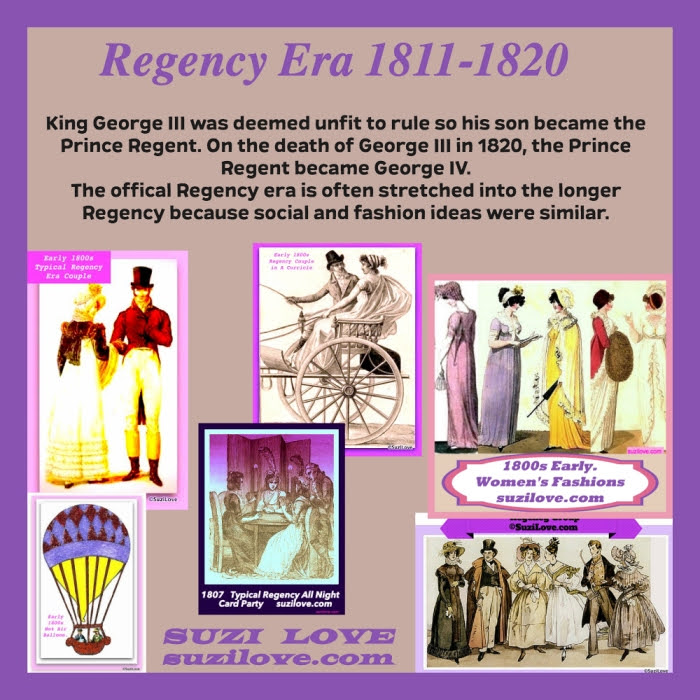
1811-1820 Regency Era Overview. The British Regency was the period from 1811-1820. King George III was deemed mad and unfit to rule so his son became his proxy, the Prince Regent, or Prinny to his close friends. The Prince Regent was often a figure of ridicule in Jane Austen’s times and featured regularly in caricatures, or cartoons, as a fat man who overindulged in everything and spent an exorbitant amount of money.
As a period in Britain’s official history, the Regency lasted less than ten years, although scholars apply the term Regency to a much longer period. It began in 1811, when George Ill was declared mad and the Prince of Wales was appointed Regent. It ended in 1820 when the King finally died and the Regent was crowned George IV. However, the Regency was a period in Britain’s history that had an effect on the social and cultural life for four decades, from the start of the French Revolution in 1789 to the passing of Britain’s Great Reform Act in 1832.
The decision to make George IV the Regent took a lot of political debate. After nearly two and a half months of political wrangling, the British government agreed to grant the title of Prince Regent on George. The Act of Parliament was finally passed by a commission in the House of Lords on February 5th 1811 and the Prince was formally sworn in as Regent at Carlton House the next day. He continued to rule as Regent until 1820 when, on his father’s death, he assumed the title George IV and reigned until his own death in 1830.
During the Regency, royalty and upper class ladies and lords, or the Beau Monde, lived elegant and extravagant lives that also allowed excesses and depravity. Britain was united behind exceptional heroes in long wars against France, but internally divided by class distinction and political agitation. The foundations of a modem industrial nation were laid by engineers, inventors and scientists. while Romantic poets and visionary artists dreamt of escape to earlier times and more ideal worlds. From: Queen’s Gallery, London, U.K. For more on this, take a look at my book Regency Overview. https://books2read.com/suziloveROver
Historic images, historical information, and funny anecdotes give an overview of life in the early 1800s. Information for history readers and writers of the Regency Years, for Jane Austen fans and all history buffs. Pictures help visualize the people and places of the long Regency period. https://books2read.com/suziloveROver Regency Overview Regency Life Series Book 1 by Suzi Love.
The Regency Life Series By Suzi Love depicts the ups and downs of life in the early 1800’s, or Jane Austen’s years, or the Regency Era. Fun pictures, historical information, and funny anecdotes show how people fill their days, where they go and with whom they spend their time. These light-hearted looks at the longer Regency years are an easy to read overview of what people did and wore, and where they worked and played. Plenty of information for history buffs and lots of pictures help readers and writers of historical fiction visualize the last years of the 18th Century until Queen Victoria took the throne.
Regency Era Overview: Images, information and funny anecdotes give an overview of life in Jane Austen’s times or early 1800s. #Regency #JaneAusten #BritishHistory
1809 October A fine cambric or Indian muslin high-gown, with long sleeves and falling collar, ornamented at the feet and around the neck with appliquéd lace or needle work. Deep amber broach or gold filigree buckle, confining the dress at the throat and waist, with bracelets to match. Gold chain and opera glass. The woodland hat of fine plaited straw or chip, with ostrich feather falling on one side. A French cloak of bright purple sarsnet or velvet, lined with amber or rose, and trimmed entirely round with black lace and beading. Parasol, with deep amber awning. Shoes and gloves of buff kid. Fashion Plate via Rudolph Ackermann’s ‘The Repository of Arts’.
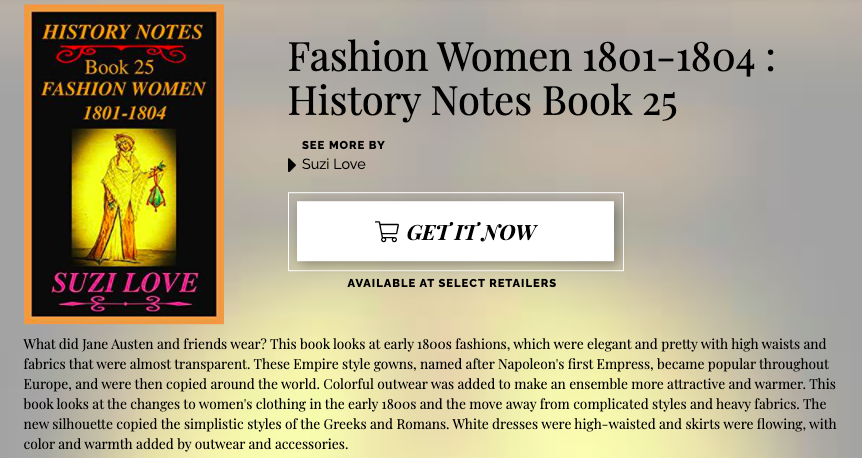
Fashion Women 1805-1809 History Notes Book 26 What did Jane Austen and friends wear? https://books2read.com/SuziLoveFashionWomen1805-1809
“Two nights ago,” Lady Rebecca Jamison said, “the woman we engaged at the Women’s Betterment Society to tally the Stock Exchange ledgers — our friend — was murdered. The killer was still inside Peggy’s house when I arrived. Her slayer stopped at the back door and stared directly at me, memorizing my features.”
Her pronouncement was flat-voiced, deadly calm.
“Thankfully, his immediate concern was escaping with our two accounting books. But when the cache identifies me as the woman who saw their lackey’s face, I am certain they will send him to dispose of me as well. They are peers, titled and wealthy, and cannot risk being exposed as members of an illegal group. If we cannot stop these men, brutes who employ cold-blooded assassins to do their dirty work, I will certainly be the next to die.”
The Duke of Sherwyn’s chilled blood turned to ice.
Embracing Scandal (Scandalous Siblings) by Suzi Love. Lady Rebecca Jamison saves her family from financial ruin by investing in railways, but when a greedy syndicate murders her friend, Becca is forced to beg assistance from Cayle St. Martin, the new Duke of Sherwyn. https://books2read.com/suziloveES
ES_ Embracing Scandal Book 1 Scandalous Siblings Series D2D_ES_ https://books2read.com/suziloveES