1883 Fashion Designs, American. Dresses hats and purses. Harper’s Bazar, New York City.
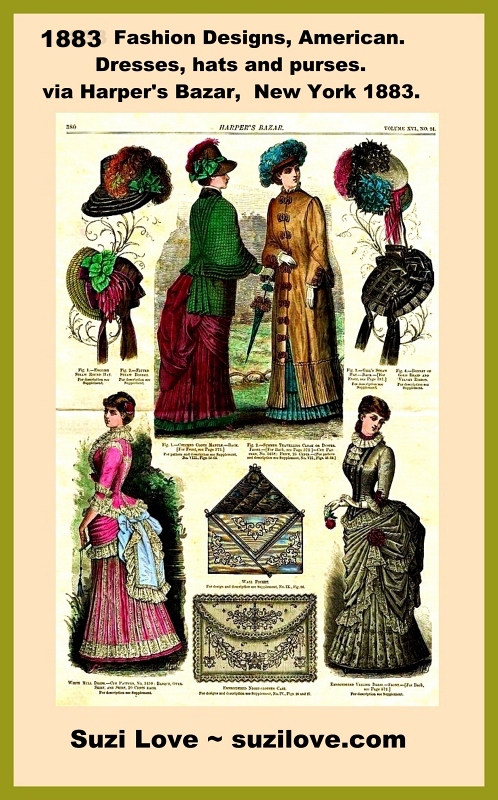


1883 Fashion Designs, American. Dresses hats and purses. Harper’s Bazar, New York City.
1800s A Young Lady Riding and Carriage Driving, England. #Riding #Regency #Victorian #Cartoon From: 1860 Mr. Sponge’s Sporting Tour by Robert Smith Surtees. via Google Books (PD-100)


1804–1805 ca. Evening Dress, French. Narrow white dress of sheer cotton mull, probably from India, and with sheer short sleeves, extra wide neckline, vertical white embroidery which was very fashionable at the time. The cotton fabric was probably imported from India already embroidered with heavy white cotton thread in transparent mull. At the beginning of the nineteenth century, this sort of dress was considered shocking and immodest after the wider hooped dresses of the eighteenth century. This style of dress was worn by most women in Jane Austen’s time, but only the wealthy could afford the best quality mull. Vertical white embroidery was very fashionable in the early 1800s, with the sheer cotton mull probably imported from India already embroidered with this heavy white cotton thread. These daring items of clothing copied the Grecian idea of loosely draped clothing and were the first of many changes to women’s outfits. Heavy fabrics were abandoned, especially in summer, in favor of lighter materials that allowed women to move about easier.
From the museum curator: “On December 24, 1803, Jerome Bonaparte (1784—1860), brother of Napoleon, wed Elizabeth Patterson (1785—1879) of Baltimore. The beautiful and fashionable young American was married in a dress of muslin and lace that, according to a contemporary, “would fit easily into a gentleman’s pocket.” Although originally thought to have been Patterson’s wedding dress, the formal gown illustrated here probably dates from 1804, when this type of vertical white embroidery became fashionable. Napoleon had the marriage annulled in 1805. Jerome was made king of Westphalia in 1807 and he married the princess of Wurttemberg. Elizabeth, banned from France by the emperor, remained in Baltimore with her son, Jerome Napoleon Bonaparte (1805—1870). Metropolitan Museum, New York City, USA.


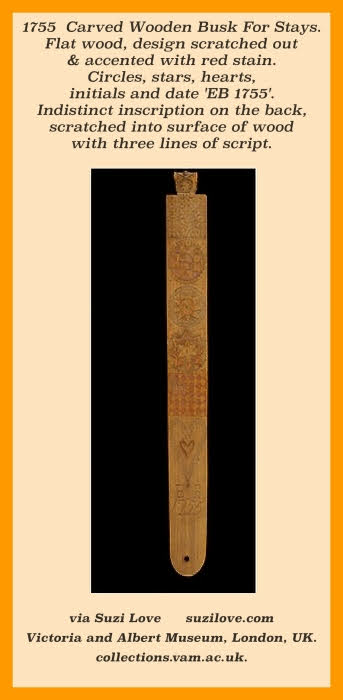
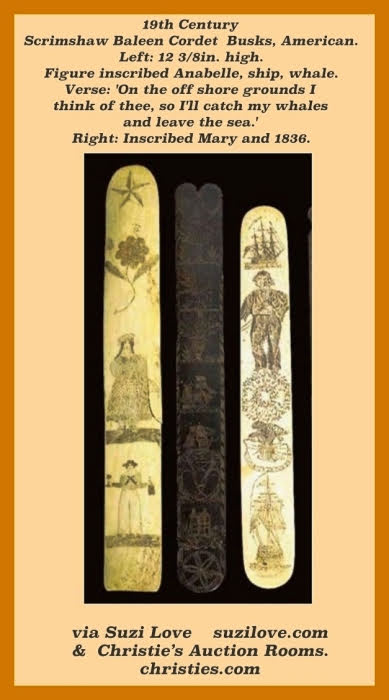
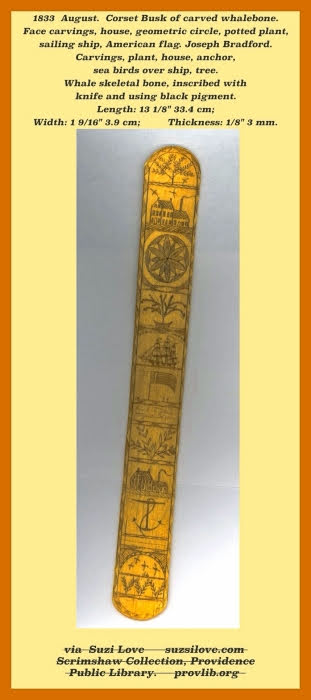
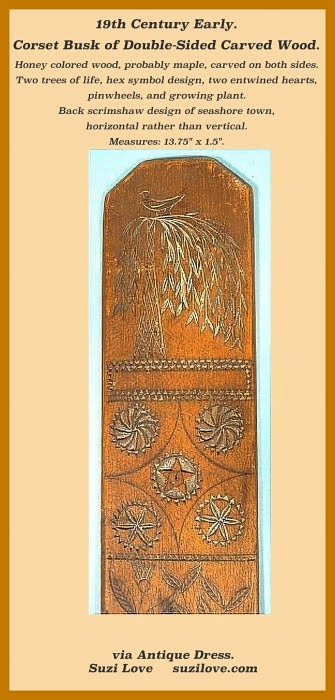
Busks shaped and reinforced the centre front of stays, or corsets. They were made from whalebone, wood, and bone, and were often inscribed with names, dates, and symbols of love because they were positioned close to the heart. The corsets worn in Jane Austen’s later years and by women in Bridgerton times often had busks to stiffen the corset and support the breasts.





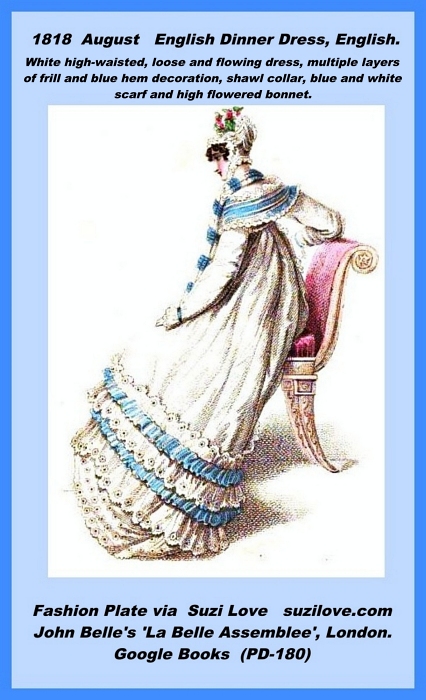
1818 August English dinner Dress. White high-waisted, loose and flowing dress, multiple layers of frill and blue hem decoration, shawl collar, blue and white scarf and high flowered bonnet. Fashion Plate John Belle’s La Belle Assemblée or, Bell’s Court and Fashionable Magazine, London.
1811 Half-Mourning Dress, French. Black dress, high white neck ruffle, black hat with white trim and white shoes. Jane Austen and her family would have worn this type of outfit when mourning a relative or friend. However, as black dresses, black tunics, and black lace shawls were popular throughout the Regency years, it is often hard to decide what was definitely made for mourning and what was simply fashionable wear. Fashion Plate via Journal des Dames et des Modes, or Costume Parisien.
In November, 1810, Princess Amelia, youngest daughter of George III, died. At the end of 1810 full mourning of complete black would have been worn but by the beginning of 1811, half mourning would still have been to respect the loss of a royal family member. Half-mourning allowed touches of silver, grey, mauve and white to be added to a mostly black outfit and would be worn after the period of full mourning was ended, times depending on the relationship to the deceased person. Garments and accessories could either be trimmed with black, jet jewelry worn, black ribbons added, or a layer of black net or gauze added to a dress or hat.
Definition Half or Slight Mourning: Allowed touches of grey and white to be added to full, or deep, mourning ensembles. Some lustre, or shine, was allowed in fabrics and accessories. After a time, mauve or deep purple could also be worn. https://books2read.com/SuziLoveFashion1810-1814

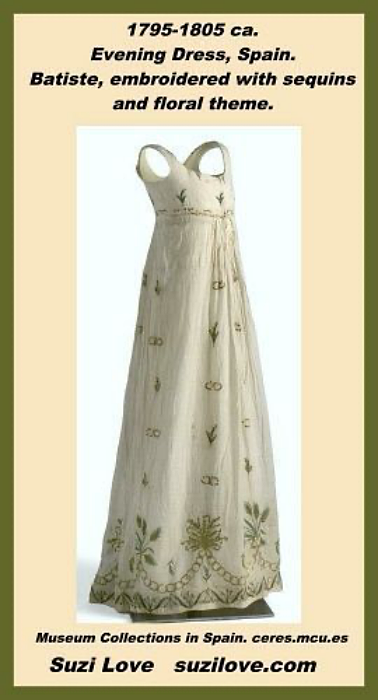
1795-1805 ca. Evening Dress, Spain. Batiste, embroidered with sequins and floral theme. Via Museum Collections in Spain. ceres.mcu.es
The Empire styles at the beginning of the 19th century were made of a soft, lightweight fabric gathered just under the breasts. It featured a low square neckline, and small, short, puffed sleeves with a low shoulder line. Although lawn and batiste were used, muslin was the fabric of choice as it was easy to clean. The thin muslin clung close to the body and emulated styles worn in ancient Greece. Shades of white predominated, with the addition of pale pastel shades worn for day wear.
Definition Batiste: Soft, sheer, cotton or linen fabric in white and delicate colors, used for handkerchiefs, nightwear and neckwear. Probably named for its inventor, Jean Baptiste, of Cambrai.
1812 February Winter Walking Dress, English. Scarlet Merino wool pelisse lined with straw colored sarsnet, trimmed with light colored spotted fur attached with loops of black silk cordon and rich frog tassels, broad fur in front forming a tippet, pointed at back, narrow fur passes from top of sleeves, worn over a white dress, yellow winter hat, gray gloves, and paisley shawl. Fashion Plate via John Belle’s La Belle Assemblee.
Definition Merino Wool: Finest quality wool, originating in Spain. Just before and during the Regency, Merino sheep were exported from Spain into Britain and other parts of Europe. Napoleon supported Merino growth in France. In 1808, after French invaded Spain, King George purchased additional 2000 Merinos for royal flock but Britain too wet for thriving industry. Other countries i.e. Australia, began producing fine quality Merino.
I can picture Jane Austen and her female friends and family wearing a Pelisse, or Walking Dress, Or Redingote, like this to keep them warm when shopping or paying visits to friends. During the Regency Era, out door activities were encouraged and outside clothing needed to be more practical and with thicker fabrics, such as Merino wool. Tunics gave an additional layer to thin dresses and walking dresses, pelisses, Redingotes and half cloaks were worn and accessorized with cashmere shawls and oversized fur muffs.