
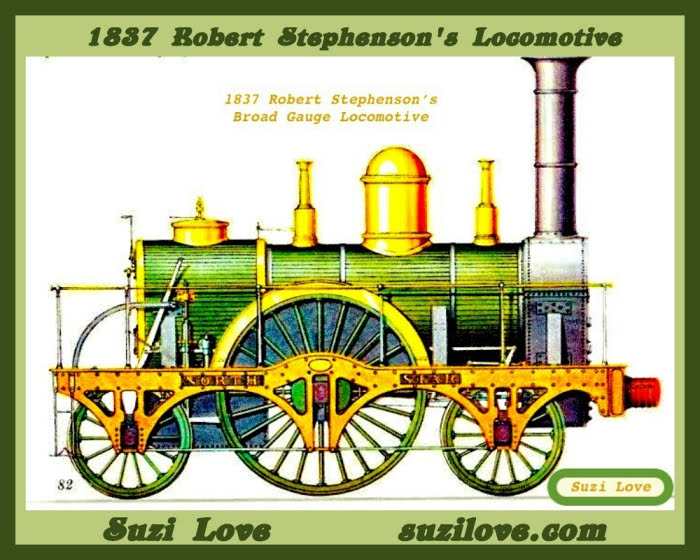
1800s Early Robert Stephenson’s Innovative Steam Locomotives.
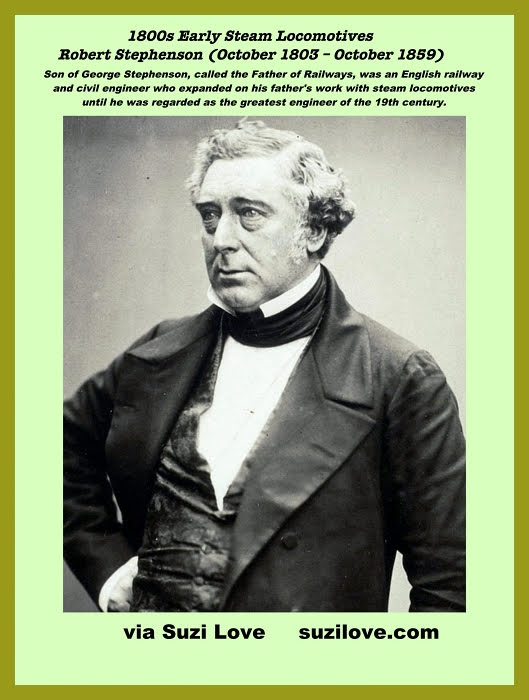
Robert Stephenson (16 October 1803 – 12 October 1859), son of George Stephenson, called the Father of Railways, was an English railway and civil engineer who expanded on his father’s work with locomotives until he was regarded as the greatest engineer of the 19th century. He helped his father survey the Stockton and Darlington Railway line and later assisted in the first surveys of the Liverpool & Manchester Railway.
How did people travel in Bridgerton’s and Jane Austen’s times? Treat yourself to a nonfiction book. History Notes Book 10. Travel and Luggage. books2read.com/SuziLoveTravel
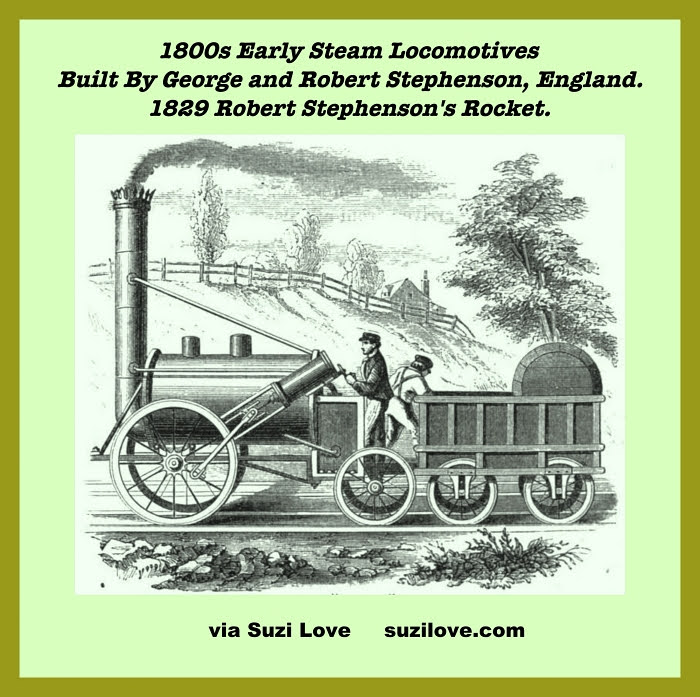
Stephenson’s Rocket was built for and won the Rainhill Trials of the Liverpool and Manchester Railway in October 1829 to show that improved locomotives would be more efficient than stationary steam engines. It was built at the Forth Street Works of Robert Stephenson’s company in Newcastle upon Tyne and was the most advanced locomotive of its day. The Rocket was based on earlier designs by George and Robert Stephenson, including the Killingworth locomotive Blücher in 1814, the Locomotion in 1825 and the Lancashire Witch in 1828.
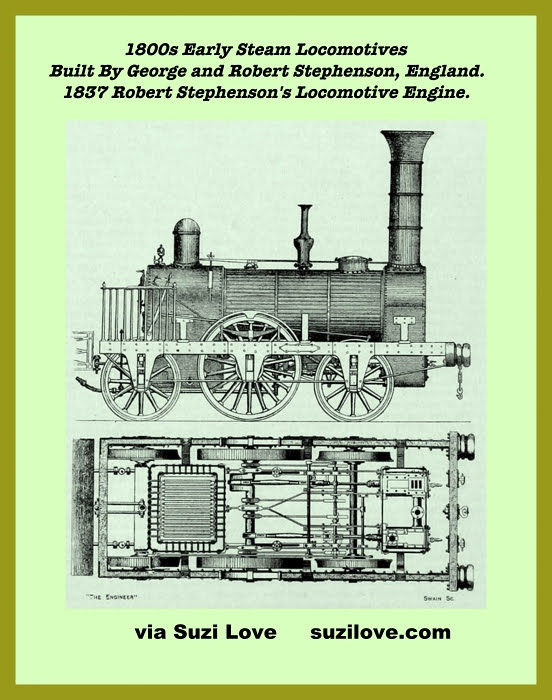
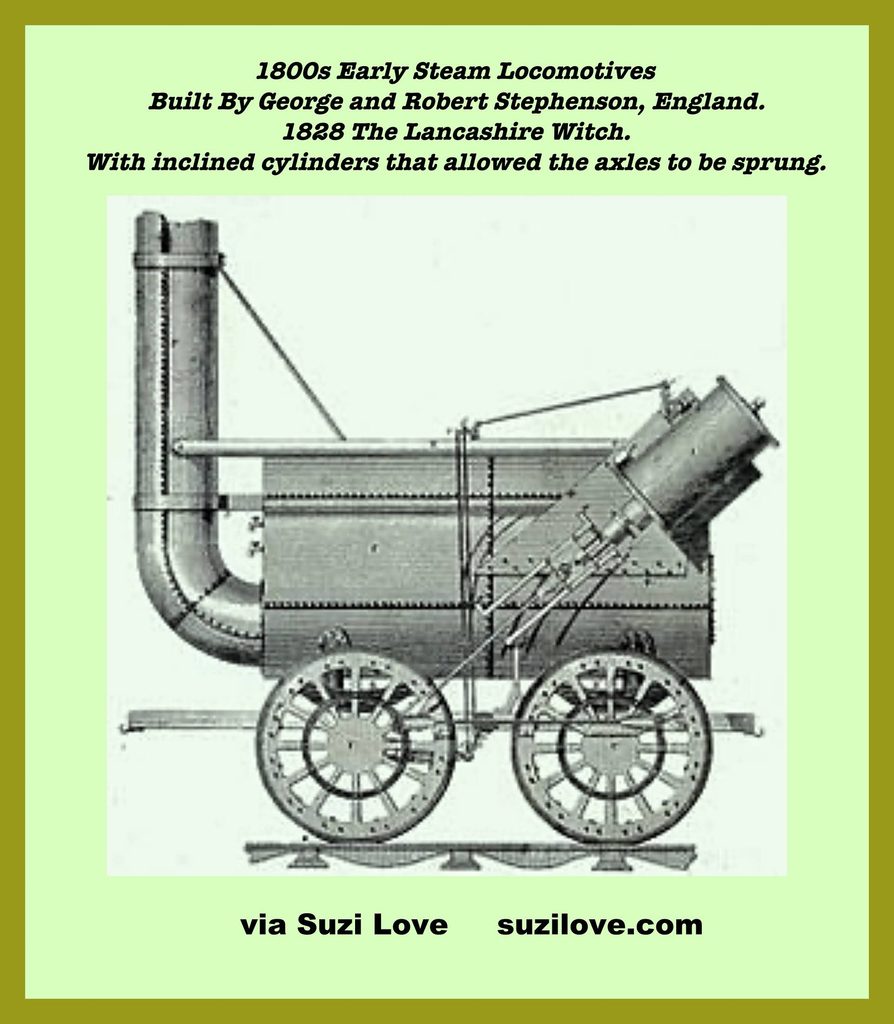
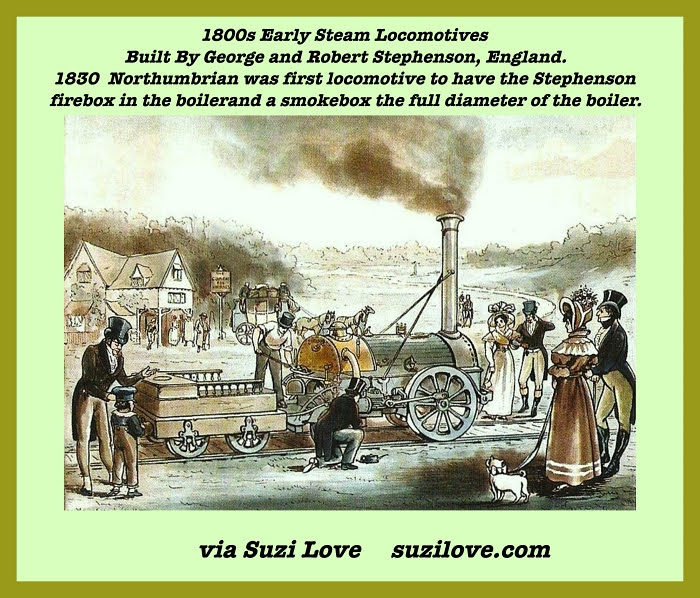
Timeline for Robert Stephenson and his steam locomotives.
- 1821: Robert Stephenson assists his father George on surveying the Stockton and Darlington Railway.
- 1822: Robert assists with the first survey of the Liverpool & Manchester Railway.
- 1823: Robert becomes managing partner of locomotive builders Robert Stephenson & Co in Newcastle, the first locomotive company in the world.
- 1825: September – Stockton & Darlington Railway opens using locomotives from Robert Stephenson & Co.
- 1827: Robert assists his father George with construction of the Liverpool & Manchester Railway.
- 1829: Robert Stephenson & Co’s locomotive Rocket wins the Rainhill Trials.
- 1830: Robert appointed to survey a line between London and Birmingham.
- 1833: Robert appointed chief engineer of The London & Birmingham Railway.
- 1838: The London & Birmingham Railway is opened with Robert’s tunnels at Kilsby and Primrose Hill being major civil engineering works.

