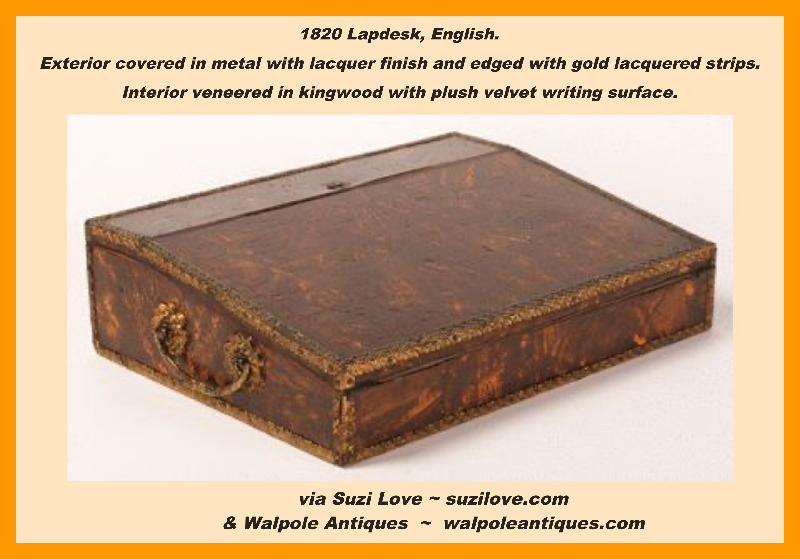
18th Century Early. Silk, Leather, and Linen Mules, European. Embroidered in the Florentine Style, a type of flame stitch canvas work with varied stitch lengths often in subdued tones. via Metropolitan Museum, NYC, U.S.A.



I'm an Australian author of contemporary and historical romances, plus history non-fiction. My books range from sexy to erotic, late 1700s to the mid 1800s, and with a dash of Australia thrown into the mix. My heroes and heroines challenge tradition and my stories often expose the seamier levels of life. I now live in a sunny part of Australia after spending many years in developing countries in the South Pacific. My greatest loves are traveling, anywhere and everywhere, meeting crazy characters, and visiting the Australian outback. I hope my books bring history alive and you have fun adventuring with my roguish heroes and feisty heroines.
18th Century Early. Silk, Leather, and Linen Mules, European. Embroidered in the Florentine Style, a type of flame stitch canvas work with varied stitch lengths often in subdued tones. via Metropolitan Museum, NYC, U.S.A.
1809 Wedgwood and Byerley showrooms for Wedgewood china, York Street, London, UK. Plate via Rudolph Ackermann’s Repository of Arts. The premises of master potter Josiah Wedgwood in York Street, St James’ Square, London, U.K. Wedgwood china was known for its high quality, beautiful glazes and Wedgwood trademark printed on the back of each item. The London show-room was managed by Thomas Byerley, who also held a quarter share of the business. From 1790 to 1810 the firm was known as Wedgwood and Byerley.


After the French Revolution, the fussy styles previously affordable only by the very wealthy were replaced with ideas of simplicity in dress, behavior, and decorating. The neoclassic style was adopted and carried through the Napoleonic War years, partly because of Napoleon Bonaparte’s love of anything Greco-Roman. The Empire silhouette copied the chiton worn by the Greeks and Romans. The chiton was a tubular garment draped from the shoulders and sometimes belted beneath the bust and this style of garment was completely different to the rectangular panniered skirts of the 18th century.
1802 Mother and Child, French. Mother wears a long green cape over a loose and flowing white dress. The child wears a similarly flowing pink dress. Both wear fitted hats. Fashion Plate via Journal des Modes et des Dames, or Costume Parisienne. suzilove.com
The Empire style of clothing began as children’s wear made from fine white cotton. Women adopted the same fabrics in England and turned them into light and airy tubular dressed with skirts gathered under the bust and often with more fullness at the back to allow women to walk and move freely.
1807 Empire style, or high-waisted, white walking dress, French. Worn with a red draping shawl and long white gloves. Fashion Plate via Journal des Modes et des Dames, or Costume Parisienne. suzilove.com
Empire style dresses were high waisted and were worn almost exclusively by women from 1800 until around 1820.
In the 1820’s, waists began to drop from under the bust and skirts went from tubular to bell shaped by flattening the front and adding fullness at the centre back.
By the 1830s, waists were almost back down to their natural waistline and they stayed at a woman’s natural waist as skirts widened even more until they became the conical hoop skirts of the later 19th century.
During the Empire years in France, fine Indian muslin was manufactured and embroidered in India and then exported to Europe and America. French women wore the finest and most sheer cottons and dresses became more an more daring as bodices were cut lower and lower and gowns became transparent.
1805-1815 ca. Three Women’s Empire Style Dresses. landeskunde-online.de suzilove.com
Naturally, English women copied this French trend. Some supposedly ‘damped down’ the skirts of their gowns with water to make them even more see through, and therefor even more enticing to the gentlemen. As the Prince Regent, George IV, was a known connoisseur of women, the boldest of ladies wanted to catch his eye, and perhaps become of one of his mistresses.
1805-1810 ca. Lemon Dress, Regency style, Light and Floaty Dress. via Manchester Galleries manchestergalleries.org suzilove.com
This trend to sheer fabrics, which would have been freezing in winter in England or Europe, also led to the creation of other fashion items that women needed to stay warm.
Long draping shawls were worn over these sheer Empire style gowns, as were Spencers and Pelisses, or Redingotes. Tunics were often added to give gowns an appearance of decency, especially from the back.
1802 White Dress, French. Long burgundy shawl, white lace cap and yellow gloves. Fashion Plate via Journal des Dames et des Modes, or Costume Parisien.https://books2read.com/SuziLoveFashionWomen1801-1804
The type of dress worn across Europe in the early 1800s. This sort of high-waisted dress would have been worn by Jane Austen and her contemporaries in England. The Empire waist gown defined women’s fashion during the Regency Era. ‘Empire’ is the name given in France to the period when Napoleon built his French Empire. High-waisted, loose gowns were adopted by the aristocracy as a symbol of turning away from the fussy, elaborate and expensive clothing worn in the 1700s.

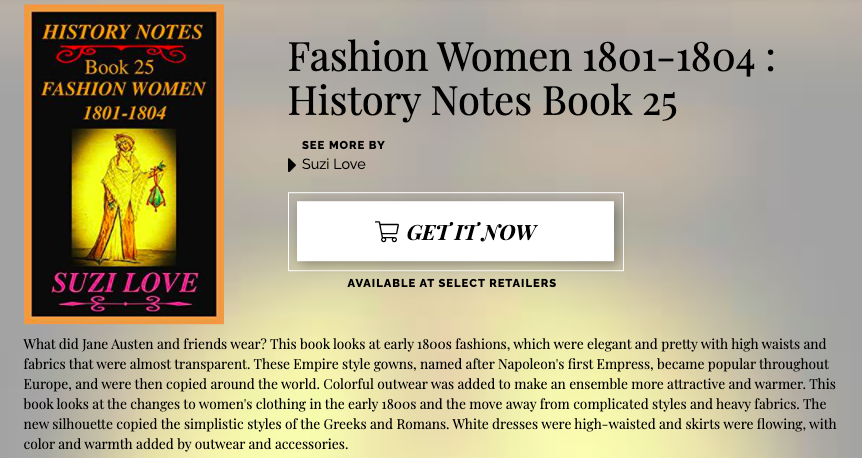
1816 Ball Dress, French, as worn by the Bridgertons and Jane Austen. White short length dancing dress, multiple frills above hem, black bodice with a back bow, hair braided and pinned into an upswept evening style. Fashion Plate via Journal des Dames et des Modes, or Costume Parisien.
Women’s clothing came in the late 1810s came in a wide range of styles to suit every season and occasion. When attending assemblies or balls, ladies in Jane Austen’s times women wore Empire style dresses which were usually of light fabric and floaty in style and often of a shorter length suitable for dancing.


1809 Women’s Fashions: Dresses, Shawls, Hats and Jewelry from various fashion magazines. Typical of the outfits worn by Jane Austen and her contemporaries for daytime and evening activities. An Empire style, or high-waisted white cotton dress worn under a Spencer or short jacket, a Redingote, or coat, for warmth and with pretty hats, shawls and shoes.


Custom House, London. From 1825 Views Of London. The Custom-House of London appears to much advantage in the accompanying view. Flanked by the little navy of Billingsgate, with a glimpse of the dome of St. Paul’s, the Monument, and London-Bridge in the distance, it stands forward in majestic composure on the edge of the Thames. The first stone of this building was laid on the Twenty-fifth of October, 1813, the fifty-third Anniversary of his late Majesty’s Accession, and it was opened for business on the twelfth of May, 1817; the old Custom-House in the interim (February, 1814) having been consumed by fire. It is built after a plan by David Laing, Esq. and cost in the erection 167,000 pound besides 29,300 pound paid for the property on which it stands, after deducting 12,440 pounds received for old materials. The length of the front here presented, which is executed in Portland stone, is 484 feet, 101 inches. The architectural beauties of the Custom House consist in an appropriate simplicity of style, combined with a classical adherence, throughout, to the rules of just proportion. As the Official Registry of the exports and imports of the State, where the complicated concerns of the mercantile interests of this vast Empire are reduced under a few general heads, it imparts a profound moral attraction to the scene.
1825 Custom House, London. From 1825 Views Of London. #London #BritishHistory #England https://books2read.com/suziloveROver Share on X
1810 Cotton And Silk Dress With An Embroidered Hem, American. #Regency #Fashion
1810 Dress, American. Cotton and silk Empire style, high-waisted, dress. Short puffed sleeves and with a two layer frilled and embroidered hem.
This dress shows the typical Empire silhouette of a tubular garment draped from the shoulders and sometimes belted, or tied with a ribbon, beneath the bust.
The Empire period fell between the 18th Century and the rectangular shaped panniered skirts and the 19th Century and conical hoop skirts.
From the Metropolitan Museum: “The neoclassic style was adopted in all forms of decoration after the French Revolution and was upheld during the Napoleonic Wars partly due to Napoleon Bonaparte’s (1769-1821) alliance with Greco-Roman principles.
In fashion, the style began as children’s wear made from fine white cotton, but was adopted by women in the form of a tubular dress with skirts that were gathered under the bust with some fullness over a pad at the back.
As the style progressed the skirts began to flatten at the front and solely gather from the bodice at the center back. The style persisted until the 1820s when the waist slowly lowered and the skirts became more bell shaped.”

1810 Dress, American. Cotton and silk with a two layer frilled and embroidered hem. Hem Fabric View. via Metropolitan Museum New York City, U.S.A. metmuseum.org suzilove.com

1800 White Muslin Dress, European. Empire style, high-waisted dress of light weight cotton, with softly falling gathered long skirt and with a train. via Los Angeles County Museum of Art, California, USA. collections.lacma.org
The type of dress worn across Europe in the early 1800s. This sort of high-waisted dress would have been worn by Jane Austen and her contemporaries in England. The Empire waist gown defined women’s fashion during the Regency Era. ‘Empire’ is the name given in France to the period when Napoleon built his French Empire. High-waisted, loose gowns were adopted by the aristocracy as a symbol of turning away from the fussy, elaborate and expensive clothing worn in the 1700s.


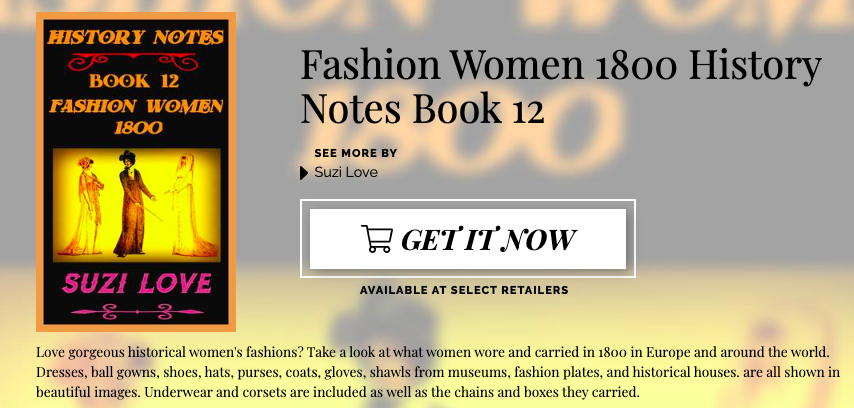

1820 Lapdesk, English. Exterior covered in metal with a lacquer finish and edged with stamped and gold lacquered brass strips. Interior veneered in kingwood with plush velvet writing surface. walpoleantiques.com