I'm an Australian author of contemporary and historical romances, plus history non-fiction.
My books range from sexy to erotic, late 1700s to the mid 1800s, and with a dash of Australia thrown into the mix. My heroes and heroines challenge tradition and my stories often expose the seamier levels of life.
I now live in a sunny part of Australia after spending many years in developing countries in the South Pacific. My greatest loves are traveling, anywhere and everywhere, meeting crazy characters, and visiting the Australian outback.
I hope my books bring history alive and you have fun adventuring with my roguish heroes and feisty heroines.
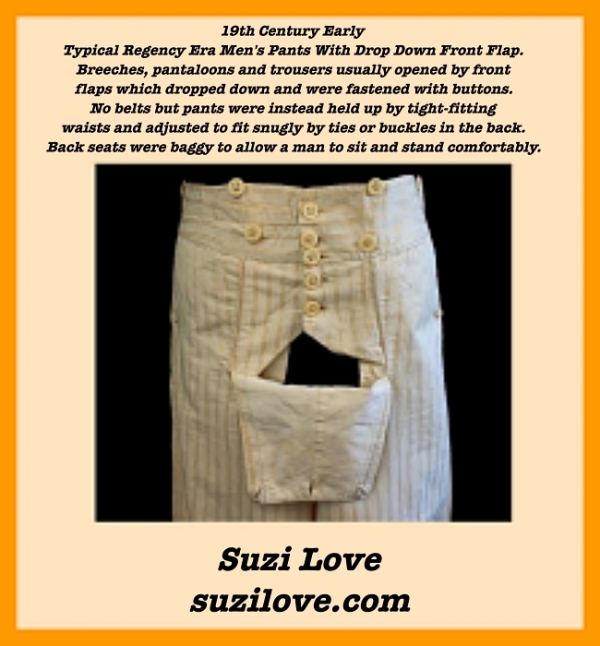
19th Century Early Typical Regency Era Men’s Pants With Drop Down Front Flap. Breeches, pantaloons and trousers usually opened by front flaps which dropped down and were fastened with buttons. No belts but pants were instead held up by tight-fitting waists and adjusted to fit snugly by ties or buckles in the back. Back seats were baggy to allow a man to sit and stand comfortably. Typical of a gentleman’s pants worn during the early 1800s, or the Regency Era, or Jane Austen’s times. They have a front flap, or fall, a back waist tie and buttons and ties to secure the breeches below the knee.
1806 Short Sleeved White Muslin Dress With Train, French. Bodice and sleeves have ribbon decoration, evening flowered headdress, half parure of necklace and ear bobs, and gorgeous Indian hand loomed green shawl. Fashion Plate via Journal des Dames et des Modes, or Costume Parisien. https://books2read.com/SuziLoveFashionWomen1805-1809
Definition Shawls: The shawl started off in India as a fine wool garment for men that could be worn as a scarf, turban or as a mantle: the word comes from the Persian shäl. Originally imported from the East, European Kashmir shawls were made first in Norwich and Edinburgh in Britain in the late 18th century. Shawls were an essential item in the early 1800s to cover the thin gowns women wore. They were made of muslin, gauze, silk, wool, and velvet, though cashmere shawls were the softest and most prized.
Definition Jewelry – Parure: Matched set of jewelry, including a necklace, bracelet, earrings, pin etc. Half Parure had no headpiece.
Reticule Or Bag: Purse, often with a drawstring to pull closed and usually made of cloth or covered cardboard and often decorated with beading or embroidery. Carried by a woman during the Regency period to carry all their daily necessities. in the place of pockets.
Spencer: Short jacket, cropped at the waist, worn over a dress, or gown. Delicate and regency dresses provided so little protection from the cold, so over garments were essential for warmth, modesty and good health.
Pelisse Or redingote Or Walking Dress: Coat worn over clothing of both sexes for warmth and protection from the elements.
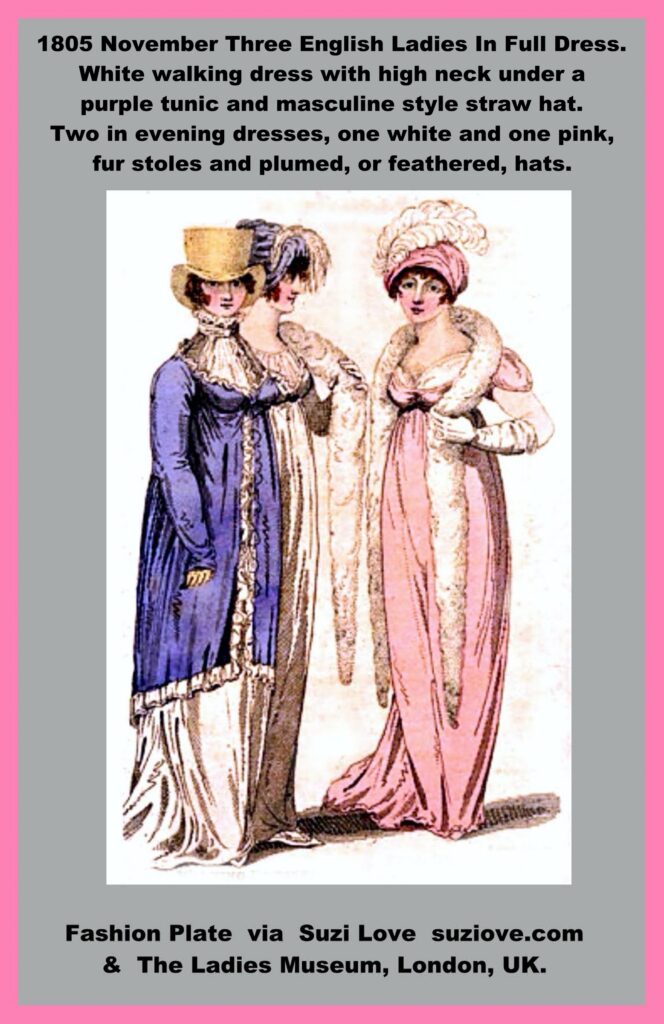
1805 November Three English Ladies In Full Dress. White walking dress with high neck under a purple tunic and masculine style straw hat. Two in evening dresses, one white and one pink, fur stoles and plumed, or feathered, hats. via Vernon and Hood Poultry at The Lady’s Monthly Museum, London, U.K. These gorgeous dresses show the transition from the round dresses of the late 1700s to the Empire style dresses with the waistline high under the bust. Small trains were still worn in the early 1800s, but much more manageable than the larger and more elaborate trains of the late 1700s. Jane Austen and her friends would have worn dresses like this to their assemblies and evening events.
Definition Accessory: An accessory completes and complements an outfit. Two groups – 1. Those worn e.g. bonnets, caps and hats, boots and shoes, cravats and ties, gloves, mittens and muffs, jewelry, scarves and shawls, socks and stockings. 2. Those carried e.g. bags, fans, and parasols.
Definition Full Dress: The most formal and complete ensemble, worn for day or night events, and includes the fullest range of accessories that could be added to the outfit to make the most impressive display.
Fashion Women 1805-1809 History Notes Book 26
What did Jane Austen and friends wear? This book looks at early 1800s fashions, which were elegant and pretty with high waists and fabrics that were almost transparent. These Empire style gowns, named after Napoleon’s first Empress, became popular throughout Europe, and were then copied around the world. Colorful outwear was added to make an ensemble more attractive and warmer.
https://books2read.com/SuziLoveFashionWomen1805-1809
19th Century Inkstand, English. Ormolu and tortoiseshell. The type of inkstand that households would have in Bridgerton’s and Jane Austen’s times for writing letters and keeping track of estate matters. Curved, recessed top, two square inkwells of faceted cut glass with round necks and ormolu lids. via 1st Dibs Auctions ~ 1stdibs.com
HN_13_D2D_WritingTools Book 13 What did the lady of the house use to pen notes? What sat on the desk of the man of the house when managing his accounts? #History #Nonfiction #travel books2read.com/SuziLoveWritingTools
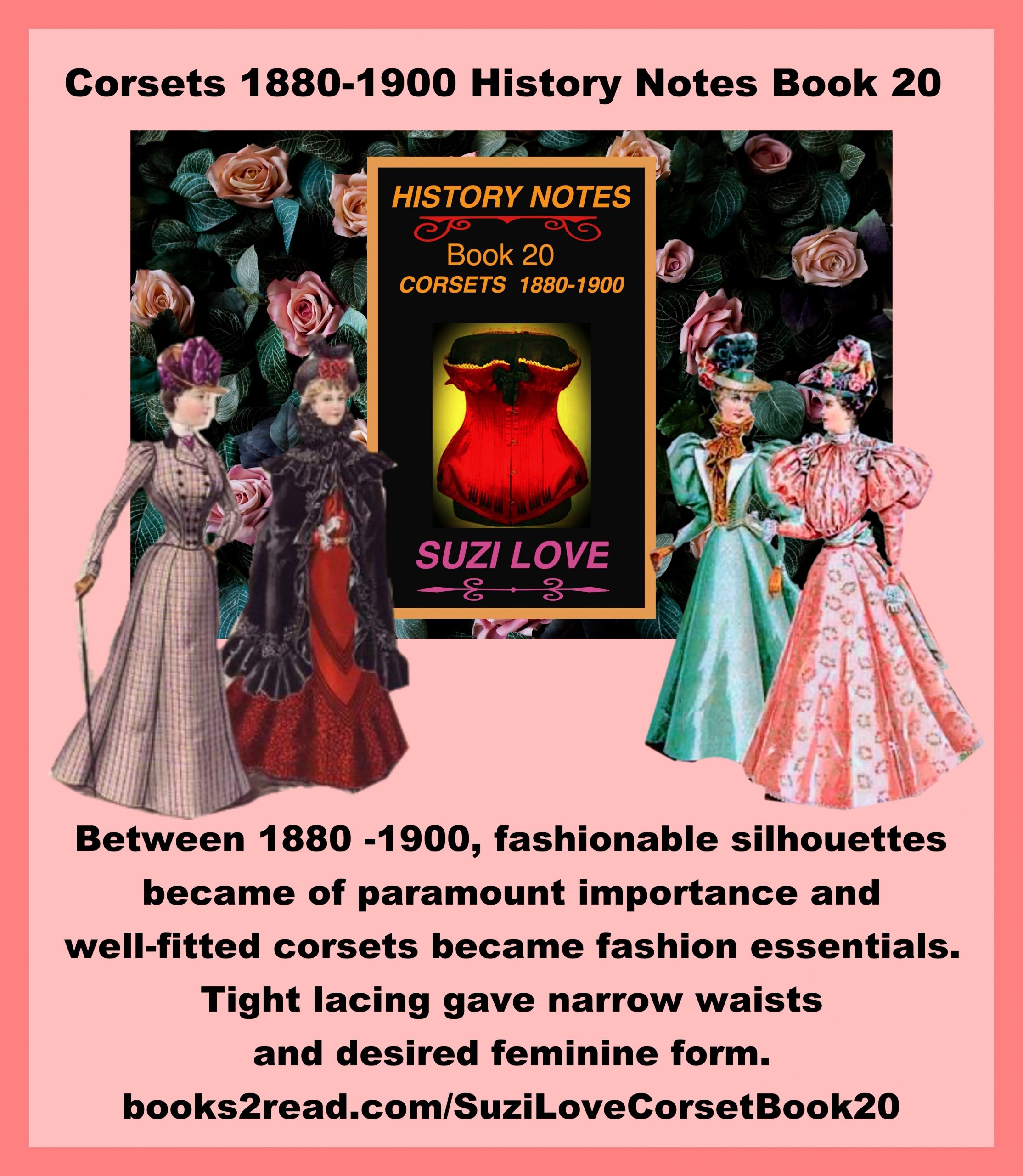
Corsets 1880-1900 History Notes Book 20. This book shows how a fashionable silhouette became of paramount importance and how a well-fitted corset became a fashion essential. As well as a decorative fashion item, tight lacing gave a narrow waist and the desired feminine form under clothing. https://books2read.com/SuziLoveCorsetBook20
1810 ca. Pineapple Dress, French. High-waisted, Empire style dress with embroidered pineapple motifs, short wide neckline, puffed sleeves and long train. via Palais Galliera, Musée de la Mode de la Ville de Paris.
During the 1600s and 1700s, pineapples were hard to keep fresh during long sea voyages from warm climates of the Carribean etc. In the early 1800s, the rich in Europe put pineapples in the shelter of glass houses in to protect them from England’s changeable weather so pineapples became an expensive and exotic delight that few could afford. But symbols of pineapples sprang up everywhere, in sculptures, architecture and in fashion. In Jane Austen and Bridgerton years, it was fashionable to make and carry pineapple shaped reticules, or bags.
1819 Pink Redingote, French. Also called a Walking Dress or Pelisse in England. Vertical front has pink satin bows, high white collar, matching pink satin hat and pink slippers. Short puffed sleeves over long straight, as was the fashion in 1819 across Europe. The type of outfit young Regency Era ladies would have worn if they were out shopping on Bond Street, walking in a park, or taking a carriage ride through Hyde Park. Fashion Plate via Journal des Dames et des Modes, or Costume Parisien. https://books2read.com/SuziLoveFashionWomen1815-1819
Definition Redingote Or Pelisse Or Walking Dress Or Coat: French word developed from English words, riding coat. Long fitted outdoor coat worn over other garments for warmth. Often left open at the front to show off the dress underneath. Sometimes cut away in front. Originally made with several capes and trimmed with large buttons. French fashion plates call these coats Redingotes and they are designed for women, men and children. English fashion plates call them a Pelisse, a walking dress, Promenade dress, or Carriage dress.
1813 The Theatre. From Poetical Sketches of Scarborough By Thomas Rowlandson. Aquatint was added by John Bluck and Joseph Stadler. The sketches by Green were made as souvenirs and not intended for publication. Via Wikimedia Commons commons.wikimedia.org (PD-ART)