I'm an Australian author of contemporary and historical romances, plus history non-fiction.
My books range from sexy to erotic, late 1700s to the mid 1800s, and with a dash of Australia thrown into the mix. My heroes and heroines challenge tradition and my stories often expose the seamier levels of life.
I now live in a sunny part of Australia after spending many years in developing countries in the South Pacific. My greatest loves are traveling, anywhere and everywhere, meeting crazy characters, and visiting the Australian outback.
I hope my books bring history alive and you have fun adventuring with my roguish heroes and feisty heroines.
1820 ca. Silk Spencer, British. Made of silk and willow. Short length, long sleeves, extensive decoration on shoulders, sleeves and wrists. Military style braiding on the spencer in support of all the soldiers fighting wars across the world. The sort of jacket worn by fashionable Regency ladies over their light and flowing Empire dresses. Credit Line:Catharine Breyer Van Bomel Foundation Fund, 1987 via Metropolitan Museum New York City, U.S.A. metmuseum.org
Definition Spencer: Short jackets cut to match the high waistlines of Empire dresses. They often copied military styling, such as braiding, shoulder decoration, buttons and loop fasteners, and wrist adornments. They were generally of complex construction, often with a diamond shaped piece in the back. Said to have originated in an accident to Lord Spencer while hunting when his coat tails were torn off and he wore it as a short jacket.
1820 ca. Spencer, British. Silk and willow. Front View.1820 ca. Spencer, British. Silk and willow. Back View. 1820 ca. Spencer, British. Silk and willow. Sleeve View. 1820 ca. Spencer, British. Silk and willow. Sleeve Decoration View. 1820 ca. Spencer, British. Silk and willow. Braiding View. 1820 ca. Spencer, British. Silk and willow. Wrist View.
1820 ca. Military Style Silk Spencer With Braiding In the Style of the Bridgertons and Jane Austen. #Bridgerton #JaneAusten #RegencyFashion #BritishHistory books2read.com/suziloveSpencers
HN_4_Spencers, Or Jackets. #Regency #Georgian #Victorian #Fashion History Notes Book 4 By Suzi Love.
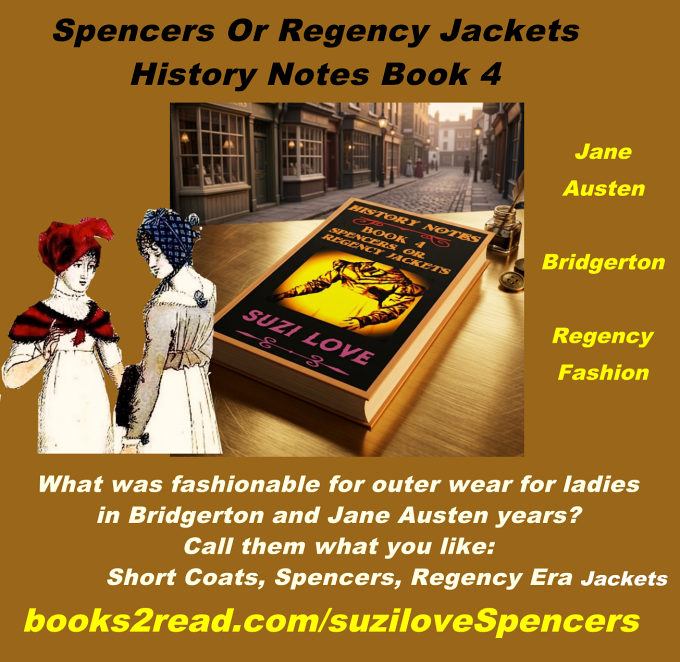
Spencers Or Regency Jackets By Suzi Love. History Notes Book 4. What was fashionable for outer wear in past centuries? Call them what you like: Spencers, short jackets, or Regency jackets were very popular. Take a look at the jackets being worn by women in the early 1800s or the times of Jane Austen. books2read.com/suziloveSpencers
Definition: Spencer – Short, bodice hugging, usually long sleeved, outer jacket. For warmth and for fashion.
Definition Caroline Spencer: Worn during the Directoire and First Empire (1790-1815 C.E.). Spencer with pelerine cape that was made of white kerseymere and trimmed with light blue satin cut on bias.
Spencers were short jackets cut to match the high waistlines of Empire dresses. They often copied military styling, such as braiding, shoulder decoration, buttons and loop fasteners, and wrist adornments. They were generally of complex construction, often with a diamond shaped piece in the back.
HN_4_Spencers, Or Jackets. #Regency #Georgian #Victorian #Fashion History Notes Book 4 By Suzi Love.
1800 Young Dandy’s Morning Outfit, French. Brown, doublebreated, cutaway coat, striped trousers tucked into high black boots with tassels, gloves, small jaunty hat and a walking stick. Fashion Plate via Journal des Dames et des Modes, or Costume Parisien.
Dandy: The author of The Hermit in London, a series of sketches published in 1819—1820 observed: ‘A distinguished Exquisite is padded all over to-day; and all the other foplings are, on the morrow, mere walking pin-cushions. A fat prince, or a fat dandy, requires confinement in his limbs; and all his subjects are immediately restrained within the same limits. One day, the back is to be as broad as an Irish chairman’s, and the shoulders to be bolstered up to imitate a hod-man; and the next, the shoulders are to be flat, and a man is to be pinched in and laced up until he resembles an earwig. All these are Master Snip’s maneuvers, who continues to make his bill equally long, whether the spencer or the box-coat be in vogue.
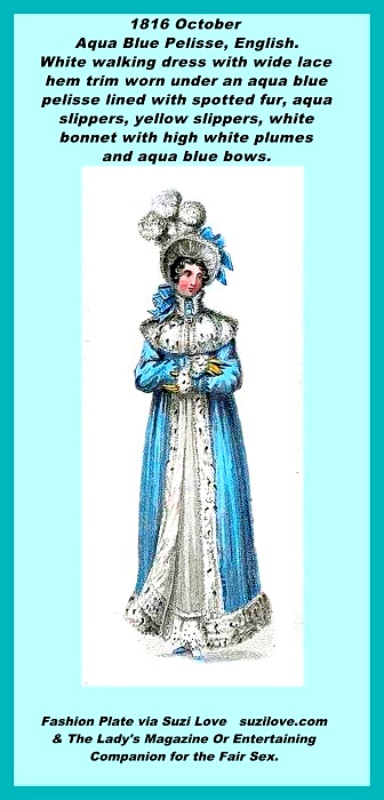
1816 October. Pelisse, English. White walking dress with wide lace hem trim worn under an aqua blue pelisse lined with spotted fur, aqua slippers, yellow slippers, white bonnet with high white plumes and aqua blue bows. Fashion Plate via Lady’s Magazine.
During the early 1800s, dress fabrics and dresses were thin, sometimes almost transparent. These lightweight white cotton dresses were fashionable in Jane Austen’s times, but they were certainly not warm when a lady was out walking or when riding in a carriage. Numerous outer layers could be added for warmth and to brighten and personalize an outfit. These might be an overdress, pelisse or redingote, hat, shawl, gloves, or large fur muff.
A typical outdoor outfit worn by the Bridgerton family, or Jane Austen and her contemporaries, when going outside consisted of an Empire style, or high-waisted, white cotton dress worn under a Pelisse, or Redingote, or coat, for warmth and with an added layer with the pretty shawl. Hats were made to match gowns and cloaks and fashionable women spent an extraordinary amount of time coordinating complete ensembles which included reticules or bags, shoes, shawls, gloves, hats, parasols, and fans. Typical Empire style dresses had low necklines and with skirts that started directly under the bust and flowed into the classical relaxed wide styles of Greece and Rome. These were worn most days and cotton, silk or taffeta were the popular fabrics.
Definition Redingote Or Pelisse Or Walking Dress Or Coat: French word developed from English words, riding coat. Long fitted outdoor coat worn over other garments for warmth. Originally made with several capes and trimmed with large buttons. For women, the coat was often cut away in the front or left open to show off the dress underneath. French fashion plates call these coats Redingotes and they were worn by men, women, and children. English fashion plates call the coats a Pelisse, a walking dress, Promenade dress, or Carriage dress.
1816 October. Pelisse, English. White walking dress with wide lace hem trim worn under an aqua blue pelisse lined with spotted fur, aqua slippers, yellow slippers, white bonnet with high white plumes and aqua blue bows. Fashion Plate via Lady’s Magazine.
1810 ca. Muslin, or Cotton, Bodiced Petticoat With Sleeves, British.The sort of petticoat Jane Austen wore beneath her dresses, for both modesty and warmth. via Killerton House. National Trust, U.K. nationaltrustcollections.org.uk
In Jane Austen’s years of the early nineteenth century, women often wore light-weight dresses under which was worn a range of underclothing to stop gowns appearing transparent and sticking to a lady’s body. To preserve modesty, underclothing included a chemise next to the skin, then a corset, and then petticoats to give shape to a dress and to keep it away from her body.
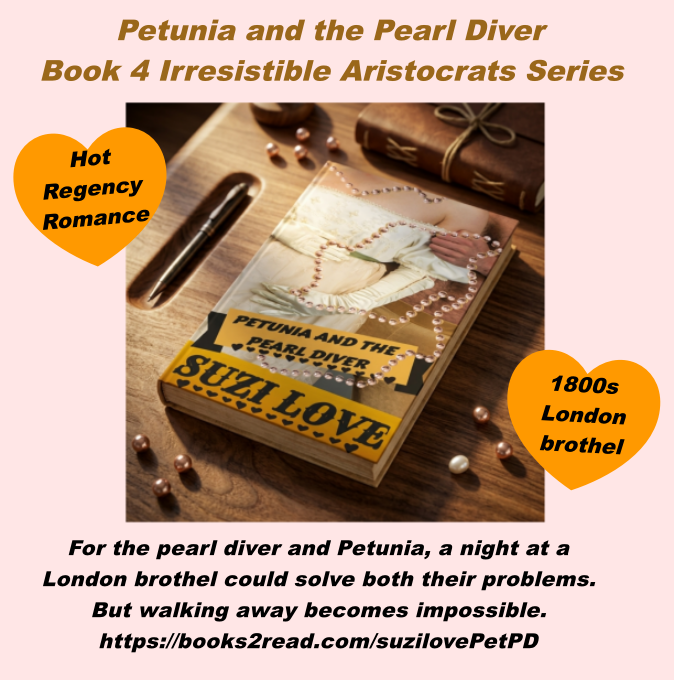
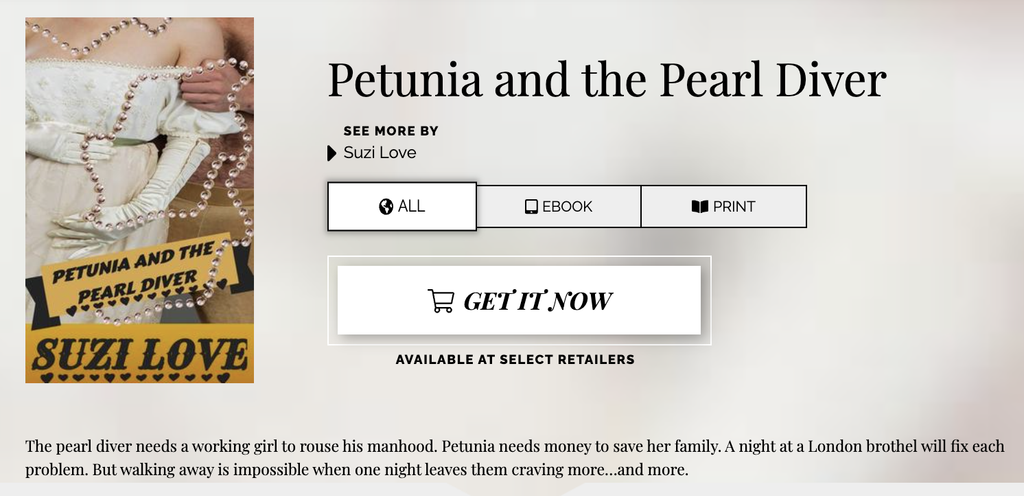
Petunia and the Pearl Diver: A hot Regency romance. Petunia needs money to save her aristocratic family. The pearl diver needs a woman to save him, body and soul. Their night together at a London brothel could solve both problems. But can their relationship survive in the real world?Because walking away becomes impossible when one night leaves them craving more…and more.
Book Hook: The pearl diver looked at the fidgeting Mistress. When she’d first come into the room he’d thought…no fucking chance. Miss I’m-Afraid-of-My-Own-Shadow would waste his time and his money. However, he’d underestimated the sheer brazen determination of the woman, because she was still in this room with him, when he’d have bet another strand of pearls that she’d have turned tail and run in the first three minutes. Hell, the other two girls were seasoned prostitutes and they’d run after getting no reaction from him, due to equal parts of disbelief, frustration, and his howling anger.
“What’s your name?” He didn’t expect an answer, but he’d startled her into a response.
“Petunia.”
She looked more shocked than he was that she’d blurted out what he assumed was her real name. Street walkers, even high class ones, used stage names. The two girls before had called themselves Strawberry and Plum.
She seemed horrified, perhaps even terrified, over her mistake, which made him wonder what the hell she was hiding. If she was employed here, she’d have called herself…another fruit? Pineapple, or lemon? Her expression was sour enough to have sucked lemons.
“John.” She waved at guard number one, the big man with an obvious liking for male physiques. “Turn him over.”
The pearl diver glared at the guard, but they tossed him to his stomach as if he was a lump of meat thrown into a frying pan. “Shit.” He kicked backwards, but missed. The whip cracked near his bare backside and he yelled. “Holy mother of God.” He tried to look at his backside to see if it was marked.
“I’m your mistress, so you don’t speak unless spoken to.”
The whip cracked a second time, but thankfully only stung a little as her aim was so crooked.
“That will remind you,” Petunia announced, “that I’m here to do a job. I need those pearls. So you’re not leaving until I’ve earned them.”
1804-1815 ca. Wedding Dress. Silk dress with square bodice and very small bodice, short puffed sleeves, beautiful train decorated in gold. via Palais Galliera, or Musée de la Mode de la Ville de Paris. City of Paris Fashion Museum, formerly Musée Galliera. https://books2read.com/SuziLoveFashionWomen1805-1809
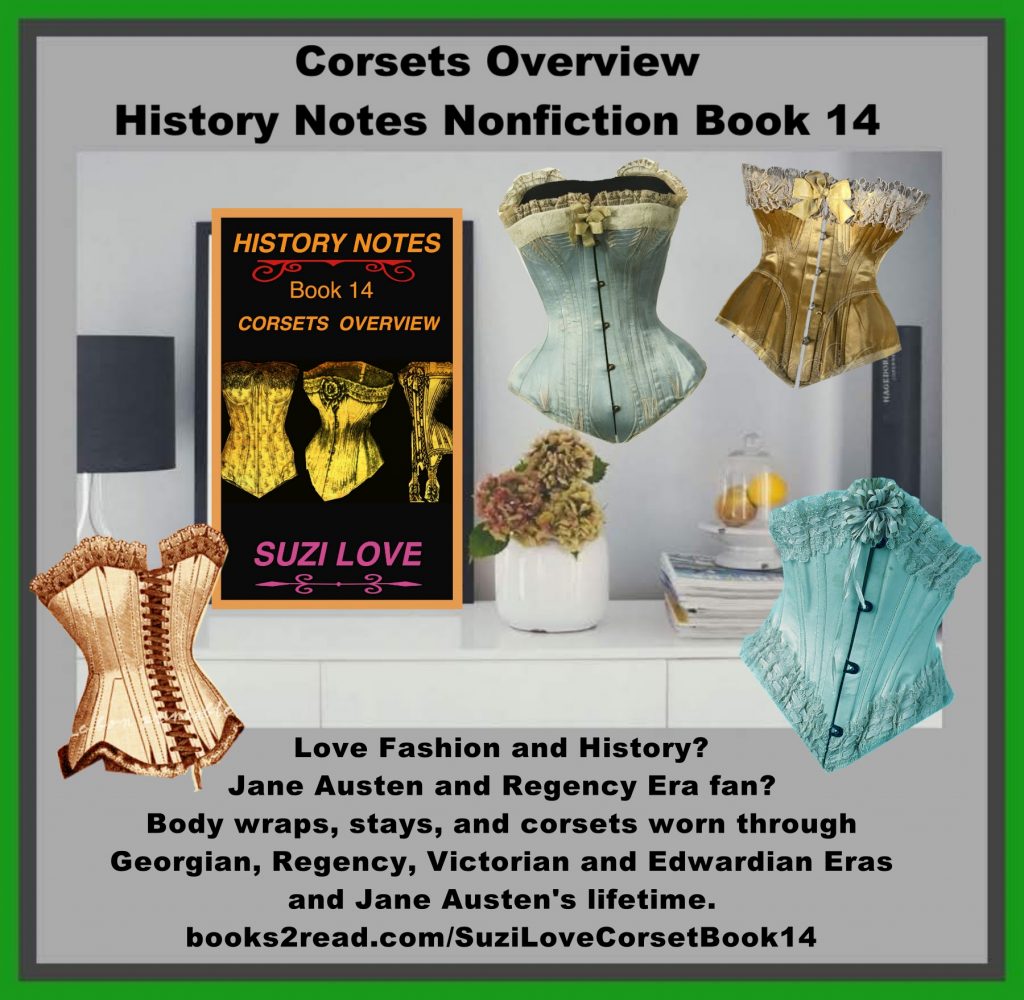
This book shows how body wraps, stays, and corsets were worn to create a variety of fashionable silhouettes through past centuries. Corsets flattened breasts and accentuated rounded hips or pushed up breasts and showed off the bust line depending on the fashions of the time and the desired silhouette. Overview of corsets through history, including the Georgian, Regency, Victorian and Edwardian Eras, and the Bridgerton and Jane Austen’ years. History Notes Book 14.
The name stays probably comes from the French estayer meaning to support. The word corset, which comes from the French word corps for body, had been in use centuries earlier, though often with not quite the same meaning. By the beginning of the 19th century when these undergarments took on more shape and form, the word corset was generally used instead of stays.
During the 1820s, fashions changed from the loose and flowing Regency Era or Empire style gowns and the waistline lowered back to almost the natural position. Towards the mid 1800s, breast cups were added to corsets to give more support and breast comfort. Corsets were lengthened to the hip and gussets added in both the bust area and over the hips. Therefore corsets had more shaping but with less boning.
From the 1820s onwards, menbegan to wear corsets and this continued through the Romantic Era, though the men who wore corsets usually claimed they needed them for back pain.
Queen Victoria ruled England from 1837 to 1901 and at the beginning of her reign, dress waists were around their natural line. But as the years of her reign progressed, fashionable waists became thinner and corsets were redesigned to give more of an hourglass figure.
Early Victorian Era corsets were cotton, boned with mainly whale bone, laced at the back and with tiny hooks and eyes up the front for front fastening. By the middle of the century, corsets were beginning to be more decorative with embroidery and ribbons and then later made of colorful silks and satins.
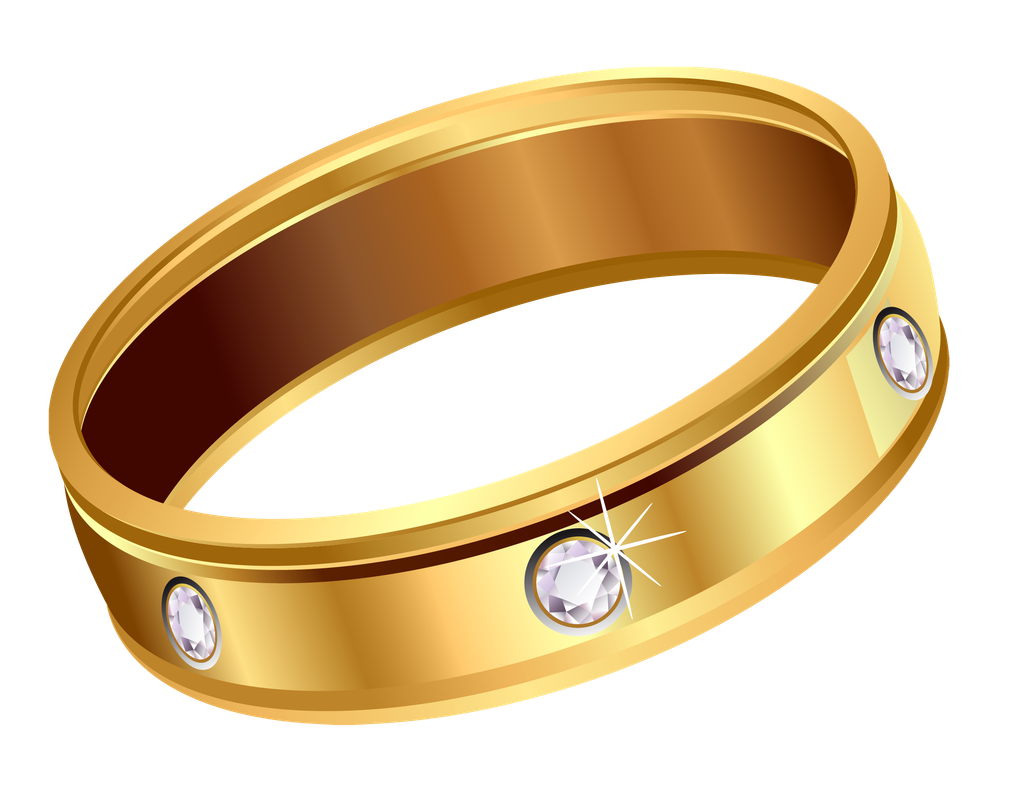
Wedding ring customs that originated in long ago history.
Betrothal ring – An old Roman custom confirming that the marriage contract would be carried out. It was the first part of a dowry given, and it meant the woman was no longer for sale as the first part of the monetary settlement had been paid.
Wedding ring – many primitive peoples who believed in magic used a rope around the waist or the hand and feet, and later a ring, to symbolise that the bride was captured and spoken for, and also to ward off any evil spirits hovering around the bride and ensure marital bliss.
The ring hand– a symbol of the humiliating tradition of the man as the master – the right hand of the family – and the woman being the slave . The right hand stood for power and authority while the left hand expressed submission and serfdom.
The ring finger – Ancient Greek and Roman anatomists believed a vein or nerve led from the heart to the third finger – the healing finger – so they romantically linked this finger to the heart. There are also some more practical reasons the third finger continues to be used. It’s the most prominent for displaying a ring, and it cannot be extended to its full length on its own and usually remains slightly bent, preventing the ring slipping off.
So next time you look at a wedding ring, you can think back to how it came to be on someone’s left third finger,
Rituals of courting and marriage from ‘How Did it Begin’ by R. Brasch first published in 1965. In the word ‘Wedlock’, the lock isn’t a lock and chain but the Anglo-Saxon for gift, as wed means a promise. Wedlock pledged the gift of the happiness of a man and a woman. Nearly all courtship rituals can be traced back to early practises designed to ensure the fertility of a union. Kissing is thought to have started because primitive man believed exhaled air had magic power.
Signing an X for a kiss began in the Middle Ages when people were illiterate and used an X to sign and would then kiss the parchment to affirm their sincerity, like kissing the Bible to take an oath. The word ‘Spooning’ to describe courting came for the custom of young men in Wales to carve an elaborate spoon to give as a love token to the girl of their choice in the place of an engagement ring. Leap year proposals by women to men were a rare chance for women to correct an unjust state of affairs, just as the extra day in a leap year was a topsy-turvy day, a leapt over day in other years. In a time when there was a surplus of women, it was a chance of ensuring they were not left on the shelf.