1790-1810 ca. Fichu Or Shoulder Shawl. Jane Austen and her female family and friends would have worn a Fichu over a light muslin dress for both warmth and modesty. via Metropolitan Museum New York City, U.S.A. metmuseum.org.
Definition Fichu: Triangular piece of lace, muslin, or other cloth worn about the neck and cleavage to fill in a low bodice or neckline and preserve a lady’s modesty. From the French ‘thrown over’. The Bridgerton family and Jane Austen and her female family and friends would have worn a Fichu over a light muslin dress for both warmth and modesty.
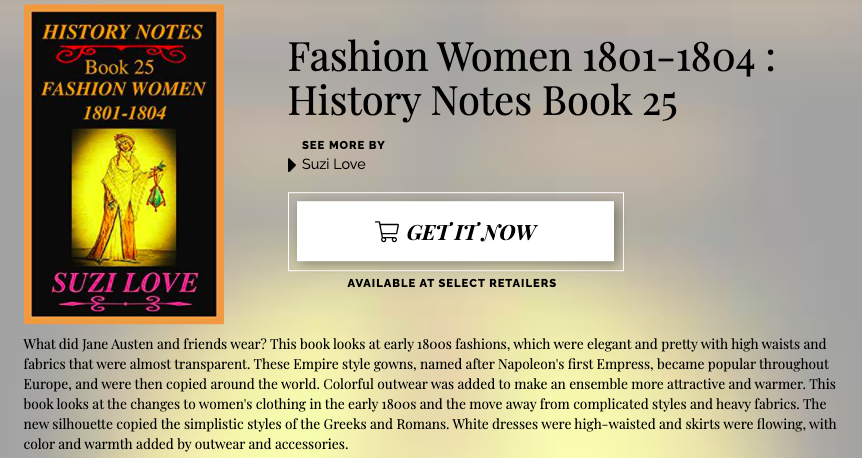
1790-1810 ca. Fichu Or Shoulder Shawl. via Metropolitan Museum New York City, U.S.A. metmuseum.org HN_25_D2D_fashwomen1801-1804 https://books2read.com/SuziLoveFashionWomen1801-1804
There has been some discussion on the names for Corset Makers. I’ve seen lots of names, including Stay Maker, Stay Manufacturer, Corset Maker, Body Tailor and Milliner. It was mainly men who were Stay Makers, but there were also some women who included stay making with their millinery.
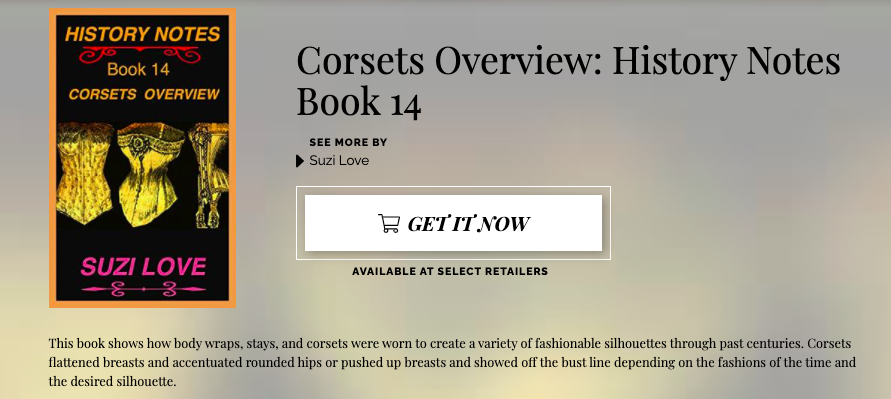
Corsets Overview History Notes Nonfiction Book 14. This book shows how body wraps, stays, and corsets were worn to create a variety of fashionable silhouettes through past centuries. Corsets flattened breasts and accentuated rounded hips or pushed up breasts and showed off the bust line depending on the fashions of the time and the desired silhouette. Includes corsets through the Georgian, Regency, Victorian and Edwardian Eras and Jane Austen’s lifetime. Overview of corsets through history, including the Georgian, Regency, Victorian and Edwardian Eras and Jane Austen’s lifetime.
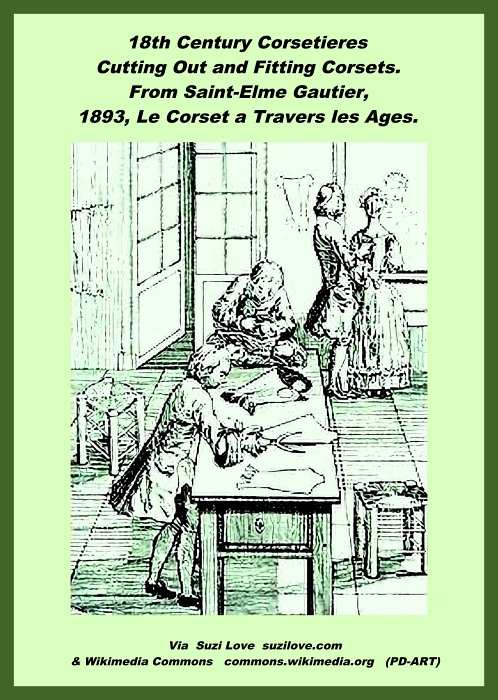
1776 April 28th John McQueen, Stay Maker., New York. At the sign of the White Stays in Smith Street,near the Mayor’s baths, New York. Making all sorts of stays in the newest fashion that is worn by the ladies of Great Britain or France. Packthread stays for babies from one month to seven years, stays for children of Tabby, Ruffled Canvas, Or Buckram, and for older girls an assortment of thin boned stays of different sorts and sizes.1835 Milliner, Dress and Corset Maker to the Royal Family. Mrs. Langdon. 37 Milson Street, Bath, U.K. Local Trade Advertisements. From 1835 The Historical and Local New Bath Guide By C. Duffield. via Google Books (PD- 150)18th Century Interior of the shop of a body tailor, or corset maker. From 1893 The Art of the Tailor of the Bodies of Women and Children.1835 Fashionable Long and Short Stay Manufacturer. Robert Drew & Co. Local Trade Advertisements. From- 1835 The Historical and Local New Bath Guide. Published by C. Duffield via Google Books (PD-150)18th Century Corset Maker From 1893 Le Corset, A Travers Les Ages.18th Century Corsetieres cutting out and fitting. From Saint-Elme Gautier, Le Corset a Travers les Ages. en.wikipedia.org
1795-1805 ca. Green Silk and Metal Vest, Or Waistcoat, Probably French. The style of waistcoat worn by men in Jane Austen’s times. Interesting cross-over front and tasteful embroidery, standing collar, back has ties to adjust the fit. via Metropolitan Museum, N.Y.C., U.S.A. metmuseum.org
1790-1800 ca. Men’s Riding Boots. Black leather with wide tan leather tops, small heel and slightly rounded toes. via Los Angeles County Museum of Art, California, USA. collections.lacma.org
1798 Gentleman’s Outfit, French. Long green overcoat with yellow buttons, tan gloves, black boots topped with yellow band, gloves with three seams across the back of the hand, high white cravat, black hat, fob at his waist and holding a cane. Fashion Plate via Journal des Dames et des Modes, or Costume Parisien.
HN_2_D2D_Fashion Men 1700s
books2read.com/suziloveFashMen1700
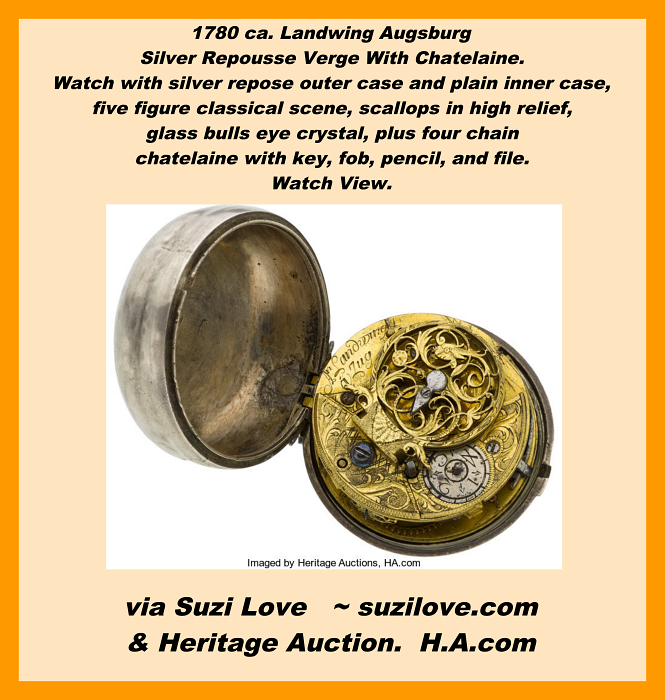
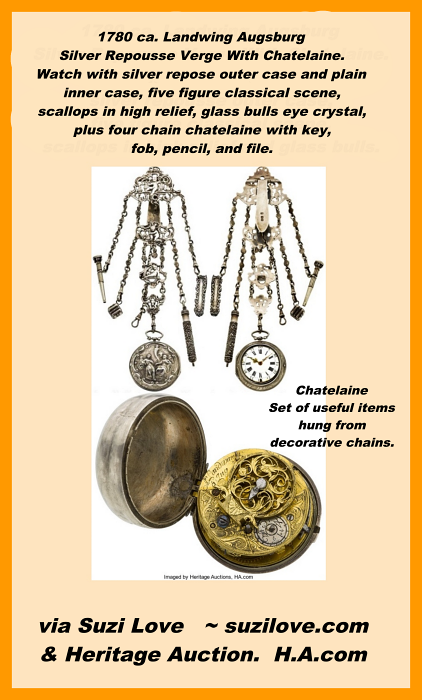
1780 Watch on a Chatelaine, Germany. Silver Repousse Verge With four chain chatelaine. via Heritage Auction H.A.com.
Definition Chatelaine: The word Chatelaine is French and means the keeper of the keys. Chatelaine” derives from the Latin word for castle. In Medieval times, the chatelaine was in charge of the day-to-day running of the castle. What did a chatelaine do? Most important task was keeper of the keys. Also ordered supplies, did bookkeeping, supervised servants, taught castle children, and organized guests. books2read.com/SuziLoveChatelaines
By 1700’s, a metal jeweled ornament hung from pockets, attached to belts, or by hooks into skirt waistbands
During 1800’s, women wore large collections of tools hung from chains
Young girls sewed and did needlework and needed to carry sewing notions eg scissors, thimbles
Worn by women of all classes, from workers to nobility
Varied depending on class and finances.
Made of silver, brass, steel, leather, or fabric
During 19th century, fashionable dresses often had no waist and nowhere to hang chatelaines
Chatelaines became decorative brooches
Often given as a wedding present from a husband to bride
Later became fashion accessories.
1780 ca. Watch. Landwing Augsburg
Silver Repousse Verge With Chatelaine. Watch with silver repose outer case and plain inner case, five figure classical scene, scallops in high relief, glass bulls eye crystal, plus four chain chatelaine with key, fob, pencil, and file. via Heritage Auctions
Chatelaine: Set of useful items hung from decorative chains.Chatelaines and Chains History Notes Book 9 By Suzi Love. #regency Women in charge of houses wore long chains holding important household items around their waist e.g. keys, pen, notebook, sewing. books2read.com/SuziLoveChatelaines
1798 Woman’s Light Blue Douillette, Or Housecoat, French. Trimmed with pink velvet, pink fan, black slave sandals, apricot hat with black trim. Fashion Plate via Journal des Dames et des Modes, or Costume Parisien.
Description Douillette: A coat or housecoat, sometimes quilted, worn in France.
What was fashionable for women in the late 1700s? Extravagant colors and fabrics and outrageous styles were all seen in these flamboyant fashions. #Georgian #nonfiction #amwriting books2read.com/suziloveFashWomen1700s
1750-1770 ca. Back Lacing Linen Corset, European. Made of linen, lining of natural linen, chamois leather to strengthen, straps of linen, stiffening of whalebone. Corset: deep point, hip flaps, lacing at the back, Netherlands.
Description: Quilted linen corset with vertical tunnels and with ribs. Whalebone stiffening, point on front, hip flaps, front shoulder straps of fabric plus long narrow linen strips to tie. Lined and has chamois leather at armpits, front point and waist. Linen corset with a deep thickened point at the front, hip flaps, and lacing at the back. Fully quilted with vertical tunnels, with ribs. Thickened tip at the front is slightly triangular. Above for round shape due to wide horizontal rib. Flares from the waist into hip phlangers, or fingers. Lacing eyelets and criss-crossed lacing at the back. Front shoulder straps are of the fabric with very long linen straps with narrower linen strap, total 110 cm, and two horizontal linen loops on top of the backs. There is a narrow linen strip on all seams and along all edges. Armpits and the front point are reinforced with chamois leather and chamois leather is at the waist with straps attached. Via Mode Museum Province of Antwerp
Corsets 1700-1790 History Notes Book 15 This book shows how body wraps, stomachers and stays were worn during the 1700s. They created a variety of fashionable silhouettes to suit the elaborate fashions worn for court and daily life during the 18th Century. Wearing the correct underclothing was essential for keeping garments in place and giving the best fashion display.
1740–1760 ca. Silk and Cotton Petticoat. via Suzi Love ~ suzilove.com & Metropolitan Museum, N.Y.C., U.S.A. metmuseum.org
HN_1 Fashion Women Late 1700s History Notes Book 1 by Suzi Love.
What was fashionable for women in the late 1700s? Extravagant colors and fabrics and outrageous styles were all seen in these flamboyant fashions.
books2read.com/suziloveFashWomen1700s
1798 Two ladies in Jane Austen style white walking dresses. Left: Dress has gold trim, white bonnet, green Parasol. Right: Stand up collar, short puffed sleeves, brown shawl and coiled head dresses, both with necklaces. via Rijks Museum, Amsterdam, Netherlands. rijksmuseum.nl
HN_1 Fashion Women Late 1700s History Notes Book 1 by Suzi Love.
What was fashionable for women in the late 1700s? Extravagant colors and fabrics and outrageous styles were all seen in these flamboyant fashions.
books2read.com/suziloveFashWomen1700s